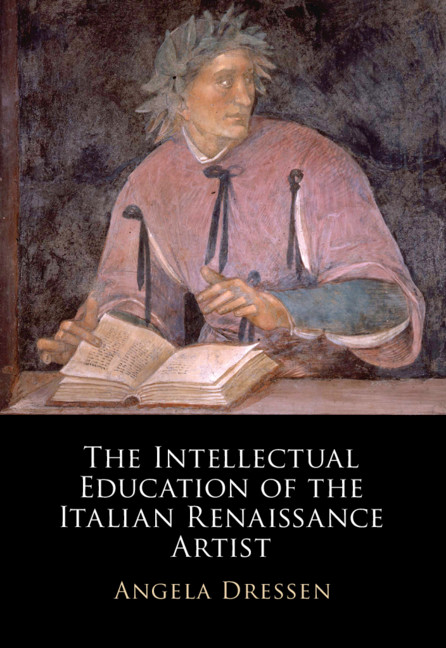

Scholars have traditionally viewed the Italian Renaissance artist as a gifted, but poorly educated craftsman whose complex and demanding works were created with the assistance of a more educated advisor. These assumptions are, in part, based on research that has focused primarily on the artist's social rank and workshop training. In this volume, Angela Dressen explores the range of educational opportunities that were available to the Italian Renaissance artist. Considering artistic formation within the history of education, Dressen focuses on the training of highly skilled, average artists, revealing a general level of learning that was much more substantial than has been assumed. She emphasizes the role of mediators who had a particular interest in augmenting artists' knowledge, and highlights how artists used Latin and vernacular texts to gain additional knowledge that they avidly sought. Dressen's volume brings new insights into a topic at the intersection of early modern intellectual, educational, and art history.
Loading metrics...
* Views captured on Cambridge Core between #date#. This data will be updated every 24 hours.
Usage data cannot currently be displayed.
This section outlines the accessibility features of this content - including support for screen readers, full keyboard navigation and high-contrast display options. This may not be relevant for you.
Accessibility compliance for the HTML of this book is currently unknown and may be updated in the future.
