

What Walt Whitman called the “volcanic upheaval of the nation, after that firing on the flag at Charleston” prompted a meeting in New York’s Scandinavian Society in April 1861.Footnote 1 The meeting helped organize the first Scandinavian company in the Civil War and incorporate it into the First New York Infantry Regiment.Footnote 2 Company recruits elected Norwegian-born Ole Balling as captain, Danish-born Christian Christensen as first lieutenant, and Swedish-born Alfred Fredberg as second lieutenant. Both Balling and Fredberg had experience from the First Schleswig War in 1848, and Christian Christensen, the Scandinavian Society’s president and the recruitment meeting organizer, seemed a natural selection, since he was “well-known among all Scandinavians in America” (see Figure 5.1).Footnote 3

Figure 5.1 Christian Christensen, president of the Scandinavian Society in New York and Civil War officer, photographed in New York early in the war.
With the Scandinavian Society’s host J. A. Jansen “chosen as First Sergeant,” the company’s leadership, representing the three Scandinavian countries, reflected the general composition of the unit. “The company now consists of approximately 80 Scandinavians evenly divided between the three countries,” the unit’s librarian reported back to the Copenhagen paper Dagbladet (The Daily).Footnote 4
Before embarking for Newport News in Virginia on May 26, 1861, the company received a battle flag from the Swedish ladies in New York and a drum from a local Danish-born attorney, while also participating in a parade down Broadway with the rest of the First New York Regiment.Footnote 5 Shortly after arriving in camp by Fort Monroe, the First New York, along with several other New York regiments, saw action at the battle of Big Bethel. The June 10 engagement ended in a Union defeat; it also prompted several letters to New York newspapers and family members back home.Footnote 6 In a letter to his mom, Danish-born Wilhelm Wermuth stressed that he had thus far escaped unscathed, but he also admitted, “I have been near our Lord a few times, I was in a pitched battle on June 10 and a man fell close to me.”Footnote 7 About the war’s larger implications, Wermuth added: “Now we await a big battle by Washington which will presumably settle the fate of the blacks.”Footnote 8
The topic of slavery was also important in public statements about enlistment, though reality, perhaps not surprisingly, proved more complex. In a letter dated August 22, the Scandinavian company’s librarian recounted the battle of Big Bethel in Dagbladet and attempted to put the soldiers’ motivation into words. According to the Scandinavian-born letter writer, the men greatly desired to “meet the enemy in open battle,” since they had volunteered not out of “ambition or greed or other ignoble motives, but to defend and assert freedom and all human beings’ equal entitlement thereto, regardless of how the skin color varies.”Footnote 9
With this statement, Dagbladet’s correspondent articulated support for equality and freedom as universal values worth risking one’s life for, values that Scandinavian immigrants had also equated with the essence of American citizenship, and Wermuth’s letter in addition demonstrated awareness that the war directly or indirectly revolved around the issue of slavery.
Though they privately expressed more pragmatic reasons for enlisting, these early Scandinavian volunteers may have been more idealistic in their motivations for war service than was the case for recruits who joined later in the war. According to James McPherson, this was the case for many Anglo-American soldiers, and it was certainly the way Scandinavian Civil War soldiers wanted their service to be remembered.Footnote 10 In several publications, Scandinavian immigrants later described themselves as having volunteered in greater proportion than did any other ethnic group in the United States.Footnote 11 The claim likely has some merit among Norwegian-Americans, who often came to America with less social and economic capital than their Swedish and Danish counterparts and settled in closer-knit rural ethnic enclaves where they likely experienced greater pressure to enlist.Footnote 12 There is, however, also ample evidence of contemporary resistance to military service among Scandinavian-born immigrants. In other words, Norwegian, Swedish, and Danish immigrants entered the military based on a complex set of motivations that was often as much about economic and political opportunity (and social perceptions of honor) as it was about love for the adopted country or anti-slavery sentiment.Footnote 13
In New York’s Scandinavian company, the early Norwegian, Swedish, and Danish volunteers did indeed publicly claim to be fighting out of idealism, and part of the reason may well have been the fact that the soldiers quickly were exposed to concrete discussions of slavery and abolition. The Union forces at Fortress Monroe were commanded by Benjamin Butler, who since May 23, 1861, had afforded runaway slaves protection within Union lines (see Figure 5.2).Footnote 14

As Eric Foner explains, Butler claimed to be drawing on international law when designating the runaways as “contrabands,” and by May 27, 1861, at least fifty local runaways “including a three-month-old infant” had sought refuge “at what blacks now called the ‘freedom fort.’”Footnote 15 Thus, Scandinavian soldiers stationed around Fortress Monroe experienced first-hand the centrality of slavery to the Civil War, yet the company’s two highest-ranking officers seemingly volunteered for less idealistic reasons than defending “all human beings’ equal entitlement” to freedom.Footnote 16 Captain Balling (see Figure 5.3) admitted in his memoirs that he had no interest in the political questions of the day and also indicated that First Lieutenant Christensen joined the military mainly for economic reasons.Footnote 17 Christensen never wrote concretely about his motivation for enlisting, noting only that “Company I of 1st New York Volunteers was formed in the Scandinavian Society of New York, of which I was then (in the spring of 1861) president.”Footnote 18

Christensen’s brother-in-law, Ferdinand Winslöw, however, in a private account written to his wife Wilhemina in the fall of 1861, suggested that the first lieutenant’s incentive for military service was mainly economic.Footnote 19 “Christensen had to admit of all the debts that bothered him,” wrote Winslöw in October 1861, and Balling years later wrote that Christensen had confided in him: “My house went bankrupt yesterday, I am in dire straits and I do not know what I tomorrow shall give my family to live off of.”Footnote 20
Balling’s reference to Christensen’s “house” probably had to do with the Danish immigrant’s position at a brokerage firm on Wall Street. According to Christensen’s personal papers, he worked for Pepoon, Nazro & Co. on 82 Wall Street until the Civil War’s outbreak in April 1861 but never afterward. Based on Winslöw’s letter to his wife, the company founders, Marshall Pepoon and John Nazro, may have been in financial trouble – or perhaps just been disinclined to help their former employee.Footnote 21 “Papoon [sic] and Nazro promised Christensen to pay Emmy $100 a month during his absence, but cheats and rascals as they are they have never paid the first copper yet.”Footnote 22 Christensen therefore probably enlisted as much for practical reasons as idealism, and the same could be said of his brother-in-law. Though Ferdinand Winslöw also belonged to the group of early volunteers, he made it clear in a letter dated September 22, 1861, that he served as quartermaster of the 9th Iowa Infantry Regiment to avoid being drafted later and having to “go with very bad grace,” thereby alluding to the importance of honor more than patriotic zeal.Footnote 23
As it turned out, the schism between idealism and pragmatism was a recurring theme as Scandinavians in other parts of the United States pondered whether to mobilize for the Civil War. Ivar Alexander Hviid (Weid), who had received Old World military training, organized a recruitment meeting in Chicago on July 29, 1861. Weid’s call in Emigranten was decorated by an eagle holding an “E Pluribus Unum” ribbon, under which the Danish-born immigrant wrote:
Countrymen Scandinavians!
Our adoptive fatherland is threatened by rebels who seek to overthrow the union that now for so many years has brought fortune and blessings to the country. It is every man’s duty to defend the country he resides and makes a living in, and as a result we Scandinavians also have an opportunity to show the new world that we have not yet forgotten the heroism that since olden times has personified the Norseman.Footnote 24
Weid thereby publicly appealed to a common Scandinavian ethnicity and greater American values such as the economic prosperity that Scandinavians associated with the Union and the United States’ ability to create unity out of diversity. Yet, at the individual level, it was clear that Weid did not necessarily fully embrace the creed of “E Pluribus Unum.” When Weid learned that his company would be incorporated into the German-led 82nd Illinois Infantry Regiment, the Danish-born captain felt such urgency to have the decision overturned that he wired the adjutant general of Illinois, Allen C. Fuller, on September 13, 1862, and argued that military and political strife originating from the Old World had been transplanted to the United States: “I think it wrong to order my Company into Hecker. Germans & Scandinavians never agree[.] They are national enemies,” Weid wrote.Footnote 25
Indicating Scandinavian-born immigrants’ limited political leverage, Weid’s complaint changed nothing: the Scandinavian company remained part of the 82nd Illinois Regiment.Footnote 26 Due to their larger share of the population, however, German immigrants had more opportunities to enlist in ethnically uniform units and at times even refused to “offer their Service into a Mixt Regement [sic],” as evidenced by an August 27 letter to Wisconsin’s governor Alexander Randall a few months before the German-led 9th Wisconsin Regiment was mustered into service.Footnote 27 Some German soldiers, as Walter Kamphoefner and Wolfgang Helbich have suggested, were therefore never part of a multiethnic Civil War crucible as “general fraternization across ethnic lines simply did not happen.”Footnote 28 Scandinavian soldiers, on the other hand, had little choice. The majority of Scandinavian soldiers in the Civil War served in ethnically mixed units, and – as the example of Ivar Weid demonstrates – even units at the company or regimental levels were part of brigades and corps that forced Norwegians, Swedes, and Danes to interact with their fellow soldiers and to an extent depend on them for survival.Footnote 29
Yet in Wisconsin a concerted effort was made to raise a large-scale Nordic Civil War unit. As the summer of 1861 turned to fall and winter, community leaders constructed a pan-Scandinavian ethnic identity based on a common martial Viking past while also acknowledging the practical realities of a political spoils system tied to military service and an idealistic belief in – and duty toward defending – American values and the opportunities associated with American citizenship.Footnote 30
On September 2, 1861, Emigranten’s editor Carl Fredrik Solberg reminded his readers that the Scandinavians “owe the country as much as our native-born fellow citizens do” and that since they “in every respect enjoy the same rights” they were obligated to defend the country.Footnote 31 Additionally, Emigranten printed a text by the Norwegian-born community leader and politician John A. Johnson, who had recruited several Scandinavian volunteers around Wisconsin to “help suppress the slaveholders’ insurrection and uphold the country’s constitution and laws.”Footnote 32 In the following weeks, several more letters arguing for Scandinavian volunteerism and idealism appeared in Emigranten and simultaneously revealed the connection between recruitment and politics.
In between the practical appeals to ethnicity and the more high-minded appeals to civic nationalism, Scandinavian leaders recognized the political need to field visible Scandinavian military units in order to have political influence in the future. Solberg later remembered an important exchange to that effect with Hans Heg, likely in the late summer of 1861:
One night after I had gone to bed and fallen asleep Mr. Heg came into my room and got in bed with me and woke me up. He said he had decided to enter the military service and had come to Madison for that purpose. We stayed awake the rest of the night talking over his plans of raising a Scandinavian regiment, concerning which he was very enthusiastic. I remember he said, “The men who conduct this war are going to be the men who will conduct affairs after it is over and if we are going to have any influence then we must get into the war now.” He was shrewd enough to see the trend of things.Footnote 33
Initially, Scandinavian leaders aimed even higher than a regiment. On the evening of September 15, prominent Norwegian-Americans gathered at the Capitol House hotel in the center of Madison with the goal of raising a Scandinavian brigade. Capitol House was by 1861 considered Wisconsin’s finest hotel, with 120 fashionable rooms inspired by East Coast architecture, and the meeting’s setting therefore indicated the Scandinavian elite’s level of ambition.Footnote 34 Hans Heg was appointed the unit’s commanding officer, and in the subsequent weeks the recruitment efforts were stepped up in earnest.Footnote 35 By September 25, leading Norwegians in Madison were so confident in their ability to enlist fellow Scandinavians in purely ethnic units that they wrote to the governor of Wisconsin, Alexander Randall, and informed him that “Scandinavians from different parts of this State” had resolved “to raise a Scandinavian Brigade for the war now pending in this our adopted Country.”Footnote 36
Underscoring the pragmatic aspects of Civil War enlistments, Johnson received a letter from a countryman, Bernhard J. Madson, suggesting a relatively common quid pro quo for helping to raise the desired ethnic units. On September 27, 1861, Madson assured Johnson that he had enlisted two Norwegian men and soon after wrote that he was “hard to work for the Company” and devoting his “entire time” to recruitment.”Footnote 37 Madson had read in Emigranten that John Johnson’s brother, Ole, was “commissioned as recruiting Officer,” and he followed his enlistment update with a specific request: “I wish to know, if I am working for the Company for a position or not, since your brother will without doubt be elected Capt.”Footnote 38 In other words, would Johnson and his brother use their “combined influence” on Madson’s behalf “for a Lieut. post?”Footnote 39 Johnson’s answer, if he ever wrote one, has not been preserved among his personal papers, but Madson, despite his best efforts, never managed to rise above the rank of “sergeant” with the 15th Wisconsin.Footnote 40 Madson’s lobbying did, however, underline the juxtaposition between the idealism of “upholding the country’s constitution” and the practicalities of securing financially attractive leadership positions privately.Footnote 41 In another example, Hans Heg, on Monday, September 30, 1861, issued a call for Civil War service through Emigranten that revealed both the rhetorical idealism of citizenship duties and the political reality underlying ethnic Civil War units: “The authorities that be in this our new homeland have, as we all know, called the citizens of the country to arms to support the government in its attempt to preserve the Union and its constitution,” Heg wrote.Footnote 42
Scandinavians! Let us recognize our present position, our duties and our responsibility as we should understand them. We have still far from carried the part of the war’s burdens in respect to delivering personnel as the Scandinavian population’s great number here in the country oblige for us … While the adopted citizens of other nationalities such as the Germans and Irish have put whole regiments in the field, the Scandinavians of the West have not yet sent a single complete Company of infantry to the grand Army. Must the future ask: Where were the Scandinavians, when we saved the mother country?Footnote 43
The appeal was signed by ten prominent Scandinavian businessmen, editors, and opinion-leaders (in all, nine Norwegians and one Dane) and yielded clues to how the ethnic elite wanted Scandinavian identity to be understood in the public sphere.Footnote 44 On the one hand, Scandinavians were an exclusive group with a common language and culture competing with Germans and Irish immigrants in displays of loyalty (and by extension political power); on the other hand, they were part of a greater national project with values that had by now drawn them to become citizens in an adopted homeland.Footnote 45
As proof that these ethnic Scandinavian military units were exclusive in terms of language, Emigranten’s editor on October 8, 1861, published a letter by Hans Heg, who emphasized that the “Regiment’s officers would be men who speak the Scandinavian languages. Thereby also giving the Scandinavian, who does not yet speak the English language, opportunity to enter into service.”Footnote 46 This reference to a common Scandinavian origin and identity was a practical construction to maximize recruitment – and perhaps also a necessary one, since Yankee-Americans often were not able to tell Danes, Swedes, and Norwegians apart.Footnote 47 Consequently, the exclusive ethnic identity promoted by the Scandinavian regiment’s organizers afforded non-English-speaking immigrants the opportunity to fight in the war, to ensure a monthly income, and to contribute to their adopted country maintaining a certain territorial size and certain political ideals.
Secondly, the call for volunteers introduced a political ethnicity, in which Scandinavian unity, and subtle expectations of future political power, was defined in opposition to the “other nationalities such as the Germans and Irish” that had “put whole regiments in the field.”Footnote 48 Based on the writings of Heg, Solberg, and other ethnic leaders, these exclusive and political perceptions of ethnicity – exclusive ethnicity serving as a foundation for political power – outweighed the more idealistic and universal values also introduced in Heg’s petition.Footnote 49
Still, the rhetoric of universal ideals, calling attention to citizenship’s duties and adherence to foundational American values of equality and liberty, echoed frequently through the pages of Emigranten and the Swedish-American Hemlandet during the Civil War, while less idealistic motivations appeared in private correspondence.Footnote 50
Emigranten’s editor enthusiastically backed the idea of an exclusively Scandinavian military unit and frequently opened up his newspaper to contributions aiding the recruitment effort while personally lauding Hans Heg as “young, forceful and bold, proud, and unwaveringly trustworthy.”Footnote 51 Hundreds of Norwegians, a few Swedes, and approximately fifty Danes eventually accepted the call to enlist in the Scandinavian regiment, but the pace of recruitment also made it clear that a Scandinavian Brigade was far from realistic.Footnote 52 Despite initiating the recruitment process in September, the regiment did not fill its ranks until January 1862.Footnote 53 The 15th Wisconsin was eventually made up of ten alphabetized companies with nicknames such as “St. Olaf’s Rifles,” named after the Norwegian king Olav den Hellige (Olaf the Holy), and “Odin’s Rifles,” which tied Scandinavian-American recruits to a common Viking ancestry.Footnote 54
Similar calls for Scandinavian troops, touting a common ethnicity and defending universal values, with the implicit acknowledgement that there was political gain to be had from ethnic units, were published across the Midwest in the fall of 1861 though on a smaller scale. In Illinois and Minnesota, ethnic leaders who were not affiliated with the recruitment effort in Madison, Wisconsin, simultaneously attempted to organize smaller ethnic companies.
Ivar Weid raised his Scandinavian company from a recruiting station in Chicago; a little further west, around Bishop Hill, Illinois, a Swedish company was organized by Captain Emil Forss, who had been an officer in the Old World, and the unit was named the “Swedish Union Guard.”Footnote 55 On October 2, 1861, Forss announced the company’s existence in Hemlandet and encouraged his countrymen to “join us” in knowing the duty that they owed to “our adopted country” and thereby “renew honor to the noble Scandinavian name.”Footnote 56 Swedish-born Hans Mattson organized yet another ethnic unit around the same themes and also likely with a view to turn Civil War service into a political career.Footnote 57
Mattson succeeded in organizing a Scandinavian company for the 3rd Minnesota Infantry Regiment, but in the end the most ambitious and influential Scandinavian ethnic turned out to be the 15th Wisconsin Regiment commanded by Colonel Hans Heg. In the fall of 1861, Heg asked Claus Clausen, his childhood pastor, to be the regiment’s chaplain. According to Emigranten, Clausen, now forty-one years old, replied that “he regarded it as a calling that it would be his duty to accept, if it could be arranged with his congregations” around St. Ansgar in Iowa.Footnote 58
The Danish-born chaplain’s idealism and sense of duty, in some respects, however, clashed with the more practical and immediate daily concerns of the regiment’s soldiers. Claus Clausen, who was commissioned on December 11, quickly realized that he faced a tall task regarding the “regiment’s moral condition,” where drinking and gambling were regular occurrences.Footnote 59 Underscoring the ethnic tension between Scandinavians and Irish immigrants, an alcohol-induced fight broke out on December 24, 1861, between the 15th and 17th Wisconsin Regiments that left several of the participants with “sore noses and black eyes.”Footnote 60
The challenge Clausen initially faced in connecting with Scandinavian-born soldiers was in some ways surprising given the theological struggle centered on slavery that raged outside Madison’s Camp Randall among Scandinavian clergymen and congregations.Footnote 61 In this conflict, Clausen, who for years had worked outside the official church structure, sided more with the worldly concerns of Scandinavian congregations than with transplanted Norwegian state-church-affiliated clergy and sparked the largest controversy in the Norwegian Synod’s history.Footnote 62
When the Civil War broke out in April of 1861, the Norwegian Synod shut down its educational activities at the German-led Concordia College in Missouri.Footnote 63 Professor Peter Lauritz (Laur.) Larsen, who was responsible for the Norwegian students at the educational institution in St. Louis, issued an “announcement” in Emigranten on May 6, 1861, explaining the decision. “[On] account of the political circumstances the faculty at Concordia College, in addition to the supervising committee, have been compelled to suspend instruction and send the students away,” Professor Larsen wrote and asked that his mail now be sent to Madison.Footnote 64 Larsen’s announcement led Emigranten’s editor to ask a simple, but loaded, question regarding the Norwegian pastors’ position on slavery given the fact that it is “impossible for anyone at all to remain passive” at the current moment.Footnote 65
The question was important, Solberg argued, because rumors were circulating that the Norwegian pastors exhibited pro-Southern sympathies. Solberg expressed hope that the men “to whom our future pastors’ upbringing and instruction is entrusted, is sincerely and unwaveringly devoted to the Union and its government.”Footnote 66 Solberg extended his political arguments with a religious one by stating that “all authority was of God” and that rebellion against the authorities therefore had to be seen as “ungodly.”Footnote 67 Norwegian Synod leaders such as Pastor A. C. Preus immediately sensed the question’s explosive implications and in a private letter dated May 10 warned Professor Larsen, “For God’s sake,” against answering publicly.Footnote 68
Less than a month later, however, John A. Johnson revived the issue of loyalty among the Norwegian pastors when he published another piece on the topic in Emigranten and increased the pressure on Synod leaders. As Johnson revealed in a letter to his brother Ole on June 1, 1861, the newspaper piece and its content was no coincidence:
My leisure time has been occupied for two or three days in writing an article for the Emigranten concerning the union of our church with the Concordia College, St. Louis. I have been urged to do this and I must say also that it was strictly in accordance with my own inclinations. Perhaps you do not know that the faculty of that college are secessionists, Prof. Larson included, I think it is a great shame that the Norwegians should send their youth to such an institution to be educated. I wish to sever our connection with them, and intended to give som[e] pretty sharp blows. How well I have succeeded others must judge. It is pretty hard work for me to write, especially in Norwegian, and I know not how the article will appear in print. The editor seems to be well satisfied with it, though he says is it most too severe in some places. I will send you a copy of the paper as soon as it is printed. I do not wish to be known as the author of the article until I am obliged to, so if anyone asks you, keep dark.Footnote 69
Based on Johnson’s letter, his response was likely solicited by Emigranten’s editor, and it thus provides a peek behind the scenes of the newspaper’s editorial processes as well as its editor’s conscious attempts to shape Scandinavian public opinion in favor of the Republican Party. J. A. Johnson’s letter, signed “X” (but due to a typo published as “H.”), appeared in Emigranten on June 3, 1861, and added fuel to a smoldering conflict.Footnote 70 The rumor that “the faculty at Concordia College was made up of Secessionists or at least men who sympathized with the Secessionists” could only be rebutted by “a denial from one of the Concordia educators themselves,” the correspondent argued.Footnote 71 “Professor Larsen has been asked by Emigranten to explain the issue as a whole and his silence can only be interpreted as a complete confirmation of the rumor’s veracity.”Footnote 72
To defend secession, Johnson continued, the rebels presented two main arguments: “1) that Slavery is not a sin; 2) that resisting the execution of the United States’ legislation in the slave states is not a sin”; the Scandinavian clergy’s position on those two assertions was important for the congregations and the ethnic community to know about, Johnson wrote.Footnote 73
Regarding the first argument, Johnson asserted that for centuries slavery had been considered sinful throughout the civilized world: “England, Denmark, and Holland have through great sacrifice and effort set free the slaves in their possessions,” and in the North not “one in a hundred” would deny that slavery is a “boundless abomination.”Footnote 74
Johnson invoked the founding fathers’ idea that “all men are created equal”; regarding the second argument, the Norwegian-born immigrant noted that all government officials took the oath to uphold the Constitution and that the same was true for immigrants wishing to become American citizens.Footnote 75 Consequently, Johnson argued, the Constitution and the officials elected to uphold it should supersede any authority claimed by local or state governments. Yet defenders of the Constitution in the South “were punished with the most outrageous and painful death.”Footnote 76
The idea that dissenters in the South were in grave danger found expression on several other occasions during the war’s early months and often with a certain narrative hyperbole.Footnote 77 If individual states within the Union were able to undermine the national government’s authority, contrary to the way societies had been organized in the Western world for ages, the consequences could be severe, Johnson warned. “What would the result be, in case a state had the right to secede at its pleasure? If South Carolina has this right then all other states has it and we could soon have 34 governments instead of 1,” Johnson wrote in language indicating threshold principle worries.Footnote 78
It was therefore apparent that the Scandinavian community’s position on such matters, not least the influential clergy’s, had to be clarified. “We have, in good faith, sent our youth down there to be trained as pastors without knowing that we exposed them to influence of the secessionists’ poisonous opinions,” Johnson charged and encouraged the Norwegian Synod leaders to sever their ties to the Missouri Synod and create their own institution of learning.Footnote 79
The week after Johnson’s piece was published in Emigranten a self-proclaimed Scandinavian Democratic voter, Jacob Nielsen of Janesville, Wisconsin, indicating the issue’s importance to the Scandinavian immigrant community, took issue with “H”’s lack of precision regarding the concept of biblical “sin” and thereby foreshadowed a spiritual and political debate that would bedevil the Scandinavian religious community for the rest of the decade.Footnote 80
Johnson’s piece and Nielsen’s reply incited Professor Larsen to make a formal statement in Emigranten on June 17.Footnote 81 Larsen started out by criticizing “a political paper” calling public attention to his political views on the rebellion instead of approaching him privately if it was believed that his position was detrimental to the students he was responsible for educating.Footnote 82 Larsen then proceeded to lay out his position on the two main issues on which everything else depended: “1) Slavery and 2) Rebellion or the relation to the authorities altogether.”Footnote 83
Countering Johnson’s reading of the Bible passage “Do to others as you would have them do to you,” Larsen argued that it was unreasonable for a beggar to expect the prosperous to share wealth in excess of alms and unreasonable for the slave to expect freedom from a master in excess of his “duty and conscience”Footnote 84 – in short, words far from ideals of equality and liberty to Scandinavian readers. Since slavery “existed among the Jews” and therefore was “allowed by God,” Professor Larsen was unwilling to declare slavery sinful. “Of the numerous biblical passages proving that slavery is not a sin, I can just in all haste grasp a few out of many.”Footnote 85 That slavery was not considered a sin by arguably the most prominent Scandinavian clergyman in America turned out to be a key point.Footnote 86
To Emigranten’s anti-slavery editor, Larsen came dangerously close to supporting pro-slavery paternalistic arguments for the institution’s benignity in relations between master and slave, thereby ignoring the injustice and by extension the violence, or threat thereof, underlying the whole system of enslavement.Footnote 87 Emigranten’s opinion, likely voiced by Solberg, disagreed with Professor Larsen on several points and let this be known in the same issue. Describing slavery as the greatest “civic evil” in America, “an absolute enemy of our republican institutions,” the newspaper argued for “inherent human sympathy and the conviction” that slavery was “detrimental both to the slaves and the country,” which left little room to interpret Larsen’s statement as anything other than an expression of Southern sympathy.Footnote 88 It came down to a sense of duty coupled with a sense of common human sympathy for people held in bondage, Solberg argued.
We are driven by an instinctive, spirited patriotism, which awakens in all nations in the moment of danger, the same intense patriotism that manifested itself in Norway during the war of 1814 and in Denmark during the Schleswig-Holstein rebellion of 1848 which was far more than just following from the jurists’ agreement that Norway and Denmark were right.Footnote 89
Here Solberg introduced a key difference between his text and Larsen’s: the emotional and intangibly instinctive aspect of slavery’s relationship to ideals of equality and its key role in the current military mobilization occurring both in both the South and the North to such an extent that the Norwegian Synod could no longer maintain its educational mission in Missouri. Where Larsen attempted to separate the issue of slavery from the recently written ordinances of secession – and to an extent succeeded intellectually in making the case for slavery being biblically sanctioned – the professor failed in this particular public debate unfolding in Wisconsin at a time when Scandinavian leaders were recruiting hundreds of Norwegians, Swedes, and Danes to fight against the slaveholding states, run by landholding planters, in rebellion against American authorities.Footnote 90
In the Norwegian township of Perry, Wisconsin, the local pastor’s position on the issue of slavery seemingly caused considerable tension. According to a later local account, Pastor Peter Marius Brodahl moved with his wife Johanne “into the Blue Valley parsonage in 1857,” but he “endured the hostility of parishioners who disagreed with his stance that holding of slaves was not a sin” during the Civil War.Footnote 91 The account further suggested that Brodahl’s elite Old World education and resulting “self-conscious” behavior set him apart from his parishioners.Footnote 92
The class-based differences between the Norwegian Synod’s leadership and pastors and parishioners not educated in the Old World was also on display after the Norwegian Synod’s annual meeting on June 26, 1861. After the meeting, held in Rock Prairie, Wisconsin, where Claus Clausen preached in the 1850s, the ministers issued a joint statement trying to clarify Larsen’s theological position by stating that it was “in and of itself not sinful to hold slaves.”Footnote 93
The Norwegian Synod’s clergymen, many of whom had been educated at Scandinavian universities and were affiliated with the Norwegian state church, generally rejected the Grundtvigian ideas that inspired Claus Clausen, and in late June 1861 they supported a conservative interpretation of slavery’s sinfulness.Footnote 94 Clausen initially agreed with the joint statement’s wording, as it was required in order to be reinstated in the Synod, and he also signed a document admitting to have sinned by resigning from the Synod in the first place. Yet, when Clausen, in his own recollection, had a little more time to consider the statement, he arrived at the conclusion that “slavery in its essence and nature runs counter to the spirit of Christianity generally and the love of God and humanity [kærlighedsbudet] specifically and therefore had to be a sin.”Footnote 95
In this statement there were echoes of Grundtvig’s Old World position on slavery. If Clausen had read Grundtvig’s parliamentary debate comments made on December 14, 1848, which he conceivably could have, he would have known of Grundtvig’s Old World abolitionism and his position of refuting the right “for one man to possess his fellow men with full right of property; against this I protest in my name, and in the name, I should think, of all friends of humanity.”Footnote 96
Thus, after Clausen accepted the position of military chaplain in late 1861, he became even more closely tied to the regiment organizers’ public anti-slavery position, which may have contributed to him writing a piece for Emigranten called “Tilbagekaldelse” (retraction) on the biblical aspects of the slavery issue, which was published on December 2, 1861.Footnote 97
In words that, to an extent, echoed Grundtvig’s first 1839 statement on Danish slavery, Clausen declared “that one human being holds and uses another human being as his property forcefully under the law and that these human beings’ position called slavery, is declared to be an evil in itself.”Footnote 98 Moreover, Clausen, using a general argument that built on Grundtvig’s 1843 Easter thoughts about a common Christian humanity between Black and white, added that slavery “violates the order of nature and all true Christianity.”Footnote 99 As a result, Clausen was once again thrown out of the Norwegian Synod when he insisted that “slavery was irrefutably sinful.”Footnote 100
Thus, by December 1861, when he published his retraction and joined the Scandinavian Regiment as chaplain, Claus Clausen was offering a religious, and somewhat revivalist, anti-slavery vision more in tune with the Scandinavian congregations where many parishioners had acquaintances, friends, or family members serving in the military to suppress the rebellion.Footnote 101
In time this disagreement over slavery’s sinfulness, instigated by anti-slavery Norwegian-born leaders, contributed to a split within the Scandinavian-American church and revealed important fault lines between the Scandinavian-American clergy tied to the Old World state churches and pastors, like Claus Clausen, who were critical of state church positions. Additionally, there was a class component tied to the debate as well. To the university-educated synod leaders, the discussion about slavery’s sinfulness was primarily intellectual and secondarily political.Footnote 102
To community leaders such as Clausen, Solberg, and Heg, who had lived in small pioneer settlements among the Norwegian Synod’s laity (and seen rural hardship up close), it was clear that the issue of slavery’s sinfulness was political first and intellectual second. The issue of slavery and the Republican Party’s deepening fight for emancipation also raised important questions about race relations within American borders as 1861 turned to 1862, and the connection became increasingly clear to the Scandinavian-born men as they went into the field with their respective military units.
Yet, despite the synod conflict’s rhetorical and practical ferocity and Clausen’s anti-slavery position, it was evident as the war progressed that many of the 15th Wisconsin’s leadership were more concerned with liberty and equality as it pertained to opportunities for upward social mobility among Scandinavians than they were with ensuring freedpeople an equal place in an American free labor economy.
***
On a cold, rainy Sunday evening, March 1, 1862, the Scandinavian Ladies of Chicago presented Colonel Hans Heg of the 15th Wisconsin Regiment with a beautiful blue and gold silk banner (see Figure 5.4). “For Gud og Vort Land!” read the flag’s inscription (For God and Our Country), an adaptation of the well-known Old World Scandinavian rallying cry “For Gud, Konge og Fædreland” – “For God, King, and Fatherland.”Footnote 103 The inscription said much about the Scandinavian ethnic elite’s public perceptions of Civil War service, as the importance of religion and adherence to “Our Country,” a nation where citizenship – theoretically – was based on universal ideas about equality, were recognized by the flag-makers.Footnote 104 Additionally, even as it drew inspiration from Scandinavia, the flag also demarcated the Old and the New Worlds, monarchies and republican government, by erasing the word “King” from the Scandinavian-American battle flag.Footnote 105

Figure 5.4 The Scandinavian Regiment’s battle flag with the inscription “For Gud og Vort Land” (For God and Our Country).
Yet the Scandinavian regiment was, in part, created because of Scandinavian immigrant leaders’ fear that Norwegians, Swedes, and Danes, despite the privilege afforded them due to their white skin and Protestant religion, were somewhat marginalized in relation to the American political and economic establishment, because of language barriers, lack of capital, and lack of access to a political spoils system. For example, the problem of getting Scandinavian-American officers appointed by Wisconsin’s governor was described by Colonel Heg in a letter to J. A. Johnson in August 1862: “I have no particular pride of nationality in the matter, but I know we have men amongst the Norwegians, capable of being developed – and of becoming good military officers – when modesty prevents them from gaining any position.”Footnote 106
Yet modesty did not prevent Bernt J. Madson from receiving his coveted lieutenant position; rather, it was likely the inability of the Scandinavian ethnic elite to expand the pool of available officer slots outside the 15th Wisconsin, which by 1861 was the only regiment where a Scandinavian immigrant with no military experience could realistically hope to be appointed.
As we have seen, Madson wrote J. A. Johnson in early October 1861 petitioning him to throw his and his brother Ole C. Johnson’s weight behind a lieutenant appointment; even by late 1862 he was still lobbying for a better position.Footnote 107 Writing from camp near Nashville, Tennesee, Madson implored J. A. Johnsn to do him a favor by “seeing Gov. Solomon for me” to ask “if he could give me a Lt post in one of the new Reg’ts, Hoping you will do all you can in [sic] behalf.”Footnote 108 No officer position outside, or even inside, the Scandinavian regiment materialized for Madson, however, and the same was true for the vast majority of Norwegian immigrants, by far the most important voter demographic within the Scandinavian community in Wisconsin.Footnote 109 As Olof N. Nelson admitted in his otherwise hagiographic account of the Scandinavian imprint of America, “there were, undoubtedly, Scandinavians in all the fifty-three Wisconsin regiments. But while the Norwegians supplied a large number of common soldiers, they do not appear to have distinguished themselves as officers.”Footnote 110
The Scandinavian immigrants who did receive an officer’s appointment generally did so because they had been part of Scandinavian ethnic units originally or because they had Old World military experience, which was badly needed in the United States in 1861 and early 1862.
The civic nationalism publicly expressed by Scandinavian leaders in their initial calls for ethnic Civil War units was, however, mirrored and reinforced in the songs the soldiers wrote when they did take the field in 1861 and 1862.Footnote 111 Swedish-born Nels Knutson, for example, on a cold and dreary night on picket guard in Missouri, conjured up a song about brotherhood, common humanity, courage, freedom, and religion. “Now brothers and comrades,” the song began, the time has come to fight for what is right and the cause of humanity in “God’s honor.”Footnote 112 To achieve this end, Knutson, admitted, hard battles would need to be fought – he invoked help from “the God of War” – but in the “land of the brave and the home of the free,” that was the price to pay “for honor, duty, and country.”Footnote 113
By 1862, Scandinavian immigrants’ understanding of “God and Our Country” had important implications in relation to who they perceived as being worthy of inclusion.Footnote 114 As such, the regimental flag, the public recruitment appeals, and the popular culture emanating from Scandinavian Civil War service all reinforced a sense of nationalism based on freedom expressed through commitment to a civic nationalism and often also Protestant religion. The motivations privately expressed, however, revolved around economic and political gain. Old World Scandinavian religion, Protestant and Lutheran as opposed to Irish or German Catholic, played a part in everyday demarcations of “us and them,” and, despite anti-slavery rhetoric in the public sphere, everyday practices revealed less than full support for racial equality.
While Grundtvig preached the importance of viewing “all of mankind” as “children of one blood” and army chaplain Claus Clausen called the Norwegian Synod’s statement on religiously sanctioned slavery “a web of sophistery,” it was clear that Old World ideas of racial superiority, coupled with the allure of land acquisition at the expense of Native people, often influenced Scandinavian-born people’s worldview both at the political and the grassroots community levels.Footnote 115
The second session of the 37th United States Congress convened on Monday, December 2, 1861, the same day that Scandinavian readers out west opened Emigranten to Claus Clausen’s retraction and an editorial focused on the state of the Union. On December 3, Lincoln’s private secretary John George Nicolay “communicated” the president’s first annual message to Congress and distributed the content widely.Footnote 1
The president’s message, as we have seen, underscored the threshold principle’s importance in terms of population growth (“eight times as great” since the 1790 census) and acquisition of territory to “furnish homes for white men” by colonization of “colored men.”Footnote 2 Lincoln’s words immediately spurred a flurry of activity in Danish and American diplomatic circles and demonstrated the racial ideology of white superiority that connected colonization abroad and colonialism at home, rhetorically as well as chronologically and practically. Immediately after Lincoln’s message, the Danish charge d’affaires in Washington, DC, Waldemar Raaslöff, alerted the government in Copenhagen (see Figure 6.1). In a December 6 report to the Ministry of Foreign Affairs, Raaslöff directed the ministry’s attention to Lincoln’s “latest message” and “the planned Colonization of Negroes” who were, or would be, “emancipated due to the progress of the military operations.”Footnote 3 In Lincoln’s message, Raaslöff saw opportunities to revive previous discussions over colonization between the United States and Denmark.

Concerns over labor shortages on St. Croix, St. Thomas, and St. John had been a recurring theme since emancipation in 1848. As freedmen and women exercised their newfound, albeit limited, autonomy to seek employment opportunities away from agricultural labor, their former masters and Danish colonial administrators grew increasingly worried. In one estimate, the number of agricultural workers “decreased by one quarter” within the first five years of emancipation, and the lack of laborers in turn created economic challenges that played a role in a brief Danish parliamentary discussion of selling the West Indian “possessions” in 1852.Footnote 4 Partly due to worries related to the threshold principle, Danish politicians voted against selling St. Thomas, St. Croix, and St. John and instead worked consciously to bolster the economic interests of the islands’ elites by exploring opportunities for importing foreign labor.Footnote 5 The story was not singular to the Danish West Indies. Ever since the downfall of slavery in the Caribbean, European colonial powers had been seeking new sources of labor to remedy shortages across the area.Footnote 6 By the 1840s, Caribbean colonies, not least the British West Indies, were receiving “coolies,” Asian laborers who worked for such low rates that many observers felt these laborers, themselves only partially free, were also undercutting the costs of slave labor.Footnote 7 From 1856 and forward, the St. Croix Burgher Council, a citizens body consisting of elected representatives from the island’s international elite, spearheaded an effort to bring in laborers from areas as geographically diverse as “Madeira, Africa, China, and the East Indies.”Footnote 8 But because the distance to the United States was much shorter and the cost of importing African American laborers therefore much cheaper, the Danish government and the St. Croix Burgher Council started viewing Black laborers in the American South as a more advantageous and economically favorable way to alleviate labor shortages.Footnote 9
Concerned with profit and with an eye toward international exchange markets, St. Croix planters and government officials by 1860 followed American news with particular interest and turned their gaze toward the large slaveholding nation to the north when the United States navy increased its anti-slaving patrols. In the spring of 1860, American naval efforts “near the Cuban coast” resulted in the seizure of three vessels, “the Wildfire (26 April), the William (9 May), and the Bogota (23 May),” with nearly 2,000 enslaved Africans aboard.Footnote 10 The “US Home Squadron” transported the ships to Key West in Florida, and the news of this potential labor source spread among the St. Croix planter class in June.Footnote 11 By the end of the month, St. Croix governor Vilhelm Birch encouraged the American consul on the island, Robert Finlay, to inquire if the American government, instead of sending “savages” to West Africa, could send 500 to 1,000 of the so-called recaptives to St. Croix, where they would be set to labor for five-year terms.Footnote 12
Finlay responded positively to Birch’s question and forwarded the correspondence to the American secretary of state, Lewis Cass.Footnote 13 Underscoring the situation’s importance, Denmark’s King Frederik VII in July personally signed a document dispatching chamberlain Louis Rothe to conduct negotiations with the American government as it debated the recaptives’ fate.Footnote 14 Rothe soon proposed transferring up to 2,000 Africans to the Danish West Indies as it, in his estimation, would save the Americans the expense of a return journey, help planters on St. Croix acquire cheap labor, and provide “the African race” civilizational uplift through “the advantages” the island of St. Croix offered.Footnote 15
In the end, however, President James Buchanan’s administration chose to send the recaptives to Liberia and effectively brushed off Danish diplomatic advances with the explanation that “the laws of the United States provide a positive mode of disposal for the slave cargo of all vessels captured in the procuration of the African slave trade.”Footnote 16 Absent from Buchanan’s argument were considerations of the human cost. By late summer, the American government had sent 1,432 recaptives from Key West, but only 823 made it to Liberia, as many other perished from disease.Footnote 17 Danish officials’ correspondence also demonstrated that economic interests and perceived racial hierarchies, more than concerns over civilizational uplift, determined their policy proposals. As Rothe wrote on September 14, 1860, the “imperfectly civilized population” of Liberia was unfit to continue receiving boatloads of “captured Africans” in need of being “reclaimed from barbarism” on its shores.Footnote 18
Before returning home, Rothe offered his American counterparts an open invitation to reconsider the colonization offer in the future and left instructions to his successor.Footnote 19 Thus, Waldemar Raaslöff in December 1861 took it upon himself to again present Caribbean colonization plans when Abraham Lincoln brought up the issue to Congress.
In a meeting with Secretary Seward on December 14, Raaslöff posed the question of “transferring Negroes found on seized slavers” and attempted to gauge the American government’s willingness to support larger colonization plans.Footnote 20 “Since the number of Negroes” who were or would be emancipated already added up “to several thousand” and was “steadily rising,” Raaslöff argued, it would “be impossible for the United States to provide work for them all.”Footnote 21 In short, they would soon “be a big burden.”Footnote 22
Raaslöff had visited Fort Monroe in the summer of 1861 and was therefore likely familiar with runaways being considered contraband.Footnote 23 Moreover, the Union navy’s capture of South Carolina’s Port Royal and the surrounding Sea Islands in November 1861 made white residents leave while approximately 10,000 formerly enslaved stayed behind.Footnote 24 Raaslöff stressed that these so-called contrabands were an important part of an ideal colonization agreement:Footnote 25
The negroes emancipated because of the war, particularly in South Carolina, are among the best and most civilized in the United States and thereby are much above the negroes found on slaveships, as these are completely raw and uncivilized, [and] do not know the language, the work and the entire way of living here and in our colonies.Footnote 26
Seward, in Raaslöff’s words, viewed the Caribbean colonization idea favorably and explicitly encouraged the Danish authorities to appoint agents, equip ships, and solicit the labor of “negroes emancipated because of war” along the eastern seaboard.Footnote 27 Seward also offered the American government’s assistance, a proposal that aligned poorly with the later recollection of his opposition to colonization (always in support of “bringing men and States into the Union” and never “taking any out”), but it aligned well with the Lincoln administration’s commitment to a white man’s republic in the early years of the Civil War.Footnote 28
Colonization would remove Black people to make room for white people, and, if Danish authorities enticed a few thousand fugitive slaves settle in the West Indies, such an arrangement could potentially open the door to much larger agreements with powerful Caribbean colonial powers such as Britain, France, or Holland.Footnote 29 Consequently, Seward supported the idea.Footnote 30
The Secretary of State answered me that this idea was actually completely new to him, as he had not thought of placing the above-mentioned emancipated slaves this way, but that he, without having presented it to the President, pronounced himself for the plan and assured me that its implementation would in the best way be supported by the United States government.Footnote 31
According to Raaslöff’s description of the December 14 meeting, Seward reiterated the importance of “completely voluntary” emigration to St. Croix but also believed that many runaway slaves would willingly work in the Caribbean and “noted that any foreign government that would try and induce free negroes to emigrate to their West Indian colonies would find the United States government ready to render all possible assistance.”Footnote 32
As a result, Danish officials for months worked hard to realize a plan that would facilitate colonization of the “most civilized” emancipated Black laborers.Footnote 33 Encouraged by Raaslöff, the governor of St. Croix Peter Birch and the island’s Burgher Council quickly formulated a proposal.Footnote 34 Governor Birch shared Raaslöff’s perspective on runaway “negro slaves,” whom he described as a burden on the United States, and confidently wrote to Copenhagen on January 2, 1862, that the American government was considering “disposing” of “these, under present conditions, inconvenient individuals by colonizing them in Central America or the West Indies.”Footnote 35
Following a meeting on January 6, 1862, the council, according to Birch, “declared themselves willing to receive emancipated negro slaves” to the number of 300 to 500.Footnote 36 Additionally, Birch added in his letter to Raaslöff, the St. Croix planters were willing to pay the costs of the transportation, as long as they received agricultural workers who would contract to work for at least three years in sugar cultivation on the island in exchange for free housing, a ration of flour and salted fish, and pay of 95 cents per week with twenty-four work days per month.Footnote 37 In a flurry of letters aimed at the top of Lincoln’s administration, Raaslöff offered free transport to St. Croix for people of “African Extraction,” a work day from sun up to sun down, and, echoing Lincoln’s annual message, all in an “extremely agreeable and salubrious” climate.Footnote 38
Yet by the spring of 1862 it seemed increasingly clear that the formerly enslaved had little interest in taking advantage of the Danish proposal. African-American perspectives on colonization could be gleaned from the agent appointed to hire laborers by the St. Croix Citizen’s Council on February 4, 1862.Footnote 39 The agent, George Walker, quickly ran into problems recruiting “refugees from the Southern States” and discussed the nature of his difficulties along the South Carolina Sea Islands in a letter to the St. Croix Governor’s Mansion:Footnote 40 “It is more than probably that I can get the consent of Mr. Seward to go to Fort Monroe, Hatteras, or Port Royal, and hire all the negroes I can get, who will go willingly to St. Croix, as laborers,” Walker wrote to Governor Birch on March 16, 1862, “but when I go to the negroes themselves to induce them to go aboard ship and go over the sea, I am afraid all the satisfaction I shall get will be ‘no want to go Massa.’”Footnote 41
Walker added:
The negroes are strongly attached to the soil where they live, and their masters tell them that the “Yankees” are making war for the purpose of catching them and selling them off to Cuba, and I fear that field hands, which are the only class you want, will have a great aversion to going on board ship, and the Government will not probably now use any coercion to induce them to go.Footnote 42
Walker seemingly held out hope that the American government could use some form of “coercion” in the future to induce so-called contrabands to leave the country but realized it was almost impossible to attract former slaves, who would “go willingly,” because of the comparatively poor labor conditions on the islands.Footnote 43 Former slaves hired by the American government in coastal Carolina made $8.00 a month, according to Walker, which was considerably more than the maximum 15 cents a day on weekdays and 20 cents on Saturdays (even when factoring in the plantation laborers’ accommodations and garden plots), proposed by the Danish authorities.Footnote 44
Additionally, given Lincoln, Seward, and several other high-ranking Republican supporters’ insistence that colonization had to be voluntary, agents like Walker faced an uphill challenge since the African-American community was far from silent on the issue.Footnote 45 Despite some internal division regarding the judiciousness of colonization, Black Americans and abolitionists had resisted colonization attempts for decades.Footnote 46 On January 23, 1862, a little more than a month after Lincoln’s annual message to Congress, freeborn abolitionist and lawyer John S. Rock pointed out the racial discrimination behind the Republican Party’s course on colonization and immigration at the Annual Meeting of the Massachusetts Anti-Slavery Society. In his speech, Rock argued that sending Black Americans out of the country instead of utilizing their abilities at home, for example in armed service, undermined the nation’s military strength and highlighted the racial discrimination underlying the Republican Party’s homestead advocacy. “Why is it that the people from all other countries are invited to come here, and we are asked to go away?” Rock asked. “Is it to make room for the refuse population of Europe?”Footnote 47
Given the opposition to colonization among the Black population and the sensitivity with which the issue was treated by the Lincoln administration, Raaslöff by late spring suggested an alternative to Seward.Footnote 48 In a May 26, 1862, letter, Raaslöff reiterated his preference for former slaves with agricultural experience but was prepared “to negotiate and to conclude a special convention for the transfer to that island of Africans who may hereafter be found on board of slavers captured by cruisers of the United States.”Footnote 49
While these “captured Africans,” from a Danish diplomat’s perspective, were far from equal to white men, he reiterated the government line that the opportunity to live with an “excellent and highly civilized colored population” could however expedite the development of these supposedly primitive workers.Footnote 50 In the Danish diplomat’s mind, and in actual labor practices on St. Croix, a hierarchy of workers clearly existed. As Raaslöff informed Seward, former slaves on St. Croix were divided into first-, second-, and third-class laborers and paid accordingly based on an assessment of their knowledge, ability, physical strength, and endurance.
The captured African, who generally is almost a savage, entirely unaccustomed to and unacquainted with regular agricultural labor, would therefore quite naturally and justly have to pass through the lower classes and not become entitled to form part of the first class, which involves the highest pay.Footnote 51
Former slaves with agricultural experience, presumably elevated in their social standing through interaction with Europeans, were at the top of such a hierarchy, which explained Raaslöff’s interest in South Carolina; but, realizing the short-term diplomatic and legal obstacles for such an agreement, and perhaps more importantly Black opposition to voluntary colonization, the Danish diplomat settled for what he considered third-class laborers.
Raaslöff’s arguments were repeated almost word for word in newspapers such as the National Intelligencer after June 10, 1862, when the Government Printing Office officially disseminated the correspondence between Seward and Raaslöff.Footnote 52 On June 13, the National Intelligencer, based on the Newark Daily Advertiser, described the “New Plan of Negro Colonization,” where Raaslöff’s portrayal of Africans as almost savages was slightly rephrased and the Danish diplomat’s position that the endeavor would be “entirely satisfactory” from a “humane and christian” perspective was relayed.Footnote 53 Moreover, in a newspaper clipping enclosed by Raaslöff in his report home on July 15, 1862, the National Intelligencer lauded the Danish government for its philanthropy in regard to “recaptured Africans” and hoped the Danish proposition “would receive the sanction of Congress” as it offered the “triple advantage” of “a benefit to the productive industry of a friendly Power, a benefit to the poor negroes themselves, and a saving of great expense and inconvenience to us.”Footnote 54
Demonstrating the chronological connection between issues of colonization and colonialism, Raaslöff’s May 26 offers to “conclude a special convention” on “captured Africans” coincided with Scandinavian editors out west, in an echo of Republican Senator Benjamin Wade, excitedly announcing that “Land for the Landless” had triumphed over “Negroes for the Negroless” as the long-awaited Homestead Act was finally signed.Footnote 55
Critical perspectives on homestead legislation were absent from Scandinavian newspapers, but abolitionists connected colonization and colonialism and criticized the political establishment’s land distribution in favor of white Europeans, a plan that, in their view, further enabled the enslavement of “Africans in the Americas.”Footnote 56
The Danish government’s active work to amend American colonization policy and Scandinavian-American immigrants’ support for Indian removal indicated an acceptance of Old World racial ideology that, in part, shaped life and policy debates within American borders.Footnote 57 Danish diplomats like Birch, Rothe, and Raaslöff characterized Africans as “savages” and “barbarians”; only enslaved people who lived among white planters, such as those in South Carolina or the West Indies, were described as having civilized potential and in the American West, Norwegian, Swedish, and Danish immigrants’ descriptions of Native people often echoed those of Old World colonial representatives. Designating American Indians as “wild” and “savages” helped settlers justify their pursuit of land.Footnote 58 As such, Scandinavian immigrants, as demonstrated by Karen V. Hansen, aided “the US imperial project of seizing and transforming North America,” even if they did not arrive as “conscious participants in a colonial scheme.”Footnote 59 Yet a key policy plank in this “colonial scheme” was the Homestead Act, which for years had found explicit support among the Scandinavian elite and rural communities. The Homestead Act was an important part of their support for the Republican Party, as well as being an important part of their divergence with the abolitionist movement.Footnote 60
To Emigranten the Homestead Act also had important transnational implications, as it was clear that it would “benefit the settlers by promoting the nation’s development.”Footnote 61 In part due to the Lincoln administration’s conscious efforts, the Homestead Act attracted widespread attention in Europe, not least in Scandinavia, and thereby advanced Republican politicians’ combined attempts to grow both territory and population in accordance with the threshold principle.
When Abraham Lincoln spoke in December 1861 of “furnishing homes for white men” through acquisition of territory and colonization of “colored men,” he was simultaneously laying the ideological and practical groundwork for further expansion into the west.Footnote 62 The Homestead Act’s passage in May 1862 (along with the Morrill Land-Grant College Act and the Pacific Railroad Act in early July) further cemented the Lincoln administration’s commitment to white settlement on land previously occupied by Native people.Footnote 63
To Emigranten the Homestead Act’s “benefit to settlers without means” was “too evident to warrant any explanation,” and its importance underlined by the fact that it was translated word for word (just as an earlier homestead proposal had been as far back as 1854).Footnote 64 Similarly, Hemlandet praised it a victory for free labor as the landless could now become free men.Footnote 65 The Homestead Act, which allowed citizens to claim seemingly free land if they were willing to inhabit the area and improve the land for five years, thereby fulfilled a long-standing Scandinavian immigrant dream as well as a long-standing Republican goal.Footnote 66
Scandinavian-American immigrants quickly seized on the opportunities provided by the Lincoln administration, but tellingly there was no mention of the Dakota people living in Minnesota – or indigenous people living elsewhere – when the Homestead Act’s potential was espoused in Midwestern immigrant enclaves. On August 6, 1862, Hemlandet published a letter from Andrew Jackson, a Swedish-American pastor living in Minnesota, which drew Scandinavian immigrants’ attention to homestead opportunities:
It is known that the Swedes and Norwegians have taken up a section of approximately 15 square miles that is very sparsely settled. I had hoped that our countrymen would come and settle among us to fill the empty space, especially as the Homestead Act makes it so easy to acquire land here.Footnote 67
Time was of the essence, however. According to Jackson, who first arrived at Green Lake in 1859, Americans were eyeing the land, and so the Swedish pastor’s countrymen needed to be both faster and bolder if they were to get a slice of “empty” Minnesota farmland before the Americans did.Footnote 68 Otherwise Scandinavian newcomers would have to settle even further west where there would be no pastors, no schools, and no fellow Scandinavians: in short, immigrant sheep without a herder. Hurry to Minnesota, Jackson pleaded.Footnote 69
Pastor Jackson’s 1862 letter fit a broader pattern among Nordic settlers. As we have seen, since the first Scandinavian newspaper broadside was published in the Midwest in 1847, editors and correspondents in immigrant enclaves had regularly expressed support for territorial expansion as well as general disregard for Native people’s interests and rights.Footnote 70 In a letter dated November 16, 1857, Norwegian-born pastor Johan Storm Munch wrote to his brother in Norway about Minnesota extending westward “to the possessions of the Indians” and noted that the Norwegians had “occupied the best land” while only briefly alluding to American Indians’ presence in travel descriptions.Footnote 71 “Here and there (although now seldom) a forlorn Indian, wrapped in his blanket, curiously stares,” Munch wrote in an account of a journey down the Mississippi, which included observations from a trip inland:Footnote 72
The road went over desolate, wild prairies, and from there into thick, dark woods, where only a couple of years ago hordes of Indians had their home. Now, however, hardly one was to be seen.Footnote 73
Pastor Munch’s wife, Caja, in a letter home relayed the idea that “here in America all were equal,” yet her impressions of Native people in a letter to her parents dated October 24, 1858, made it clear that she did not consider them so.Footnote 74 Caja Munch described “Indians” as “howling like wild animals,” travelling in big bands, instilling fear in Scandinavian women, and, in an anecdote about alcohol, lacking self-control.Footnote 75
While Scandinavian-born men and women on several occasions also expressed some empathy for Native people, it was often with the assumption of inevitable Indian dispossession.Footnote 76 Thus, even Scandinavian immigrants who “wrote of shameful treatment of Indians” did not, as Betty Bergland points out, challenge “the justice of federal policies ceding land.”Footnote 77 This justification of land-taking was rooted in a notion of white superiority: civilized Europeans as opposed to “half-wild children of nature.”Footnote 78 In this sense, the Scandinavian immigrants’ whiteness (and their Protestant religion) set them apart in their own eyes from American Indians and people of African heritage. In Jon Gjerde’s words:
As they began to label themselves in relation to others, European immigrants transposed the despotism of Europe to the unfreedom of the nonwhite as a vehicle to juxtapose their freedom in the United States. As historians have illustrated time and time again, this transformation from the unfree European to the free American tragically was connected to the denial of freedom to others.Footnote 79
Often Scandinavian immigrants did not reflect on the fact that they were settling on land formerly inhabited by American Indian tribes, though they were clearly aware of the fact. Norwegian-born Ole Andersen, for example, hoped to attract fellow immigrants to the newly organized Dakota territory in 1861 by detailing how settlers were benefiting from native people’s agricultural practices. “In the James Valley and along the Missouri wheat yields are 26 bushels an acre. Corn, grown on old Indian plantings, yields 78 bushel an acre,” Andersen wrote.Footnote 80
Also C. C. Nelson, who settled in Minnesota and recounted his experiences later in life, noted the presence of indigenous people. “We arrived on the 10th day of July, 1858, and found the country a complete wilderness, with the exception of Indians who were there only human beings around here,” Nelson wrote, before adding, “We didn’t find them very pleasant or agreeable.”Footnote 81
Moreover, Pastor Jackson’s letter from August 6, 1862, described the area around Green Lake, Minnesota, as “empty space,” despite the fact that it was located on recently ceded Native lands and located only about 30 miles east of the Yellow Medicine Agency where Dakota people retained an ever-decreasing slice of land west of the Minnesota River.Footnote 82
Though the Homestead Act gave the impression that the “unappropriated public lands” offered were indeed uninhabited land, the situation in Minnesota proved more complex.Footnote 83 Despite negotiations throughout the 1850s with the Dakotas, which led to Indian bands ceding “millions of acres,” including ancestral grounds, the American government’s failure to survey reservation borders until 1858 strained the relationship between Native Americans and Northern European settlers.Footnote 84
Tension between Dakota bands and immigrants had been on the rise at least since late 1854 when German-born settlers moved into “abandoned summer lodges” built by Sisseton bands.Footnote 85 As described by Gary Anderson, European immigrants thereby effectively reduced the land available for hunting, and, when Dakota bands returned in the spring of 1855, newly arrived settlers were confronted by Indian women angrily pounding their fists into the ground, signifying possession of the land.Footnote 86 As more German and Scandinavian settlers moved into the river valleys, lack of cultural understanding caused ever-simmering conflict.
Most of these settlers were foreigners who knew nothing about the Indians and did not understand the importance of reciprocity in Sioux society. If they aided a passing hunting party, it was usually out of fear rather than from a willingness to share. Consequently many Dakota men came to hate their German and Scandinavian neighbors.Footnote 87
Additionally, the Dakota community, split between farmers and hunters, disagreed on how to deal with settlers. Spurred by government agents, who handed out “annuity money and food only to Indians who showed some inclination to become farmers,” a faction of Dakota tried to adopt white people’s practices and appearances, but the hunter bands continued to view white people as trespassers.Footnote 88 The settlers, however, remained in place and – bolstered by a series of treaties signed between 1837 and 1858 – over time only augmented their presence.Footnote 89
According to the 1850 census, 6,038 white people (and thirty-nine “free colored”) lived in the Minnesota territory, whereas 8,000 “Sioux” were counted.Footnote 90 By 1860, however, Native people made up just 1.4 percent of Minnesota’s population (2,369 out of 172,023), while foreign-born residents accounted for 34.1 percent (58,728) with 6.84 percent of the recently admitted state’s population registered as Scandinavians (mainly Norwegians and Swedes).Footnote 91
Thus, in the spring of 1861, when a conflict over stolen pigs from a nearby farm was on the verge of escalating to violence, the Dakota made clear that both land and animals belonged to them and that Scandinavian immigrants, in turn, belonged east of Fort Snelling. Still, settlers kept coming.Footnote 92
By the summer of 1862, the US government’s failure to deliver promised food supplies and money, along with the immigrants’ encroachment, had stretched Dakota hunters’ trust to the breaking point.Footnote 93 Out of desperation, a band of Dakota raided a warehouse in early August, which allegedly prompted one “Indian agent” to exclaim, “If they are hungry, let them eat grass.”Footnote 94 On August 17, four Dakota hunters, in a tragic attempt to demonstrate bravery, attacked and killed five settlers in Acton, Minnesota, and in the early morning of August 18 asked the support of Little Crow, the most influential leader of the Mdewakanton band.Footnote 95 As Gary Anderson and Alan Woolworth have explained, several of the Dakota hunters who sought out Little Crow were part of an influential hunting lodge that had “increasingly become an instrument for resisting government acculturation and a forum for voicing discontent with the reservation system.”Footnote 96 The hunting lodge denied admittance to Indians who, in accordance with the American government’s wishes, had taken up farming, and the hunters’ position was strengthened by the delay of provisions and annuities. Thus, “faced with the full force of about a hundred members of the soldiers’ lodge, Little Crow reluctantly agreed to join the war.”Footnote 97
Shortly thereafter, at 7 a.m., the attack, supported by the majority of Dakota men, began in response to broken treaties, hunger, and foreign-born advances onto what they considered their lands.Footnote 98 Scandinavian immigrants in the area where Pastor Jackson had advocated future settlements were among the first attacked. Soon letters recounting the trauma of violence started appearing in Scandinavian-American newspapers and reinforced widespread disdain for the Dakota Indians’ humanity and their claims to land.
On August 27, 1862, two lengthy articles appeared in Hemlandet under a large typeset heading “Fiendtligt anfall af Indianerne i Minnesota” (Hostile attack by Indians in Minnesota) followed by the subheader that in translation read “Horrible bloodbath among the settlers on the borders.” A correspondent, who was only identified as “A Minnesotan,” described a community that within a month had gone from blissful ignorance of the Civil War to feeling the conflict’s consequences in a shockingly concrete manner:
We did not think we were in any danger or that we should have any need for our soldiers here at home, but we were deceived. The Indians, both the Sioux and the Chippewa, have just now attacked our settlements on the border and are raging forward like wild animals, burning, stealing, and murdering anything in their path.Footnote 99
The Dakota initially targeted settlements along the southern part of the state: New Ulm, Mankato, Fort Ridgeley, and, a little further to the north, Norway Lake. In Wisconsin, Emigranten in a September 1 article under the headline “Indian Unrest in Minnesota – a Norwegian-Swedish Settlement Attacked” brought the war’s horrors into Scandinavian log cabins:Footnote 100
The Norway Lake settlement is chiefly made up of Norwegian and Swedes. They were gathered in church Wednesday afternoon on August 20 and on the way back from service they were attacked by a roaming mob of Indians. Some rode ponies, other[s] were on foot and approximately fourteen people were killed and horribly mutilated … There is now no communication between Green Lake and Norway Lake.Footnote 101
The reports published in Hemlandet were equally grim. “A number of countrymen killed,” read a headline on September 3, 1862, where a letter from Red Wing, Minnesota, named some of the war’s casualties: “Lars Lindberg, Anders Lindberg, August Lindberg, A. B. Brobäck and their child Daniel Brobäck” among several others.Footnote 102 Andrew Jackson, who had advocated land claims in Minnesota three weeks earlier, doubted his survival when he penned a letter on August 25. “[The Indians] are on horseback and seem to be well trained in their hellish doings,” Jackson wrote. “God help us.”Footnote 103
The assaults on civilians and ensuing military engagements were harrowing for all involved. Pastor Jackson, perhaps too traumatized to describe the violence, wrote to fellow pastor Erik Norelius on August 20, 1862, in the middle of the attacks, but did not devote a single word to his experience or those of congregations by Eagle Lake, Nest Lake, Wilson Prairie, or Norway Lake. Similarly, Swedish-born Erik Jönsson could apparently never bring himself to send a letter, written on March 3, 1863, to his Old World family detailing the trauma.Footnote 104
You may have heard that the Indians have ravaged in Minnesota. They came over here on August 23, six savages on horseback, just as we were ready to drive to St. Peter … Unfortunately, in our fear when we hid in the grass we became separated. I had son Nils and son Olof, three years old, and my wife had a little ten-month-old son [August] with her as well as the girl [Inga] and Pehr … When the savages came back they found my wife right away and the three children lying in the grass beside their mother. When they heard the savages talking, Inga said (afterwards) that mother prayed, Lord Jesus, receive my soul into your bosom. They shot her in the chest. Then they took Inga and dragged her around in the grass until her skin as torn and lacerated from the hips to the feet, but the Lord gave her strength. She was as still as if she were dead. They felt of her pulse and opened her eyes, but when they saw no sigh of life they let her lie. Then they took Pehr a little distance away and shot him.Footnote 105
The Dakota Indians, according to Jönsson, then burned the family home as well as that of five neighbors. Jönsson acknowledged receiving a letter from his family in Sweden in September 1862, but “because of my great sorrow and misery I neglected to write.” In his postscript, Jönsson added a few words about his youngest son, who had initially survived the Dakota attack: “August, who was born October 21, 1861, became ill with measles on January 22 and died on February 2, 1863.”Footnote 106
With accounts in the vein of Jönsson’s flowing east, the Scandinavian-language newspapers were soon brimming with reports of “hostile” Indian attacks – “wild animals,” burning, stealing, and plundering.Footnote 107 The two main Scandinavian newspapers Emigranten and Hemlandet at times shared content and Emigranten on September 15, 1862, published an account from Hemlandet under the heading “More on the Indian Unrest in Minnesota,” in which the writer described his encounter with “the savage enemy” and corroborated the main details of the letter that Erik Jönsson never sent.Footnote 108 Perhaps understandably, little attention was paid to the conflict’s causes in these particular accounts.Footnote 109 When a Scandinavian correspondent, Lars Lee in South Bend just outside Mankato, finally did venture an explanation in Emigranten, he acknowledged that “the Sioux Indians have not received their government pensions yet,” but he then added, “We now hope they will get them in lead and steel.”Footnote 110
To quell the Dakota uprising, President Lincoln in early September appointed Major General John Pope, fresh from defeat at the battle of Second Manassas in the war’s eastern theatre. Pope’s army, the Department of the Northwest, included the 3rd Minnesota Infantry Regiment with a sizeable contingent of Scandinavian soldiers (Company D), and the new commander did not hide his contempt for the enemy he was about to face. “They are to be treated as maniacs or wild beasts, and by no means as people with whom treaties or compromises can be made,” Pope instructed.Footnote 111
Within six weeks, the government forces and Minnesota militia gained the strategic upper hand. Chief Little Crow’s defeat at the hands of Colonel Henry H. Sibley’s troops at the battle of Wood Lake on September 23, 1862, effectively ended the conflict.Footnote 112 Close to 500 settlers, soldiers, and militia men had lost their lives along with an “unknown but substantial number” of Dakota Indians.Footnote 113 With an additional 303 Native people condemned by a military commission, it was obvious from the Minnesota settlers’ perspective that many American Indians would have to pay a physical price in order for the Lincoln administration to escape paying a political price.
While subsequent interviews with Dakota Indians, mediated through, and recorded by, white missionaries, demonstrated that not everyone had taken active part in the bloodshed, Scandinavian immigrants and the American government’s response did not differentiate between Dakota bands – and initially not between individual Dakota men either.Footnote 114
Pope’s view of American Indians as “maniacs or wild beasts” was echoed in letters from Scandinavians who survived the conflict.Footnote 115 The inhabitants of Minnesota, a loyal Republican state, for months remained so anxious that trepidation even crossed state lines to Wisconsin. Within Minnesota, fear of the “savage Indians” also crossed ethnic and political lines. The pro-Republican Scandinavian newspapers were far from the only outlets concerned with the US–Dakota War. In Brown County, the Democratic Green Bay Advocate expressed the same ideology of white superiority as was found in Emigranten, but its editor also implicitly criticized the government for lack of vigor in dealing with “the Sioux” and their “savage outbreak.”Footnote 116
In the end Lincoln, after his assistants’ careful review, assented to the execution of thirty-eight Indians who were hanged on December 26, 1862, in the “largest official mass execution” in American history.Footnote 117 On December 31, 1862, Wisconsin’s adjutant general, August Gaylord, submitted his annual report to the governor and tied the Dakota War directly to the need for a state militia in order to continue population growth in the region.Footnote 118
[The Indian raid in Minnesota] also gave rise to uneasiness on our northern frontier, and for a time threatened serious consequences, the result of panic rather than of actual danger. The settlers along the frontier rushed terror stricken from their homes … some have left entirely; preferring to sacrifice their homesteads, than to remain subjects to continued fear. A State military organization would do much to reassure the timid, and give confidence to those in the more exposed localities, and thereby prevent what might otherwise prove a serious hindrance to immigration.Footnote 119
The 1862 US–Dakota War, in time, became part of the argument for continued settlement on former or current indigenous land, a practice of elimination that Patrick Wolfe has termed “settler colonialism” (see Figure 6.2).Footnote 120 The war also continued to play a role at the national level. To prevent further political consequences, the Republican-led Congress, “with Lincoln’s assent,” exacted an even higher toll on the Dakota community than the mass execution. As Steven Hahn has noted, by early 1863, Congress effectively stripped the Dakota of “their reservation along the Minnesota River, abrogating all claims they might have, terminating the payment of annuities and forcing them out of the state and onto the open plains, along Crow Creek, in southeastern Dakota Territory.”Footnote 121 Thereby, the US–Dakota War, and the memory of that war, helped Scandinavian immigrants more clearly articulate a settler colonial mindset that was mostly implicit before the struggle over landownership turned violent – but a mindset that persisted subsequently.Footnote 122

Figure 6.2 The dispossession of American Indians in Minnesota forced many native bands further west into the Dakota territory where they soon again encountered Northern European immigrants in pursuit of landownership. This May 28, 1928, photo shows the Redfox family – Solomon (standing left), June, Mary, Louise, Esther, George Two Bear, and Archie – with Reverend Mathias B. Ordahl (standing right), who baptized the infant, and his grandchild sitting in front.
As the Homestead Act’s colonial consequences were beginning to show in Minnesota, concrete colonization steps were simultaneously taken in Washington. Consequently, Waldemar Raaslöff made his way up the stairs of the United States Capitol, on a warm Wednesday in the middle of July 1862.Footnote 123 The Danish chargé d’affaires sensed he was on the cusp of a binding agreement that would fundamentally alter American colonization policy. Despite acknowledging to the Danish Ministry of Foreign Affairs that anything “touching on the great Negro question [is] treated by the [United States] government with the utmost caution,” Raaslöff was optimistic about eventually bringing African-American laborers to St. Croix.Footnote 124
To ensure smooth passage, Senate Judiciary Committee chairman Lyman Trumbull and Secretary Seward had personally helped Raaslöff edit the proposed document by striking words such as “treaty,” “convention,” and “apprenticeship,” as these terms would draw political opponents’ attention and result in undesirable debates or votes on the Senate floor.Footnote 125
Amended to the liking of Trumbull and Seward, and bearing the official name “An act to amend an act entitled ‘an act in addition to the acts prohibiting the slave trade,’” the bill passed the Senate, by a vote of 30–7, late in the evening of Tuesday, July 15, thanks to Trumbull’s efforts.Footnote 126 The following day, Raaslöff “had the pleasure of seeing the bill pass the House of Representatives unamended,” and on July 17 President Lincoln approved the act followed by a go-ahead for further negotiations.Footnote 127
Raaslöff therefore met with Secretary of the Interior Caleb Blood Smith on July 19 and, in the presence of two witnesses, signed an agreement regarding “recaptured Africans,” which was understood by the parties involved, as well as Confederate Secretary of State Judah P. Benjamin when he later learned of it, as a first step to pursuing concrete colonization plans for current so-called contrabands or even future freedpeople in the Caribbean.Footnote 128
The agreement between the United States and Denmark stipulated that for the next five years, “all negroes, mulattos or persons of color seized by the US armed vessels onboard vessels, employed in the prosecution of the Slave Trade,” would be transported to St. Croix and employed as third-class agricultural laborers earning 5 cents a day.Footnote 129 It was an “unconditionally advantageous” agreement, asserted Raaslöff proudly in his letter home to the Danish Ministry.Footnote 130 The congressional bill did not explicitly mention colonization of refugees, contraband slaves, or freedpeople within American borders, but it expanded the president’s options for negotiating with “foreign Governments having possessions in the West Indies or other tropical regions” regarding so-called recaptured Africans; and politicians, both North and South, with the help of the Second Confiscation Act, understood it as opening the door to what was called voluntary emigration to a colony “beyond the limits of the United States.”Footnote 131 In other words, the agreement was read with great concern in the Confederacy.
Confederate Secretary of State Judah P. Benjamin, who incidentally had been born on St. Croix in 1811, clearly interpreted the Danish-American agreement as a legislative step to undermine Southern slavery. After reading about the colonization agreement, Benjamin wrote to his European commissioner Ambrose Dudley Mann on August 14, 1862 and instructed him to ensure that Danish leaders “reject any possible complicity, however remote, in the system of confiscation, robbering, and murder which the United States have recently adopted to subjugate a free people.” According to Benjamin, Confederate president Jefferson Davis specifically feared that the Lincoln administration was corrupting a “neutral and friendly power by palming off our own [Confederate] slaves seized for confiscation by the enemy as Africans rescued at sea from slave-traders.”Footnote 132
Though Benjamin admitted to not knowing “the precise terms” of the Danish-American agreement, his and Davis’ fears were not wholly unfounded. Raaslöff had, as we have seen, on more than a few occasions expressed desire to use former Confederate slaves for labor in the Danish West Indies.Footnote 133 This link between “recaptured” Africans and emancipated “negroes” remained clear to Danish, American, and Confederate officials. The silver lining, from a Confederate perspective, was the fact that the Danish-American agreement “only” included “Africans captured at sea from slave-trading vessels,” and, in addition, it seemed near inconceivable to Benjamin that the Lincoln administration could garner widespread support for emancipation among a xenophobic white electorate.Footnote 134 “The prejudice against the negro race is in the Northern States so intense and deep-rooted that the migration of our slaves into those States would meet with violent opposition both from their people and local authorities,” assessed Benjamin in his letter to Mann.Footnote 135 “Already riots are becoming rife in Northern cities, arising out of conflicts and rivalries between their white laboring population and the slaves who have been carried from Virginia by the army of the United States,” Benjamin added.Footnote 136
In some ways Benjamin’s letter was both obvious and prophetic. In the late summer of 1862, “prejudice against the negro race” was intense in the North, and riots were becoming rife in Northern cities. Senator Lyman Trumbull, a supporter of colonization who had helped Raaslöff edit the document that led to a change in American policy in July 1862, also expressed ambivalence about the role of future freedpeople in American society. As Eric Foner has noted, Trumbull, “who included a colonization provision in the original version of the Second Confiscation Act, explained candidly, ‘There is a very great aversion in the West … against having free negroes come among us. Our people want nothing to do with the negro.’”Footnote 137
Inadvertently underscoring Benjamin’s point, President Lincoln on August 14, 1862 – the very same day that the Confederate Secretary of State wrote to Ambassador Mann – held a meeting with five leading delegates from Washington’s Black community.Footnote 138 At this meeting Lincoln advocated colonization more directly than ever before.
Black people, Lincoln said, were cut off from “many of the advantages” that “the white race” enjoyed.Footnote 139 Even when slavery would eventually end, there was little prospect of racial equality. “On this broad continent, not a single man of your race is made the equal of a single man of ours. Go where you are treated the best … I do not propose to discuss this, but to present it as a fact with which we have to deal,” Lincoln plainly stated.Footnote 140 While the president acknowledged that free Blacks could be unwilling to leave the country where they were born, he called such a position “selfish” on their part and reiterated that voluntary emigration from the United States was his preferred solution. “It is better for us both, therefore, to be separated … There is an unwillingness on the part of our people, harsh as it may be, for you free colored people to remain with us.”Footnote 141
Such comments fit well with Raaslöff’s impression of the American president. In the wake of the April 16, 1862, compensated emancipation act in Washington, DC, the Danish diplomat reported home that he had “heard people say” they regretted the president’s approval of the bill and that, if Lincoln had not signed the emancipation bill, it would have been in accordance with the views he had always maintained.Footnote 142 These statements indicated a lack of belief in Black people’s capacity for citizenship in the Lincoln administration, a perspective supported by the DC emancipation bill’s appropriation of $100,000 for “voluntary colonization of African Americans living in the capital,” which, as Kate Masur has noted, was “a nod to those, including Lincoln, who doubted that black and white people could peacefully coexist in the United States once slavery was over.”Footnote 143
Thus, it was likely that Raaslöff’s hearsay regarding the public’s surprise over Lincoln signing the bill, if credible, could be traced to the fact that the bill in some respects went further than Lincoln then had hoped.Footnote 144 After hesitating for a few days, Lincoln, who had drafted a bill to abolish slavery in the nation’s capital in 1849 but privately advocated gradual, compensated emancipation, supported by a popular vote, did sign the bill, as he felt “a veto would do more harm than good.”Footnote 145 Moreover, by August 1862, Lincoln had, according to Secretary of the Navy Gideon Welles, already started thinking of widespread and potentially also uncompensated emancipation. In his July 13, 1862, diary entry, Welles wrote of a carriage ride to a funeral that he shared with President Lincoln:
It was on this occasion and on this ride, that he first mentioned to Mr Seward and myself the subject of emancipating the slaves by Proclamation in case the rebels did not cease to persist in their war on the government and the Union, of which he saw no evidence. He dwelt earnestly on the gravity, importance and delicacy of the movement – said he had given it much thought and said he had about come to the conclusion that we must free the slaves or be ourselves subdued.Footnote 146
Welles added that this discussion on July 13, 1862, marked an important break with the president’s previous thinking on the emancipation as Lincoln had previously “been prompt and emphatic in denouncing any interference by the general government with the subject.”Footnote 147
While Lincoln, prodded by abolitionists, was clearly considering the idea of emancipation, his August 14 meeting and his administration’s subsequent pursuit of large-scale voluntary colonization suggests that the president was at this point following a dual strategy with continued belief in colonization as a viable partial solution for dealing with race relations within American borders.Footnote 148
Opposition to colonization among Black Americans, however, remained widespread. Abraham Lincoln’s August 14 demand for voluntary emigration received a cordial but clear rebuttal from the African American community.Footnote 149 Frederick Douglass described the president as “silly and ridiculous” in his inconsistent advocacy of colonization, but Lincoln’s preliminary Emancipation Proclamation on September 22, 1862, nevertheless included a provision for the freed people to “be colonized, with their consent.”Footnote 150 Additionally, Welles noted in his diary on Friday, September 26, 1862:
On Tuesday last the President brought forward the subject and desired the members of the Cabinet to each take it into serious consideration. He thought a treaty could be made to advantage, and territory secured to which the negroes could be sent. Thought it essential to provide an asylum for a race which we had emancipated, but which could never be recognized or admitted to be our equals. Several governments had signified their willingness to receive them. M. Seward said some were willing to take them without expense to us. Mr. Blair made a long argumentative statement in favor of deportation. It would be necessary to rid the country of its black population, and some place must be found for them. He is strongly for deportation, has given the subject much thought, but yet seems to have no matured system which he can recommend. Mr. Bates was for compulsory deportation. The negro would not, he said, go voluntarily, had great local attachments but no enterprise or persistency. The President objected unequivocally to compulsion. Their emigration must be voluntary and without expense to themselves. Great Britain, Denmark, and perhaps other powers would take them.Footnote 151
After Lincoln’s August 14 meeting with Black leaders, Raaslöff, who himself had called Africans “almost savages,” seemed to believe that colonization continued to be a key part of Lincoln’s racial policy, and when the preliminary emancipation proclamation was issued it therefore took Raaslöff by surprise.Footnote 152
Still, on September 30, 1862, eight days after President Lincoln’s preliminary Emancipation Proclamation, American diplomats in European countries with “colonial possessions” such as Great Britain, France, Holland, and Denmark, were instructed to invite the respective prime ministers to a convention regarding emigration of “free persons of African derivation.”Footnote 153 Secretary of State Seward authorized his ambassador in Copenhagen, Bradford R. Wood, to “inquire whether the Danish govt” had “a desire to enter into such a negociation [sic],” and suggested a treaty running for ten years regarding the free Blacks and former slaves, many of whom Seward claimed, despite significant evidence to the contrary, had “made known to the President their desire to emigrate to foreign countries.” Moreover, Seward wrote, “it is believed that the number of this class of persons so disposed to emigrate is augmenting and will continue to increase.”Footnote 154
In part pressured by Confederate emissaries, the Danish government declined to pursue further negotiations with the American government despite the September 30 overtures.Footnote 155 The decision was influenced by the Danish Kingdom’s declining international stature following the Napoleonic Wars, and dependence on Europe’s great powers to resolve the Schleswig War of 1848, coupled with continued tension in relation to the German confederation and the Danish Kingdom’s German-speaking residents.Footnote 156 In the belief that the July 19 agreement would send thousands of recaptives to St. Croix and the knowledge that it would be close to impossible to attract freedpeople from the United States, the Danish diplomats tacitly accepted their lack of Grossstaat status and agreed to heed Confederate warnings.Footnote 157
As the Danish Ministry of Foreign Affairs phrased it in a missive from November 21, 1862, it would be wise not to negotiate about importation of labor with the Lincoln administration currently, “as it was doubtful if the North American Union would emerge victorious from the war with the separatist movement.”Footnote 158 With that, official Danish colonization interest petered out, and the same seems to have been the case within American borders. Seward’s circular in many respects was the pinnacle of official optimism regarding colonization initiatives from the Lincoln administration, though there is evidence that the idea continued to hold sway over the president privately.Footnote 159
The main Scandinavian-born actor driving the colonization negotiations in the United States, Waldemar Raaslöff, was sent on a mission to China, and his successor, Swedish count Edward Piper (see Figure 6.3), less actively pursued implementation of the July 19 agreement. As it turned out, no recaptives were ever transported to St. Croix by the United States navy, and instead the Danish government’s simultaneous negotiations with Great Britain proved somewhat more fruitful. On June 15, 1863, 321 laborers from India, so-called coolies, arrived at St. Croix and were provided housing that a British official who later visited found “totally inadequate.” As Kalyan Kumar Sircan has pointed out, men and women were “lodged indiscriminately together in one room,” and provided such poor diet that within “18 months of their arrival twenty-two [Indians] had died.”Footnote 160

Figure 6.3 Count Edward Piper, sitting on the far left, is pictured here with fellow diplomats (e.g. France’s Henry Mercier, third from the right) and William Seward at Trenton Falls, New York, in 1863. Piper proved less active in high-level colonial negotiations than his predecessor, Waldemar Raaslöff.
Importantly, also in this case of labor importation, Denmark had to rely on a more powerful international player. In comparison to Great Britain or the United States, Denmark’s international influence had for years been waning and the nation was no longer able to affect change internationally without outside help. Yet, this realization did not directly dawn on key Danish politicians until an even further descent into Kleinstaaterei starting in 1864 and culminating in 1870 with diplomatic fiascos in both the Old and the New Worlds, the latter at the hands of the United States.
By 1862, however, Danish and American diplomatic relations were relatively strong, though one particular piece of legislation would prove to be the source of much diplomatic energy exerted over the coming years. The transnational connection between the issue of conscription and immigration in relation to the 1862 Homestead Act was immediately recognized by European, Confederate, and American diplomats. In Europe, Confederate diplomat A. Dudley Mann – who saw immigration to the United States as a direct threat to the Confederate war effort and “was convinced that in every part of Europe [there] were scores of Union agents who existed for the sole purpose of recruiting soldiers” – warned the Confederate government about the bill and its consequences.Footnote 161
On at least “twelve occasions,” Mann sent reports home about European immigrants serving the cause of the Union armies. Without Irish and German troops, Mann claimed, “the war against the South could not have been carried on,” and the Midwest especially was becoming “a receptacle for foreign emigrants, who are chiefly controlled by out-and-out abolition propagandists, driven from Germany on account of their red-republican, socialistic demonstrations.”Footnote 162
Thus, as colonization faded from the forefront of international diplomacy and domestic policy, the interrelated issues of citizenship and American empire persisted.
The Homestead Act laid the foundation for further territorial expansion based on white settlement and, in time, provided an almost irresistible incentive for landless and smallholding European immigrants to add to the American population. As Don Doyle has noted, the Homestead Act’s transnational appeal was “a remarkable campaign to replenish the Union army and score a clever public diplomacy coup in the bargain.”Footnote 163
Consequently, on August 8, 1862, Secretary Seward issued Circular No. 19 to his American envoys in Europe, aiming to spread knowledge about the agricultural, manufacturing, and mining opportunities the Homestead Act provided. “You are authorized and directed to make these truths known in any quarter and in any way which may lead to the migration of such people to this country,” Seward wrote.Footnote 164 Soon thereafter, on August 12, 1862, the American consul in Bergen, Norway, O. E. Dreutzer, reported back that he had translated the Homestead Act and was working to get it published locally.Footnote 165
Other American envoys followed suit. The Homestead Act was prepared for publications in both Sweden and Norway, while the same approach was followed by American diplomats in other European countries such as Germany and France.Footnote 166 When the Homestead Act was distributed and advocated in Scandinavia by local consuls directed by the State Department in August 1862, it renewed interest in questions of emigration and citizenship on both sides of the Atlantic.Footnote 167
On the one hand, American authorities were trying to detail the wondrous opportunity within American borders and were helped by the fact that living conditions for many smallholders in Scandinavia was equated with poverty.Footnote 168 On the other hand, the Civil War, and thus fear of forced military service, diminished Old World emigration enthusiasm some. Scandinavian-language migration pamphlets were increasingly critical of the United States after the federal draft in the fall of 1862, and foreign-born consuls within the United States complained regularly over immigrants being forced into military service.
American attempts to promote the Homestead Act led to heightened diplomatic activity, as European governments charged the Lincoln administration with what can be termed an indirect draft due to the Homestead Act’s attraction for impoverished Europeans. Additionally, the Homestead Act raised two interrelated issues of importance to European immigrants: on the one hand, citizenship’s relation to military service; and on the other, as we have seen, the notion of the American West as empty land.Footnote 169
The Homestead Act stipulated that American citizenship, or intended citizenship, was required to claim land. Yet, in their quest for landownership, Scandinavian immigrants often did not contemplate the potential consequences of this prerequisite for a homestead claim, but after the Militia Act and Enrollment Act passed in 1862 and 1863 respectively it was clear that the right to a homestead claim equalled eligibility for military service. As Ella Lonn pointed out:
President Lincoln, in order to avoid misapprehension concerning the obligations of foreigners under the law of 1863, issued a proclamation on May 8, 1863, declaring no alien exempt who had declared his intention of becoming a citizen of the United States or a state or had exercised other political franchise. Such an alien was allowed sixty-five days to leave the country if he so desired.Footnote 170
Thus, a noticeable shift in migration patterns from Scandinavia occurred in the wake of the 1862 US–Dakota War and Militia Act.Footnote 171 The Danish emigration writer Rasmus Sörensen spent the early summer of 1862 in Wisconsin and specifically recommended New Denmark and several other places in the Midwest subsequently. Yet, when Sörensen published an updated pamphlet with emigration advice in 1863, he explicitly made the Lincoln administration’s draft policies part of the reason why he now recommended Canada. Scandinavian immigrants were encouraged by Sörensen to settle north of the United States because of the “insecurity” brought on by the “incessant recruiting and equipping of their people and money for warfare.”Footnote 172
Sörensen did, however, try to dismiss rumors that circulated in Scandinavian newspapers about immigrants being kidnapped for military service, potentially due to some highly publicized British cases, but he acknowledged that countrymen could try to coax newly arrived immigrants into the army so they would not have serve themselves.Footnote 173
Perhaps just as importantly, Sörensen directly tied the opportunities under the Homestead Act to potential military service, as he recognized the Homestead Act’s provision that, since only citizens or intended citizens could take out land under the 1862 Act, doing so equalled military obligations to the American government:
It is true that every settler can attain unsold free land, namely 160 acres … by pledging to become a citizen and thereby assume duty of military service and committing to settle and cultivate as much of this free land as he can for 5 years before he thereupon gets the deed.Footnote 174
The draft’s impact on issues of citizenship, as well as the American government’s aim of growing the population through European emigration, was also noticeable in immigrant naturalization petitions. Whether newly arrived immigrants were sought out as targets for countrymen trying to evade either the draft, Yankee Americans trying to collect their draft bounty, or felt cultural pressure to volunteer in small close-knit communities, this indirect draft was perceived as a significant problem among prospective Scandinavian emigrants.
The diplomatic tension based on the issue of forced military service was less pressing for the Scandinavian governments than was the case for the British or German legations, but thinly veiled recruitment by American consuls in Norway and Sweden did cause smaller diplomatic incidents. When Seward directed his European envoys to spread information about the Homestead Act’s opportunities, he also indirectly raised the ire of Sweden’s King Karl (Charles) XV.Footnote 175 According to Seward’s representative in Stockholm, Jacob S. Haldeman, the Swedish government had since 1861 been fierce opponents of American attempts to recruit laborers whether in agricultural or industrial sectors:
It is well known that the King and his brother Prince Oscar are violently and bitterly hostile to all who recommend or encourage immigration, and I find if I wish to stand well with the King and his Ministers the less said for the present on this subject the better.Footnote 176
The Swedish authorities, likely linking the solicitation of laborers to the solicitation of military men, expressed such opposition to recruitment that Foreign Minister Count Manderström advised “the American Embassy in Stockholm that his government could not condone the solicitation of soldiers by United States consuls in Sweden.”Footnote 177
Yet, both in the Old World and the New World, fear of forced military service was the main story.Footnote 178 While the concrete influence of emigration writers warning against forced military service in the United States is difficult to measure, the hesitancy to travel to the United States during wartime – partly due to fear of an indirect military impressment – is supported quantitatively. In a demographic study based on millions of census pages, Danish historian Torben Grøngaard Jeppesen found that Norwegian, Swedish, and Danish immigration, along with that from Germany and Holland, fell “fairly significantly” during the Civil War.Footnote 179 In other words, the fear of forced military service for some time contributed to undermining the Lincoln administration’s goal of growing the population through the Homestead Act.
Few Civil War issues were as complex, confusing, and fear-inducing in immigrant communities as the federal draft implemented in the wake of the 1862 Militia Act. The Militia Act, which passed on the same day that President Lincoln authorized the St. Croix negotiations, enabled the president to call state militia into the service of the United States for up to nine months and implement a draft if individual states could not fill their quotas with volunteers. The act also requested the states’ enrollment of all male citizens between eighteen and forty-five years of age, if need be, and enabled the military to employ African-American laborers.Footnote 1
The Militia Act thus vastly expanded the pool of potential recruits for the United States military and, in Steven Hahn’s words, “marked an enormous shift in policy.”Footnote 2 At a time when “martial manhood and citizenship went hand in glove,” the Lincoln administration’s policy reignited long-standing discussions over who was eligible to enjoy the rights of American citizenship and who, in turn, should carry out the duties associated with such citizenship.Footnote 3
Consequently, high-level policy discussions over colonization, military service, and homesteading in Washington, DC, aimed at expanding the white population, pool of military recruits, and the nation’s territory (the basis for American Empire), had important implications for Scandinavian immigrants’ perceptions of citizenship. By the summer of 1862, two questions took on increased significance within the Scandinavian-American community: Who belonged within the borders of the United States? And what rights and duties were associated with belonging?
On August 4, the War Department ordered 300,000 militia men to “be immediately called into service,” and assigned state quotas based on population count.Footnote 4 As letters from anxious Danish-born immigrants started to flow to his office, it became clear to Waldemar Raaslöff (who had temporarily moved his legation base to Long Branch, New Jersey, to enjoy the soothing “sea, air, and bath”) that there was no escaping the Militia Act’s consequences.Footnote 5
“The introduction of forced conscription will have an effect on filling the army ranks,” Raaslöff wrote home on August 12; “[the spending] will be increased considerably by the employment of thousands of negroes, fugitive slaves who are de facto emancipated.” And, added Raaslöff, there was now real concern that the ranks would be filled by his countrymen.Footnote 6
In a “private and confidential” letter, Raaslöff wrote to Frederick William Seward, the son and assistant of the secretary of state, on August 14 to ask if the US government was planning on issuing general instruction for the exemption of foreigners drafted into military service for the Union forces. “I have had a great many applications from Danish Consuls and Danish subjects,” Raaslöff wrote, “and although no drafting has yet taken place, the apprehensions of my countrymen do not appear altogether groundless.”Footnote 7
Even though Frederick Seward assured the Danish diplomat, in a letter dated August 17, that the War Department’s regulations for a potential draft emphasized “drafting only of citizens of the U.S. not of aliens,” Raaslöff’s suspicion was not unfounded.Footnote 8 Categories such as “citizens of the U.S.” and “aliens” were complex. The underlying problem was the fact that American citizenship by 1862 was only loosely defined. In Christian Samito’s words, “the rights and privileges one enjoyed depended on a complicated network of factors, including whether one was a naturalized or native-born citizen, where one lived, and one’s race, slave status, gender, political office, job, position within a family, and membership in different associations.”Footnote 9 Even Attorney General Edward Bates, writing in November 1862, had to admit that he could not find the “exact meaning” or the “constituent elements” of citizenship anywhere.Footnote 10
Moreover, the War Department’s call for 300,000 militia men now made it necessary for the government to reconcile notions of citizenship duties at the state, federal, and international levels to avoid widespread resistance to, and diplomatic fall-out from, a possible draft in the fall of 1862. The issue of defining citizenship duties was critical to ensure a fair draft for both native- and foreign-born men living within the Union; since diplomatic issues fell within William Seward’s purview, the State Department, building on the War Department’s directives, played a critical role in establishing parameters for citizenship in relation to foreign governments both publicly and behind the scenes in the fall of 1862.Footnote 11
In its work to define American citizenship, the Lincoln administration could draw on a few general guidelines such as the ones established by the Naturalization Act of 1790, which in Linda Kerber’s words was “generous in requiring only two years of residency, proof of ‘good character,’ and an oath to ‘support the constitution of the United States’” but included only “free white persons.”Footnote 12 Still, the 1790 Act served as inspiration for subsequent naturalization acts and state constitutions on the question of citizenship (even if individual states tweaked the wording slightly).
Hence, diplomatic tension revolving around the definition of citizenship ran high in the fall of 1862. In the span of a few months, the US Department of State was forced to investigate close to 1,000 cases, from mainly British and German subjects, of alleged wrongful enlistment. At the local level, ethnic groups, not least Scandinavian immigrants, developed draft resistance strategies to avoid military service.Footnote 13 For two reasons, foreign-born residents’ concern with the 1862 draft was concentrated in Wisconsin. First, according to the 1860 census, 36 percent of Wisconsin residents were born outside American borders (and the number even higher for draft-eligible men), which was a significantly greater proportion than in other states struggling to field enough volunteers.Footnote 14 More Norwegian, Swedish, and Danish immigrants lived in Wisconsin (23,265) than in any other state in the Union, and Scandinavian Wisconsin residents therefore far outweighed countrymen in other states such as Ohio, Indiana, Maryland, and Pennsylvania that had to resort to drafting in the fall of 1862.Footnote 15
Second, in Wisconsin, there was significant confusion and tension regarding draft regulations, quotas, and enrollment of foreign-born residents that was exacerbated by the difficulty of procuring volunteers during harvest season. Thus, Wisconsin quickly became the Scandinavian epicenter around which questions of American citizenship, as it related to the duty of federally mandated military service, revolved. All five Scandinavian cases challenging conscription that made it to William Seward’s desk in the fall of 1862 originated from Wisconsin.
Even though these five cases from Scandinavian-born individuals constitute only 1.1 percent of the State Department’s “Case Files on Drafted Aliens” from Wisconsin during the Civil War, the relatively small number masks the consequences of the draft at the community level. A close reading of selected medical exemption records, census data, diary entries, letters, and newspaper articles reveals widespread draft anxiety and myriad strategies in the Scandinavian immigrant communities aimed at avoiding military service. Moreover, this examination also shows that draft resistance in Wisconsin cut across otherwise deep political and ethnic divisions and further demonstrates that immigrants actively used the vagueness of citizenship definitions to obtain draft exemptions.Footnote 16
While it is certainly true that the Republican-leaning secular Scandinavian newspapers Emigranten and Hemlandet supported the Lincoln administration’s expansion of citizenship duties, many, if not most, of the Scandinavian immigrants who had not volunteered for military service in 1861 resisted the militia draft even if they were active supporters of the Republican Party. Flight from enrollment officers (at times across state borders), dubious attempts at securing medical exemptions, and mutual aid societies organized to hire non-Scandinavian substitutes were just some of the attempts made by Scandinavian-born residents in Wisconsin to escape the draft.Footnote 17
After Abraham Lincoln’s July 1 call for 300,000 volunteer troops for three-year service, there was some confusion in Wisconsin about the state’s exact quota. Since Wisconsin had raised more troops than required in previous calls, state Adjutant General Augustus Gaylord operated from the assumption that Wisconsin should raise six regiments, roughly the equivalent of 6,000 men.Footnote 18 Yet, when the War Department called for an additional 300,000 troops on August 4 (and assigned Wisconsin a quota of an additional 11,904 men), Wisconsin’s German-born governor Edward Salomon quickly realized that trouble was looming. Throughout the month of August, Salomon communicated almost frantically with Secretary of War Stanton to buy time for additional volunteering and gain clarity regarding draft procedures. At the same time, Wisconsin residents, especially foreign-born men, organized community meetings, filled ethnic newspapers with draft-related articles, and when possible got in touch with local consulates.Footnote 19
On August 9, the War Department issued regulations for “the enrollment of and draft of 300,000 militia” to specify how actual draft proceedings were to be conducted and thereby made fears of forced military service even more concrete across the Union. State governors were now directed to appoint officials who could enroll all able-bodied men between eighteen and forty-five by recording their “name, age, and occupation,” as well as any information that might exempt them from duty.Footnote 20
Consequently, on August 10, Gaylord sent out instructions to local sheriffs and tasked them with collecting enrollment information statewide to ensure that everyone eligible for military service was registered for the potential upcoming draft. Adding up all previous calls for troops, on August 11 Gaylord calculated that Wisconsin still needed to raise 18,150 troops through volunteering and – if need be – a statewide draft.Footnote 21
Knowing that resistance to a draft would be substantial, Governor Salomon wrote Secretary of War Stanton on August 11, 1862, pleading to have the deadline for volunteering extended past August 15, so as to not “check the spirit among the loyal people of this State.”Footnote 22 Additionally, Salomon assured the secretary of war that Wisconsinites were determined “to fill all by volunteering, if they can be allowed to do so by giving them time enough … To cut off volunteering in this State when it takes ten days to reach the most distant portions is unfair and unjust, and our people so feel it.”Footnote 23
The following day, August 12, 1862, Salomon wrote again expressing concern that “one-half of the able-bodied men between eighteen and forty-five years in this State are foreign-born.”Footnote 24 Salomon’s letter claimed that the foreign-born had all “declared their intention to become citizens of the United States” and were eligible to vote. Perhaps out of necessity, this led the governor to reveal a more expansive understanding of citizenship when he concluded that “great injustice will be done to our State if they are exempt. Cannot those who are not willing to subject themselves to draft be ordered to leave the country?”Footnote 25
Stanton’s prompt answer made clear that “foreigners who have voted at our elections are regarded as having exercised a franchise that subjects them to military duty,” but added that a declaration of intention to become a naturalized citizen was “not of itself sufficient to prevent their taking advantage of their alienage.”Footnote 26
Stanton’s indirect clarification of what constituted American citizenship – voting but not a declaration of intent to become a citizen – was so important that Salomon immediately ordered it “published for the information of the people of the state.”Footnote 27
Meanwhile, Secretary of State Seward initially took a less encompassing approach to draft eligibility. As previously noted, Seward’s State Department answered Raaslöff on August 17 that the draft only included “citizens of the U.S. not of aliens,” and the Secretary of State personally reiterated this position in a response to the British legation on August 20, which was later published, when he wrote that “none but citizens are liable to military duty in the country”; he added, “This Department has never regarded an alien who may have merely declared his intention to become a citizen, as entitled to a passport.”Footnote 28
Perhaps not surprisingly, many immigrants at the community level were confused by the ambiguity between Seward’s statement that “none but citizens” were liable to military service and the War Department’s position that “foreigners who have voted at our elections are regarded as having exercised a franchise that subjects them to military duty.”Footnote 29
On September 1, 1862, Emigranten printed Secretary of State William Seward’s letter from August 20, 1862, in an attempt to assure Scandinavian readers that only immigrants who had become citizens were subject to the draft. Yet, Seward’s letter translated into Norwegian was prefaced by an editorial comment, likely from Emigranten’s editor, Carl Fredrik Solberg, that it would be “reprehensible” for anyone eligible to vote to shun military service. “When we have a citizen’s rights we should also recognize a citizen’s duties,” the editor lectured.Footnote 30
As such, Emigranten’s position supported Stanton’s view that anybody who had voted was liable for the draft, and the newspaper writer actually expanded on Stanton’s definition with his editorial call to have anyone enjoying the right to vote should recognize their duty to serve in the American military. According to Emigranten, such a position seemed both “fair and right,” and the resolution of the confusion surrounding draft eligibility now depended on “whether the Secretary of State or the Secretary of War shall be obeyed.”Footnote 31
The secretary of state indirectly answered Emigranten’s question on September 5, 1862, in a response to an inquiry from Indiana Governor Oliver P. Morton. Seward’s response demonstrated he had reconciled his position with that of Stanton’s August 12 directive to Salomon. Though Seward initially proclaimed that “there is no principle more distinctly and clearly settled in the law of nations, than the rule that resident aliens not naturalized are not liable to perform military service,” the secretary of state ended his letter by underscoring the connection between voting and draft eligibility (which would conveniently also expand the pool of potential militia recruits):
It is proper to state, however, that in every case where an alien has exercised suffrage in the United States he is regarded as having forfeited allegiance to his native sovereign, and he is, in consequence of that act, like any citizen, liable to perform military service. It is understood, moreover, that foreign governments acquiesce in this construction of the law. It is hoped that under this construction your militia force will not be sensibly reduced.Footnote 32
Thus by September, when a handful of states were preparing for a draft, the State Department’s position was that any foreign-born resident within the United States who had voted was eligible for military service. The state most severely affected by this expansion of draft eligibility was Wisconsin. While Stanton, in response to Salomon’s pleas, agreed to extend the deadline for accepting volunteers (September 1 for old regiments being replenished with new volunteers, and August 22 for entirely new regiments), the chronological cut-off points left Wisconsin with too little time to fill the state quota due to logistical and practical problems.Footnote 33
Because of the difficulty of attaining accurate draft rolls in a timely fashion, a frustrated Governor Salomon wrote to Stanton on August 26 with first a question and, as he frequently did, then a demand for a quick reply: “What course shall I take where in a township no man will serve as enrolling officer and the people refuse to give their names and abandon their houses when an officer comes to enroll them? Answer.” The somewhat exasperated reply came back from Stanton the next day: “In the case supposed in your telegram of yesterday afternoon I do not know anything better than to ‘let them slide.’”Footnote 34
The sheriffs and their deputies tasked with collecting accurate enrollment regularly had to travel on bad roads to remote locations and at times encountered resistance in ethnic communities to such a degree that Adjutant General Gaylord in his annual report had to admit that the initial draft rolls were “too incomplete to be relied upon as furnishing accurate and trustworthy data, and they were, with few exceptions, returned to the sheriffs for correction.”Footnote 35
Additionally, evidence of medical examinations that raised questions in terms of both quality and ethics started to trickle into Gaylord’s office.Footnote 36 Though the theme of duty to “our adopted country” was frequently found in Emigranten, actual practice in the medical examiners’ offices revealed that the Scandinavian martial enthusiasm was not what it appeared in the newspaper pages.
In Dane County, where the state capital Madison was located, Emigranten on August 18 proudly reported that the “Norwegian” town of Vermont had procured thirteen volunteers out of the settlement contingent of eighteen allegedly “almost all Norwegian,” and the nearby “Norwegian town Pleasant Springs” held a meeting on August 14 where it was decided to spur volunteer enlistment by providing a bounty of $50.Footnote 37 In the same issue, Emigranten relayed reporting from the Toronto Globe that Toronto was being overrun by people (the editor did not offer specifics on ethnicity) fleeing conscription while foreigners specifically were reported leaving Baltimore to avoid the draft. Additionally, the Scandinavian editor singled out Irish “secessionists” in Missouri and chastised them for claiming to be subjects of Great Britain in order to avoid military service.Footnote 38
Yet the Scandinavian recruitment success reported by Emigranten masked draft resistance even within Dane County where the newspaper was published (see Figure 7.1). As the American state apparatus suddenly reached tangibly into the Scandinavian communities and demanded that the rights associated with citizenship also be accompanied by acknowledgement of duties, otherwise seemingly able-bodied Scandinavians started showing up at their local draft and medical examiners’ offices seeking exemptions by late August.

Figure 7.1 “Udskrivningen i Wisconsin” (The Conscription in Wisconsin) reads the far-right column headline of Emigranten on November 14, 1863, testifying to the draft’s enduring importance for the newspaper’s readership.
In Dane County, more than 75 percent of the 1,014 exemptions granted were issued as medical exemptions between August 24 and September 11, 1862, by examining surgeon John Favill. As it turned out, Dane County’s rate of 1,014 exemptions out of 7,466 draft enrollees, which translated to a 14 percent exemption rate, was actually below the state average, while Brown County (29 percent), Manitowoc County (35 percent), and Ozaukee County (50 percent), among others, pulled up the statewide average.Footnote 39
However, even in a county like Dane with relatively few draft exemptions, Scandinavians in towns like Perry and Springdale seem to have been disproportionally successful in gaining medical exemptions. According to the 1860 census, 169 men in the town of Springdale were between the ages of eighteen and forty-five in 1862, with 37 percent being Norwegian. Yet a conservative estimate based on common Scandinavian names (even when recorded with spelling errors) such as Arne Anderson, Thore Oleson, and Peter Arnison, as well as the names matching specific census information regarding nationality, suggests that at least ten Norwegians (out of twenty medical exemptions preserved at the Wisconsin Historical Society) escaped the initial draft for conditions such as “want of constitutional vigor,” “a bad hand,” “injury of the knee,” and so on after being examined by Favill.Footnote 40 In Perry, 80 percent of the 137 draft-eligible men were Norwegian-born, but at least fourteen out of the sixteen medical exemptions granted (88 percent) seem to have been given to Norwegians. In other words, Norwegians likely made up a larger share than their numbers warranted of medical exemptions granted to draft-eligible men from towns like Springdale and Perry. And the Scandinavian pattern of seeking draft exemption in Wisconsin was not limited to Dane County.
On September 15, 1862, Emigranten – after first decrying the disgrace of people “prostituting” themselves by dressing up as women to slip over the border to Canada – published an anonymous letter from a reader in the southern part of Wisconsin who claimed to have seen first-hand the Scandinavian reluctance regarding military service. “I fear that a great deal of the draft-eligible Norwegians, at least the ones around Janesville and Beloit,” would try to escape the draft, the correspondent noted. Norwegians usually considered “strong and energetic” were now trying to dodge the draft by actively seeking medical exemptions. “I thought of sending you a list over such patriots, but the meetings [medical examinations] are not yet over, and I am also afraid that the list would have been quite long.”Footnote 41
The correspondent’s use of “Norwegians” instead of “Americans” highlights the ambiguity surrounding citizenship and national allegiance. Following Emigranten’s editorial position, which perhaps was not entirely coincidental, the anonymous letter here argued for Norwegians serving in the military even if they were not fully naturalized citizens.Footnote 42
In Brown County, where 49 percent of the population according to the 1860 census was foreign-born, Scandinavians in New Denmark established a mutual aid society demarcated along ethnic lines to allow drafted countrymen to hire substitutes.Footnote 43 On August 30, 1862, the Scandinavian inhabitants met to “support and comfort the families of persons who may be conscripted” for the United States army. The solution, after lengthy discussions, was a monthly fee of $2 from everyone who attended the meeting and wanted to be a member. What was left unsaid in the meeting minutes, but what the meeting’s secretary Fritz Rasmussen made clear in his diary (and later through his and his community members’ actions), was that many residents were prepared to hire substitutes, feign invalidity, or invoke ambiguous citizenship status to avoid conscription.Footnote 44 “Draft fear,” Rasmussen noted, was the principal topic of conversation.Footnote 45
The New Denmark residents’ worst fears were realized when Wisconsin proved unable to fill the federally mandated military quota. On October 27, 1862, Emigranten reported that, out of twenty-eight Wisconsin counties, the northeastern part of the state would be comparatively hard hit. Brown County, for example, was to provide 155 men (out of 1,324 subject to the draft), Ozaukee County 529 men (out of 1,229 subject to the draft), and Washington County 807 men (out of 2,282 subject to the draft).Footnote 46 All told, the state of Wisconsin was going to draft 4,131 men, with the qualification that “returns from Milwaukee” were yet incomplete and the adjutant general had not received all information from Dunn, Kewaunee, Rock, and Shananaw County (the quotas for these counties were to “be announced when complete”).Footnote 47 Despite the laborious attempts to get draft rolls right and ensure transparency in the process, the statewide draft when it was implemented on November 10, 1862, was, in Gaylord’s words, met with such “stubborn” and in some cases “armed resistance” in eastern Wisconsin that Governor Salomon had to intervene.Footnote 48
The Draft Commissioner [in Ozaukee County] was violently assaulted, escaping with his life only by flight, and the records were destroyed. But the authors of this had kindled a flame, which soon outran their control, and an infuriated mob ran riot through the town; old personal differences were made the occasion of attack; houses, with their contents, were demolished, and the wrecks of once happy homes, now stand through the village of Port Washington, as a sad memento of lawless violence.Footnote 49
Following the November 10 riots, Governor Salomon wrote to the state’s appointed provost marshal, Walter D. McIndoe, and authorized him to “proceed immediately to Port Washington with a sufficient military force to enforce the draft, and arrest the leaders and aiders and abetters in the riotous proceedings.”Footnote 50 Ozaukee County’s many German and Luxembourg residents were primarily involved in agriculture, and the area had a “low enlistment rate” along with strong support for the Democratic Party – a connection that Emigranten, in its November 17 issue, did not fail to point out. Emigranten laid the blame for the insurrection squarely at the feet of a seemingly unholy trinity of Catholicism, German-born immigrants, and the Democratic Party, which in combination produced what was reported as “gross violence.”Footnote 51
The German-speaking immigrants’ actions in Ozaukee County were described as conducted by “a furious mob” that, in addition to assaulting the draft commissioner and much else, had broken into a Masonic lodge. “The Free Masons is a society that the German-Catholic clergy most definitely is opposed to,” noted Emigranten with a thinly veiled reference to the nativist movement of the 1850s.Footnote 52
Moreover, detailing a revolt in Milwaukee’s 9th Ward and once again using religion to partially explain disorderly deeds, Emigranten noted that a large crowd of Germans “strongly influenced by the pro-slavery catholic paper Milwaukee ‘Seebote’” were largely responsible for the unrest.Footnote 53
Events unfolded less violently in Brown County as the larger towns of Green Bay, De Pere, and Fort Howard, according to a later historical account, had filled their quotas ahead of November 10.Footnote 54 The draft burden therefore fell on the smaller communities with fewer resources to organize widespread resistance, but violence – or threats thereof – simmered just below the surface. Foreign-born men “who had come to the United States to escape the military conscription laws enforced in Germany, France and other countries and were not yet long enough in America to understand or sympathize with the Union” voiced their discontent loudly, and Belgian immigrants in Green Bay and Scott “refused to comply with the governor’s order.”Footnote 55
The resistance was slightly more muted in the Scandinavian immigrant communities, but the amount of time and space devoted to draft issues in Emigranten testified to the importance of the forced military service in the minds of the paper’s subscribers. To Norwegian, Swedish, and Danish immigrants, it was not only the concrete fear of being drafted that took its toll mentally, and for some physically; it was also the amount of time spent planning for the draft, which had economic consequences. In New Denmark, the frequent meetings held in the “Scandinavian War Aid Association” drained the time and energy from the association’s secretary’s farm work, to such an extent that he skipped an important meeting on November 14 just the day after rumors of the draft results had started circulating in town.Footnote 56
On Thursday November 13, Rasmussen had learned from a community member that “they had finally begun drawing for the draft” and that five members “were chosen – unfortunately – from the Scandinavian Association,” while another four were drafted without being members of the association. All told, nine men were drafted from New Denmark on top of the sixteen volunteers the community had already furnished “out of 69 able-bodied men,” or, as Rasmussen noted, “between every second and every third.”Footnote 57
Rasmussen’s numbers were off by one compared to the adjutant general’s office (twenty-four out of sixty-eight able-bodied men in the official tabulation), but with a quota of nine draftees out of sixty-eight men (13 percent), New Denmark in November was harder hit by the draft than the county in general (where 155 out of 1,814 men, or 9 percent, of the able-bodied men were drafted).Footnote 58
The reality of military service in the short term, however, proved less severe for county’s communities. Out of 155 men drafted from Brown County, forty-four did not report and another forty-four were discharged, leaving just sixty-seven men mustered in by the time the adjutant general gave his annual report in 1863. Gaylord, in the case of Washington County, explained the fact that “few drafted men” had reported by noting the lack of transportation to Camp Washburn in Milwaukee where they, along with draftees from Brown and other nearby counties, eventually were to report.Footnote 59 While poor infrastructure and lack of transportation definitely played a role in towns like New Denmark, the underwhelming number of recruits at Camp Washburn was also explained by the continued unwillingness to accept the draft.
In addition, foreign-born residents within American borders from the fall of 1862 and forward recognized the importance of their citizenship status. In Brown County, the district to which New Denmark belonged, only eight “declarations of intention” to become a citizen were taken out in 1863. In comparison, 177 Brown County declarations of intention survive from 1860, sixty-nine from 1861, and twenty-five from 1862.Footnote 60 According to the 1860 census, Brown County numbered 6,148 men, 2,302 of them between the approximate military age of twenty and fifty years; and of the eight declarations taken out in 1863, five (two Danes, one Dutchman, one German, and one Irishman) were born between 1814 and 1818, thereby making them older than forty-five years and consequently ineligible for the 1862 draft.
At the local level, only one draftee from New Denmark ended up in the army as a consequence of the 1862 draft, while the remaining eight employed different strategies for initially avoiding military service. Out of the nine foreign-born men drafted from New Denmark, four were Danes, two Norwegians, two Irish and one from France. Five of the nine could use funds from their membership in the “Scandinavian War Aid Association” to defray the costs of hiring a substitute, but the non-Scandinavian members of the town had to look for other measures. In desperation, thirty-year-old Dennis Devan’s Irish-born wife threatened the local sheriff with violence when he came around to deliver the draft results:
[The sheriff] was most excited and dreadfully flustered as he well knew what it meant to come around to people with such messages, as he said, “not very pleasant news.” Dennis Devan’s wife had met him in the door with a pitchfork and a “don’t come in here.”Footnote 61
Devan eventually got exempted, though it is difficult to ascertain the exact reason why in the surviving records, but it is likely that he received a medical exemption, through either real or feigned injury, or was able to fight the authorities’ enrollment information in other ways. Medical exemption, as we have seen, or the ability to convince the enrollment officers that the draft rolls contained wrongful information were strategies regularly employed by drafted men in the community. Underlining the ethnic differences that guided life in New Denmark, Fritz Rasmussen in a April 11, 1863, diary entry noted about Devan’s wife that she was “the only Irish wife I have thus far met who can converse just somewhat decently,” and reiterated his perception of Irish men as being (too)heavy drinkers, which he thought impacted their ability to be productive farm laborers.Footnote 62
In rural communities, age likely had an effect on medical exemptions, due to cumulative bodily wear and tear, but age could also be a factor in and of itself as the draft-eligible age was set between eighteen and forty-five. Mads Rasmussen, for example, who was listed as being forty-four years old on the draft rolls made up in August 1862, seemingly found a different (and cheaper) solution to avoiding military service than hiring a substitute when he, according to a later document, “got out of [the draft] by getting old in a Hurry.”Footnote 63 What that likely meant was that Rasmussen, who was a member of the Scandinavian War Aid Association, went to Green Bay, which was an initial county rendezvous point, and acted even older than his age (he was born in 1820) at the medical examination, which eventually earned him an exemption.Footnote 64
At least two other New Denmark draftees succeeded in having a substitute accepted by the military authorities, and one of them was Fritz Rasmussen’s brother-in-law, Celius Christiansen. Christiansen, who married Fritz Rasmussen’s sister Inger in 1857, was also a member of the Scandinavian War Aid Society and therefore had approximately $70 in mutual aid that he could parlay into finding a substitute instead of risking his life in the military.Footnote 65 Thus, as soon as it was rumored that Christiansen had been drafted, he anxiously started searching for a substitute and was able to convince the recently married twenty-three-year-old August Hauer to enlist in his place in exchange for $170.Footnote 66
Yet, in these discussions over substitutes as well as in the creation of the Scandinavian War Aid Association, Old World notions of ethnicity seemingly complicated New World notions of citizenship duties. When August Hauer, who was born in Schleswig (one of the duchies that had rebelled against Danish rule in 1848), told his father, Hans, that he had enlisted as a substitute for Celius Christiansen, the family patriarch – who according to Fritz Rasmussen was “a mortal enemy of anything Danish” – angrily attempted to change his son’s mind and make him go back on the promise to be a substitute.Footnote 67 Interestingly, Hans Hauer had lived among Danish people most of his life: four of his children were born in Denmark prior to the 1848 revolution, but the next four were born in the United States between 1852 and 1862. Importantly, however, Hans Hauer’s actions may well also have been shaped by the fact that his son Johan (a little brother of August) had died from disease in the service of the Union Army on February 15, 1862.Footnote 68
Christiansen had previously served in the Danish military, which likely made claims for medical exemption less plausible, and he had voted in an American election as early as 1854, which made exemption due to “alienage” unlikely.Footnote 69 Despite this initial setback, Christiansen continued the negotiations with August Hauer and eventually secured him as a substitute. Yet, even if an accord was mutually agreed to, there was no guarantee that the substitute would be accepted by the American authorities; and thus, on top of the expense of paying the substitute, draftees incurred the added expenses (not least in terms of laboring hours lost) associated with travelling to Green Bay or Milwaukee to report for military duty.Footnote 70 As Fritz Rasmussen complained in his diary, “that is of course the universal rule: that the poor man can not thrive, who must bear the expenses, but that the rich man grows fat on the crumbs stolen from the poor one.”Footnote 71
The only New Denmark resident that served as a result of the first draft was Hans Gundersen from Norway, who had declared his intent to become a naturalized citizen on March 30, 1861, less than two weeks before the Civil War’s outbreak. Gundersen’s forced war service led to fierce debates in the Association in late November, as Gundersen had not signed on to the original pact.
Being single with neither wife nor children, Gundersen in August volunteered to support the Scandinavian War Aid Association with a pledge of a dollar every month. Yet, one dollar was only half of the monthly fee, which made him “neither a half nor full member,” according to Fritz Rasmussen.Footnote 72 Yet when Gundersen’s name was drawn up, he requested support from the Association, which the members reluctantly agreed to provide, perhaps underscoring a sense of ethnic obligation.Footnote 73
The meetings in the Scandinavian War Aid Association continued well after the draft, and in late November it was resolved that the secretary, Fritz Rasmussen, should publish information about the Association’s proceedings in the local Green Bay Advocate. “Dear Sir,” Rasmussen wrote on November 24, 1862, in a letter that underscored his reluctance to serve in the United States military despite his support for the Republican Party:
I take this opportunity to ask the favor individually of you, as well as in [sic] behalf of quite a large proportion of the settlers of the town, to give these lines a publication in your paper – if for nothing else – to show the neighbors that we have not all left the country to avoid the trouble and travail of the land, but are here yet, able to give a hand at reefing the canvass if the storm should be still stronger should we be commanded to do so, for all our – I was going to say patriotic (?) men have gone long before this. We had lately, grown somewhat callous to the subject of drafting, which at first, was only imagined as possible. Although, among the weaker part of our members, it created considerable sensation: but they being descendants of … war-faring people … mustered courage enough to manage looking the monster straight in the eyes, and adopt measures to alleviate the curse somewhat.Footnote 74
With the help of the War Aid Association, questionable medical exemptions, and related efforts, most Scandinavians in New Denmark avoided military service in the first draft. For several others, however, the draft was a potential tragedy. French-born Peter Kiefer had to leave “a young wife and six small kids all under the age of seven,” and Fritz Rasmussen’s neighbor, Knud, asked him to write a will stipulating that he wanted to leave all his earthly possessions to his wife.Footnote 75 When the draft finally got underway in Keewaunee County, Rasmussen noted that twenty-six people had been drafted in the town of Franklin, and that several, who were “in very dire straits,” had “small children.”Footnote 76 That these were not singular incidents was supported by Gaylord’s annual report, in which he noted that “peculiar hardship” had occurred in cases where “large families, from whom one or more had previously volunteered, were deprived of their only remaining support of the family.”Footnote 77
Although draft resistance was most pronounced in the eastern part of Wisconsin, a handful of Scandinavians in Racine, Kenosha, and Dane County, along with hundreds of German and Irish immigrants, tested the nature of American citizenship by taking their claims of alienage all the way to the State Department.
One of the young Norwegians who tried, and failed, to get an exemption from military service due to his foreign-born status, not medical disability, was Ole Hanson in Dane County. Hanson appeared before draft commissioner Levi Vilas on Monday, September 1, but he was denied exemption, along with his countryman Helge Hanson, for having already taken out naturalization papers and voted.Footnote 78 As it turned out, Hanson was drafted in November and, not willing to accept the local draft commissioner’s ruling, on December 12, 1862, with the help of his father, took his case to a local attorney who forwarded it to the State Department.Footnote 79
On February 27, 1863, Hanson was notified that his exemption request had to be submitted through more official channels (either a local consul or the state executive), but on March 18 the Norwegian-born Wisconsin resident was finally given an exemption “unless evidence controverting” his statements of having “never declared his intention to become a citizen” nor “exercised the privilege of the elective franchise” was unearthed.Footnote 80
The wording of the State Department’s answer to Ole Hanson was revealing. Not only was voting deemed a factor in draft eligibility, but it was also clearly stated that having declared one’s “intention to become a citizen” was as well.Footnote 81 In other words, between August 17, 1862, when Frederick Seward assured Raaslöff that the American government’s draft only included citizens, and March 18, 1863, when Hanson was finally released from military service, the State Department had expanded draft eligibility to include both voting and intent, in essence broadening the federal government’s definition of American citizenship and thereby increasing the pool of recruits.Footnote 82
Since Ohio, Indiana, Maryland, and Pennsylvania drafted before Wisconsin, the State Department received alienage claims as early as August and September 1862, which soon kept the secretary of state so busy that Ella Lonn later marveled that “Seward had time to attend to any of the other duties incident to the secretaryship of state.”Footnote 83
By the time the draft rolled around in Wisconsin on November 10, Seward was working hard to clarify the draft procedure and that same day attempted the following explanation in a letter to France’s envoy, Henry Mercier:Footnote 84
This is a complex government, consisting of State governments, within their sphere independent of the federal government; the federal government, its sphere, independent of the State governments. Collisions between them cannot be prevented by executive action. They must, however, be reconciled when they have occurred. The government calls on the States to furnish troops by draft of the militia. The States determine for themselves who constitute the militia, and they make the draft. They respectively provide for ascertaining who are liable to the draft and who are exempt from it, and they have State commissioners to hear, try, and determine such cases. Those commissioners render accounts of their doings to the governors of the States, and act with entire independence of the federal government, and are in no way responsible to them. If the governor of a State errs, and subjects to military duty a person who is entitled to exemption of the ground of alienage, a question is thus raised between the United States and the nation which is entitled to protect the complainant. This department then receives and promptly and effectually decides the case. It would indeed be very agreeable to communicate in advance to representatives of the foreign powers the principles upon which the department would proceed in such cases. But, on the other hand, it must be allowed there are few subjects more productive of conflicting legislation and adjudication than that of alienage. It seems, therefore, to be prudent to refrain from anticipating merely what speculative questions involve, and to confine the action of the government to those cases which, being practically brought before it, must necessarily receive its solution.Footnote 85
Underscoring the confusion that reigned in immigrant communities (and the measures some were willing to take to avoid military service), Milwaukee’s Prussian-born consul Adolph Rosenthal wrote to William Seward on November 24 with a long list of residents born within the German states who claimed to be exempt from service. The arguments forwarded by Rosenthal can in many ways be seen as a microcosm of the citizenship issues that the State Department based their decisions on in order to avoid diplomatic incidents of transnational consequence. Additionally, while patterns in the State Department’s decision-making did emerge, it is also evident from Seward’s letter to Mercier that the United States government attempted to retain some leeway in its handling of cases. Ultimately the burden of proof therefore fell on the immigrant claiming alienage, and if the paperwork was not sufficient then a military discharge was no guarantee.
At the one end of the spectrum, Rosenthal presented cases that were “such that the right to claim exemption is unquestionable” and pointed to thirteen foreign-born residents, “being subjects of foreign powers” as well as “having taken no steps to become citizens of the United States nor exercised any rights as such,” as clear-cut examples.Footnote 86
In the next paragraph followed the description of eleven subjects who “ceased to be subjects of their former sovereign, but have likewise not declared their intention to become citizens of the United States,” and – one step further removed from being a subject of foreign power – six applications from individuals who “who it seems have ceased to be subject of their former sovereign and have declared their intention, to become citizens of the United States, but have not become such.”Footnote 87 Rosenthal also submitted three cases of German immigrants who seemed to have moved closer to American citizenship. Despite having made affidavits that they were “still subjects of their homegovernments [sic],” these three immigrants had “declared their intention to become citizens of America” and had voted.Footnote 88 Finally, the German consul submitted two applications on behalf of Andreas Sollar and Franz Wolfgram, who had “ceased to be subjects of their former sovereigns” and had “declared their intention and voted” but had “not become citizens of the United States.”Footnote 89
This, in other words, was the continuum on which issues of forced military service and citizenship existed, in the eyes of a foreign consul; from having made no declaration of intent to naturalize and exercised no rights of American citizenship to having declared intent and voted but not finalized the process of naturalization. Highlighting the case-by-case decision-making outlined by Seward in his letter to Mercier, ten out of the initial thirteen cases in which Rosenthal deemed “the right to claim exemption” unquestionable resulted in discharge from the military.Footnote 90 At the other end of what one might call the “citizenship continuum,” both Sollar and Wolfgram, who had declared their intention and voted, were denied discharge.Footnote 91
Apart from the Dane County case of Ole Hanson, a small handful of successful Danish exemption cases from Kenosha and Racine County, all arguing for exemption based on alienage and supported by claims of not having voted or taken out papers intending to become American citizens, survive in the State Department records. Those cases, decided in late 1862 and early 1863, all resulted in discharge.Footnote 92
Given the fact that Norwegians were much more numerous than Swedes and Danes in Wisconsin, it is perhaps surprising that only Ole Hanson’s case made it all the way to the State Department in 1862, but a few explanations can be offered. Ella Lonn points out that the Swedish foreign minister saw little reason for granting Swedish and Norwegian nationals protection that they had voluntarily renounced by emigrating.Footnote 93
Thus, the low number of high-level Swedish and Norwegian cases (only two out of the 436 Wisconsin cases that survive in the State Department archives) for an immigrant group that constituted more than 8 percent of all foreign-born Wisconsin residents in 1860 can partly be explained by lack of Old World political will to defend their former subjects against the American government’s draft policies.Footnote 94 The Danish representative Raaslöff, who had developed close personal relationships to top American politicians early in the war and actively sought to have draft regulations clarified in August of 1862, helps explain why the four Danish cases taken to the State Department in 1862 resulted in exemption.Footnote 95
Additionally, Scandinavian settlements patterns in rural areas, shaped by Norwegian, Swedish, and Danish immigrants mostly finding agricultural work, likely contributed to the relatively few Scandinavian “alienage” cases in comparison to the prevalence of cases from the area around Milwaukee, which was heavily populated by German immigrants and well represented by German consuls.Footnote 96 Living in rural Wisconsin, it was practically and economically difficult for Scandinavian immigrants to travel to Chicago, where the closest Scandinavian consuls at this time were located.Footnote 97
In sum, the draft had much larger ramifications at the community level than what can be gleaned from the diplomatic correspondence and official draft rolls that are often used to gauge the level of draft resistance.Footnote 98 While 1,042 cases of alleged wrongfully forced military service survive in the State Department’s records, including at least two Norwegians and five Danes, it is on the ground level, in the medical exemption offices, in the community meetings, and in the homes visited by enrollment officers that the real ramifications of the federally mandated draft must be sought. As demonstrated here, the draft impacted and complicated the labor relations that had previously characterized a small town like New Denmark by sending more than one out of three draft-eligible males to war between 1862 and 1865, and it challenged these foreign-born men who had come to the United States to enjoy the fruits of American citizen rights to grapple with the consequences of American citizenship duties. The Scandinavian immigrants’ eagerness to participate in American democracy (and through the process of voting to further their own economic interests) left them unable to claim “alienage,” and they thus had to resort to other ways of getting exempted from the draft rolls. Norwegian-born immigrants in some localities were quite successful in acquiring medical exemptions, while the Scandinavians in New Denmark initially were able to defer military service through mutual aid that allowed for the hiring of substitutes and likely also medical exemptions.
Yet, the draft, as James McPherson has pointed out, presented the potential for “an enormous expansion of federal power at the expense of the states,” and by denying claims of “alienage” throughout the fall of 1862 to foreign-born residents who had either voted or declared their intent to become naturalized citizens, the State Department did expand the meaning of American citizenship before the legislative process caught up on March 3, 1863 with the Federal Conscription Act that by law expanded draft eligibility to “persons of foreign birth who shall have declared on oath their intention to become citizens.”Footnote 99
Thus, with a congressional legislative stroke, immigrants who had declared their intention to become citizens unambiguously became legally subject to military duty. As it turned out, the Federal Conscription Act and the related acts that followed would within the next two years have tremendous impact on communities like New Denmark and further reduce Scandinavian immigrants’ incentive to naturalize or even emigrate in the first place.
To Scandinavian-born community members, these draft laws challenged American ideas of liberty and equality, since the state now coerced prospective citizens into the military and undermined opportunities for economic equality by putting a greater burden on less affluent immigrants than was the case for rich people.
Along with the draft, economic hardship, exacerbated by the Civil War, filled the pages of Fritz Rasmussen’s diary throughout the fall of 1862.Footnote 1 Faithfully, Rasmussen described the local economic prospects but often also the “quite variable” weather (one day surprisingly hot, the next chilly and cloudy). As October drew closer, however, the entries gradually shifted from meteorology to military tidings. With mounting Union casualties, dark clouds were gathering on the horizon.Footnote 2 On September 20, 1862, Rasmussen sarcastically noted that he might as well serve in the army, with all the difficulties and dangers that would bring, rather than endure the daily grind in New Denmark.Footnote 3 “It is most enough, to derange minor minds, those circumstances that both country and commerce are involved in,” Rasmussen wrote:
[For years,] I have been borrowing and going in debt, constantly increasing my property and very well [felt], that if things would continue, I would easily be able to clear up and splendidly, but now everything is down as a bog; and too, the fear of a possible “draft” compelling to go into the war. … I have had but little of worldly comfort, when exepting [sic] the greatest of all comforts; a incomparable good health; as I have had to work most hard and in every way tried, to make both ends meet, which I as yet, have not been able to. But the present greatest aggravation and most contemptable [sic] of all: is to hear those in pecuniary regard, well off, to complain and expressing their patriotism, in the most pitiable manner. So much for human Senserity [sic].Footnote 4
The war had made it increasingly difficult to procure cash, and trade opportunities were suppressed.Footnote 5
In addition, Fritz Rasmussen also recorded his wife Sidsel’s dissatisfaction “with things and circumstances” over the summer.Footnote 6 According to Fritz Rasmussen, Sidsel had compared their condition with that of others and was “gritty and grumbling,” as she was “quite adverse to farming” and considered “a farmer nothing more or less than a hireling or working-animal, for society in general.”Footnote 7 Rasmussen, however, expressed the hope that her feelings would change “when the dice” would “turn up a little richer” in his favor.Footnote 8
In late May, Rasmussen had written of “work work, steady and allways [sic], so that it blackens up before the eyes; and no time [for] any relax in work,” and yet he was not able to procure even the “most necessary wants in the household.”Footnote 9 Moreover, on May 5, 1862, Rasmussen, “celebrated” his twenty-ninth birthday with a diary tirade rejecting the notion that “life is sweet.”Footnote 10 To the Danish immigrant, life’s sweetness only came true for one in a thousand, while he himself had a difficult time even writing: due to another hard day’s work, “the hand will not lay steady,” Rasmussen scribbled.Footnote 11 At the root of the problem were people, often “those well off,” who constructed or maintained hierarchies, Rasmussen argued.Footnote 12 One such person was Frederik Hjort, who was described on March 31, 1861, as having Old World class sensibilities.Footnote 13
Since he is a schoolmaster’s son from Denmark [he] naturally possesses – to a pretty great extent – the inherent European power-seeking spirit that the poor smallholder or farm hand and the lower classes in Denmark as well as all of Europe sighs under and must tip their hat to. This is not found here and the constitution can therefore not be reconciled with such views, since regardless of how wealthy he is, he must nonetheless settle for being on an equal societal rung with the common man.Footnote 14
If the affluent had been in a different position in life, Rasmussen posited, they would yearn for “Liberty, Equality and the Rights of man,” even if the “present government” was admittedly imperfect (though the American “form of government” was not).Footnote 15 The opportunity to use one’s free will in the United States, with nobody judging or punishing one’s actions (and implicitly thereby allowing for upward social mobility), was the freedom attainable only in the New World, according to Rasmussen.Footnote 16
As we have seen, the class-based discussion between Rasmussen and Hjort that centered on equality also tied into conflicts over slavery between mainly rural congregations and well-educated clergymen in the Scandinavian communities in the North and a year later shaped opinions of the draft as well.Footnote 17
Yet it was not solely in the northern villages that debates raged over who were the producers of economic growth and who were the beneficiaries of that labor. The deepening sense that the rich and powerful were exploiting the poor, a perception familiar to Old World immigrants, was apparent in the South as well.Footnote 18
Accounts of the Norwegian, Swedish, and Danish immigrants’ experiences with life in the slaveholding South appeared periodically in newspapers and private letters. These depictions demonstrated that Scandinavians in the South benefited economically from slavery even if they did not directly support slaveownership or the Confederate statebuilding experiment.Footnote 19
Still, while there is evidence that several Scandinavians were reluctant participants in the slaveholding economy, class, in combination with significant social pressure, often trumped race in the struggle to achieve upward social mobility. In other words, few Scandinavian immigrants in the South challenged the institution of slavery since many indirectly benefited economically from it. Yet, tacit acceptance of the surrounding slavery-based society did not mean widespread embrace of secession. On the contrary, opposition to the planter class grew stronger as the Civil War progressed even as dissidents found themselves in a perilous position.
In Emigranten on May 20, 1861, a Norwegian-born correspondent warned that anarchy reigned in New Orleans: people were being forced into military service and intimidation was ever-present.Footnote 20 A Dane living in Alabama in 1861 also alleged that “hangings and killings … were the order of the day,” for people who displayed sympathy for the North.Footnote 21
Moreover, the threat of violence forced a Scandinavian company into Confederate service around New Orleans. Along with all other residents in New Orleans, Norwegians, Swedes, and Danes had been directed to report for drill training. As Union forces approached the city in the spring of 1862, the “the Scandinavian Guard” was presented with documents to sign up for six months of military service.Footnote 22 Few, if any, of the company’s soldiers, however, wanted to join the Confederate cause, and the unit’s leaders, according to an anonymous correspondent, explicitly framed the conflict as a rich man’s war.
Almost all of us balked at signing and said that we had nothing to fight for until the enemy came within 3 miles of the city. Moreover, we found it more suitable if they would enlist one of the regiments consisting of rich Americans, many of whom had property and negroes worth more than 2 million dollars; these people had started the war and had something to fight for. We were foreigners who had to support ourselves through work. But all arguments were in vain.Footnote 23
The powerlessness articulated by the Danish-born immigrant was far from isolated to Scandinavian residents in New Orleans. As Keri Leigh Merritt has demonstrated in her study of non-slaveholding whites, attaining political influence in the South was “an unrealistic dream” for most, as voting restrictions in a state like Louisiana barred the majority of “white men from the polls.”Footnote 24
Along with poor whites, slaveholders in the South worried about immigrant influence to such a degree that they incarcerated newcomers, especially men and women from Ireland, at a higher rate than their proportion of the population would otherwise warrant.Footnote 25 Despite such hardship, and their initial reluctance to support secession, many Irish immigrants still chose to join the Confederate ranks when war broke out. As an ethnic group, the Irish earned a reputation for bravery, but also, in the words of David Gleeson, “had a propensity to desert” and thereby challenged the notion of a “united Confederate nation.”Footnote 26
The relatively few Scandinavian immigrants’ wartime actions further undermined the alleged Civil War era Solid South. When “the Scandinavian Guard” was forced into Louisiana’s Chalmette Regiment, they, in their own words, did everything they could to resist and delay their service while consciously trying to set themselves apart by embracing Old World Scandinavian symbols as opposed to identifying with the newly formed Confederacy. The company named the throughway between their tents “Scandinavian Street” and the first tent on the street “Dannevirke,” inspired by the historic and mythical Danish fortification in Schleswig that dated back to the pre-Viking age.Footnote 27
When the threat of a Union invasion became real, the entire Chalmette Regiment refused to ship out toward Fort St. Philip but were forced at the point of guns and bayonets to do so.Footnote 28 In an act of defiance, the correspondent noted that the Scandinavian soldiers, by then, “had taken down the rebel flag but the Danish one still flew.”Footnote 29
The Scandinavians were positioned as sharpshooters at Fort Jackson in the middle of Louisiana’s swamp region, surrounded by “snakes and insects as well as crocodiles,” but when the attack came on April 24 at 3 a.m. the Chalmette Regiment, with its contingent of Scandinavian troops, surrendered “without firing a shot.”Footnote 30 As Michael Pierson has shown, the surrender at Fort Jackson indicated “just how little resistance” nonvolunteers around New Orleans were willing to offer, and the lack of Confederate zeal was underlined a few days later in a mutiny at Fort Jackson involving many German and Irish immigrants.Footnote 31

Figure 8.1 The Union Navy’s attack on Fort Jackson and Fort St. Philip on the way to New Orleans on April 24, 1862, is here depicted as more dramatic than the parts of the battle where Old World immigrants were involved.
With the fall of New Orleans, the only Scandinavian ethnic unit in the Confederate military ceased to exist, but the class-based tension underlying its military service persisted. In an example of subtle criticism of the Confederate ruling class, Danish-born A. J. Miller wrote a satirical letter to a friend on June 26, 1862, about the absence of patriotism he and his sons felt. Both of Miller’s sons, Jon and Charles, had been conscripted “into the great Confederate States’ army to fight for freedom and against – I don’t know what,” Miller wrote and continued with a comment on the hardship the Civil War had already visited on the community as evidenced by the condition of his poultry.Footnote 32 “The fowl had consumption – as it was said – from lack of something to consume.”Footnote 33
Christian Koch, a Danish-born sailor who had married into an American family and settled in Bogue Homa north of New Orleans, quickly experienced the fear and privations of Civil War as well. Koch operated a schooner which was seized by Union forces early in the war and therefore had to navigate the borderlands between Union-held territory around New Orleans and his family home in Confederate-held Hancock County, Mississippi. Writing from New Orleans on September 10, 1862, Koch urged his wife Annette to help their sons avoid military service by hiding from Confederate authorities. “If they have not yet taken Elers, send him, for Gods sake, of[f] at once, let him stay in the swamp,” Koch wrote, “I think Emil had also better keep out of theyr vay [sic], as I hear the[y] take boys from 16 years.”Footnote 34
Additionally, in a testament to challenges both North and South, Swedish-born Frans O. Danielson in his November 20, 1862, letter home from Helena, Arkansas, explained to his family that southern politicians had passed a law “that no man” owning “twenty Negroes” could be drafted.Footnote 35 “That will make some of the lower classes open their eyes,” Danielson added.Footnote 36
In time, poor whites and immigrants in the South did open their eyes, at least if measured by their opposition to military service. According to Merritt, “the Confederacy suffered incredibly high rates of desertion” among “poor whites” fighting against their will, and David Gleeson observes that “Irish soldiers deserted more often than their native-born colleagues,” while a predominantly German company in the Army of Northern Virginia had the worst desertion rate of all.Footnote 37
Though the number of surviving records is small, a similar development seems to have taken place among Scandinavian immigrants in the South. In a letter home, Elers Koch, who by 1863 was conscripted into the 9th Mississippi Cavalry, expressed support for his Uncle George who had seemingly deserted, and Christian Koch, in an April 13, 1863 letter, cursed “the ‘rascals’ who caused the war.”Footnote 38 Moreover, forty-eight-year-old Charles Stevens, another Danish-born sailor, only reluctantly joined a cavalry unit in Georgia in 1864 and was later claimed to have opposed secession.Footnote 39 In short, the class tension underlying military service revealed itself repeatedly whether it was around New Orleans or New Denmark.
Fritz Rasmussen’s brother-in-law, Celius Christiansen, hired a fellow immigrant to serve in his place when he was drafted in 1862, but two years later, when Christiansen was forced into the military again, he no longer had any “pretense about hiring a substitute”: by then “it was only the rich man who enjoyed that right.”Footnote 40 Christiansen’s rural draft experience mirrored that of numerous immigrants in American cities. As Tyler Anbinder has found, “immigrants were far less likely than natives to buy their way out of the draft.”Footnote 41 However, different strategies for draft resistance strategies ensured that urban immigrants, often German and Irish, overall were underrepresented in the United States military while the onus of the draft fell “disproportionately” on “native-born laborers, especially those residing in rural areas.”Footnote 42
While there were several exemption categories, it was clear that immigrant enclaves, urban and rural, would now even more concretely have to decide what citizenship meant to them. To Scandinavian immigrants, exercising the right to vote was a key part of citizenship, and the war’s ebbs and flows led some to a reassessment of political allegiances.
While Fritz Rasmussen generally supported the Republican Party’s economic ideals, he at times also considered its policy implementations flawed. For the Danish-born New Denmark resident, the disillusionment with the war and the country’s overall economic circumstances likely led him to stray from the Republican Party. In his diary on November 4, 1862, Rasmussen noted that he went down to the local schoolhouse in the morning to “observe ‘the general election’” and afterward brought home salt for a neighbor who had to split a barrel with a countryman due to the rising prices.Footnote 43 In the early afternoon, Rasmussen and his Uncle Knud both voted for the Democratic county clerk candidate Myron P. Lindsley, who had written to Rasmussen personally to ask for his vote.Footnote 44
At the state level, the 1862 midterm election also proved difficult for Republican candidates. The Democratic Party picked up three of Wisconsin’s six seats in the House of Representatives in Washington, DC, and thereby split the number of representatives equally with their Republican opponents.Footnote 45
At the national level, however, Fritz Rasmussen gave the impression of being a solid, though not uncritical, supporter of the Republican Party as evidenced by his December 1862 exchange with the local Bohemian doctor, Mr. Patrzizny, “as fanatical a democrat as any.”Footnote 46 On their political differences, Rasmussen noted, “Laying that aside we are very sincere freinds [sic], he not having the remotest idea; of my adheranse [sic] to a different creed.”Footnote 47
A few weeks earlier, partly demonstrating his frustration with the draft, Rasmussen recorded a derisive description of Brown County’s Irish-born draft commissioner, Henry S. Baird, who, in Rasmussen’s view, had “branded” himself as “thorough Democrat” and normalized “aristocracy” in handling his responsibilities.Footnote 48 Still, most community members in New Denmark managed to avoid the draft in 1862, and Fritz Rasmussen’s somewhat intermittent surviving diary entries in the early part of 1863 dealt more with local than national news. Partly because of the Danish-born immigrant tiring of the daily writing and partly because of a diary having gone missing, little is known of Fritz Rasmussen’s end to 1862, but on Friday, March 20, he picked up the pen for the first time in 1863.Footnote 49 “Finally I thought to have become true to my oft taken decision of ending my scribbling or diary-writing and observations,” Rasmussen began before citing his reasons to contemplating quitting; difficulties getting paper, poor lighting, and weariness after a day’s work were all reasons, yet in the end he had to admit that keeping his journal had become a habit and a few years later also admitted that writing had a therapeutic quality to it, as it helped dispel his “troubled thoughts.”Footnote 50
The following months provided ample opportunity for “troubled thoughts” concerning both local draft politics and national party politics. In addition, local tragedies provided immediate grounds for reflection in the early summer.
In his diary entry from June 5, 1863, Fritz Rasmussen noted that he had passed the early part of the day “with talk and political discourses and differing opinions about the same (politics)” with his work crew before going up to Einar Quisling to attend the funeral of the Norwegian farmer’s youngest who “died the other day.”Footnote 51 A number of neighbors congregated at Quisling’s home after the funeral to pay their respects, and just as people finished greeting each other, “yet another little girl (the second oldest), who laid ‘saddled with with death,’ died”:Footnote 52
It was decided to lay the second child to rest that Sunday and that morning Rasmussen helped prepare the grave for Quisling’s little one and attended the funeral with his father and father-in-law. At one point later in the day, Sidsel, seven months pregnant with her and Fritz’s third child, feared that their daughter Rasmine also had fallen ill with the same symptoms as the two children who had just passed way. The Rasmussen family, however, breathed a sigh of relief when it turned out that Rasmine’s condition improved quickly.Footnote 53
In short order, illness had taken two of the youngest New Denmark community members, and the Civil War was threatening to take several older ones. As previously noted, Johan Hauer died from disease on February 15, 1862, his older brother August had since volunteered as a substitute, and Niels Peter Pedersen had been gravely wounded on June 2, 1863, during the siege of Vicksburg.Footnote 54 Now, as the draft rolls were once again being made up in Wisconsin during July and August 1863, Fritz Rasmussen, along with his twenty-nine-year-old neighbor Theodore Hansen and several others, found their names on the official “draft registration” list.Footnote 55
Hansen, who was born in the same Old World village as Fritz Rasmussen’s wife and regularly swapped labor with Fritz Rasmussen in America, owned a plot of land close to the Rasmussen family.Footnote 56 In March 1861, Fritz Rasmussen recorded in his diary that Theodore Hansen, who had been part of the New Denmark community since 1855, was looking to buy yet another plot of land in New Denmark and thereby indicated that the relatively young immigrant was on his way to realizing upward social mobility through landownership in America.Footnote 57
Military service could be an avenue to upward social mobility with enlistment bonuses and, theoretically, a steady monthly income, but Theodore Hansen’s dreams were tied to farming not fighting. Hansen’s stepfather, Mads Rasmussen, who had avoided military service likely due to his age and marital status, harbored little affection for his stepson and might have exerted pressure, directly or indirectly, to make the younger family member enlist in his place.Footnote 58 A later account, at least, maintained that Theodore Hansen enlisted to avoid Mads Rasmussen’s having to serve.Footnote 59
After enlisting in the 22nd Wisconsin Infantry on November 13, 1863 (and initially expressing satisfaction with the lighter workload in the army compared to life on the farm), Hansen’s subsequent letters demonstrate that his motives for enlisting were not tied to economic aspirations or patriotic sentiment.Footnote 60 Hansen’s reluctance to serve mirrored dynamics within the German immigrant community, where Mischa Honneck has found that the “compulsory features” of the 1863 Enrollment Act even “invited comparisons to slavery and tyranny.”Footnote 61
Still, despite the draft resistance apparent on the ground in immigrant communities, important political differences remained between the Scandinavians and larger ethnic groups.Footnote 62
Hans Borchsenius, the recently converted Democrat (and, on account of illness, recently discharged army adjutant), specifically warned against backing his former party. “I know that the Democrats are working hard to assume government power and are attempting to persuade people in every possible way,” Borchsenius wrote in a piece published by Emigranten on October 27, 1862.Footnote 63 Democratic critique of high taxes and hard times, however, rang hollow when considering their unrealistic political platform, Borchsenius maintained. “Everyone ought to have their attention directed at the congressional elections, as the nation’s fate might depend on a fortunate outcome,” Borchsenius argued, and the soldiers of the 15th Wisconsin Regiment responded with strong Republican support.Footnote 64
With the exception of three men, the 15th Wisconsin voted unanimously for a Republican candidate in the 1862 midterm election and counted 239–0 votes for the Republican candidate in Wisconsin’s chief justice election in April 1863, along with 41–0 in Wisconsin’s gubernatorial election on November 3, 1863 (in comparison, 82 percent of the predominantly German 9th Wisconsin and 25 percent of the mainly Irish 17th Wisconsin supported the Republican candidate, James D. Lewis).Footnote 65 Fritz Rasmussen also threw his support behind the party in power during the gubernatorial election of 1863:Footnote 66
In the afternoon gone down to Schoolhouse No. 1, to vote, at the general Election; of course “Union vote” and, what a clamour [sic] the “Catholics” made; who are all without national distinction – “Democrats.”Footnote 67
To Rasmussen it seemed as if American society, no matter how great the expression of “adherence to republican sentiments and institutions,” was becoming increasingly hierarchical and undermining opportunities for individual expression.Footnote 68 “‘Dog over Dog,’ that is human nature,” he noted, but much of his frustration was also tied to renewed worries over the draft.Footnote 69 Emigranten recorded the 1863 election results on November 9 and described the outcome as the largest Republican victory in Wisconsin since Lincoln’s election in 1860, but the paper quickly turned its attention to draft-related issues as well.Footnote 70
Given the draft’s magnitude in the Scandinavian-American community it therefore seemed only fitting that Fritz Rasmussen ended 1863 on a conscription-related note. In his December 31 entry, Rasmussen described his farm-related chores (chopping stove wood) and community-related work (helping residents with official and personal correspondence). On the final day of the year, Rasmussen paid out money from the “public (Volunteer) fund” to the wife of a local Civil War soldier, and later he helped a countryman, Lars Andersen, write a couple of letters, “one to his son in the Army and one to the Office of the ‘Emigranten’ with a part of his contingent.” On his last line for the year 1863, Rasmussen neatly and gloomily noted, “So ended this year too and has entered the space of nothingness, as many of its predescessors [sic] before it; gone! gone!! And, we are going too.”Footnote 71
While Fritz Rasmussen closed out 1863 thinking about the draft, that same year had begun with discussions about issues of race. In its first editorial of 1863, Hemlandet celebrated “a new epoch” in “this country’s history” as slavery had been abolished, the rebellion’s backbone broken, and freedom reestablished.Footnote 1 Still, Hemlandet’s articles demonstrated continued widespread feelings of vengeance toward Dakota bands, and the lead-up to emancipation revealed a lack of support for racial equality within the Scandinavian-American community.Footnote 2
Throughout 1862, expressions of racial superiority occurred regularly even among professed anti-slavery officers. On January 15, 1862, Ferdinand Winslöw, chief quartermaster for the Army of the Southwest, described his “elegant free darkie” servant, Homer Grimes, as a “nigger” ready “for any command,” and a few months later Colonel Hans Heg noted his young Black servant working hard while acting as “a good Nigger.”Footnote 3 Additionally, in an undated letter to his Danish-born father, seemingly composed in 1862, seventeen-year-old Charles Adolphus Lund wrote from Racine, Wisconsin: “I do not believe in letting the Negro free, not by a good deal.”Footnote 4
Yet military developments prompted renewed assessment of race relations, not least within the Lincoln administration, and the Scandinavian-American press followed events closely. As the main Union Army frantically chased Robert E. Lee’s Army of Northern Virginia into Maryland during the first half of September 1862, the Scandinavian-American press, drawing on east coast newspapers, published weekly situation reports.Footnote 5 In a by-now well-known turn of events, a Union corporal’s discovery of Lee’s Special Order 191, detailing the Confederate Army’s movements, gave the government troops an unprecedented advantage, and the subsequent costly battle around Antietam Creek on September 17 forced the invaders back.Footnote 6 The victory gave President Lincoln a successful military pretext for issuing the Preliminary Emancipation Proclamation on September 22, which Emigranten (notably commenting on the proclamation’s military instead of moral impact) described as a “mighty step forward in suppressing the rebellion.”Footnote 7 Lincoln’s proclamation proposed to compensate states in the Union that set “immediate or gradual” abolition in motion but, as we have seen, also kept the option of colonization, with freedpeople’s consent, open.Footnote 8 Thus, the Preliminary Emancipation Proclamation implicitly reinforced a view of white citizenship that was also demonstrated in Secretary Seward’s Homestead Act promotion in Europe and further underlined by his September 30 attempt to open colonization negotiations with Great Britain, France, Holland, and Denmark.Footnote 9

Figure 9.1 Ferdinand Winslöw (bottom right) wrote more than 100 letters to his wife, Wilhemina, during the Civil War, as did Hans Heg to his wife, Gunild, and both at times expressed a sense of white racial superiority.
Yet, even with its underlying premise of a continued white man’s republic, the Preliminary Emancipation Proclamation was controversial. From 1862 and forward, Democrats, according to Eric Foner, raised fears that “Emancipation would produce ‘scenes of lust and rapine’ in the South and unleash ‘a swarthy inundation of negro laborers and paupers’ on the North.”Footnote 10 With a message amplified through sympathetic editors, the Democratic Party hammered at the lack of military success, the ineffective leadership, the poor economy, and the Preliminary Emancipation Proclamation’s impotence ahead of the 1862 midterms. As Green Bay Advocate editor Charles D. Robinson opined on October 2, 1862, you had to “catch your rabbit” before you could cook it, and the proclamation had no effect until “the States in rebellion” were once again brought “under the jurisdiction of the constitution.”Footnote 11
During this time of economic and military anxiety, Democratic viewpoints, as we have seen, appealed to some Scandinavian-born immigrants in New Denmark, and even among otherwise solid Republican supporters in the Scandinavian community, the Preliminary Emancipation Proclamation received a lukewarm reception. Swedish-born Frans O. Danielson, serving in the 29th Iowa, wrote to his siblings that he was glad to hear that the Republican Party had a lot of support back in New Sweden before commenting on the soldiers’ reaction to Lincoln’s proclamation: “There are some bitterly opposed to it but they will have to grin and bear it,” Danielson wrote.Footnote 12 Perhaps more revealing, Danielson, who had observed runaway slaves up close as part of the Army of the Southwest in Helena, Arkansas, added: “Let me know if you have got Niggers up in Iowa yet, and what you think of freeing them and sending them North. We have got thousands of the buggers down here. For my part I don’t think much of them.”Footnote 13
In expressing views of Black people’s inferior status, however, Scandinavian immigrants were far from alone.Footnote 14 Responding to an equipment request from the Army of the Southwest, Major-General Henry W. Halleck suggested that the army’s commander, Samuel R. Curtis, and his “antislavery politics” were part of a larger problem, as Congress was “so busy discussing the eternal nigger question” that they failed to make the necessary appropriations.Footnote 15 Moreover, as Curtis’ army advanced toward Helena in the spring and summer of 1862, enslaved people by the thousands “abandoned their masters” and joined the march, which foreshadowed the challenges and criticism of emancipation along the banks of the Mississippi River.Footnote 16 Curtis, who was closely aligned with German-born anti-slavery radicals in his ranks and personally close with Ferdinand Winslöw, liberally issued free papers and allowed former slaves to sell cotton from nearby plantations, which opened him up to censure from more conservative officers.Footnote 17
When Curtis was transferred for a higher command in August 1862, his division commander Frederick Steele, an opponent of emancipation, took command at Helena and detailed his view of the Army of the Southwest’s condition in a letter to President Lincoln dated February 15, 1863:
[In August 1862] our camps and the town of Helena were overrun with fugitive slaves of both sexes, from infancy up to old age. Vice, immorality and distress, the usual accompaniments of vagrancy and destitution followed. The women were prostituted to a fearful extent, I believe by officers as well as by men, the feeble died in the streets in great numbers, from neglect and want. Disease and the elements of disorganization were introduced into my command by these miserable creatures.Footnote 18
Thus, Steele placed blame for the army’s poor condition on fugitives, but – in shaping conditions on the ground – the Union Army’s white officers bore the primary responsibility. At Helena, some Union officers even took advantage of the situation to advance their personal economic interests by confiscating cotton from nearby plantations. One such officer, among several, was Ferdinand Winslöw. While attempting to control chaotic conditions around Helena, the Danish-born quartermaster sold horses, demanded a stake in a local business, and in all likelihood profited privately from cotton sales that were meant by Curtis to help support the numerous refugees living under desperate conditions.Footnote 19 In other words, Winslöw, by taking advantage of his position as chief quartermaster, in several instances chose pecuniary gain at the expense of his professed abolitionist values of “equality and freedom.”Footnote 20

Figure 9.2 Major-General Samuel Curtis and Staff photographed in St. Louis in late 1861 or early 1862. Winslöw is seated to the far left.
The soldiers on the ground understood the situation clearly. Danish-born Anders M. Koppel wrote about the soldiers’ “disgust” with the “cotton expeditions” in the summer of 1862.Footnote 21 Additionally, Calvin P. Alling, who like Koppel served in the 11th Wisconsin, pointed out Colonel Charles Hovey of the 33rd Illinois Infantry Regiment as one of the central actors engaged in illegal speculation around Helena and wrote that “some of the regiments engaged in stealing and smuggling cotton, in the name of the Government,” but shipped it north to St. Louis and sold it “as their own.”Footnote 22
The cotton speculation going on around Helena in 1862 – and the private gain that followed – led to a “Court of Inquiry” in 1863 that implicated several high-ranking Union officers such as General Curtis (and his quartermaster Winslöw) in an attempt to ascertain, among other things, whether “officers in the service have been engaged, or directly or indirectly participated in traffic in Cotton or other produce on the Mississippi River.”Footnote 23 The court case was mostly presented to the public as a problem of officers overstepping their responsibilities as public servants in relation to the government, but that same government was by 1862 also responsible for providing for thousands of runaways.Footnote 24 The human cost of Union officers’ private profit, however, was only cursorily considered by the court and the press, though the lack of resources in and around Helena, in part due to the cotton traffic, was underscored in a letter – loaded with assumptions about Black people’s capacity for citizenship – written by Acting Assistant Quartermaster B. O. Carr and sent to Winslöw on July 24, 1862:Footnote 25
Capt., There is a perfect “cloud” of negroes being thrown upon me for Sustenance and Support, out of some 50 for whom I draw rations this morning but twelve were working stock, all the rest being women and children. What am I to do with them? If this taking them in and feeding them is to be the order of the day, would it not be well to have some competent man employed to look after them and keep their time; draw their rations; look after their Sanitary Condition. Etc. Etc? As it is, although it is hard to believe that such things can be, Soldiers & Teamsters (white) are according to common reports indulging in intimacy with them which can only be accounted for by the doctrine of Total Deprativity.Footnote 26
Steele and Carr’s description of Black fugitives revealed the unequal power relationships between white soldiers and future freedpeople, as well as an ideology of white superiority that was also mirrored by civilians in the Midwest. In Leslie A. Schwalm’s words:
Among many midwesterners, emancipating and aiding former slaves who intended to stay in the South were viewed as a humanitarian issue. But when former slaves – by their own volition or with the help of others – made their way north, emancipation became an increasingly critical and vigorously debated matter of public policy. Revealing a deep-seated belief in the benefits and necessity of a racially stratified society, many whites assumed that any black gains in the region would diminish their own status and citizenship. For those midwesterners whose understanding of white supremacy had been premised on their right and ability to exclude first Native Americans and then African Americans from the region, the physical mobility of former slaves suggested an undesirable change in racial boundaries and practices in a postslavery nation.Footnote 27
Concerns of freedpeople’s mobility were also voiced in Hemlandet on October 22, 1862. The paper warned that “a certain party” was trying to stir up the Irish as well as the working class by inciting fear of wage-based competition if “masses” of freedpeople should migrate to the North.Footnote 28 Hemlandet, however, reassured its readership that, while “black migration lowers the wages for white labor,” there was no reason to despair:Footnote 29 “The South is the black race’s natural home, the negro thrives the most in the tropical regions.”Footnote 30
News of the Preliminary Emancipation Proclamation had likely reached civilian Scandinavian-born immigrants a month earlier, when Hemlandet on September 24 announced it as “a fatal blow to the rebellion” and Emigranten a few days later noted that the president would declare “all slaves free” in the states where the rebellion was maintained by the end of the year.Footnote 31 Still, the Scandinavian-American press spent little subsequent editorial energy on emancipation and instead devoted itself mostly to weekly description of military affairs, coverage of the US–Dakota War in Minnesota, and updates on the draft.Footnote 32
A sense of Scandinavian immigrants’ position on emancipation could, however, be gleaned from later published letters and editorials. Henrik (Henry) Syvertsen, a Norwegian immigrant with a degree from the Royal Frederick University in present-day Oslo, was curiously silent on the Preliminary Emancipation Proclamation when he penned a letter, focused on military matters, to Emigranten on October 18, 1862, from Kentucky; but later in the war he published a letter in the Norwegian-language Fædrelandet (the Fatherland) about the teachings of phrenology and his belief that “a negro [is] unfit for higher education.”Footnote 33
In his letter, dated May 30, 1864, Syvertsen reinforced his view of racial superiority, as he sought to allay his Scandinavian-American readers’ fear over amalgamation by stating: “I doubt, that a time should come when an educated, moral woman would marry a Negro. The loathsome stench alone that comes off a Negro in the summertime would be an insurmountable obstacle.”Footnote 34 Leading up to the 1864 presidential election, Syvertsen also penned a long letter for Fædrelandet with a sense of sensation and ironic distance about local residents’ reaction to the newly deployed Black provost guards: “Just imagine, that Negroes, whom these aristocratic Lexingtonians always have treated and considered animals, that these now should guard them, that was over the top.”Footnote 35
Fædrelandet, published out of La Crosse, Wisconsin, launched its first edition on January 14, 1864 and claimed to be an unabashedly Union paper, but not because of President Abraham Lincoln, nor because of “Negro emancipation”; rather, it was a Union paper because the pure American republic, created “on liberty and equality,” was a truly “glorious institution in accordance with human and divine law.”Footnote 36
Though the Union war effort by 1864 was intimately tied to liberty through abolition, the connection was less pronounced in Fædrelandet’s coverage.Footnote 37 The paper’s distinction between “Negro emancipation” on the one hand and American foundational values of “Liberty and Equality” on the other indicated that, despite freedpeople’s crucial contributions to the United States military, support for their future economic and political rights in American society could not be taken for granted among opinion leaders in the Scandinavian-American community.Footnote 38
In an April 7, 1865, editorial with distinct echoes of the racial stereotypes put forth by Hemlandet in 1862, Emigranten’s editor Carl Fredrik Solberg penned an editorial asking “what will be done with these freedmen.”Footnote 39 Solberg painted a scenario where freedpeople could “come up here and flood our Northern states” and change the cities’ appearances with “black or yellow skin, their wooly head, and white teeth.” Even more ominously, the editor asked: “Would they not, with government authority, come and acquire space and become our neighbors and (oof!) our in-laws?”Footnote 40 Emigranten continued: “Would not these poor, helpless, poor, wretched, perplexed colored people,” lacking legal rights, come North and cause difficulties as a “new and priviledged class of beggars and paupers?”Footnote 41 The answer, Emigraten assured its readership, was comforting:
The negro does not thrive outside the South. We even have an intelligent Negro’s own word that many blacks from the North will venture South as soon as any colored there can have his full freedom and his weightiest argument was that “the black people is not regarded at all” here in the North.Footnote 42
The racial ideology expressed in the Scandinavian-American public and private spheres regarding emancipation would continue to inform perceptions for years. The conclusion drawn, almost universally, was that slavery was a stain on American democracy and the institution’s demise consequently a blessing, but freedom did not equal a broad embrace of liberty and equality for nonwhites. Moreover, emancipation debates often played a marginal role on the homefront in midwestern communities even as draft legislation sent an ever-increasing proportion of Scandinavian-born men South. Probably hundreds, if not thousands, of Norwegians, Swedes, and Danes witnessed Black soldiers’ war service up close as part of the armed forces where they were confronted directly with the question of freedpeople’s rights. Those left behind, however, mainly discussed the duties of citizenship.
As we have seen, liberty in the eyes of Scandinavian immigrants often meant a liberal government, freedom of religion, and equality in societal matters. The Lincoln administration’s conscription policy was therefore regularly perceived as undermining the ideal of a limited government protecting individual rights. Yet the paradox between love of liberty and reluctance to defend it was almost completely absent in discussions in the Scandinavian-American public and private spheres by 1864.
A week before Fædrelandet’s first edition, on January 7, 1864, Fritz Rasmussen described correspondence with the local provost marshal about conscription. Rasmussen’s inquiry was prompted by conversations with several inhabitants of New Denmark about avoiding the draft – specifically Rasmussen’s ability to cheaply make out papers vouching for residents who had not declared their intent to naturalize.Footnote 43 Little more than a month later, on February 15, 1864, Rasmussen detailed a special meeting by New Denmark’s residents at the local schoolhouse with the sole purpose “of voting a tax upon the town, to procure Volunteers, so as to avoid the Draft, so much the dread of the community.”Footnote 44 Usually local meetings ran long due to disagreement, but this was different. “I must say that I have, as yet, not attended any kind of meeting, for whatever purpose, which have proved so unanimous to the subject matter for consideration as this one,” Rasmussen wrote:Footnote 45
Very little Descention [dissent] or opposition brought forward, as those, wishing as to do, plainly felt that internal rebuke, of the thought to do so by learning and seeing the mind of the gathering. It was finally resolved, to have the town authorities procure Volunteers at what price they could get them, though not exceeding $150.00 each; and the whole sum to be emploied [sic], not to exceed $1500.00.Footnote 46
On February 24, 1864, Rasmussen again dealt with draft-related issues, as his father-in-law came over and wanted his help with paperwork related to draft exemption.Footnote 47 Additionally, in March the Brown County–based vice-consul for Sweden and Norway, Otto Tank, published several “Consular Announcements” in the Scandinavian-American newspapers dealing concretely with the issue of citizenship.Footnote 48 Swedish or Norwegian subjects could obtain a consular certificate to ensure exemption from military service, if they paid $2; had sworn testimony certifying their “place of birth,” “age,” “arrival in the United States,” and “places lived”; and confirmed “not having voted nor declared their intent to become citizen of the United States.”Footnote 49 The related issues of citizenship, duty, and conscription only took on increased importance given the mounting Union losses in eastern and western theaters during the spring and early summer of 1864 and revealed a continued chasm between ethnic elite rhetoric and the sentiment in Scandinavian communities – though also a realization on the part of Scandinavian editors that the draft issue was a prime concern among their readers.Footnote 50
On November 16, 1863, Emigranten had warned its readership that “the conditions for exemption” were “very strict,” but it nevertheless provided a very detailed description of what conditions could lead to draft exemption.Footnote 51 Emigranten’s message had been clear: it was more the exception than the rule to get out of military service because of one’s physical condition.Footnote 52 A week later, however, a reader emphasized that there was also an important legal component to military exemption. On November 23, 1863, a pointed critique aimed at the Norwegian consul in Wisconsin appeared in the pages of Emigranten:
There are a number of Norwegians, among the most recent conscripted or drafted men, whose claim to exemption from the draft rests on “no citizenship,” or in other words, who never have voted in municipal or national elections and never having declared intention to become citizen of the United States.
These Norwegians surely fell under the protection of the Norwegian consul, the correspondent B. W. Suckow, argued, and he chastised the allegedly inexperienced representative for consulting American authorities before issuing “protection-documents.” As an example of the consul’s incompetence, Suckow recounted the story of a twenty-four-year-old Norwegian immigrant who sought “protection papers against the draft.”Footnote 53 The consul, however, had stated that the immigrant’s father, who had declared his intention to become a citizen before the son reached legal age, made the son eligible for military service as well. The consul’s interpretation of draft legislation was claimed by the writer to be fallible, as only the father’s full-fledged citizenship could have led to the son being draft-eligible. In the wake of the March 3, 1863, Enrollment Act, which specifically tied draft eligibility to “intention,” the claim seemed tenuous, however.Footnote 54
Absent from the discussion in Emigranten was the question of whether a seemingly healthy, twenty-four-year-old Norwegian-born man, who had lived in the United States for a number of years, was actually duty-bound to serve in the military. The American government’s perspective was by 1863 clear: “All able-bodied male citizens” between twenty and forty-five years of age “ought willingly to contribute” to ensure the “maintenance of the Constitution and Union, and the consequent preservation of free government,” but Suckow’s letter indicated a slight shift in the Scandinavian public sphere.Footnote 55
By publishing Suckow’s letter, Emigranten now included voices that ran counter to the discourse of duty – so prevalent in the Scandinavian ethnic elite’s push for volunteer recruitment in 1861 and 1862 – and thereby demonstrated an openness to discussing military exemption in an era marked by conscription.Footnote 56 By late 1863 it had seemingly become more acceptable within their own communities for Scandinavian immigrants to seek exemption from military service, and Old World officials were increasingly expected to help obtain it.
Yet elite rhetoric surrounding the duties of citizenship persisted. As an example, John A. Johnson, who was one of the principal organizers behind the 15th Wisconsin regiment in 1861, addressed the question of duty and sacrifice in a Fourth of July address aimed at an English-speaking audience in 1864.
The speech initially echoed Lincoln’s at Gettysburg in November 1863 and then turned to the importance of territorial growth, with an implicit nod to the threshold principle, before ending with a discussion of duty. “Eighty-eight years ago today,” Johnson noted, “the immortal Continental Congress” made clear to the world that “all men were created free and equal.”Footnote 57 Like several Scandinavian-born orators and editors before him, Johnson lauded the nation’s founders for their seemingly infallible commitment to freedom and equality and criticized the slaveholding states for undermining these values:
It has been said by some, “why not let the South go?” Have we not without their territory enough resources to make the greatest nation on earth. We have one foot upon the Atlantic the other upon the Pacific with territory between of almost exhaustless fertility, enough to farm 50 great States capable of supporting more than 100 millions of people … but if the South may secede why may not any other section, or even single states. And where would it end if a section or state as soon as it felt a little aggrieved should practice the doctrine of secession? Would we not soon be divided into immensurable petty states, without the power to protect our industry or commerce or to enforce respect from foreign nations?Footnote 58
On the importance of maintaining national unity for the sake of continued territorial and population growth, Johnson added: “No one doubts this. Then our only salvation is to put forth every effort to make every necessary sacrifice of blood and treasure to reunite the shattered Republic.”Footnote 59 Yet the rhetoric of “every necessary sacrifice,” by ethnic leaders such as Johnson, was often not shared on the ground in the Scandinavian immigrant enclaves, and increasingly the resistance was reflected in the press.
A little more than a month later, Fædrelandet focused less on the nation’s founding ideals than on the pressing reality of the draft. On August 25, 1864, acknowledging its readership’s hopes and wishes, Fædrelandet noted a sense “that Wisconsin will not have to furnish much more than 12,000 men.”Footnote 60 In Illinois, focus was even more clearly directed at draft avoidance. On September 7, 1864, Hemlandet reported to its mainly Swedish-born readership, that the “draft is on everybody’s mind” and added that “every town does whatever possible to dodge it.”Footnote 61 Hemlandet informed its readers that anyone who was not yet a citizen, had not voted, and had not taken out papers with intent to naturalize could contact “W. H. Church, Clerk of Circuit Court,” in Chicago’s 1st Ward, and get proof of exemption from the draft.Footnote 62
By 1864, the framing of duty by the Scandinavian press was less specifically tied to military service in defense of the nation’s values than to an acceptance of Old World countrymen also contesting the definition and duty of citizenship in order to avoid military service. Residents in New Denmark seemingly explored every exemption option. An increasingly desperate Fritz Rasmussen penned the following complaint in his diary on October 2, 1864, after his neighbor Knud had stopped by to borrow a recent issue of Fædrelandet:
So goes Sunday, even with Monday, worrying and drudging; more so now, under the dreadfull [sic] anxiety of the “War” i.e. the fear of being drafted, to “serve my Country” (?) Yes, to serve a few overrich, vainglorious and diabolical creatures, in the shape of human beings. … Honest, Hold [old], Hoary “Abe” is certainly to[o] honest and old, for the position he holds, blessed be the generous heart to the contrary!Footnote 63
Resigned, Fritz Rasmussen by October 3, 1864, had started to make arrangements for travelling to Green Bay for a medical examination with his brother-in-law James.Footnote 64 On October 6, James stopped by to notify Fritz Rasmussen that they had both been drafted along with New Denmark community members Marcus Pedersen, Rasmus “Sejler” (sailor), Anton Christiansen, Johan Hartman, Niels Mogland, Ferdinand Larke (Lærke), and several others. According to Fritz Rasmussen, James “staid [stayed] talking a little while, about which best to do: ‘run away or stand.’”Footnote 65
On October 11, Rasmussen went down to James to see if “he had come back from Green Bay and ‘the Provost Marshals Office’ and what might be the news.”Footnote 66 James was not home yet, however, and Rasmussen made plans with his countryman Ferdinand Larke to go the following day. When Rasmussen got back to his own place, an Irish community member, in Rasmussen’s diary referred to as Brady’s wife, came to talk and put “forth all Kinds of arguments to induce me to ‘not report’ or ‘run away.’”Footnote 67
Yet, in the end, Rasmussen and several other community members could not bring themselves to run away. On a beautiful and mild fall day, October 12, Rasmussen and his travel companions went to Green Bay to report for military service.Footnote 68 In the “forenoon” of October 13, Rasmussen went in for his medical examination, hoping to get exempted, and got the impression that a bribe, which was not an uncommon occurrence, could have secured such an outcome.
As J. Matthew Gallman has shown, bribery was so prevalent that numerous humorists with a wide audience portrayed “those weak kneed, cowardly, despicable types who came up with ridiculous schemes to avoid the draft.”Footnote 69 Some showed draft dodgers running off to Canada, “creating an expatriate community of cowards in Windsor”; others men dressing up as women; and the cartoonist Austin A. Turner depicted an early draft evader complaining of weakness in his back but in fact carrying a “stack of bills strapped to his back, as a generous bribe to the doctor” (see Figure 9.3).Footnote 70

Figure 9.3 Underlining the prevalence of draft resistance, and its echoes in broader American culture, the draftee in this cartoon says, “Doctor I’m weak in the back,” to which the examining surgeon replies, “Yes, I see it – can’t go – too delicate.”
The word around Green Bay was that it was possible, with the right stack of bills, to find a similar exemption solution in the local examiner’s office, but at the moment of truth Fritz Rasmussen failed to take advantage of the situation:
If I had only been bold and present-minded enough, I might, I think, very probably have been exemted [sic] for, I had or to all appearances, was given, all the chance, that the Doctor possibly could give a person, to offer a bribe, if really he would have taken any, as the general belief is that he does.Footnote 71
While Fritz Rasmussen could not bring himself to pay for a fraudulent medical exemption, Ferdinand Larke was willing to pursue other options. The Danish-born blacksmith, who was examined just a few minutes after Rasmussen, “pretended a stiff knee,” “made himself a miserable cribble [sic],” and complained loudly though he, in Rasmussen’s estimation, was as “sound in the leg as if he never had any ailment in it.”Footnote 72 In an unexpected turn of events, Larke also told the examining surgeon, who “worked at” him considerably, that Fritz Rasmussen could vouch for his injury.Footnote 73 Put on the spot, Rasmussen explained that he had known Larke for “the last 11 or 12 years” and also bended the truth when adding:
[I] had often heard him tell of suffering extremely, in that knee once; [and] had allways [sic] thought that he drew that leg a little awkward, when walking; yes: that he was considered an upright character, through our neighborhood; that I didn’t think it nescessary [sic] to make use of cloroform [sic].
Describing the incident in his diary, Rasmussen was somewhat shocked that Larke “dared to try” without even having consulted or hinted at his intention before turning to his fellow New Denmark resident for support:
During the scuffling, Ferdinand once cried out most pitiable and said “Oh ‘Doctor’ I didn’t come here to get hurt. I came to be examined.” To which the Surgeon answered: “No, but we are not here to be fooled.” But most assuredly as I have heard Ferd. to have said since – they were most damnably fooled. By nine oclock P.M. on the 13th we again made home, most dreadfully tired; and, I, by no means very contended [sic].Footnote 74
Approaches to the draft and medical examination processes underscored the desperate measures foreign-born residents would take to avoid the draft. For some, the strategies for avoiding military service succeeded. Larke, for example, was declared exempt because of “lameness in the right Knee,” while Rasmussen – along with several community members, Norwegian-born Einar Quisling among them – was “held” for the army instead.Footnote 75 The news shook Fritz Rasmussen, who could not bring himself to record anything in his diary for two weeks after going to Green Bay. “I have been rather puzzled in my mind; hardly knowing what to lay hands to, on account of the being ‘drafted’ to serve ‘Oncle Samuel’ [sic],” Rasmussen finally wrote on October 26.Footnote 76
The thirty-one-year-old immigrant now had to leave his wife and three daughters in New Denmark. As it turned out, Rasmussen would also serve alongside soldiers of native-born, German-born, and Irish-born heritage while experiencing the effects of slavery up close. Thus, Rasmussen – who, like many of his fellow countrymen in Brown County, would have preferred to stay out of the Civil War – had to contemplate the merits and drawbacks of American citizenship to an even greater degree over the following year. Yet when the Danish-born immigrant, weary from countless hours of hard farm work, sat down on October 26, 1864, to take up his diary, optimism about life in America had temporarily vanished. Rasmussen’s entry captured his mood: “Perhaps I may soon come to write with the sword or bayonet, making gory figures. Thou Lord and Ruler of us miserable beings, have mercy upon us and save us from the Evils to come.”Footnote 77
As Fritz Rasmussen and other New Denmark community members prepared to travel south, the officers and men of the 15th Wisconsin were getting ready to travel north. The remaining officers and men, that is – the past two years had been trying for the approximately 800 Scandinavians who had originally enlisted. Battles at Perryville, Stones River, Chickamauga, Pickett’s Mill, and Atlanta had taken such a toll that, by late 1864, only 320 men remained on active duty.Footnote 78
Yet, throughout the war, soldiers in the Scandinavian Regiment continued to describe warfare as something Scandinavians withstood better than any other ethnic group. As Henry Syvertsen noted after the regiment’s first major battle in Kentucky on October 8, 1862, “the Norwegians must be a quite peculiar, composed race”; despite “cannonshot after cannonshot and musketvolley after musketvolley thundering” around them, “the coffee pots were immediately over the fire as soon as the order to rest was given.”Footnote 79
The narrative of calmness under fire, often traced back to a martial Viking past, was common in descriptions of the Scandinavian Regiment during and after the Civil War.Footnote 80 The underlying idea was a sense of Scandinavian superiority that, to some degree, was earned on the battlefield but also reflected in civilian accounts. In his memoirs, for example, former Union officer, Ole Balling, even contended that Abraham Lincoln in the fall of 1864, had greeted him “with great affection” and mentioned that the Norwegians he knew in the Midwest were “the very best settlers.”Footnote 81
Among the Norwegians in the Midwest who served in the military, the 15th Wisconsin Regiment was the most visible unit and therefore received the most attention in both contemporary and subsequent accounts.Footnote 82 For its part, the 15th Wisconsin was hit hardest during the battle of Chicakamauga on September 19 and 20, 1863. Colonel Hans Heg, shortly after having been promoted to brigade commander, fell victim to a sharpshooter’s bullet, while Ole C. Johnson, who succeeded Heg as regimental commander, was captured and sent to Libby Prison in Virginia.Footnote 83 In all, the 15th Wisconsin sustained 177 casualties during the battle, and afterward stories of Hans Heg’s sacrifice, valor, and coolness under fire, along with that of his soldiers, came to exemplify the Scandinavian war effort.Footnote 84

Figure 9.4 Portrait of Hans Heg by Herbjørn Gausta. The Norwegian-born colonel fell at the battle of Chickamauga on September 20, 1863.
Still, the fact that many Scandinavians did not serve in pan-Scandinavian units and instead were scattered in numerous regiments across the midwest was lamented by Fædrelandet on August 25, 1864:
Unity makes for strength and respectability. Heg wanted his countrymen to reap the full fruit of what they did for the fatherland. He realized that if Norwegians were shoved into the American regiments under the American regimental names, then the Americans would appropriate all the officers’ positions – everything that would yield money and honor – and only leave the Norwegians the cold honor to cover the battlefield with its bodies, without even in death mentioning their actual names.Footnote 85
The necessity of gaining ethnic recognition for political gain through units like the 15th Wisconsin, and the underlying premise of pure Scandinavian units performing better than ethnically mixed units, was underscored in the same article by Fædrelandet.Footnote 86
Furthermore, the idea of Scandinavian military superiority was on full display in Fædrelandet leading up to the 1864 presidential election. At this moment, agitation against Democrats, not least German and Irish supporters of the Democratic Party, had reached a pinnacle, as demonstrated by the October 13 editorial penned by Fædrelandet’s editors:
In the Democratic meetings some big-name Gentlemen are sitting intelligently, a smile on their lip and clever stratagem behind their ears, but the masses are formed by the Irish and Germans, who never knew what the constitution contained and blindly follow their leaders’ say … When we see Norwegian farmers among this crowd, we have to believe that either they seek office at the presidential election or they have degraded themselves to being equals with the Irish and intellectually inferior Germans.Footnote 87
Ramping up the anti-Democratic agitation, the editorial also compared writers of Democratic campaign pamphlets with animals, Irish, and “wild-Germans” (Vildtydskere).Footnote 88 As a demonstration of the Democratic Party’s lack of appeal among Scandinavians, the 15th Wisconsin, which by late fall of 1864 was finally stationed in the rear to guard a bridge at Whiteside Station, sent a clear message when the soldiers cast their presidential election votes on November 8.Footnote 89
Through votes for presidential electors, state superintendent, members of congress, state senators, members of assembly, and county officers, it became clear that Abraham Lincoln’s Union Party continued to enjoy overwhelming support. With Company B detached at Lookout Creek, 177 soldiers in the 15th Wisconsin Regiment had their votes registered in the surviving records, and 176 votes (99 percent) were cast for electors who supported Abraham Lincoln.Footnote 90
Norwegian-born Second Lieutenant George Hovden of Company G marked the election in his diary and noted that everyone in the company “went for Lincoln.”Footnote 91 A little north, at US hospital no. 8 in Nashville, Tennessee, Gunvold Johnsrud, who served in the 16th Minnesota Infantry on November 4, 1864, wrote about the “great Union Procession for the A. Lincoln & Johnson party,” held in the streets ahead of the election, and added: “It was quite a wonder to see so many lights at one time and place.” During the election, four days later, the Norwegian-born Johnsrud offered the assessment that “little Mack will have a poor show for president.”Footnote 92
In Arkansas, a Swedish-born correspondent to Hemlandet reported that the 3rd Minnesota, which included a Scandinavian company, had voted before leaving Pine Bluff. “All the votes ‘cast’ were for Abraham Lincoln,” the correspondent noted, though “one or two intended to vote for Mac but refrained from doing so, out of shame, when they saw how everyone else voted (they were ‘conscripts’).”Footnote 93
Reporting about a mock vote involving his “invalid company” in Lexington, Kentucky, Henry Syvertsen distanced himself from the Democratic candidate George McClellan and reported it as a “happy sign of the times” that 44 out of 50 supported Lincoln.Footnote 94 Moreover, Ole Steensland, an imprisoned Norwegian-born soldier from the 15th Wisconsin, later remembered how support for Lincoln remained strong even in the infamous Georgia prison camp Andersonville where thousands died from illness and malnutrition.Footnote 95
The New Yorkers went around with ballots and said “vote for little Mac(Clellan) and let us have peace and get out of here and not lie here to rot for Lincoln and the Negroes.” We said: Vote for Lincoln; – a Man, who is loyal to the Unions and will not give up until he has [clamped] down on the Confederacy.Footnote 96
The Scandinavian soldiers thereby helped justify the rationale behind the Lincoln administration’s decision to let soldiers vote. Wisconsin Republicans had taken the lead regarding this electoral issue, and several other states modeled their voting practice after Wisconsin’s example.Footnote 97 Across the country, more than three out of four soldiers, 78 percent, supported Abraham Lincoln in the 1864 election, and the Scandinavian 15th Wisconsin Regiment’s 176 out of 177 votes for the incumbent turned out to be the strongest support for the president among any Wisconsin regiment.Footnote 98 In the 9th Wisconsin Regiment, made up of a sizeable German contingent, close to 80 percent of the soldiers (396 out of 498) supported Lincoln, while that number was less than 30 percent in the 17th Wisconsin, a predominantly Irish regiment.Footnote 99
Such voting patterns among Scandinavians, Germans, and Irish extended outside of Wisconsin’s military units.Footnote 100 As Walter Kamphoefner and Wolfgang Helbich have pointed out, the “percentage of support” for Lincoln among Germans “declined slightly” between 1860 and 1864, and Milwaukee, with its strong German influence, “was one of only two big cities where Lincoln lost ground between elections.”Footnote 101 Even more pronounced was Irish-American opposition to Lincoln. As Susannah Ural has shown, “Irish-Americans turned out in droves” to vote for George McClellan in 1864, which, in one example, led to 90 percent of the vote in a heavily Irish New York ward being cast for Lincoln’s opponent.Footnote 102
The Scandinavian immigrant vote in New Denmark was less clear. Despite his frustrations with the Lincoln administration, Fritz Rasmussen probably supported the sitting president, whom he had described as “honest” a month earlier. Yet in the same diary entry Rasmussen, as we have seen, also maintained that Lincoln was too “old, for the position he holds.”Footnote 103 In his diary, Rasmussen wrote that he had gone “to schoolhouse No. 1 for election,” but in contrast to 1860, where he voted “for Abraham Lincoln and H. Hamlin,” he did not disclose which candidates received his support in 1864.Footnote 104 Fritz Rasmussen did, however, maintain, or at least regain, his admiration for Lincoln, and if he followed the recommendations in the Scandinavian-language newspapers circulating in New Denmark, he would again have voted “for Lincoln.”Footnote 105
If Fritz Rasmussen did indeed vote for Lincoln, he likely did so along with most Scandinavian immigrants.Footnote 106 Even along the Pearl River in the deep South, Christian Koch, who had been navigating life between New Orleans and his home in Hancock County since 1862, was clear about his political preferences.Footnote 107 “I am glad Lincoln is elected again, I dont [sic] want to see peace now till the South is whipped, if it last 10 years longer, I begin to feel as if I could help to fight them myself,” Koch wrote.Footnote 108
In the end, Lincoln won all the states in the North, with the exception of New Jersey, and also enjoyed electoral success in states such as Maryland, Missouri, and West Virginia. Emigranten celebrated the president’s reelection on November 14, 1864, while praising the voters’ support of the “war policy hitherto followed to suppress the rebellion.”Footnote 109
Lincoln’s reelection ensured that the conscripted New Denmark farmers would have to help suppress the rebellion and ensure emancipation. Two months later, Fritz Rasmussen therefore started his own journey toward the deep South along with 150 other closely guarded draftees.Footnote 110
Fritz Rasmussen left Madison as part of the 14th Wisconsin Regiment on a clear, cold Tuesday, January 17, 1865, en route to join the Union campaign against Mobile in Alabama.Footnote 111 For months the draft had impacted life in Wisconsin, and for months it would continue to do so. Thus, in one of Edward Rasmussen’s first letters to his son in the army, dated January 23, 1865, he included information on the draft that demonstrated how closely the community followed the quota system and how much they by 1865 knew about it:
Now the draft is again upon us and this time I am thinking that it will be the last as here will not be many remaining for additional drafting. I saw in the [Green Bay] Advocate that Green Bay must deliver 45 of their able-bodied men and since there are here in this town around 30 and they therefore must have 12 men but will draft 24, then it will soon even out.Footnote 112
Additionally, on February 20, 1865, Rasmussen’s in-laws, Ane and N. C. Hansen, referenced the impending draft scheduled for March, which seemed to make it impossible for any of the remaining foreign-born men to avoid military service. Consequently, several Danish immigrants struck out for Green Bay to voluntarily enlist and procure the $300 bonus associated therewith.Footnote 113
Fritz Rasmussen’s brother-in-law, Celius Christiansen, who was drafted in 1862 but avoided service by hiring a substitute, likely knew that he was on the short list for the upcoming draft and volunteered in Green Bay along with at least ten other New Denmark residents, which caused “quite a commotion” in the immigrant community.Footnote 114 The problem, as Fritz Rasmussen’s father described it, was that by volunteering in Green Bay and being paid there, the volunteers would be credited there and not in New Denmark, which likely meant that “the few remaining will have to go as soldiers since there will be no one left to draft from.”Footnote 115
Rasmussen’s wife Sidsel made the same point when she wrote to her husband from New Denmark on March 22, 1865, and revealed in a new letter the following day that the draft’s pressure exacerbated ethnic tension in the community: “Dennis Devan was drafted and ran away like every other Irishman. [Johan] Goldsmidt was also Drafted and had to go.”Footnote 116 Yet also within the Danish immigrant community, the draft revealed both ethnic and class tension. Indicating the continued conflict between German and Irish immigrants and their Scandinavian counterparts, not least perceptions of who was bearing, and who was skirting, the duties of citizenship, Fritz Rasmussen’s father notified his son of the draft’s results on March 23, 1865:
The draft has come to an end here 14 days ago and now I believe it will end for good, as there is not one single able-bodied man left fit for service. Here the draft was later. Linhardt, Mads Rasmussen, Anders Petersen, Goldsmidt, Dines Duan [Dennis Devan], Hofman and several Germans and Irish but all three Danes were rejected and they only got a hold of a few Germans. The rest had run away.Footnote 117
Edward Rasmussen also recounted a story of a failed attempt at bribery by Goldsmidt, who as a result was compelled to serve even without a medical examination, before turning his attention to the community volunteers that had enlisted. “That concludes the draft,” Rasmussen asserted.Footnote 118 Otherwise, most of the Rasmussen family letters sent to Fritz revolved around concern for his safety, local news (a town election on April 4 and a deadly smallpox outbreak in May), and national news from the war (the fall of Richmond and Petersburg).Footnote 119
One topic completely absent from the letters sent south to Fritz Rasmussen was the issue of emancipation and the plight of four million freedpeople after the end of hostilities. This was perhaps not surprising given the relatively small number of free Black people living in the Upper Midwest (in Brown County, Wisconsin, twenty “free colored” out of approximately 12,000 residents were counted in the 1860 census), but while the New Denmark letter-writers may never have met a Black community member, they would have known about policy debates through newspapers circulating in town.Footnote 120 Moreover, thoughts on abolition, and the fight to achieve it, had clearly taken on increased importance outside of Brown County.
For Fritz Rasmussen, the shared fate of soldiering created an even greater sense of solidarity, also across ethnic lines, for the already class-conscious Wisconsin farmer. As an example, the thirty-one-year-old immigrant’s first letters home from the campaign against Mobile in March 1865 detailed spending miserable, rainy days huddled up on a pile of coal with his Irish comrade-in-arms Patrick Terry, and a week later sharing his tobacco with a Prussian-born neighbor from New Denmark named George Böhme.Footnote 121 Yet in Alabama’s subtropical climate, surrounded by unknown and often unwashed men, the drafted farmer had come down with a painful bout of diarrhea. Weakened by hot flashes and chills, Rasmussen time and again had to leave the ranks and let yellowish pus mixed with bloody stool fertilize the swamps of Alabama. “I am seemingly in no small danger of losing this fragile life, either by enemy bullets or disease in this climate,” Fritz Rasmussen warned his wife Sidsel in a letter on March 24.Footnote 122 Three days later, the Army of West Mississippi came into contact with Conferederate defenders by Mobile Bay in Alabama, and, judging by the way the Danish draftee recorded the encounter, he thought he was going to lose his life in the confrontation.Footnote 123
The noise, Rasmussen wrote, was intense, almost to the point of deafening. Only when darkness fell over southern Alabama did the shooting wane, but even then the Danish immigrant’s life was still in danger due to feverish shivering and, by day, the continued Confederate bombardment.Footnote 124 Over the following days, one shell landed in a group of soldiers but only knocked over their coffee pot; another snapped a pine like a twig; a third tore the head off a man; and as the siege around Mobile’s Spanish Fort and Fort Blakely continued, Rasmussen reported on several wounds suffered by both Black and white soldiers in his vicinity:Footnote 125
This morning an Indian was carried in, shot in the head, and who was, I think, drawing his last breaths. Just as we had had dinner they started to throw shells in here again so one was not safe anywhere and an old poor English-man (Isaac Brigham) who had gone as a “substitute” and like me came from Green Bay had his right leg torn a quarter off three inches below the knee by a piece of a bomb.Footnote 126
Rasmussen’s military experience, shared with thousands of comrades, strengthened his sense of belonging to a national community and in some ways mirrored that of the Irish and Black soldiers.Footnote 127 As Christian Samito has pointed out, “military service had explicit links to citizenship and inclusion as part of the American people,” and the fact that Rasmussen and others of Scandinavian heritage served alongside American Indians, Germans, Irish, English, and native-born soldiers helped shape a broader view of American citizenship.Footnote 128
Fritz Rasmussen in his writings regularly exhibited concern for, and friendship with, fellow soldiers of many different backgrounds.Footnote 129 The reluctant recruit sympathetically described a fellow soldier of Stockbridge Indian heritage who helped an ill Irish-born comrade-in-arms; and on March 30, 1865, he mourned another Stockbridge Indian friend from northern Wisconsin, Thomas Anthony, who had died of illness:Footnote 130
This saddened me even more than if it had been someone from a different part of the country[.] This man was, so to speak, from home and we had practically formed a brotherly relationship that, for my part went closer to the heart than perhaps his but which encouraged me more than any others except my comrade Terry.Footnote 131
Interestingly, Rasmussen’s statement alludes both to the entanglement of Native Americans and white European settlers and the distance between them.Footnote 132 On the one hand, the Danish immigrant felt a real bond between him and Anthony based on their mutual Wisconsin background, but Rasmussen also realized that the warm “brotherly” feelings were not necessarily shared by Anthony, who in his lifetime would have witnessed large-scale European settlement on American Indian land in the Midwest.Footnote 133 Though motivations for joining the military were multifarious among Native people, Anthony’s volunteer service is noteworthy due to the association between martial manhood and American citizenship.Footnote 134 Thomas Anthony’s service in a regular military unit such as the 14th Wisconsin could well have been motivated by economic concerns but could also potentially have been a way to establish a claim to citizenship.Footnote 135
Military service did often lead to increased standing in the surrounding society, not least among white Americans with political power. Native people, however, continued to struggle to achieve recognition as citizens in Wisconsin and elsewhere for years after the Civil War.Footnote 136 American Indians, for example, were notably absent when Republican congressman George S. Boutwell, on the Fourth of July, 1865, pointed to the service by “whites and negroes born on this continent,” as well as “the Irish and the Germans” and “representatives from every European race,” as proof that they all deserved voting rights and, by extension, recognition as citizens.Footnote 137
For many, war service was therefore not without importance – but even in this final push to reunite the nation was also not without risk. While digging trenches outside Fort Spanish by Mobile Bay, Fritz Rasmussen on April 6 described one shell wounding twenty-one men, filling the trench with smoke, and the blast wave nearly concussing the entire unit.Footnote 138 On April 8, Rasmussen and several veterans was shocked “terribly and horribly” by a rifle bullet cutting the neck artery of a fellow soldier while another hit an “Indian” from Rasmussen’s own company in the leg.Footnote 139 Mercifully, by 5:30 p.m. on April 8, the end of the campaign was in sight. In a mass bombardment, more than ninety-six artillery pieces opened fire on the forts around Mobile and, according to one witness observing from a safe distance, created a moment of almost surreal beauty: “The fire of so many large guns, and the loud explosion of shells, produced one of those sublime scenes which seldom occur, even in the grandest operations of war,” recalled Brigadier General (and later US Minister to Sweden and Norway) Christopher C. Andrews.Footnote 140
The bombardment set a chain reaction in motion. The 8th Iowa initiated the attack and succeeded in planting the American flag on top of the breastworks despite fierce Confederate resistance before the defenders retreated further into the fortress. For a brief moment, Rasmussen thought his regiment would be called upon to finish the attack. Shortly before midnight on April 8 Rasmussen and his fellow soldiers were sent to the frontlines “double quick, forward march!” and from this vantage point witnessed other units move toward the breastworks.Footnote 141 “We expected to see and hear a horrendous sight every moment,” Rasmussen wrote.Footnote 142 But the Confederate defenders were gone. Spanish Fort was in Union hands. The following day, on April 9, Fort Blakely fell, and Ferdinand Winslöw – the 9th Iowa’s former quartermaster, who seemed on the cusp of another logistics appointment in Major General Edward Canby’s army – wrote to his wife Wilhemina about the elation.Footnote 143 Winslöw arrived in Canby’s camp just as the battle ended and found his brother-in-law, Christian Christensen, who had helped recruit the war’s first Scandinavian company, along with several high-ranking generals.
I had hardly been there half an hour before one Aide-de-Camp after another came with the glorious news of the assault on and taking of Fort Blakely. So there were congratulations, and as the night set in, and the camp fires shone all around in these magnificent pine woods and everything around looked like a fairy-world all the Generals – Steele, A. J. Smith, Carr, Granger, Osterhaus and others sat down in a circle back of Christensen’s tent around the quiet, happy Canby, who lit and smoked his cigarre [sic] with an apparent delight and gusto.Footnote 144
The fact that Winslöw had brought along “all kinds of nice” food and a “demi-john with 5 gallons of whiskey” likely did nothing to dampen the mood, and when the Union Army entered Montgomery, the Confederacy’s first capital city, three days later, it was an important step toward territorial reunification.Footnote 145

Figure 9.5 Ferdinand Winslöw (left) surprised his brother-in-law, Christian Christensen, in Alabama in April of 1865, and they likely had this photo taken together in New Orleans shortly thereafter.
Brevet Lieutenant Colonel Stephan Vaugh Shipman, from Madison, Wisconsin, described the occupation of Montgomery in his diary and noted that they “reached the City about 9 o’clock and amid loud cheering the Flag was run up over the State House where the first rebel Congress met!”Footnote 146 The end of combat, however, raised larger questions about the nation’s future, not least the role of freedpeople. According to William Warren Rogers Jr., the “sentiments of rejoicing blacks were not in doubt,” and that was also the way Fritz Rasmussen described his experience around Montgomery on April 22, 1865.Footnote 147 As his regiment prepared to march through Montgomery to a camp a few miles outside of town, Rasmussen touched on the unit’s experience with the formerly enslaved. “This morning we again drew rations for two days that should last for three,” Rasmussen wrote, giving the reason that “Negroes” were “rushing to our lines” and causing depleted rations for the soldiers due to the larger numbers of mouths to feed.Footnote 148 The reaction among the soldiers was mixed, Rasmussen wrote: “Many find it hard but many just laugh and think that they thereby have a good excuse for ‘fourage’ (stealing).”Footnote 149
Rasmussen himself seems to have been more sympathetic to the plight of freedpeople. But if he specifically recorded his impression of marching through Montgomery on April 23, 1865, those diary pages have now been lost. Rasmussen did, however, describe the experience many years later. When asked to recount his war experience almost a half century afterward, the reluctant veteran’s memory allowed for the following:
I helped occupy “the Rebel Capital City” and [I] marched in to the high-pitched tune of “Yankee Doodle” but hardly saw a white person, on the contrary cheered by the black, many of whom could be called white, especially the women.Footnote 150
In his recollection, Rasmussen likely alluded to the sexual violence inflicted on enslaved women by their masters before and during the Civil War, and the attempts to cling to such patterns of domination among white southerners when they returned after the war.Footnote 151 Throughout 1865, Rasmussen and other Union soldiers serving in the deep South had a chance to immerse themselves more in their surroundings and consequently also contemplate southern society then and now, not least the impact of emancipation. By July 1865, Rasmussen’s critique of the Old World nobility and the New World elite mirrored, in important ways, his thoughts on slavery and his antipathy toward slaveowners.
What spendour, yes to put it plainly, Paradise – these people have lived in, not to speak of money or riches, it is therefore no wonder that they became haughty and arrogant. … It is also no wonder that when war came that they fought for their slavery, since without slavery their circumstances can not possible [sic] be what they were before. But, whether splendor for them or not, I say, splendid, splendid that slavery is abolished.Footnote 152
Thus, Rasmussen interpreted the Civil War as a class conflict; but it was still not clear how much support for abolition also meant support for freedpeople’s equality and citizenship rights. Such discussions were playing themselves out at all levels of American society, not least among the Republican leadership in Washington, DC, where plans of freedpeople’s future role in the nation were made simultaneously with plans for expanding the nation’s territory and population.

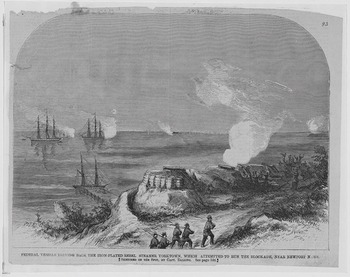
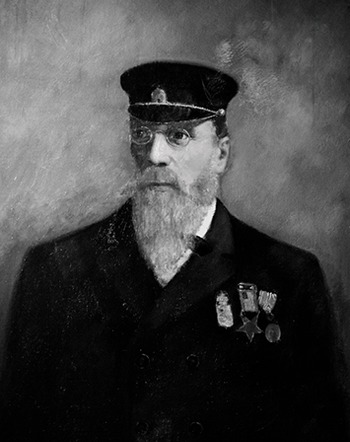


 Open access