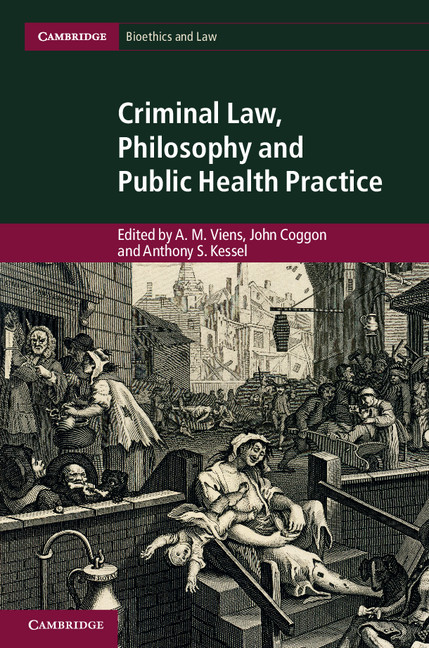

The goal of improving public health involves the use of different tools, with the law being one way to influence the activities of institutions and individuals. Of the regulatory mechanisms afforded by law to achieve this end, criminal law remains a perennial mechanism to delimit the scope of individual and group conduct. Utilising criminal law may promote or hinder public health goals, and its use raises a number of complex questions that merit exploration. This examination of the interface between criminal law and public health brings together international experts from a variety of disciplines, including law, criminology, public health, philosophy and health policy, in order to examine the theoretical and practical implications of using criminal law to improve public health.
Loading metrics...
* Views captured on Cambridge Core between #date#. This data will be updated every 24 hours.
Usage data cannot currently be displayed.
This section outlines the accessibility features of this content - including support for screen readers, full keyboard navigation and high-contrast display options. This may not be relevant for you.
Accessibility compliance for the HTML of this book is currently unknown and may be updated in the future.
