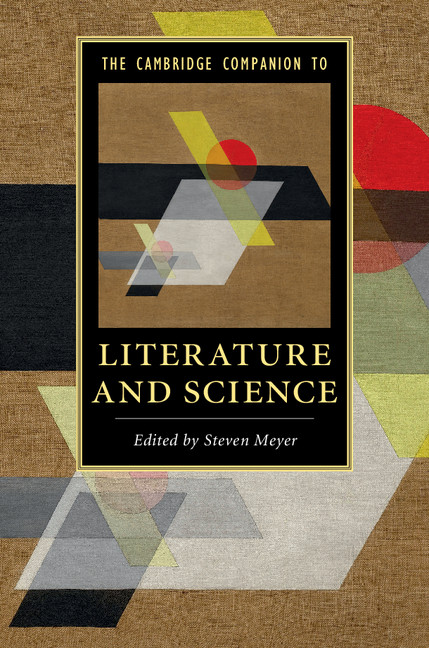

In 1959, C. P. Snow lamented the presence of what he called the 'two cultures': the apparently unbridgeable chasm of understanding and knowledge between modern literature and modern science. In recent decades, scholars have worked diligently and often with great ingenuity to interrogate claims like Snow's that represent twentieth- and twenty-first-century literature and science as radically alienated from each other. The Cambridge Companion to Literature and Science offers a roadmap to developments that have contributed to the demonstration and emergence of reciprocal connections between the two domains of inquiry. Weaving together theory and empiricism, individual chapters explore major figures - Shakespeare, Bacon, Emerson, Darwin, Henry James, William James, Whitehead, Einstein, Empson, and McClintock; major genres and modes of writing - fiction, science fiction, non-fiction prose, poetry, and dramatic works; and major theories and movements - pragmatism, critical theory, science studies, cognitive science, ecocriticism, cultural studies, affect theory, digital humanities, and expanded empiricisms. This book will be a key resource for scholars, graduate students, and undergraduate students alike.
'The Cambridge Companion to Literature and Science is a serious, substantial, and illuminating volume. The contributors are among the most highly regarded and influential scholars in their respective areas of expertise in literature and science. Together, their contributions provide a comprehensive, consistently informative, and frequently enlightening survey of what is an extremely varied and theoretically challenging interdisciplinary field. The volume will be an invaluable resource for students and scholars working in any area of literature and sciences studies.'
Paul Peppis - University of Oregon
'… original, transformative, and enormously valuable as a fresh perspective on the field.'
Martin Willis Source: The British Society for Literature and Science Reviews (www.bsls.ac.uk)
'It is an inclusive and urgent gathering of work, which presents an innovative and transformative broadening of the field of Literature and Science in the twenty-first century.'
Gemma Curto Source: Notes and Queries
Loading metrics...
* Views captured on Cambridge Core between #date#. This data will be updated every 24 hours.
Usage data cannot currently be displayed.
This section outlines the accessibility features of this content - including support for screen readers, full keyboard navigation and high-contrast display options. This may not be relevant for you.
Accessibility compliance for the HTML of this book is currently unknown and may be updated in the future.
