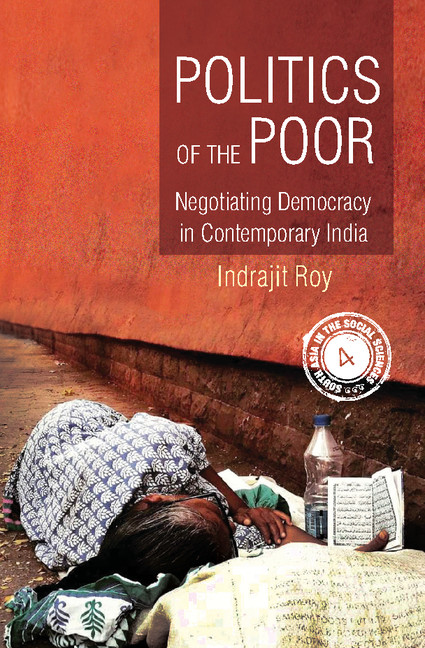

This book challenges the ongoing scholarly debates on poor people's negotiations with democracy. It demonstrates the varied ways in which the poor engage with their elected representatives, political mediators and dominant classes in order to advance their claims. Roy explains the variations by directing attention to the dynamic interaction between the opportunity structures available to the poor and the social relations of power in which they are embedded. He analyses these intersections as 'political spaces' which both enable and constrain popular practices. Through examination of the 'political spaces' available to the poor in four different localities, Roy outlines a new analytic framework to understanding poor people's politics. Based on these observations, the book makes a strong case for an approach to democracy that appreciates people's ambivalences towards democracy. Roy urges researchers of democracy to step beyond either enthusiastic narratives - the inevitability of democracy or apocalyptic accounts of democracy's impending death.
Loading metrics...
* Views captured on Cambridge Core between #date#. This data will be updated every 24 hours.
Usage data cannot currently be displayed.
This section outlines the accessibility features of this content - including support for screen readers, full keyboard navigation and high-contrast display options. This may not be relevant for you.
Accessibility compliance for the PDF of this book is currently unknown and may be updated in the future.
