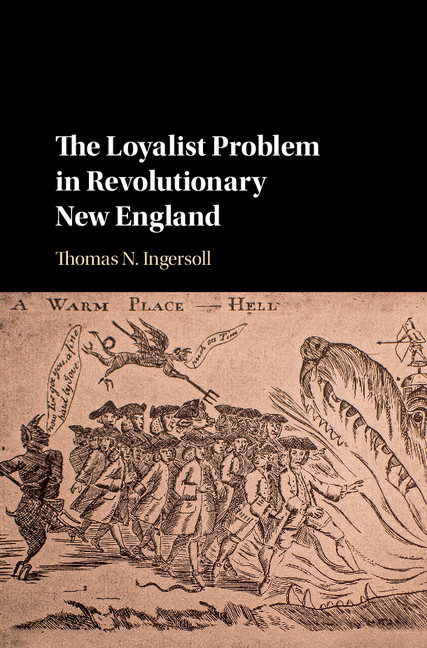

The Loyalist Problem in Revolutionary New England begins with a snapshot of the region on the eve of the Boston Tea Party. The colonists' Republican tradition helped them spark the Revolution, but their special history also threatened the unity of the United States throughout the Revolutionary War, for Loyalists tried to discredit New Englanders as a naturally rebellious people. Yet Ingersoll shows that the rebels never sought to drive the dissenters out of the new nation, and accorded them a remarkable degree of liberal toleration, with the great majority of Loyalists ultimately becoming citizens of the new states.
'Deeply researched and cogently argued, Thomas Ingersoll’s The Loyalist Problem in Revolutionary New England brilliantly exposes the roots of the American Revolution in the original settlement of New England. His book is a must-read for any student of the founding of our nation.'
Graham Russell Gao Hodges - Colgate University, New York
'In this fascinating and provocative contribution, Tom Ingersoll persuasively argues that Loyalism and Loyalists fundamentally shaped the American Revolution. Not only did they push rebels to achieve a high degree of unity, but their continued presence militated for a revolution based on a broad (and admittedly somewhat vague) principles. This interpretation offers readers much to contemplate.'
Carla Gardina Pestana - University of California, Los Angeles
Loading metrics...
* Views captured on Cambridge Core between #date#. This data will be updated every 24 hours.
Usage data cannot currently be displayed.
This section outlines the accessibility features of this content - including support for screen readers, full keyboard navigation and high-contrast display options. This may not be relevant for you.
Accessibility compliance for the HTML of this book is currently unknown and may be updated in the future.
