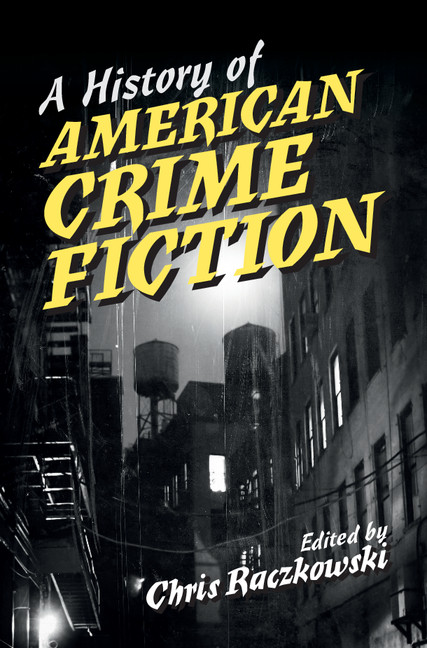

A History of American Crime Fiction places crime fiction within a context of aesthetic practices and experiments, intellectual concerns, and historical debates generally reserved for canonical literary history. Toward that end, the book is divided into sections that reflect the periods that commonly organize American literary history, with chapters highlighting crime fiction's reciprocal relationships with early American literature, romanticism, realism, modernism and postmodernism. It surveys everything from 17th-century execution sermons, the detective fiction of Harriet Spofford and T. S. Eliot's The Waste Land, to the films of David Lynch, HBO's The Sopranos, and the podcast Serial, while engaging a wide variety of critical methods. As a result, this book expands crime fiction's significance beyond the boundaries of popular genres and explores the symbiosis between crime fiction and canonical literature that sustains and energizes both.
'Starting with the Puritans and continuing through to the present day, this collection comprises 25 original essays on American crime fiction, including film and television (The Sopranos and others). Raczkowski (Univ. of South Alabama) goes beyond the usual generic markers of crime fiction …'
Source: Choice
'… this informed, substantive collection does leave us questioning the profiles and line-ups through which we more typically organize its important objects of inquiry. In this respect, the future histories of crime fiction seem well in hand.'
Christopher P. Wilson Source: American Literary History
Loading metrics...
* Views captured on Cambridge Core between #date#. This data will be updated every 24 hours.
Usage data cannot currently be displayed.
This section outlines the accessibility features of this content - including support for screen readers, full keyboard navigation and high-contrast display options. This may not be relevant for you.
Accessibility compliance for the HTML of this book is currently unknown and may be updated in the future.
