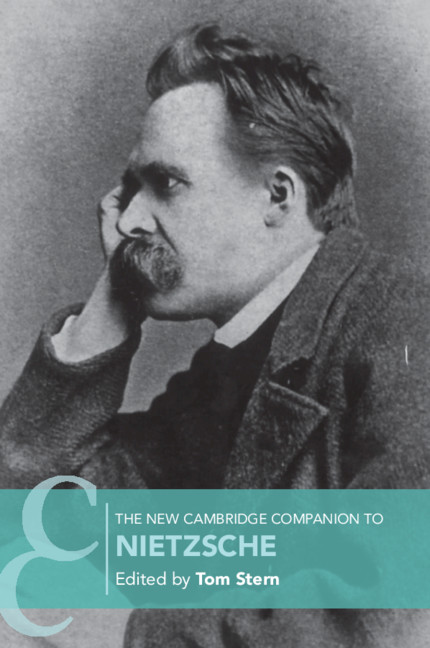

Friedrich Nietzsche (1844–1900) remains one of the most challenging, influential and controversial figures in the history of philosophy. The New Cambridge Companion to Nietzsche provides a comprehensive and up-to-date guide to his most difficult ideas, including the will to power and the affirmation of life, as well as his treatment of truth, science, art and history. An accessible introduction sets out the nineteenth-century background of Nietzsche's life and work. Individual chapters are devoted to significant texts such as The Birth of Tragedy, Thus Spoke Zarathustra, Beyond Good and Evil and On the Genealogy of Morality. Other chapters explore major influences such as Wagner and Schopenhauer, as well as examining Nietzsche's reception and investigating his enduring and often divisive legacy. The volume will be valuable for readers seeking to enhance their understanding of Nietzsche's philosophy and of his role in the development of Western thought.
'… all the essays are of high quality, and combined they provide a generally fine overview of the lay of the scholarly land. This is an excellent resource for nonspecialists … Recommended.'
M. Harding Source: Choice
‘… the volume marks an important step in Nietzsche scholarship …’
Stavros Patoussis Source: The Agonist
Loading metrics...
* Views captured on Cambridge Core between #date#. This data will be updated every 24 hours.
Usage data cannot currently be displayed.
This section outlines the accessibility features of this content - including support for screen readers, full keyboard navigation and high-contrast display options. This may not be relevant for you.
Accessibility compliance for the HTML of this book is currently unknown and may be updated in the future.
