

A national healthcare system has many interconnected sectors composed of public and private organizations. These sectors, circumscribed by the governance structure and the dynamics of the marketplace, interact with each other. China, a nation with a vast landmass and 1.38 billion people, has a complex bifurcated healthcare system that affects the sectors. The financing and delivery systems are different for urban and rural residents. There is no comprehensive book that informs interested people and students about the intricate and multifaceted Chinese healthcare system. The editors of this volume, Lawton Robert Burns and Gordon G. Liu, have undertaken an ambitious endeavor in giving a comprehensive coverage of the sectors in China’s healthcare system. They have assembled a group of experts to write on these different sectors. The editors’ ambitious coverage also extends to the recent Chinese health system reforms since 2009.
In order to understand China’s current healthcare system, its various sectors with their behavior and performance, the reader must grasp the history of Chinese health policies that molded the system. The traumatic shift from central planning to a market-driven healthcare after the liberalization of the Chinese economy in 1978 caused China’s healthcare system to become convoluted with contradictory goals and incentives for healthcare providers and health-product producers such as pharmaceutical companies. The health reforms introduced since 2009 have tried to correct some of the previous haphazard policies and the resulting discordant governance and incentive structures that impacted the various sectors.
China’s health policy that governs the health system vacillates between the public sector goal of equity and the efficiency that a free market with its driving force of profit motive can bring. Equity was the hallmark of China under the Chinese Communist government prior to 1978. The economic liberalization in 1978 sharply reduced government revenues and prompted the switch to private household financing. Nevertheless, the government wanted to assure that most people had access to affordable basic healthcare by regulating health service prices, setting them below the actual costs. At the same time, the government allowed profit margins on drugs and new diagnostic and laboratory tests so that providers could earn income and profits to sustain themselves. Under this policy, the government induced its public providers (i.e., hospitals and clinics) to become for-profit public organizations to garner their income in an unregulated (other than prices) marketplace. To generate income and profits, providers resorted to vast over-treatment, over-prescribing, and over-testing. Meanwhile, the producers (i.e., pharmaceuticals and medical devices), who supplied the technological inputs to the providers operating in this distorted marketplace, responded accordingly. The production and distribution of pharmaceuticals became the key Chinese sector to drive up the cost of healthcare. In short, the development of China’s healthcare system since 1978 can best be understood by viewing it through the lens of China’s attempts to balance equity and capricious market forces.
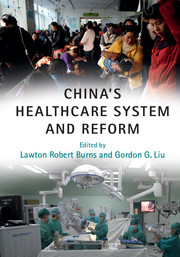
The bifurcation of the Chinese healthcare system between urban and rural was largely due to the financial survival of providers, who mainly depended on what their patients were able and willing to pay (until the 2009 reform). With the huge income disparity between China’s rural and urban residents, partly a result of the residency (hukou) system, the providers in urban and rural communities offer vastly different healthcare in terms of quality and sophistication. When the demand and supply of healthcare depends largely on patients’ income, the affluent and the poor also access vastly different healthcare. In sum, China has third-world as well as first-world healthcare, coexisting side by side, as the cover of this book suggests.
This book organizes the sectors in the healthcare system in three categories: the providers (physicians, hospitals, and long-term care facilities), payers (public and private insurance, drug approval, and reimbursement), and producers (pharmaceuticals, medical technology, and biotechnology). The editors and authors break new ground by bringing the producers into the picture, offering analysis and new information about the less-documented side of China’s healthcare system. The editors also address the critical sector of human resources and medical education.
In sum, China’s Healthcare System and Reform is a groundbreaking book that gives a more holistic understanding of China’s healthcare system by organizing the information into sectors. It will stimulate policy analysts to think about how to design policy to create the “best” governance and incentives for interactions among the sectors. It will stimulate the managers in each sector about how to strategize the future of their businesses in dealing with the other sectors. Lastly, this book paves the way for researchers to examine the dynamic interactions between the sectors, a desired effort in deepening our knowledge of healthcare systems globally.
