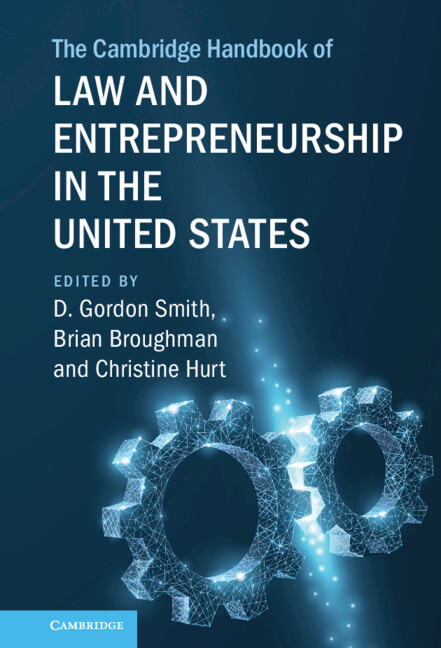

Law plays a key role in determining the level of entrepreneurial action in society. Legal rules seek to define property rights, facilitate private ordering, and impose liability for legal wrongs, thereby attempting to establish conditions under which individuals may act. These rules also channel the development of technology, regulate information flows, and determine parameters of competition. Depending on their structure and implementation, legal rules can also discourage individuals from acting. It is thus crucial to determine which legal rules and institutions best enable entrepreneurs, whose core function is to challenge incumbency. This volume assembles legal experts from diverse fields to examine the role of law in facilitating or impeding entrepreneurial action. Contributors explore issues arising in current policy debates, including the incentive effect of legal rules on startup activity; the role of law in promoting or foreclosing market entry; and the effect of entrepreneurial action on legal doctrine.
Loading metrics...
* Views captured on Cambridge Core between #date#. This data will be updated every 24 hours.
Usage data cannot currently be displayed.
This section outlines the accessibility features of this content - including support for screen readers, full keyboard navigation and high-contrast display options. This may not be relevant for you.
Accessibility compliance for the HTML of this book is currently unknown and may be updated in the future.
