

…Possibilities in the direction of any permanent improvement in price (of quinine)…one being…constantly increasing the consumption of quinine, combined with the opening up of the world's dark places, which is so steadily going on year by year, month by month, almost day by day, may in the end lead to consumption overtaking supply…Footnote 1
Malarial parasites…are as natural amongst primitive races as flea infestation is to a dog.Footnote 2
The various social lives of government quinine in British India were not confined within the walls of insulated colonial factories and laboratories. Quinine was reconstituted through the predicaments and processes of circulation. The decades following 1890 were marked by a unique phase in the history of colonial governance in British India. They witnessed unprecedented governmental rigour in enforcing consumption of the imperial drug quinine across the subcontinent, whilst the corresponding diagnostic category of malaria itself was redefined beyond recognition: from an elusive cause of many diseases to the name of a specific mosquito-borne fever disease. Ironically, therefore, the colonial state retained and enforced the drug quinine as a quintessential remedy at the precise moment when the corresponding problem of malaria was radically reinvented and ascribed with newer meanings. This converged with official lamentation about an enduring slump in the wider imperial economy of quinine, apparently the result of an excessive supply of cinchona barks from Dutch Java into the European markets, overproduction of quinine and a consequent shrinking of demands. British India emerged, by the 1910s, as the world's largest quinine consuming market.
Many scholarly works have explained such reconfigurations of knowledge about malaria by focusing on the agency of individual scientists and their networks of collaborators.Footnote 3 Knowledge of malaria and quinine (extracted from the bark of cinchona plants) has usually been studied as parts of separate and mutually exclusive histories.Footnote 4 Early twentieth-century colonial officials involved in killing mosquitoes and those engaged in distributing quinine have appeared in prevailing studies as antagonistic and oppositional groups.Footnote 5
In the 1900s, quinine, mosquitoes and malaria emerged as intrinsic components of shared, symbiotic and interdependent histories.Footnote 6 The social and physical attributes associated with quinine were refashioned once it was made to interact in the 1890s and 1900s with a range of situations and sites, including colonial factories, prisons, plantations, military barracks, high schools, mofussils, government offices, post offices, imperial conferences, bazaars, legal codes, forms of punishments and primary school curricula. Meanwhile, mosquitoes had emerged as a subject of enduring attention in the disparate fields of entomological science, sanitary governance, plantation economy and vernacular literature. The reconfiguration of malaria into a mosquito-borne fever disease at the turn of the century can be attributed to the metamorphoses of mosquitoes into a subject of overwhelming public spectacle. Unprecedented enthusiasm relating to the newer meanings conferred upon mosquitoes and malaria augmented rather than displaced the significance of quinine as an object of enforced consumption in various parts of British India.
Such historical imbrications of mosquitoes, quinine and malaria were produced and sustained by the enduring overlaps between the worlds of pharmaceutical commerce, scientific knowledge, colonial governance and vernacular cultures. In these many-layered worlds held together by Empire malaria, mosquitoes and quinine were reshaped as vibrant, commodious and entangled entities, deserving of attention, intervention and investment. At the same time, while being produced by the discourses and enactments of imperial politics, mosquitoes, quinine and malaria emerged as indispensable subjects and constituents of Empire. This chapter continues to engage histories of empire with science studies to suggest the ways in which histories of insects, commodities, disease and empire interacted and shaped one another. It goes beyond celebrating mosquitoes and quinine as historical actors, and more critically examines the processes and perceptions through which these were endowed with enduring medical attributes in the imperial archive and beyond. Thus, it raises methodological questions about how the historical inscriptions of nonhumans (like mosquitoes or quinine) can be narrated while retaining a critique of the links between empire and the production of scientific knowledge.
‘Cheapest Possible Quinine’
By the early 1890s, government factories based in Mungpoo and Nedivattam claimed that they were capable of supplying pure quinine at the cheapest possible price. The validity of these claims was queried by a number of contenders. Indeed, the prices levied by these factories on quinine were subjected to vigorous scrutiny in the following decades. The managers of these factories, in turn, continued to reiterate programmatic statements, which had been associated with the introduction of cinchona into British India since the 1860s. These factories manufactured quinine, it was suggested, not for profit but as charitable ways to offer medical relief. Such efforts presumably reflected the benevolent and humanitarian face of the colonial state in British India. The government resolved to distribute quinine at much less than the ruling market rates – at or even below the cost of production. The possibility that commercial ‘losses’ could be incurred was acknowledged. Such ‘losses’, it was promised, ‘shall be gladly borne by the government’.Footnote 7
Despite this, contemporary government correspondences reveal sustained efforts towards averting such losses. Officials had to deal with allegations about the higher price of quinine supplied from the factories at Mungpoo and Nedivattam. The price of government quinine allegedly exceeded the rates charged by private sellers in European markets from the early 1890s.Footnote 8 Writing in 1892, the civil surgeon of Akyab in Burma, for example, lamented that the price of government quinine was higher than that charged by European dealers.Footnote 9
It is doubtful whether the rates charged by the government factories in British India were ever considered an index of fair, normative price of quinine. The managers of the factory at Mungpoo claimed to have invented a process for manufacturing the cheapest possible quinine in 1889. By 1890, official files began to reflect efforts at curbing the rising price of government quinine, by placing greater trust on the prices charged by influential private operators in Europe. It was decreed in 1890, for instance, that government quinine should be ‘offered’ at the ‘market rate quoted for Howard's quinine by the latest mail from London, converted into Indian currency at the annual rate of exchange for the adjustment of financial transactions between the Imperial and Indian governments’.Footnote 10
In course of the following two decades, the price of government quinine remained consistently higher than the rates charged by private European firms. In July 1909, Rai Saheb B. L. Kabra, who worked as the Chief Medical Officer for the Poonch State, released a comparative table of prices of sulphates of quinine levied by various firms. These included besides the government factory in Calcutta, Burroughs Wellcome and Co. and Dakin Brothers Limited of London, Ferries and Co. of Bristol, and agents for a German manufacturer in Bombay. The table suggests that alternative sources of quinine continued to supply the drug at cheaper rates.Footnote 11
In the official papers the higher price of government quinine was justified in terms of its ‘assured purity’. In June 1892, David Prain, then acting superintendent of the royal botanic gardens in Calcutta provided an elaborate defence of the ‘slight difference’ in the price of quinine. He referred to the British pharmacopoeia to suggest how the commercially agreeable form of the drug was required to contain at least 95 per cent of the alkaloid, quinine. He claimed that the percentage of ‘pure alkaloid’ was higher in the government quinine than in the ‘best commercial samples’. ‘The extra pie’, he argued, ‘procured the purest quinine available’.Footnote 12
In August 1897, George King warned of extensive practices of adulteration in the medical market. King suggested that the drug offered by the ‘banneah and druggist’ in the stores possibly contained little or no quinine. Under the prevailing circumstances, he thought, the bazaar quotations for Howard's or Herring's quinine had to be considered with caution. He alleged that shopkeepers in the Calcutta bazaar frequently adulterated or even replaced quinine with inferior preparations of the cinchona barks such as muriate of cinchonine or sulphate of cinchonidine. These ‘inferior preparations’, he claimed, were indistinguishable both in appearance and taste from quinine except by chemical analysis. Empty quinine bottles with Howards’ or Herring's labels on them, he feared, could bring a price in to the bazaar far beyond their intrinsic value. By contrast, King considered government quinine which was distributed by carefully designated officials as ‘absolutely pure’.Footnote 13
A range of medical bureaucrats considered the higher price of government quinine not only unavoidable, but also desirable, since it conformed to certain political commitments of the British government. The sale of government quinine below the market rate was shown to have been detrimental to the ideologies of free trade and to the profit-maximising interests of private enterprise. It was feared it might lead to unpleasant competitions with private firms. Excessively cheap government quinine could have driven ‘the private firms out of the field’ by undercutting them. ‘Unjustifiable interference’ with private enterprise, it was argued, was ‘opposed to the policies of the government of India’. The higher price of government quinine was thus projected as one way of ensuring the prospects of privately initiated quinine trade in British India.Footnote 14
The bureaucrats preferred uniformity in the pricing of the drug to lowering the cost of government quinine. Concessional rates, it was apprehended, were liable to be abused by middlemen interested in speculating in quinine. It was suggested that ‘native druggists’ or ‘traders with enterprise and capital’ could exploit differences in price. Such groups could buy up cheaper government quinine at concessional rates and retail them at profit. Enforcing uniformity in the price of quinine was thus highlighted as one way of purging corrupt speculative ventures out of the market.Footnote 15
However, the most persistent set of justifications about the higher price of government quinine referred to the cinchona plantations in British India. The state-owned plantations in British India were shown to have been in decline since the mid-1890s. In the ten years ending in 1894–1895, the total number of plants in the government plantations allegedly fell from 171/4 million to 93/4 million.Footnote 16 Tea planters in the Darjeeling Terai who were earlier drawn towards cinchona cultivation were now contemplating investments in cocoa plants.Footnote 17 Even the government plantation and factory at Mungpoo began devoting some space to the experimental cultivation of cocoa and manufacture of cocaine.Footnote 18 As a result, the most subsidised and concessional source of raw materials for the state-run quinine factories seemed gradually to wane and the factories were compelled to fall back on alternative sources in the open, local and competitive market within British India.
This effectively meant that government quinine factories in Madras and Bengal emerged as rival buyers in a cinchona market dominated by private planters.Footnote 19 This situation was invoked recurrently well into the second decade of the twentieth century to explain the ever-increasing price of government quinine. It was suggested that demand in British India for quinine had outstripped the ‘producing powers’ of the government cinchona plantations. As a result, the government factories had to purchase expensive bark from private growers. This in turn, it was argued, caused an abrupt increase in the cost of production.Footnote 20
By 1908, the price difference between quinine manufactured in government factories in British India and its counterparts in Europe was sharp. In 1908, government quinine in British India reportedly sold at Rs. 15–10 per pound, while Burroughs Wellcome and Co. had agreed to supply the drug wholesale at Rs. 9–8 per pound.Footnote 21 In 1909, quinine supplied from official sources in British India was shown to vary between Rs. 12 per pound and Rs. 13–10 per pound. By contrast, Europe-based private distributing firms including Messrs Burgoyne Burbidges and Co., Messrs Smith Stanistreet and Co., Messrs Peake Allen and Co. sold quinine in British India at around Rs. 10 per pound.Footnote 22
In view of this, officials in charge of various government institutions in British India began contemplating the direct purchase of quinine from the open market. The government of East Bengal and Assam, for instance, started negotiations with Messrs Parke Davis and Co., an American firm, for an annual supply in April 1910.Footnote 23 Messrs Turner, Morrison and Co. had been sugar merchants based in Calcutta with considerable stakes in Dutch Java. In January 1907, it was proposed that they could, if required, act as a liaison between the Bengal government and manufacturers of quinine based in Dutch Java.Footnote 24 In September 1909, the Superintendent of the District Jail at Aligarh purchased 2000 pounds at Rs. 8 per pound from Messrs Burroughs Wellcome and Co.Footnote 25 Such officials found it strange that profit-seeking business firms could supply quinine cheaper than factories harbouring charitable pretensions.Footnote 26 These years witnessed ‘careful consideration’ of proposals concerning the discontinuation altogether of government cinchona factories and plantations in British India.Footnote 27
A range of colonial bureaucrats, including managers of the reportedly dwindling government cinchona plantations in British India, resisted such proposals. They described the availability of cheaper varieties of quinine in the open markets of Europe and Java as a transitory phase in the history of the commodity. The gradual deterioration of the government cinchona plantations in British India, it was suggested, coincided with a phase of overproduction of cinchona barks in the island of Java, which had glutted the European market. In 1906 alone Java exported more than 16 million pounds of barks; and between 1898 and 1904, shipments from Java averaged 12 million pounds annually. Such enormous outturn was described as unprecedented and which considerably exceeded the demand for the barks. This, it was argued, initiated a cascading effect which caused the price of quinine in the European markets to fall drastically.
Yet, British Indian bureaucrats like A. T. Gage, the superintendent of the cinchona cultivation in Bengal, asserted that a return of high price of quinine in the open European market was imminent. An agreement between dominant Javanese planters deliberately restricting the supply of cinchona barks, it was feared, could reinvigorate the price of quinine in the wider imperial world. Besides, shifts in the priorities of the Javanese planters could displace cinchona by sugarcane or rubber as the predominant object of investment. It was thus predicted that government quinine manufactured in British India would not retain its higher price indefinitely.
Bureaucrats like Gage considered it imprudent to discontinue government plantations and factories under such circumstances. Instead, they recommended that the government should purchase superior breeds of Javanese cinchona barks at cheaper rates from Holland. However, this was to be considered a ‘temporary expedient and not a permanent policy’.Footnote 28 It was further instructed that the government plantations in British India should not only be retained, but also extended. Potential sites for new state-owned cinchona plantations in North Bengal, the North East and the Andamans were contemplated.Footnote 29 The retention and extension of government cinchona plantations in British India were conceived as measures to guarantee adequate supply of cinchona at reasonable rates once imports from Java shrank. Meanwhile, the additional expenditure involved in purchasing from the factory and retaining the government plantations, it was suggested, ‘must be regarded as the premium for an insurance against the creation of a monopoly’.Footnote 30
‘Within the Reach of the Poorest’
By 1905, the significance of British India as a cinchona-growing and quinine-manufacturing territory was on the decline. Statistics released at the beginning of the twentieth century situated it amongst many colonial locations including Ceylon, Africa and South America where governments had initiated cinchona plantations. By then, however, the subservience of British India to the superiority of Dutch Java in the world of cinchona planters was complete.Footnote 31 Java was reported to produce more than 90 per cent of the world's cinchona plants in the first decade of the century,Footnote 32 whilst factories in British India did not figure in a list of fifteen leading quinine factories in the world released in 1905.Footnote 33
Nonetheless, British India remained significant in the world of quinine trade. The basis of that significance, however, had shifted considerably. British India figured in many accounts as one of the largest markets for quinine in the world in the first decade of the twentieth century.Footnote 34 In 1912, British India was reported to account for about one-sixth of the world's annual quinine consumption, and was one of the world's most dominant importers of quinine. Despite the government's persistence with Indian cinchona plantations and quinine factories, in effect, only 12 per cent of the enormous consumption was supplied by the dwindling factories in India.Footnote 35
The years 1890–1910 witnessed declining prices, shrinking demand and overproduction of quinine in most of the world. Private firms and colonial governments searched for new markets for the drug. In this context, extensive distribution and effective governance of quinine appeared as much more relevant than planting cinchonas and manufacturing quinine. Colonial governments in British India initiated elaborate and enduring ways of distributing quinine in these decades, which yielded the desired results. In sharp contrast to the situation elsewhere, the demand and price of quinine in British India was higher than ever before. As a result, British India remained significant in global quinine trade. ‘Constantly increasing the consumption of quinine’ appeared as one of the most plausible ways of effecting a ‘permanent improvement in the price’ of the commodity.Footnote 36
Bureaucratic correspondences in British India in these decades reveal an irony. The governments within British India were at one level tied with the wider efforts of ‘improving’ the price of quinine. At the same time, the officials felt compelled to lament the higher price of government quinine in British India. This contradiction emerged from the government's compulsion to speak in the language of charity whilst acting in the interests of profit.
This section and the next explore how quinine was reconstituted through the government's efforts at distributing, popularising and ensuring its consumption in British India. The production of quinine was thus not confined within the walls of factories and laboratories. But rather, quinine was transformed through the processes and predicaments of circulation.
The energies and investments of the colonial state were geared towards sustained attempts at distributing the drug in 1890s and 1900s. Various categories were invoked to describe the vigour, extent and depth of the efforts to circulate quinine beyond the factories, hospitals, urban enclaves and official institutions. Quinine emboldened the government to reach out to the ‘remote districts,’Footnote 37 ‘the poorest,’Footnote 38 ‘poorer classes,’Footnote 39 ‘the interiors,’Footnote 40 ‘small road side stations,’Footnote 41 ‘the general public,’Footnote 42 ‘the Santhal Parganas,’Footnote 43 ‘remote’ locations within British India, which apparently lay ‘beyond the reaches of the market’.Footnote 44
The project of reaching out to the ‘genuine consumers’,Footnote 45 however, was not an invention of the 1890s. In the late 1860s and the early 1870s, successive Sanitary Commissioners of the Bengal Presidency prescribed various ways of selling imported quinine in the ‘mofussil’ at a reasonable price.Footnote 46 These efforts were sporadic and fleeting. Sustained official efforts were resumed and reinforced only in the 1890s. Prior to this, imported quinine and its indigenous substitutes circulated in the ‘interiors’ along the networks of a proliferating vernacular medical market. As I will explore in the epilogue, cures and potions for malarial diseases constituted a thriving vernacular market, for instance, in Bengal. The colonial state's efforts in the 1890s did not represent the first or the only attempts towards distributing quinine. The routes conceived by the colonial state for the convenient circulation of quinine had been traversed already by various actors in the vernacular markets. However, after 1890 the colonial governments designed strategies of distributing quinine with unprecedented vigour.
The reinforcement of state initiatives in the early 1890s began with an acknowledgment of past failures. The sales of imported quinine, it was alleged, had been so far confined within the district and subdivisional headquarters. ‘Special arrangements’ were now proposed to bring quinine ‘within easy reach of the rural population…to popularise the use of quinine amongst the poorer classes in the provinces’.Footnote 47 As noted earlier, the colonial state pledged to distribute government quinine in the ‘interiors’, which figured as locations without any druggists’ shops or easy means of transport.Footnote 48 But the distribution of quinine, government officials feared, was not necessarily followed by acts of consumption. To flesh out such apprehensions, the prospective consumers in the interiors were variously stereotyped in the official files. Attempts to enforce the consumption of quinine in the 1890s thus emerged as yet another occasion for the imperial projection of the inhabitants of the interiors as ‘backward and conservative in their habits and ideas’, ‘averse from innovations’ and characterised by ‘primitive ignorance’.Footnote 49 The governments, therefore, exercised considerable care in selecting agents for distributing quinine: Who were best placed to act as vendors and to convince the intended consumers about the merits of consuming quinine? Answers to this question revealed the colonial governments’ various understandings about how questions of political legitimacy and acceptability might have been perceived by the intended consumers.
European officials and physicians were assumed to have authority over colonised Indian consumers. Such officials, it was suggested, were considered exotic characters and most frequently associated with institutional power. Insistence from such officials could carry the weight of a regulation.Footnote 50 However, it was eventually decided that it would be prudent to engage the lowest rung of officials from within the different communities. The purchase and consumption of quinine, it was suggested, should not appear as an outcome of rigorous punitive imposition but of voluntary appreciation. The arrival of quinine then mustn't be projected as an exceptional event in the life of communities inhabiting the ‘interiors’, but accommodated instead within the prevailing rhythms of the everyday as an effortless and routine process. This explains why officials recommended that quinine required to be ‘sold at places where people were likely to frequent in ordinary course of business’.Footnote 51
In the early 1890s, the elaborate distribution of government quinine began in Bengal and through the ‘pice packet system’. According to codes of monetary circulation in contemporary British India, one pice referred to three pies and ‘to the smallest coin in daily use amongst the public’. Quinine manufactured in the government factory at Mungpoo was to be made up into very small packets. Each packet, according to government instruction, was to contain 5 grains, worth 1 pice each. ‘Packing factories’ or central depots were set up at the Hazaribagh Reformatory School and the jail depot at Calcutta. Juvenile delinquents at the school and convict labourers at the depot were entrusted with receiving quinine from the factory, preparing the envelopes and filling them with quinine.Footnote 52
The government of Bengal initially decided to sell quinine through all ‘public offices in the interior of the districts’, such as police outposts, dispensaries and offices of the managers of wards’ estates. However, the intricate network of post offices was eventually considered the most ‘convenient and effective agency’ for the enforcement of the consumption of quinine amongst the inhabitants in the interiors. The consent of the Post Master General of Bengal was sought. It was recommended that the packing factories at Hazaribagh and Calcutta would supply every post office in Bengal with a permanent stock of a sufficient number of packets. When a postmaster found that his stock was running short he was directed to requisition the packing factory for a fresh supply. The central depots were expected to comply with the requisition order by sending the required number of packets which the postmaster paid for on receipt. The postmaster was expected to finance the procurement of new supplies from the sale of previously received quinine. A nominal remuneration was proposed to induce the postmaster to encourage sales, initially fixed at one anna for every sale amounting to one rupee.Footnote 53
By the late 1890s, this intricate and elaborate ‘system’ had been extended to almost every province within British India, including Assam, Burma, Madras, Central Provinces, Sind and Baluchistan, Punjab, United Provinces, Bombay, North Western Provinces and Oudh. The government factory at Madras was responsible for the supply of quinine to Burma, the United Provinces, Central Provinces and Bombay. Quinine was supplied to the remaining provinces from the factory at Mungpoo.Footnote 54 More packing factories were soon set up at jails in Aligarh,Footnote 55 Mandalay and Rangoon.Footnote 56 In official correspondence, the post office figured as a site which the ‘poorer classes in the interiors’ were likely to frequent ‘in ordinary course of business’. The village post office was described as ‘a popular place of meeting, where people assemble to hear the news and discuss matters of common interest.’ The postmasters and the postal peons, it was hoped, would be able to conduct sales of quinine without interfering with their ‘ordinary duties’.Footnote 57 The village postmen were instructed to carry a few quinine powders with them when making their rounds. This was conceived as a convenient way of bringing quinine to the ‘doors’ of the malarial patients.Footnote 58 The government considered it more prudent to employ postmasters and the postmen over the subordinate revenue officials and the lower rank policemen as vending agencies in the villages. Postmen were considered better distributed across the rural interiors of the districts in British India than officials associated with the revenue or police departments. The ‘universal’ presence of the subordinate postal officials in the villages, it was argued, aroused much less suspicion amongst the people than the occasional and significant visits of the police or revenue officials. The ‘poor in the country’, officials suggested, lived in ‘constant fear’ of the police and the revenue officials. The government was keen to resist the impression that increased sales of quinine were enforced by the imposition of authority or coercion by the colonial state: ‘Postmasters are free from this objection; postmasters are universal, they exercise no authority, they are poor men as a rule, and the inducement held out in the shape of commission will be an incentive to pushing the sales’.Footnote 59 The recruitment of lower vernacular officials in the postal department, government officials thought, would make the distribution of quinine effortless, routine, regular and more acceptable to the people. These intentions are echoed in a contemporary signboard (see Figure 5.1) issued by the postal department across eastern India, presently in the custody of the Philatelic Museum at the General Post Office in Calcutta, which portrays quinine as a panacea gifted by Hindu deity Lord Shiva to the villagers of Bengal.
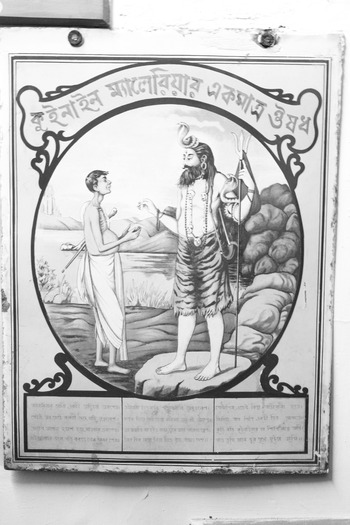
Figure 5.1 Signboard on malaria containing the caption ‘Quinine the only cure for malaria’.
The village postmen were also instructed to disseminate awareness about the ‘pice-packet system’ by pasting relevant notices on the notice board adjoining every post office and circulating copies,Footnote 60 often printed in the ‘vernacular’ languages.Footnote 61 Instructions to the potential consumers, price and dose were inscribed on a paper which was used to wrap every pice packet of quinine. The information was eventually translated into Bengali, Marathi, Gujarati, Kanarese, Sindhi,Footnote 62 TamilFootnote 63 and Burmese languages.Footnote 64
Strategies of quinine distribution in various provinces did not, however, blindly replicate the ‘system’, initiated in Bengal. Nor were strategies of enforcing the consumption of quinine subsumed within the intricate networks of the postal department. The ‘pice-packets’ enabled a flexible system, which could enlist, whenever required, a variety of familiar figures in accordance with the varying provincial situations in different parts of India and beyond. In Burma, for instance, a range of agents was considered in November 1892, including the Myooks or subordinate magistrates in charge of towns, forest officers, sergeants of police stations, thugyis or headmen of circles or villages, bazaar gaungs or headmen, and vaccinators. It was also recommended that the sale of quinine could be popularised by the police constables on beat patrol. These vendors were to be supplied with one parcel each containing 102 packets of quinine. The worth of every parcel was estimated at Rs. 1–9–6. However, the vendors were likely to receive it at Rs. 1–8–0 per parcel. The balance of 1 anna and 6 pies was to be considered as remuneration for the vendor's efforts.Footnote 65 Later this profit margin was increased.
Dissemination of knowledge about the drug through the medium of released convicts was also proposed, besides extensive distribution of handbills. Non-official vendors of quinine, like stallholders and ‘respectable shop keepers’ were considered for almost every bazaar in the province.Footnote 66 Within Bengal itself, the postal network apart, quinine was sold through the railway stationmasters at ‘small roadside stations’, vaccination establishments and the dispensaries located in the ‘mufassals’. Private employers, including zamindars, indigo and tea planters were also permitted to procure quinine from the Superintendent of Jail Manufactures and sell the drug.Footnote 67
The government devised means of distributing quinine in locations not connected by the post. In the ‘interiors’ of Sind and certain native states, quinine was distributed through the political officers or political agents, circle inspectors, patel of villages and salt licensees.Footnote 68 In June 1905, the chief commissioner of Assam recommended the enlisting of village schoolmasters, village headmen and village chaukidars as salesmen of quinine in the rural areas of the province.Footnote 69
Quinine in the ‘interiors’ figured as an agent of Empire. Its arrival was both mobilised and predicated upon a series of transformations, at least momentarily: prisons became packing factories, juvenile delinquents became convict labourers, released prisoners turned into reformed volunteers, post offices became dispensaries, peons became vaccinators and an entire network of mofussil appeared co-opted into the state's regime of distribution as ‘vending agents’. Quinine emboldened the government with an object (and an objective) with which to reach out to the interiors. Government correspondence, in turn, described quinine and the interiors as alien to and yet intimately adaptive with one another.
Such arrangements for governing a ‘thing-in-motion’, conjured up fetishist intimacies between quinine and the people inhabiting the interiors.Footnote 70 Quinine was projected as compatible with the prevailing bonds of a shared language, locality, community and the rhythms of daily life. Apart from resulting in a communalisation of quinine, exigencies of circulation reconfigured some of its physical attributes. However, as the following section shows, as a commodity-in-motion, quinine was not only reconstituted, but also, in turn, exposed fractures and tensions in between provincial governments, besides revealing various imperial prejudices.
Policing Purity
In establishing new distribution networks, the government was keen to police against the possibility of corruption of the purity of quinine. These anxieties went back to the early 1880s, when the state had begun distributing anti-malarial drugs in the form of cinchona febrifuge. These acts of policing often resulted in punishment. In January 1882, for example, Dr Bensley, the civil surgeon of Nuddea in the Bengal Presidency, was suspended for misappropriation of cinchona febrifuge in the interest of private trade. He gave the drug a Bengali name – ‘jvarer mahaushadhi’ or ‘the sovereign remedy for fever’ – altered the label on the seal and adopted his own mode of accounting. These measures, Bensley argued, were deliberate innovations to attract a rural Bengali clientele belonging to ‘all classes’. He mentioned that as part of his innovative strategies of distribution he had trained and sent out 33 kavirajas to various parts of the district with the mixture: ‘My object in carrying out this plan was simply to place the remedy within the reach of those who had no medical aid, and would probably have perished’.Footnote 71
Nonetheless, the higher authorities went ahead with the punishment. They did, however, acknowledge the merits of some of the measures initiated by Bensley. In view of the remarkable popularity of the drug dispensed by Bensley, they observed, ‘the people seem to prefer a made-up draught to the Cinchona febrifuge’. Innovations by officials located in the interiors often made the distribution of state-manufactured drugs more convenient. This opened up the intriguing administrative challenge of distinguishing between acceptable forms of innovation and corruption. Such tensions survived and were augmented in the following decades with the state-initiated efforts of distributing quinine into the interiors.Footnote 72
Retailers and speculators also were often suspected of buying subsidised government quinine in bulk in the garb of ‘genuine consumers’. It was feared that they could then package it as more expensive forms of European quinine and re-sell it at greater profit. Official files referred to ‘low paid compounders’,Footnote 73 ‘druggists’, ‘petty native chemists in towns’ as the potential suspects.Footnote 74 Preventing the identity and ‘purity’ of government quinine from being tampered with emerged as issues of consistent concern.
Labelling the physical appearance of government quinine with an inerasable and distinctive marker figured as a credible way of ensuring purity. To that effect, most of the quinine manufactured by the government in Madras was coloured pink between 1893 and 1904. Pink colour thus emerged as a label for government quinine manufactured in Madras while serving as an assurance of purity.Footnote 75 The ‘caste natives’, it was claimed, considered ‘pinkness’ as a sign of legitimate, credible, established, recognised, trustworthy, protected version of pure quinine.Footnote 76 Private manufacturers of quinine based in Europe, including the Howards, sought permissions repeatedly from the Indian government to export ‘pink coloured quinine’ into India. These requests, however, were turned down.Footnote 77
Pink quinine revealed interprovincial tensions between Madras and Bengal. In March 1904, David Prain, then Director of the Botanical Survey of India and erstwhile Superintendent of the Botanic gardens in Calcutta, questioned the prudence of such acts of colouring. He failed to appreciate any ‘excessive virtue’ in pink quinine. He lamented the conversion of pink quinine into an ‘official fetish’, and instead described ‘white’ as the ‘natural colour of pure quinine’. Any additional colouring of the drug, he feared, would constitute a more expensive and long process.Footnote 78 Officials representing the two provinces differed on the question of ‘natural colour of pure quinine’. In a polemical retort, a bureaucrat based in Madras refused to consider ‘whiteness’ as the ‘natural colour’ of quinine. He argued that like pink quinine, ‘whiteness’ was manufactured through long, tedious and expensive processes.Footnote 79 The Director General of post offices, in turn, showed that the colour of the quinine supplied by private European manufacturers and sold by druggists across British India was white. Contrary to the claims of officials representing Madras, he thought that the public more generally associated the best forms of the drug with whiteness.Footnote 80
By the late 1900s, antagonism between officials reached new depths over the difference in price charged for government quinines manufactured in the two provinces. In January 1909, the price for quinine supplied by the Bengal government was fixed in accordance with the average wholesale price of Howard's quinine prevalent in the preceding year. This amounted to Rs. 10 per pound. Meanwhile, the Madras government broke away from the prevalent convention of determining the price of government quinine. Instead, it proposed to adopt a ‘different system’ which was to be regulated by the cost of production. Accordingly, a price of Rs. 8 per pound was set for government quinine manufactured in Madras. This was considered much lower than the existing market rates. This could, it was alleged by Bengal, disturb the uniformity in the price of the commodity, drive private enterprise out of the British Indian market, and undermine the credibility of the government factory in Bengal. For a while, officials in Bengal protested in vain for the price of Madras quinine to be raised. Thereafter they turned combative.
Pink quinine could be sold at the cheaper price, it was alleged on behalf of the Bengal government, as it was relatively impure: ‘The Madras article contained only 75 per cent of the sulphate of quinine, the rest being water crystallisation; the percentages for Bengal quinine being 98 and 2, and for Howard's quinine 92 and 8, respectively’.Footnote 81 Successive chemical analyses conducted in Europe and India under the initiatives of the Bengal government suggested that pink quinine was impure.Footnote 82 It was alleged to contain a cinchonidine content of 7.84 per cent. This appeared to exceed the permissible limit allowed by the British pharmacopeia, that is, 3 per cent. Thus, pink colouration, it was suggested, could not be considered a guarantee of purity.Footnote 83 The impression of ‘pinkness’ as an indicator of purity was, according to A. T. Gage, Superintendent of the cinchona factory in Bengal, ‘misleading, a delusion, a snare’.Footnote 84 Pinkness, according to these officials, provided a distinctive label for the quinine manufactured on behalf of the Madras government, but could not serve as proof of the purity of the commodity.Footnote 85
While British officials in India were debating the physical appearance of pure quinine, greater clarity emerged on the colour of less pure and ineffective forms of quinine. Once exposed to ‘adverse conditions’ in the ‘plains of India’, it was argued in January 1912, quinine – ‘no matter of what brand’ – could be converted into ‘an inert form known as quiniretin’. Enduring exposure to heat and light, it was suggested, could initiate a series of ‘molecular transformations’ in the drug: ‘Quiniretin is the name given to an undefined brown product of the action of sunlight on an aqueous solution of quinine alkaloid’.Footnote 86
Colouring quinine was certainly not the only safeguard adopted by the governments in British India towards protecting its purity from potential abuse, when the drug was being circulated beyond the secure confines of chemical laboratories and factories. A range of other steps was considered to protect the commodity from being retailed or abused. It was recommended, for instance, that no consumer should be sold more than a certain number of packets of government quinine.Footnote 87 Each packet contained very small quantities of quinine varying from 5 grains to 7 grains. ‘The small profit and great labour involved in opening an infinite number of small packages’ was considered by itself a significant disincentive against fraud. To guard against tampering with quinine packets or the substitution of quinine by inferior articles, routine inspections of post offices were conducted.Footnote 88 A variety of government stamps were attached upon ‘firmly closed covers’ and packets to secure the purity of the product. They usually included a seal of the ‘royal arms’Footnote 89 or a seal bearing the mark of the packing factory, for example, ‘Yerrowda Prison’.Footnote 90 It was often suggested that a certificate endorsing the purity of the drug be enclosed in the packets, along with relevant instructions for the prospective consumers.Footnote 91 After sale, strict vigilance was recommended to prevent the recycling of empty labelled packets for fraudulent purposes.Footnote 92
These careful safeguards notwithstanding, desperate acts of fraud – ranging from attempts to forge government labels and packets to selling adulterated forms of the drug – continued to figure in official correspondence. One such case was reported in May–June 1905. Mahim Chandra Dutta and his son Shashi Kumar were joint proprietors of a grocery business, and owned a shop at Sapar Hat in the jurisdiction of Matbaria thana in the Pirojur subdivision of the Backergunge district in Bengal. On the days of the weekly bazaar, they sold groceries at the Tushkhali Hat. A branch post office located in Tushkhali sold government quinine in pice packets of 5 grains each to the public. In June 1904, the postmaster of that branch reported to the manager of the jail depot in Calcutta accusing Sashikumar of engaging in fraudulent acts. For more than a year, Sashikumar had been apparently selling a ‘white powder’ in packets exactly similar in size and shape as the government ones. Such packets bore the same inscriptions with an addition of ‘S. K. Dutta’ typed in very small fonts. On instruction from the Inspector General of Jails, the postmaster sent 32 packets of S. K. Dutta's quinine for analysis by the chemical examiner. This revealed that S. K. Dutta's ‘powder’ consisted chiefly of ‘flour or other starchy matter with traces of quinine sulphate and arsenic’. Subsequently, Pyar Mohun Biswas, a police inspector, was deputed to raid Shasikumar Dutta's shop. Amongst many other items, he found some packets of government quinine, a tin containing white powder, rubber stamps and pads and ink for putting the impression on the envelopes. Shasikumar was tried and convicted on charges framed under sections 274, 275, 276 and 417–511 of the Indian penal code and under sections 6 and 7 of the Merchandise Marks Act 1889. The convictions were upheld, it was observed, because Sashikumar had falsely claimed that the packets contained pure quinine. He was sentenced to six months of rigorous imprisonment.Footnote 93
The details of this case are suggestive. A network of post officials, chemical analysts, police inspectors and legal clauses were in place to detect, report, investigate, convict and punish acts of fraud in relation to quinine. Despite this, the image of quinine as a profitable commodity seems to have excited the imaginations of a range of actors in marketplaces across Bengal.
‘War of Mosquitoes’
The social and physical characteristics associated with quinine were reconstituted, while the state arranged for the travel of the drug from government factories to the ‘doors’ of potential consumers. Ironically, meanwhile, the corresponding diagnostic category, malaria, itself underwent considerable mutations. The increasing recognition of a range of microorganisms by the early 1900s as the generic cause behind different forms of diseases brought insects into the centre of public health discourse.Footnote 94 Bugs of various shapes and sizes began being suspected as carriers of different types of invisible (without a microscope) disease-causing germs between human bodies, and this resulted in a series of nosological reconfigurations. In this process, the category malaria was retained, but redefined in various quarters as the name of a fever disease caused by parasites. Although the redefinition of malaria from a generic cause of many diseases to an insect-borne fever disease was far from complete in the first decade of the twentieth century, the category became more associated with parasites, insect vectors, fevers and blood samples than ever before. It was not achieved in a day, or by the brilliance of any particular individual, or through the initiative of any specific institution. It reflected the scientific investments and political priorities of an entire generation.Footnote 95
The initiatives of Ronald Ross constituted a crucial moment in that history. Ross, in significant ways, was a product of the British Empire. His father was a Scottish officer in the British Indian army, and Ross was born in the year of the Sepoy Mutiny in Almora in northern India. As a trained physician, Ross served the colonial Indian Medical Service in different parts of the subcontinent for about two decades (1881 to 1899). Ross's microscope-based findings in the late 1890s (corroborated by his British collaborators and Italian detractors) contributed eventually to the identification of certain species of mosquitoes as the vectors for transmitting malarial parasites between human bodies. However, the process through which Ross's findings acquired wider currency and credibility was long and chequered, and was not confined to the laboratory. The widespread recognition acquired by the theory that mosquitoes were the insect vectors for malaria, this section argues, need to be situated within the broader history of enduring prejudices held towards insects more generally, and mosquitoes in particular, in colonial India and beyond. Contentious laboratory speculations were validated and reinscribed retrospectively through elaborate efforts of application by sanitary officials in the ‘fields of practice’; anticipated by anxieties amongst managers of colonial plantations; and sustained considerably by articulations in the realm of vernacular literary production.Footnote 96 Certain concerns of colonial medical entomology were shared by the worlds of imperial sanitary governance, and commercial plantations, and colonial vernacular literature.Footnote 97
A range of visitors to Ross's laboratory in Calcutta in the late 1890s, from J. W. Daniels to Leonard Rogers, were deeply impressed with him but left unmoved by the hypothesis. Studying the suburbs of Calcutta, Rogers found the presence of anopheles mosquitoes in ‘inverse proportion to the amount of fever’.Footnote 98 Despite such informed scepticisms, by the early 1900s Ross had mobilised unforeseen funds from the British state and the industry to employ his findings in restricting malaria. A series of campaigns or what he termed ‘mosquito brigades’ and ‘malaria expeditions’ were launched, proclaiming the goal of suffocating and exterminating mosquitoes. Initiated in ‘cantonments, towns, plantations’ across Sierra Leone, Lagos and Cape Coast Castle in the West Coast of Africa, such efforts were extended subsequently to Ismailia, Hong Kong, Staten Island, Havana and Mian Mir in British India amongst many other locations.Footnote 99 Ross's expeditions, amongst other features, consisted in revisiting locations established firmly as malarial in the prevalent medical geographies and finding evidence in favour of the theory he was so keen on establishing.Footnote 100 Through such expeditions, Ross prophesised, ‘the winged insects will vanish as if by magic’.Footnote 101
Insects attracted variously the attention of British officials in India from late eighteenth century: as objects of collection, cataloguing, and exchanging,Footnote 102 as items of commerce,Footnote 103 as means of punishing suspected criminals,Footnote 104 and rarely yet strikingly as sources of food.Footnote 105 However, in proposing such hawkish measures, Ross echoed and appealed to some of the contemporary biases prevalent in the British Empire about insects. As the historian Richard Jones has recently shown, protection from insects, particularly mosquitoes, mobilised a range of commodities from the end of the nineteenth century.Footnote 106 A series of advertisements (see Figures 5.2, 5.3, 5.4 and 5.5) reveal that imperial encounters with mosquitoes necessitated particular forms of houses, cones, nets, iron bedsteads, soaps and creams.Footnote 107
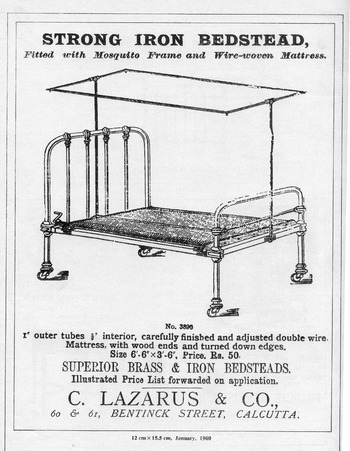
Figure 5.2 Advertisement of ‘Strong iron bedstead fitted with mosquito frame’. January 1900. R. Ray Choudhuri, Early Calcutta Advertisements, 1875–1925: A Selection from the Statesman (Bombay: Nachiketa Publications, 1992), 400.
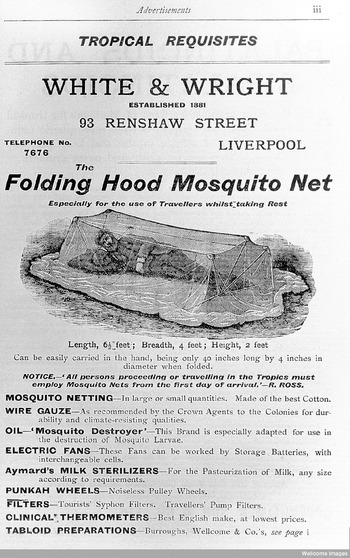
Figure 5.3 Advertisement of ‘The Folding Hood of Mosquito Net by White and Wright’. Reproduced in R. Ross, Malarial Fever, Its Cause, Prevention and Treatment (London: Longman, Green and Co, Reference Ross1902).
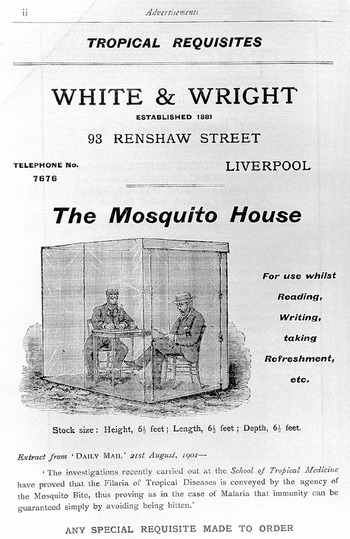
Figure 5.4 Advertisement of The Mosquito House by White and Wright. Reproduced in R. Ross, Malarial Fever, Its Cause, Prevention and Treatment (London: Longman, Green and Co, Reference Ross1902).
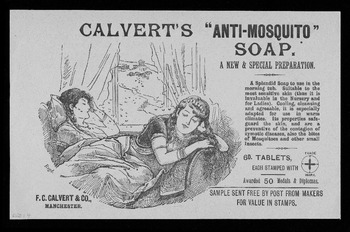
Figure 5.5 Advertisement of ‘Calvert's “Anti-Mosquito Soap” showing one woman covered in mosquitoes while another is free from them’, c. 1890.
From the 1860s, insects were projected as notorious destroyers of commercially relevant vegetation: preying on ‘woods and forests’, inflicting agriculture with plant diseases, and most consistently, as detrimental to the tea, cinchona, coffee, sugarcane and cotton plantations.Footnote 108 Collecting and cataloguing insects on behalf of the Asiatic Society, Bombay Natural History Society and Europe-based imperial museums continued. However, from the 1890s onwards, plantation money was used to fund travel to research insect pests, affecting industrially relevant vegetation. In September 1894, E. C. Cotes, the Deputy Superintendent of the Indian Museum, was deputed to tour almost every province in British India. Over a period of three years, Cotes was expected to study and report on the various insects that were alleged to destroy agricultural crops and commercially valuable plants. It is revealing to note that the Indian Tea Association elaborately sponsored his extensive entomological tours.Footnote 109 The department of Economic Entomology was instituted
in 1902. E. P. Stebbing, the erstwhile Deputy Conservator of Forests, was appointed the first Economic Entomologist to the government of India.Footnote 110 Earlier in February 1901, Stebbing was ordered by the Inspector General of Forests to ‘conduct investigations regarding insects injurious to forests’.Footnote 111 In the same year, at the insistence of the United Planters’ Association of South India, George Watt, the Reporter on Economic Products, was deputed for six months to investigate the relation between ‘plant diseases’ and ‘insect pests’.Footnote 112 On similar insistence from the planters’ community, the Mysore durbar appointed a mycologist and an entomologist to supervise the protection of sandal trees.Footnote 113
To encourage institutionalised killing of insect pests, the Deputy Superintendent of the Indian Museum, Cotes was deputed to the USA to study insecticides and other appliances geared towards the ‘destruction’ of insects.Footnote 114 The Central Provinces prohibited by law the slaughter of insectivorous birds.Footnote 115 Besides, the importation into British India of ‘natural enemies’ of insect pests, for example, ladybirds from Hawaii, hyacinths like Azolla and fishes like Millions from other parts of the United States were recommended.Footnote 116
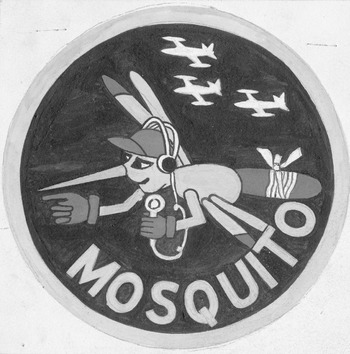
Ross's proposals were thus not isolated pleas for killing mosquitoes. Having converged with some of the broader priorities of the government, his suggestions were worded with recurrent military metaphors: ‘waging war against mosquitoes’, ‘crusades’, ‘flags’, ‘volunteers’, ‘brigades’, ‘gangs’, ‘expeditions’ and so on.Footnote 117 Metaphors which described action against mosquitoes and military intervention continued to overlap through the interwar period and into the Korean War (see Figure 5.6).
Apart from colonial governments, as hinted already, Ross's expeditions were funded extensively by industrial concerns like the Liverpool Chamber of Commerce, the Steamship Owners’ Association, the Ship Owners’ Association and the West African Trade Association.Footnote 118 The project of ‘exterminating mosquitoes’ also involved the enlistment of a range of commodities: nets, Keating's insect powder, quicklime, charcoal and gallons of phenyl, kerosene, oil and petroleum, amongst others. Killing mosquitoes further required support from ‘insectivorous’ plants, fishes and birds. Mosquitoes mobilised a hierarchy of regular and part-time labourers: ‘commissioned’ district-level officials serving the municipal and public works departments, Indian troops serving in Hong Kong, the police, assistant surgeons, hospital assistants, peons, ‘daily recruited local labour’, and a range of ‘native agents’ including village headmen, workmen, ‘gangs of coolies’, ‘sweepers’, convict labour, tinsmith and so on.Footnote 119
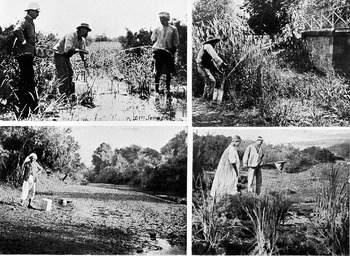
Such extensive recruitments metamorphosed mosquitoes into subjects of unprecedented attention, observation and interest, beyond the usual confines of entomological laboratories and naturalists (see Figure 5.7). In January 1902, the government of Bombay offered four prizes for a year's observations on the distribution and habits of mosquitoes in certain towns in the Presidency. The prizes ranged from Rs. 100 to Rs. 400. The competition was not restricted to the government servants. The Bombay Natural History Society was requested to adjudicate the prizes.Footnote 120 Circulars were distributed amongst certified sanitary inspectors regarding measures for the ‘extermination of mosquitoes’.Footnote 121 Dissemination of knowledge about mosquitoes was attempted ‘amongst the population’, ‘amongst the uneducated masses’ and ‘beyond the services’. Teachers in the public schools were instructed to ‘impart their scholars the rudiments of the malaria doctrine’.Footnote 122
Neither Ross's discovery nor the expeditions initiated by him in the early 1900s revealed radically new arenas in the prevailing geographies of malaria. On the contrary, such expeditions were precisely organised in locations that had been labelled as notoriously malarial in the medical geographies of empires from the mid-nineteenth century. Ross's expeditions also constituted of revisiting such locations to find evidence in favour of the theory he was so keen on establishing.Footnote 123 In certain ways, the organisation of ‘mosquito brigades’ and the firmer entrenchment of Ross's theory involving the insect vector of malaria were symbiotic processes. The mosquito brigades occasioned a spectacular network of correspondences, reports, recruitments, travels, subscriptions, fund collections, methods and personnel between various sites in British India, British Western and Central Africa, Hong Kong, Havana, New York, Dutch Java and German Africa.Footnote 124 The launch of expeditions to ‘exterminate’ mosquitoes in these locations reaffirmed their notoriety as malarial landscapes. But these expeditions equally emerged as occasions to establish the validity of laboratory speculations. Such speculations derived greater currency through confirmations acquired in the ‘fields of practice’.
Thus the extensive mobilisation of disparate actors played a part in providing retrospective legitimacy to Ross's ‘malaria doctrine’. In his book on the ‘mosquito brigades’ he referred to the ‘investigations’ he had led in the fields of Sierra Leone, Robert Koch's efforts in certain German tropical possessions, and the ‘American campaigns described by L. O. Howard’. These, Ross acknowledged, provided as much recognition to his theory as the accomplishments attained within the enclosed spaces of the laboratory.Footnote 125 By 1904, earlier detractors and sceptics like Leonard Rogers had revised their opinions.Footnote 126
In apparent contrast to such grim images, the deeply layered world of literary production, for instance in Bengali, featured mosquitoes as ubiquitous objects of fun, satire and irritation. Mosquitoes featured in the works of a range of authors: from a novel written by civil servant cum writer of fantasies Trailokyanath Mukhopadhyay in the 1890s to some of Rabindranath Tagore's poems in 1940–1941. Painful, irritating yet funny encounters between human skin and mosquitoes’ stings remained an enduring theme in a range of fables, fantasies and poetry.Footnote 127
Certain recurrent tropes, however, appeared amicably to speak to, draw upon and reinforce the more prosaic worlds of bureaucratic correspondence. In the 1880s, objects associated with mosquitoes began figuring in texts like Moshari Rahasya (Mystery of the Mosquito Curtain) as a metaphor for domestic scandals, immorality and decadent social practices.Footnote 128 Decades later, ‘Mosha’ figured as the name of an elusive serial killer in a detective fiction called Moshar hul, i.e., The Sting of Mosquito.Footnote 129
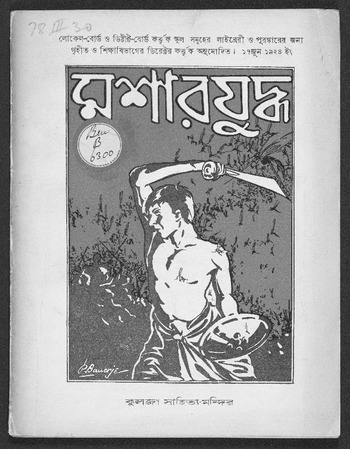
Moreover, Ross's insistence on a war on mosquitoes was parodied variously, for instance, in educational pamphlets like Moshar Juddho (War of Mosquitoes) published in 1922 (see Figure 5.8).Footnote 130 The possible transformation of mosquitoes into deadly and invincible enemies to humans was alluded to in the first of the legendary Ghana-da stories written by Premendra Mitra. Published in 1945, it was titled ‘Mosha’, that is, ‘Mosquito’.Footnote 131 Insufferable mosquito bites featured in Annada Sankar Ray's unforgettable poem ‘Kaduni’ (‘In tears’) as the nemesis of Japanese soldiers in northeastern India during World War II.Footnote 132 Earlier, as Figure 5.9 suggests, an illustrated anthology of Bengali short stories published in 1911 depicted the stomach of mosquitoes as a stage where bitter human animosities could be enacted.
Such literary images caricatured, mimicked and sustained suggestions about a potentially harmful, nonhuman world of quotidian insects. As a recurrent trope and a subject of enduring concern, mosquitoes thus held together the disparate worlds of entomological laboratories, literary production, sanitary governance and plantation economy.
Countable and the Accountable
The emergence of mosquitoes to prominence in the vocabulary of public health administration altered considerably the meaning of the word malaria. Indeed, ‘malarial fever’ in the 1900s, it was argued in certain quarters, differed radically from what was understood as malaria for much of the nineteenth century. Writing in December 1901, John H. McCollom, a professor in contagious diseases at Harvard, for instance, considered the retention of the term malarial to refer to the disease described by Ross and his collaborators as a ‘misnomer’. Instead, he proposed the name ‘gnat (mosquito) fever’.Footnote 133 For others like Patrick Manson, the establishment of mosquitoes as the vector for transmitting malarial parasites between human bodies represented a moment for rectifying prevailing diagnostic ‘ignorance’ and acknowledging what malaria really meant. Writing in April 1907, Manson recalled how in the nineteenth century an enormous variety of diseases, ranging from black water fever to sleeping sickness, were mistakenly clubbed under ‘a very big name – malaria’. Since the early 1900s, he argued, ‘the great block of African disease, called malaria’, had gradually ‘disintegrated into a number of independent, essentially different diseases.’Footnote 134 The delineation of these various ‘new diseases cut out of the malarial block’ found reflection in the mortality figures of the colonial governments.Footnote 135 Leonard Rogers referred to the mortality figures in British India as ‘incorrectly returned’ and ‘grotesquely inaccurate’, ridiculing the practice of combining deaths
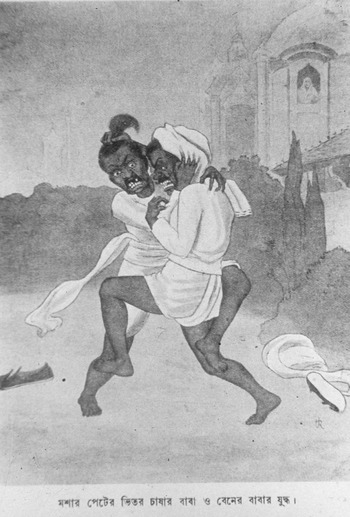
Figure 5.9 Illustration containing the caption, ‘The father of the farmer engages in war with the father of the bania within the stomach of a mosquito’. Illustrator: Upendrakishore Chatterjee, in Ramananda Chatterjee (ed.), Hindustani Upakatha (Calcutta: Prabasi Karjalaya, 1912).
from dysentery, diarrhoea, bowel complaints, ‘born feeble’, dropsy, child birth, old age, malignant tumours, small pox, cholera, epilepsy, measles, liver abscess, asthma, snake bite, syphilis, drowning, rheumatic fever, meningitis and rheumatic fever under ‘the very elastic heading fever’. Most of these causes of death, he suggested, could be considered as autonomous diseases which deserved to be reported separately.Footnote 136 In October 1909, J. T. W. Leslie, the Sanitary Commissioner with the government of India, made a similar point: ‘Many people believe that all these fever deaths are due to malaria, but a very cursory examination will show that this assumption is erroneous’.Footnote 137
In the 1900s therefore, malarial fever often appeared as a ‘new disease’ emerging out of nosological reconfigurations. Ross's version of the ‘story of malaria’ began in 1880. That was the year when Alphonso Laveran ‘discovered the parasites of this disease’. This, according to Ross, was followed by ‘independent conjectures’ until ‘facts of leading importance were obtained solely’ by his research between 1895 and 1899.Footnote 138 However, these ‘boastful statements’ converged with various other attempts of constructing longer histories of malarial fevers in different contexts. At this time, malarial fevers were described as intrinsic features of the classical antiquity of various nations. It was claimed in Bengali medical journals, for instance, that the ancient Ayurvedic texts made several references to malarial fevers and parasites.Footnote 139 Published in 1907, W. H. S. Jones’ Malaria, A Neglected Factor in the History of Greece and Rome was the first amongst many books which proposed malarial fevers to be a recurrent feature of ‘ancient Greco-Roman past’.Footnote 140 In these narratives, it was argued that Ross drew upon received wisdom and his projection of his discovery as an abrupt, unforeseen breakthrough was seriously dispelled.Footnote 141
However, the transformation of the diagnostic category malaria remained incomplete in the early 1900s in significant ways.Footnote 142 I have argued that the organisation of ‘mosquito brigades’ reinforced the prevailing political geographies of malaria. Besides, in clinical deployments malaria retained much of the elasticity ascribed to it in the nineteenth century. The detection of parasites in the blood through microscopic tests, for instance, did not become the only diagnostic practice in identifying malarial patients.Footnote 143 The retention of the term malaria (with its roots in the Italian word mal-aria, meaning bad air) itself, as a contemporary Bengali writer observed, indicated how memories of pre-parasitological conceptions persisted into the twentieth century.Footnote 144 The failure to detect parasites in the blood samples, it was argued as late as 1915, could not guarantee the absence of malarial infection in a body.Footnote 145 Malaria continued being invoked to explain a variety of maladies including chronic dysentery, diarrhoea, pulmonary tuberculosis, chronic gastritis,Footnote 146 syphilis, phthisis,Footnote 147 pneumonia, gastric and anaemia.Footnote 148 Such expressions, it was suggested, could manifest in the body two, ten or even fifteen years after it had encountered malaria.Footnote 149
Similarly, malaria sustained its prior associations with urban insanitation, poverty, labouring classes, agricultural stagnation and racial degeneration.Footnote 150 By the mid-1900s, however, more than ever before fevers, blood samples, mosquitoes and gradually parasites had begun to be compatibly accommodated within such prevailing definitions.Footnote 151 Mosquitoes now emerged as the defining feature, which shaped the malarial identity of most of these conditions. Mosquitoes, malaria and these conditions appeared congenial with one another and inseparable. Earlier aetiological judgments were reiterated and retrospectively justified by an invocation of the figure of mosquitoes. For example, their abilities to ‘encourage the growth of mosquitoes’ reconfirmed the status of stagnant ‘trivial puddles’ as sites generative of malaria.Footnote 152 In the 1900s, schemes of agricultural improvements were emphasised yet again as the ‘sovereign remedy’ of malaria. Such continuing faith was now restored on the basis of a novel explanation. It was hoped they could ‘obliterate all the conditions under which the mosquito can survive’.Footnote 153 Mosquitoes were thus centrally and emphatically inscribed into the existing medical ecologies of malaria. Similarly, colonial bureaucrats often explained the proclivity of certain poorer groups of people to malarial diseases by asserting the attributes they apparently shared with mosquitoes. Senior officials in British India, Captain S. R. Christophers and Dr C. A. Bentley, for instance, argued that anopheles mosquitoes proliferated and the urban industrial labourers dwelt under ‘analogous conditions’.Footnote 154 ‘Urban mohullas swarming with the lowest classes living in a very overcrowded and squalid condition’, bad housing, impure water supply figured as shared habitats of mosquitoes, malaria and urban industrial labourers.Footnote 155
Likewise, the category parasite was incorporated into the continuing racialised prejudice of stereotyping ‘primitives’ and ‘aboriginals’ as immune from the effects of malaria. It was suggested that malarial parasites and ‘primitives’ were happily and conveniently wedded with one another. Explaining the immunity of the so-called primitives from malaria, a statement attributed to Bentley described ‘primitives’ as ‘parasite laden races’. Malaria parasites, it continued, were ‘as natural amongst primitive races as flea infestation is to a dog’.Footnote 156 In the same decade, reports from colonial Philippines argued that Filipino soldiers and children were the ‘source of fatal infection to white men’ in malarial localities although they were themselves racially immune from the effects of malaria parasites.Footnote 157
Such insinuations that parasites and certain colonised people were intimately associated should be seen in the context of an enduring European tradition in which the expression parasites was regarded as a derogatory symbol. ‘Parasites’ was often used as a label to demean marginalised as well as ostensibly unethical groups of people. The anthropologist Hugh Raffles has drawn on the work of Alex Bein to show that the word parasite was used not just to express modern anti-Semitic contempt for Jews. In Greek comedy as well as in early modern European vernacular literature the expression parasite was also used to indicate ‘destitute persons’ and ‘persons who fawn on the rich’, respectively.Footnote 158 Victorian literary accounts compared parasitic existence with human indolence;Footnote 159 while theological texts published from London in the 1830s argued that parasites were a demonstration of the fact that man ‘has fallen from his original state of integrity and favour with God’.Footnote 160 Therefore, like mosquitoes, parasites already constituted a vibrant social category when they were incorporated within the shifting aetiologies of malaria.
At the same time, the increasing recurrence of mosquitoes and parasites in literature about malaria transformed it into a more visible, tangible and precise phenomenon than ever before. Reports on malarial fevers began listing different varieties of anopheles mosquitoes which were held to cause different degrees of malarial fevers. Different ‘kinds of malarial fever’, that is, malignant tertian, benign tertian, quartan, it was suggested, could be associated with precise varieties of anopheles mosquitoes (i.e., A. Fuliginosus, A. Rossii, A. Listoni, etc).Footnote 161 Further, as early as 1903, fever patients at the penal colony of the Andamans had to get their blood samples microscopically tested for malarial parasites on a daily basis.Footnote 162
Mosquitoes and parasites made malaria quantifiable. Malaria could now be expressed as a number to be counted, controlled and compared. For example, from the early 1900s the ‘spleen rates’ which were supposed to reflect the intensity of incidence of malaria in any particular locality began to carry the weight of mathematical accuracy and precision. The precise ‘percentage of infected children’ could now be confirmed from the occurrence of parasites in samples of blood (apart from measuring the size of spleens). Such figures enabled the comparison of ‘endemicity’ in the villages in Dutch East Indies, Lagos, Sierra Leone in West Africa or the Duars in British India in a commensurate register.Footnote 163 Further, diagnosis on the basis of detecting parasites in blood samples resulted in the quantification of losses incurred from malaria. Writing in 1904, Ross reported that ‘a total of about 250,000 days were lost to the public service as a result of this malady amongst the European troops (in India) alone…676 men or over 1 per cent of the strength were constantly sick from malarial fever’.Footnote 164
Efficiencies of various anti-malarial actions could now as well be expressed in terms of numbers. ‘Diminishing the number of mosquitoes’ figured as a consistent feature of anti-malarial measures initiated in West Africa and British India.Footnote 165 Reports about anti-mosquito projects, for instance, often contained such statements: ‘In Sierra Leone six men can clear fifty houses and remove ten cart-loads of broken bottles and empty tins daily’.Footnote 166 Performances of the colonial governments in tackling cases of malaria could now more effectively be judged.
Although frequent references to mosquitoes and parasites delimited the category in various ways, malaria nonetheless acquired unprecedented visibility in the official registers. Mosquitoes, parasites, blood samples and fevers: these newer tangible, precise and even numerable indicators appear to have suited the managerial instincts of the colonial governments. These empowered them with more definite targets against which to act as accountable agents.Footnote 167 In the first decade of the century, malaria was reasserted across South Asia, especially in Bombay, Punjab and the United Provinces, as a major public health concern.Footnote 168 This decade also witnessed overwhelming energy across the Empire in convening high-profile conferences, committees and funds towards studying and managing malaria.Footnote 169
The list of academic and administrative committees set up in the early 1900s for the enhancement of knowledge on malaria includes the Society for the Study of Malaria set up in Italy, the Malaria and the Tsetse Fly Committee of the Royal Society, the Drainage Committee of Bengal, the Anti-Malaria League of Greece and the Malaria Advisory Committee of the Government of India. Books on malaria written by colonial officials witnessed unforeseen circulation. Captain S. P. James wrote a pamphlet titled ‘Causation and prevention of malaria’ in 1903. Within a year, two editions of 5000 copies each were sold out. James received an honorarium of Rs. 750 from the government of India in recognition of the success of his book.Footnote 170
Anti-malarial projects provided occasions to test the fundraising abilities of various members of royal families. The King of Greece and Princess Christian of Great Britain, for instance, personally raised subscriptions in support of the Anti-Malarial League of Greece.Footnote 171 In July 1903, the British Colonial Office proposed the setting up of a ‘general fund’ for ‘promoting researches into the origin and propagation of malarious diseases’. This was conceived as a consolidated fund for the British Empire. Contributions were solicited from various parts of the Empire. The Lords Commissioners of the Treasury were instructed to contribute £500 per year for five years from the Imperial Funds on behalf of the Exchequer-aided colonies and protectorates. Similarly, a sum of £1500 a year for five years was to be made available on behalf of the Crown colonies. In addition, both the governments of Gambia and Sierra Leone promised to each contribute a sum of £100 per year to the fund for five years, while the governments of Gold Coast and Southern Nigeria each promised a sum of £200 and the governments of British India and Lagos promised amounts of £500 and £150, respectively.Footnote 172
Amid such a workaholic ambience, the figure of quinine was not banished as an irrelevant relic from an obsolete past; it was not rejected as unsuitable to address the ‘new disease’ emerging from redefinitions of malaria. On the contrary, quinine distribution and killing mosquitoes, often literally, happened hand in hand.Footnote 173 In fact, the government prioritised quinine distribution over other concerns. There were attempts, for instance, to divert funds from the Indian People's Famine Trust to aid the distribution of quinine in the villages of Ajmer-Merwara province in British India.Footnote 174
Indeed, along with shifts in insights about malaria, the status of quinine appeared almost equally malleable. Having been variously projected as an anti-periodic febrifuge, a prophylactic tonic, an antiseptic or a germicide in different moments in the nineteenth century,Footnote 175 quinine was ascribed, by the mid-1900s, the newer trait of being ‘inimical to the plasmodium malaria parasites in the blood of man’.Footnote 176 Writing in 1902, Patrick Manson hinted at the relevance of quinine in the diagnosis of malarial infections in contemporary clinical practice.Footnote 177
The recognition of mosquitoes and parasites as subjects worthy of enduring attention thus stoked unprecedented enthusiasm for anti-malarial schemes. But it was alleged by certain sections of the ‘Indian public’ and ‘native editors’ that beneath these altruistic efforts the government was involved in a ‘secret conspiracy’ to push the sales of quinine. It was further alleged that the government was selling quinine at Rs. 6 per pound more than the market rates to replenish an otherwise bankrupt exchequer.Footnote 178 Indeed, officials were certain that recommendations extracted through zealous initiatives like the 1909 Imperial Malaria Conference at Simla would augment the demand for quinine and ensure its greater consumption in British India.Footnote 179 Such hopes reflected the government's concern with addressing a continuing slump in quinine trade.
…Possibilities in the direction of any permanent improvement in price…one being…constantly increasing the consumption of quinine, combined with the opening up of the world's dark places, which is so steadily going on year by year, month by month, almost day by day, may in the end lead to consumption overtaking supply…Footnote 180
Thus, such commitment to push the sales of quinine in British India did not necessarily indicate disinterested altruism on the part of the state. Two decades earlier, as I have noted in the previous chapter, prisoners in the Andaman and Nicobar Islands who were subjected to the trial of anti-malarial drugs including quinine and cinchona febrifuge were denied their share of the more expensive daily milk ration. Therefore, while encouraging the purchase and consumption of quinine, state departments proposed various adjustments to make sure that they were not the ones suffering financially for it.Footnote 181
‘Experimental Demonstration Camps’
Quinine widely emerged as an object of enforced consumption in British India in the late 1900s. Wider governmental alacrity in addressing questions concerning malaria was reflected in a series of strategies in ensuring greater consumption of quinine. These, in turn, manifested in firmly punitive, carefully accommodative and exhaustively pedagogical efforts to access and regulate incompletely colonised bodies. While detailing such various faces of imperial biopower this final section suggests how, in the process, quinine itself underwent further reconstitutions. These efforts should not however be explained as immediate expressions of overwhelming economic logics, while admitting their unmistakable relevance. Although regimes of biopower and political economy conversed they were not reducible to one another. Taken together they considerably constituted what functioned as empire in British India in the 1900s.
Quinine began to figure as a necessary element in the inmates’ timetable through which stricter discipline could be mobilised. In the official itineraries of quinine, high schools, military barracks and especially prisons featured amongst inescapable sites. Official correspondence cherished them as enclosed and ‘analogical’ spaces, where ‘regularly ordered’ bodies under ‘skilled control’ could be conveniently accessed.Footnote 182
Quinine thus revealed a hierarchy of disciplinary institutions in British India. High schools like the Delhi Normal School, for example, compelled staff and the pupils to consume biweekly doses of seven grains of quinine.Footnote 183 However, meticulously monitored and intensely regimented ‘quinine parades’ organised daily in some prisons amongst the inmates, officials, cooks, sweepers and hospital attendants were projected as inspirational for other institutions.
Quinine parades were daily conducted under the supervision of the jailor and the hospital assistant in every prison in Punjab. They oversaw the accuracy of dosage, prevented any act of tampering, made sure that wastage by spillage could be reduced to a minimum and that ‘each prisoner actually swallowed the quinine’. The jailor was responsible for ensuring the presence of all prisoners in their respective yards, enclosures and cells prior to every quinine parade. He counted all prisoners who actually received the mixture. This number was supposed to correspond to that at ‘count out’ in the morning or lockup in the evening. Finally, the jailor had to certify, under his signature in the hospital assistant's journal, the number of prisoners who had been dosed. Quinine was then distributed amongst the officials, cooks, sweepers and hospital attendants.Footnote 184
The question of quinine enabled officials to project prisons as ideal sites which guaranteed freedom from malaria. Death rate from malaria amongst prisoners was shown to be one-fifth of what it was amongst the ‘general population’. Out of every one thousand victims of malaria, it was suggested, merely one could be considered a prisoner. In the abstruse logic of medical governance, jails were projected as a model which should be replicated everywhere to ensure the safest and most beneficial abodes for colonial subjects. A ‘free man’ appeared more vulnerable to malaria than a prisoner. ‘Why is it that a disease which is so rarely fatal to a prisoner should be so often fatal to a free man?’– officials wondered. Confinement within the prison, it was argued, provided the inmates a position of ‘greater advantage’. Lives in the prison were projected as ‘regularly ordered’, more regimented and ideal for the disciplined distribution of quinine.Footnote 185 Prisons were compared to the barracks, which housed the Indian soldiers in the British imperial army. In both these sites, bodies of men were subjected to ‘skilled control’. However, the most stringent measures of distributing quinine, it was argued, were more plausible in the jails than in the regimental lines. This seemed to explain how the prisoners appeared more protected from malaria than the soldiers, despite their ‘inferior physique’ and ‘lower social status’.Footnote 186
Enforced consumption of quinine was pursued by officials beyond the prisoner's cell and the native soldier's bunk. The Special Anti-Malarial Measures Act for India of 1907, for instance, recommended mandatory consumption of quinine in ‘highly malarious areas’, and ‘removal of houses inhabited by persistently infected individuals from the neighbourhood by bodies of disciplined men and government institutions’.Footnote 187 In addition, denial of ‘casual leave’ was proposed in Punjab for government servants who refused to consume quinine regularly.Footnote 188 In a report published in 1912, one Major MacGilchrist mentioned similar punishments claiming to have fined people who visited him in the hospital for malaria treatment.Footnote 189 Similarly, in another context in the early 1900s, the German foreign office proposed an agreement with colonial officers in Africa, making it mandatory for every officer to consume quinine once in every eight or nine days. The agreement also suggested that the salary of a German officer in Africa could be stopped ‘during the period of an illness that might have been avoided by reasonable care’.Footnote 190 In other parts of the world later in the 1910s, particularly during the British intervention in Salonika during World War I, as Figure 5.10 indicates, consumption of quinine continued to feature as an everyday protocol to enforce military discipline. Further, quinine calendars were also in vogue to indicate the number of occasions in which soldiers and officials had missed their mandatory dose of quinine.Footnote 191
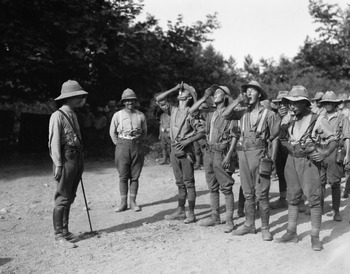
Figure 5.10 © Imperial War Museum (Q 32160).
Quinine, however, was not fed exclusively through punitive measures or in situations of confinement. The ‘free and unindentured’ labourers in the Duars plantations, for instance, were persuaded not through codified contracts. In these plantations, the government was able to access the most ‘ignorant, superstitious and backward of aboriginal tribes’ as ‘coolies’. Five-grain doses of quinine were ‘served out’ to them while conducting everyday acts of leaf-weighing or at muster by the managers’ ‘moral force of personal influence’. It was hoped, that once the ‘headmen’ began taking doses of quinine it would appear as a ‘custom’ for the rest, who with ‘sufficient docility’ would engage in acts of consumption.Footnote 192 Similarly, German medical officers in Togo and the Cameroons proposed the construction of ‘quinine stations’ on caravan routes which connected various African villages. In a remarkable demonstration of colonial desire for corporeal control, it was hoped that such stations would enable officers ‘to put quinine on the tongue of each negro passing by’.Footnote 193 Similar language has been used to describe enforced consumption of quinine in Northeast India. The caption of Figure 5.11 taken in 1911 or 1912 suggests a desperate scene in which a British official and a hospital assistant were ‘throwing quinine into the mouths of loaded coolies’.
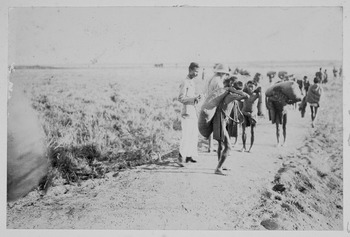
The state's intent to persuade its subjects into consuming quinine was evident in a range of accommodative gestures: during quinine parades, quinine was served by a ‘high caste Hindu convict warder’, who was assisted by a ‘convict official of similar caste’; during ramzan in the Punjab prisons, quinine was distributed only after sunset; the standard dosage of quinine was often relaxed to prevent ‘unpleasant consequences’ amongst female prisoners.Footnote 194 Further, to make quinine more ‘attractive’ and ‘palatable’ to suit the ‘taste’ of prospective consumers, various innovations were prescribed. Messrs Burroughs Wellcome and Co. began distributing ‘sugar coated tabloids’ in British India.Footnote 195 Two tablet-making machines capable of turning out 25,000 tablets a day were purchased for use in the Lahore Central Jail.Footnote 196 Thus the usually bitter and cumbersome quinine solutions were remade in more manageable forms of pills and compressed tablets, served as wine; made tastier by coating such tablets with sugar and sold under the cover of chocolate and sweetmeat. Particularly, to attract the children, solutions of quinine were sweetened with syrup and sugar, while powdered forms were often blended with condensed milk.Footnote 197 Thus, where British Indian subjects could not be regimented into consuming regular doses of quinine, the drug itself was repackaged to reach out to them. Figures 5.12 and 5.13 indicate how some of these innovations were advertised.
These elaborate initiatives coexisted with commentaries from officials who mentioned that certain marginalised groups within Indian society performed ‘ghastly’ religious rites to resist epidemics.Footnote 198 For example, in the 1910s, British Indian colonial ethnographer E. H. Hunt, through diary entries and photographs (see Figure 5.14), graphically asserted that the ‘low caste inhabitants’ of the village of Mettaguda near Secunderadad in Southern India resorted to practices like buffalo slaughter to prevent malarial epidemics.Footnote 199 Such ethnographic denunciation of the ‘lowest outcastes…aboriginal peoples of India’ almost coincided with the contemporary celebration of the enlightened benevolence of the colonial state.Footnote 200 Photographs (such as Figure 5.15) taken in the same decade from Northeastern India upheld quinine as a civilising object through which primitive tribes inhabiting the imperial frontiers could be reformed into a state of modernity.
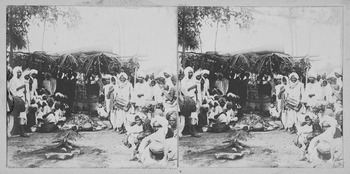
Figure 5.14 © British Library Board.
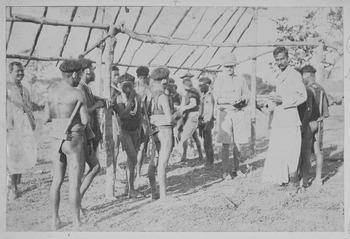
Figure 5.15 © British Library Board. Photograph of ‘Sadiya. Captain Robertson and Hospital Assistant giving quinine to Nagas’.
Unsurprisingly, quinine became the focus of various pedagogical programmes. Already in 1909, the statistical officer to the government, S. P. James, for example, proposed an exhaustive pedagogical network, the ‘experimental demonstration camps’. The ‘primary objective’ was to ‘devise a scheme for increasing enormously the demand for quinine in the small villages’ in British India. The camps were designed to
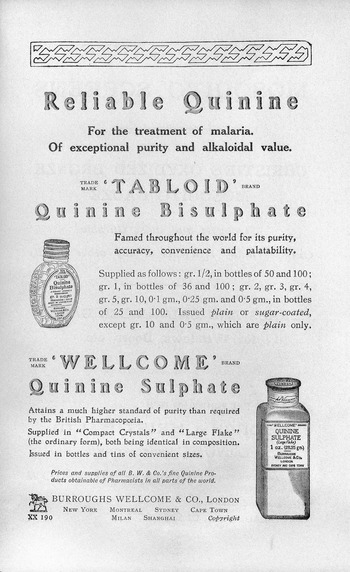
Figure 5.12 Advertisement of ‘Wellcome Tabloid Quinine Bisulphate’ published in R. Ross, The Prevention of Malaria (London: John Murray, 1910).
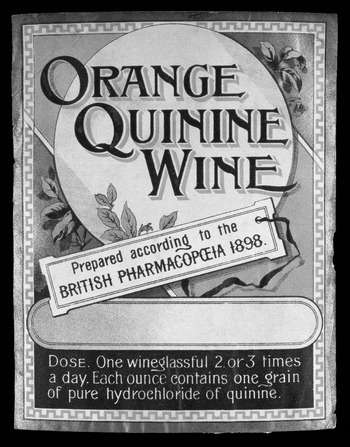
Figure 5.13 Ephemera containing the note ‘Orange Quinine Wine, prepared according to the British Pharmacopoeia, 1898’.
‘demonstrate to the people’ the benefits of the drug and the ‘correct way in which to use it’.Footnote 201 In every selected area of a district, each camp, consisting of a hospital assistant and a compounder, was supposed to operate for a period ranging from six weeks to two months. At any given period, its operations were expected to remain confined to a population not exceeding 2000 people. Visits to every house were to be occasioned with a prepared ‘little lecture’, inducing the inhabitants to convince themselves and their neighbours of the merits of consuming prophylactic doses of quinine every night. James had an estimate of the numbers of people who could be reached out through such camps. If a camp remained for two months each in areas inhabited by 2000 people, James speculated, 12,000 people could be ‘educated’ annually by each camp. If every province consisted of a minimum of thirty districts each with a camp of its own, James reasoned, ‘the number of people educated annually’ could amount to 360,000. Once a camp was set up in each district of British India, James hoped, about ‘3 million people per annum would learn thoroughly the benefits to be derived from quinine, where to obtain it and how to use it’. James considered such acts of ‘teaching the people’ more relevant than instructing them ‘in the arts of reading and writing’.Footnote 202
Besides, vernacular booklets about malaria were recommended as parts of primary school curriculum. The ‘future citizens of the Empire’, once exposed to such ‘lessons on quinine’, were expected to inspire their relatives into consuming the drug.Footnote 203 Such pedagogical faith in the relaying of internalised ‘lessons’ by more diligent pupils of Empire to their closer associates was variously replicated. Apart from binding themselves into consuming 15 grains of quinine per week, the members of the Gurdaspur Quinine Distribution Society, for instance, pledged to induce as many as possible to become members of the society. Branches were set up in various villages, tehsils and districts. Every member had to pay a subscription of 6 annas and join by a contribution of 1 rupee and 2 annas.Footnote 204 In another correspondence, the possibility of organising ‘popular lectures by Hindu and Mohamedan leaders’ was considered a judicious way of preaching and ‘popularising the use of quinine’.Footnote 205 Similarly, having described malaria as ‘a question of highest national importance’, Herbert Risley, the president of the 1909 Imperial Malaria Conference, argued that the people could not help themselves unless they were cooperating with the priorities of the government. ‘The people must help us’, declared Risley in his concluding comments, ‘for only by helping us they can help themselves’. He urged Indian landholders, bankers, professors, merchants, lawyers, schoolmasters, journalists, doctors and influential operators in the subdivisions, to enthuse greater participation in anti-malaria programmes: ‘They would be in closest touch with all ranks of people, they could teach, they could persuade, they could do all the things than an official agency would attempt in vain’. If Risley was speaking to whomever he considered ‘natural leaders of the people’,Footnote 206 colloquial official leaflets continued to address the individual, empowering them with immediate access to ‘self-treatment’ through the medium of quinine.Footnote 207 Later in the 1920s, as this photograph (Figure 5.16) of Indian men feeding quinine to one another suggests, the drug was reasserted as a means through which collective well-being and solidarity within local communities could be reinforced.
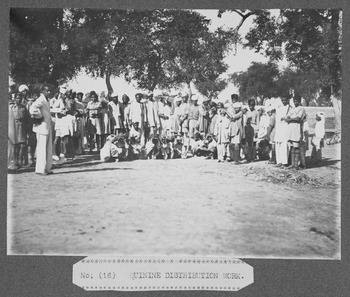
Thus, the drug quinine and the efforts to enforce its consumption in British India revealed various depths and reaches of the imperial state. However, quinine itself did not figure as a passive, rigid and unchanging object. Its relevance and resilience was recurrently underscored, while it kept changing hands, reconstituting itself considerably in the process.
Conclusion
A colonial consumer field for an overabundant drug was produced by imperial regimes in British India in the late nineteenth and early twentieth centuries. Ironically, this happened at a time when the radical redefinition of the corresponding disease, malaria, was being occasioned by the same imperial world.
Quinine and mosquitoes represented two most visible public faces associated with malaria in British India between the late 1890s and the 1910s. Through my focus on quinine and mosquitoes, I have here emphasised the need for greater acknowledgment of deep historical entanglements of Empire with nonhumans in British India. First, various imperial departments, personnel and provinces shared a commitment for producing perceptions and realities about mosquitoes and quinine. This chapter has refrained from judging whether anopheles mosquitoes indeed transmitted malarial parasites between human bodies or whether quinine indeed cured malaria. It has instead examined the traffic between the imperial worlds of pharmaceutical business, vernacular markets, colonial governance and scientific knowledge in British India through which mosquitoes and quinine could be endowed with such enduring attributes.
Imperial investments were geared towards producing and ‘maintaining’ the image of quinine as a valuable drug while it circulated through a range of sites including colonial factories, prisons, military barracks, high schools, government offices, post offices, imperial conferences, bazaars, legal codes and primary school curriculums.Footnote 208 Efforts to project quinine as compatible with the familiar icons, figures, castes, religions, tastes and languages of intended consumers, I have argued, communalised the drug. Similarly the image of mosquitoes as a potential disease-causing pest was sustained and reinforced by interactions between the worlds of colonial laboratories, plantation economy, field works and vernacular literary production.
At the same time, imperial processes and structures themselves were reshaped and sustained by the constructs, such as quinine and mosquitoes, which they occasioned. Thus, Empire itself could have hardly remained a distant, overarching and imposing entity independent of the script it mobilised. Circulation of quinine was one of many ways in which the Empire could be held together as a profit-making mission veiled by benevolence. Enduring debates between contending provincial governments about the fair price and colour of pure quinine, in turn, exposed several fault lines and tensions of empire. In many ways, quinine seems to have been a metaphor for empire: bitter, expensive and transformative which could be mutated variously to appear as charitable, reasonable and even palatable. The plethora of efforts towards enforcing the consumption of quinine in British India, cemented the Empire, yet again, as a ‘commodity spectacle’.Footnote 209
Particularly revealing is to make sense of the location of quinine and mosquitoes in imperial biopolitics. Efforts towards imposing the consumption of quinine in British India, for instance, reinforced various aspects of imperial biopower: utilitarian governance, pedagogical machineries, rule of law and strictures of incarceration. While claiming to produce ‘future citizens of the Empire’, such facets continued simultaneously to flirt with diverse visions of self-treatment and nationhood. As a tool to nurture regimented and productive subjects in the prisons, high schools, barracks, families, congregations, plantations, public offices, quinine must have informed what Stoler and Cooper call the ‘embourgeoisement of imperialism’ in the late nineteenth and early twentieth centuries.Footnote 210
Empire was shaped as well by what Nicole Shukin calls a ‘zoopolitics’ involving insects, particularly mosquitoes.Footnote 211 Regimes of governing human bodies extended over and were integrally tied with sustained investments in knowing, observing, exchanging, maiming, classifying, delimiting and narrating mosquitoes. Such widespread efforts metamorphosed mosquitoes into subjects of Empire. Engagement with mosquitoes indicated the depth and extent of Empire. In anthropomorphic accounts, mosquitoes symbolised colonial poverty, insanitation, recalcitrance and redundant excesses. Yet, mosquitoes commanded continued attention as an object of imagination, an excuse for intervention and commerce and a mirror against which humanity could be defined. Thus, mosquitoes appeared not only to justify imperial rule, but also figured as its subjects.
It is possible to suggest here that empires, as much as imperial subject/objects like pure quinine and mosquitoes, were cyborgian formations, which were held together by an apparatus of human and nonhuman enmeshes. Interactive networks explored here, for instance, amongst insects, insecticides, tinsmiths, coolies, sweepers, itinerant parasitologists, parasites, vernacular fiction writers, entrepreneurs, bureaucrats, commodities, government factories, post offices, peons, bazaar vendors, policemen, outposts, jailors, inmates, soldiers, sealing bottles, carmine, colouring matter, alkaloids may be said to have constituted not only mosquitoes and quinine, but also an imperial apparatus. I draw upon the anthropologist Viveiros De Castro to define imperial apparatus as an ‘inter-subjective field of human and nonhuman relations’.Footnote 212 Empire, I argue, could neither precede nor outlive nor be delineated from the discourses about science and nonhumans that it occasioned. The history of how malaria was reassembled in the 1890s and 1900s thus reveals how Empire itself was put together – not as an inflexible institutional apparatus, but as an assemblage in which texts, authorities and materials, and politics, knowledge and nonhumans were, to quote Donna Haraway ‘becoming with’ one another.Footnote 213 Imperial power, scientific knowledge, and nonhumans like quinine and mosquitoes were located in a shared and immanent field of co-constitution.Footnote 214
Finally, the history of malaria, quinine and mosquitoes in late-nineteenth and early-twentieth centuries also reveals how distinctions between the human and the nonhuman were constantly invoked, policed and dismantled within the imperial apparatus. The ascription of humanly attributes to nonhumans often coalesced with the relegation of various colonised subjects to the status of less-than-humans. Human-nonhuman binaries were transgressed in various ways: quinine seemed to acquire lifelike relations with people inhabiting the interiors; insects emerged as focus of projects which mobilised a series of labourers and commodities alike; the urban poor and mosquitoes as well as parasites and ‘primitives’, it was claimed, shared analogous attributes. Simultaneous operation of anthropomorphism and dehumanisation was fundamental rather than incidental to imperial exercise of power.


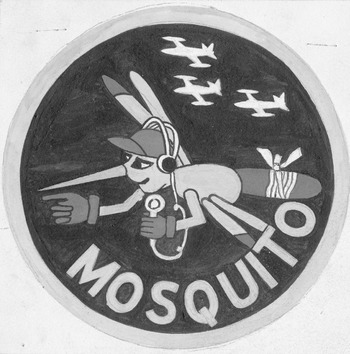
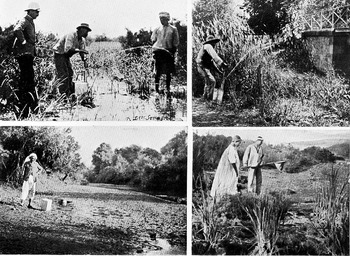
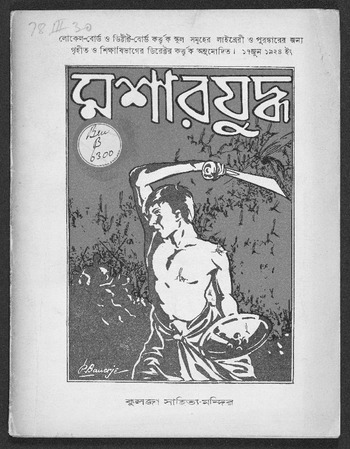


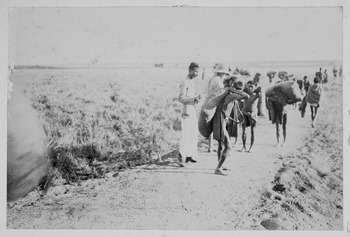


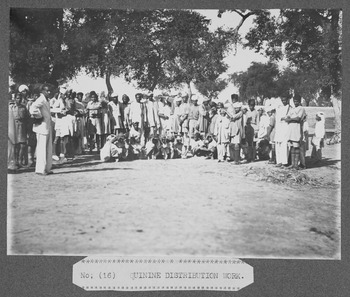

 Open access