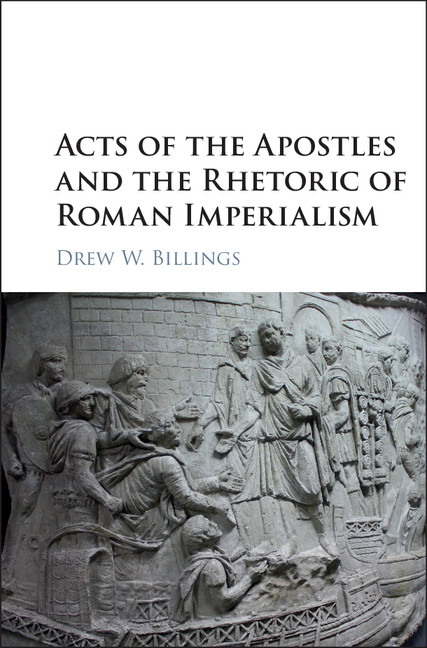

Acts of the Apostles is normally understood as a historical report of events of the early church and serves as the organizing centerpiece of the New Testament canon. In this book, Drew W. Billings demonstrates that Acts was written in conformity with broader representational trends and standards found on imperial monuments and in the epigraphic record of the early second century. Bringing an interdisciplinary approach to a text of critical importance, he compares the methods of representation in Acts with visual and verbal representations that were common during the reign of the Roman emperor Trajan (98-117 CE). Billings argues that Acts adopts the rhetoric of Roman imperialism as articulated in the images and texts from the period. His study bridges the fields of classics, art history, gender studies, Jewish studies, and New Testament studies in exploring how early Christian texts relate to wider patterns in the cultural production of the Roman Empire.
'The Acts of the Apostles has been assigned to various dates in early imperial history with a scholarly consensus falling between 80 and 90 CE. Drew Billings is not convinced by the grounds cited for that period. He considers that consensus to be based on a compromise between claims that the author is an eyewitness of the events described and skepticism about that claim. His original approach to this problem is to invite us to recognize that the Lukan narrative is a rhetorical construction of whatever original facts there might exist behind such a reshaping.'
Allen Brent Source: Bryn Mawr Classical Review
Loading metrics...
* Views captured on Cambridge Core between #date#. This data will be updated every 24 hours.
Usage data cannot currently be displayed.
This section outlines the accessibility features of this content - including support for screen readers, full keyboard navigation and high-contrast display options. This may not be relevant for you.
Accessibility compliance for the HTML of this book is currently unknown and may be updated in the future.
