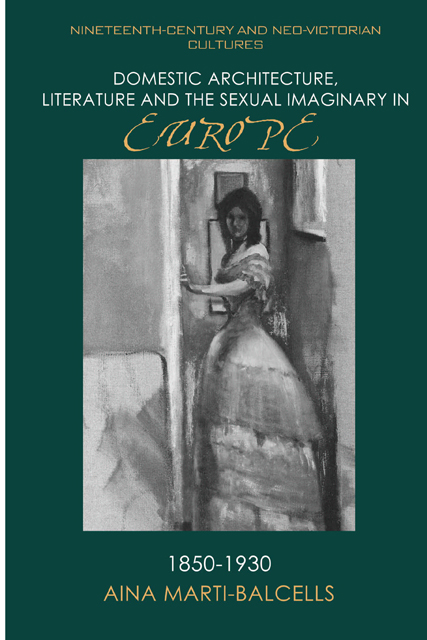
Domestic Architecture, Literature and the Sexual Imaginary in Europe, 1850-1930

-
Select format
-
- Publisher:
- Edinburgh University Press
- Publication date:
- 02 June 2023
- 31 October 2022
- ISBN:
- 9781474463096
- 9781474463072
- Dimensions:
- Weight & Pages:
- Dimensions:
- Weight & Pages:
- Subjects:
- Literature, Area Studies, European Literature, European Studies
You may already have access via personal or institutional login- Subjects:
- Literature, Area Studies, European Literature, European Studies
Show more authors 
You may already have access via personal or institutional login
Book description
This book sheds light on the contributions of architecture and its literary representations to a series of changes taking place in sexual culture during the late nineteenth and early twentieth-centuries in France, England, Germany and Austria. By analysing an important set of architectural discourses and literary representations of domestic architecture, the book illustrates the constant tension between an increasing sexual permissiveness and more conservative approaches to domesticity and sexuality. It shows the ways in which literature imagined the impact of new architectural designs on sexual culture that suggested the creation of more fluid forms of organisation of space and sexual mores.
Contents
Contents
Metrics
Full text views
Full text views helpTotal number of HTML views: 0
Total number of PDF views: 0 *
 Loading metrics...
* Views captured on Cambridge Core between #date#. This data will be updated every 24 hours.
Usage data cannot currently be displayed.
Accessibility standard: Unknown
Why this information is here
This section outlines the accessibility features of this content - including support for screen readers, full keyboard navigation and high-contrast display options. This may not be relevant for you.
Accessibility Information
Accessibility compliance for the PDF of this book is currently unknown and may be updated in the future.