To save content items to your account,
please confirm that you agree to abide by our usage policies.
If this is the first time you use this feature, you will be asked to authorise Cambridge Core to connect with your account.
Find out more about saving content to .
To save content items to your Kindle, first ensure no-reply@cambridge.org
is added to your Approved Personal Document E-mail List under your Personal Document Settings
on the Manage Your Content and Devices page of your Amazon account. Then enter the ‘name’ part
of your Kindle email address below.
Find out more about saving to your Kindle.
Note you can select to save to either the @free.kindle.com or @kindle.com variations.
‘@free.kindle.com’ emails are free but can only be saved to your device when it is connected to wi-fi.
‘@kindle.com’ emails can be delivered even when you are not connected to wi-fi, but note that service fees apply.
Why do people support or resist climate solutions? And what actually moves societies from concern to action? This book brings together leading scholars in psychology to answer these urgent questions. Spanning cognition, emotion, values, misinformation, social norms, identity, culture, decision-making, and collective action, it offers the most comprehensive synthesis to date of the psychological forces shaping climate outcomes. Moving beyond abstract debates, the volume focuses explicitly on solutions: how to increase public support for effective policy, counter polarization and conspiracy beliefs, leverage social norms, mobilize social movements, and design interventions that bridge individual behaviors and systemic change. Each chapter combines rigorous scientific evidence with clear implications for practice, culminating in a policy-oriented summary for practitioners. Accessible yet authoritative, this work is an essential resource for anyone seeking a science-based roadmap to advancing effective and equitable climate action. This title is also available as open access on Cambridge Core.
What exactly are viewers or audiences expected to appreciate when language is put on display? What kinds of ideologies about language underpin such displays? Does language operate differently when it becomes the intended object of display as opposed to when it is being used for regular communication? Language is often 'invisible' because we use it without thinking too much about it. The study of language on display makes the invisible visible. Drawing on examples of the display of language in multiple contexts: museums, exhibitions, contests, celebrations, this book analyses cases where language is deliberately offered up as an object for contemplation, entertainment, and even decoration; language as spectacle in and of itself. It provides an innovative theorisation that shows how the subjectification process involved – where people are treated more as viewers than users – entrenches an objectivist understanding of language. This title is also available as open access on Cambridge Core.
This Handbook provides the first comprehensive examination of the legal strategies around the world shaping sustainability in global value chains. Bringing together leading scholars, it maps how diverse legal disciplines (including corporate law, labour law, tax law, tort law, private law, environmental law, international law and more) conceptualise and regulate the complex architectures of cross-border production. Through a unifying analytical framework, the book reveals how fragmented regulatory approaches can complement one another, and how legal tools may address the environmental, social, and economic challenges that global production networks create and sustain. Covering jurisdictions across the globe and engaging with emerging regulatory instruments such as due diligence laws, sustainability reporting obligations, climate transition plans, and international taxation initiatives, this Handbook offers an indispensable resource for academics, policymakers, practitioners, and students concerned with responsible business conduct and sustainable development. This title is also available as open access on Cambridge Core.
In The Wealth of Nations, Adam Smith set out a system for understanding why some societies prosper and others do not, and in the process founded the discipline of economics. In the 250 years since its publication, the world has transformed beyond recognition. Smith has also been reduced in the collective imagination to little more than a byword for the free market. The Wealth of Nations at 250 brings together today's most influential economists and economic historians to ask where Smith's system still holds, and where it needs new machinery. The task of rethinking what causes prosperity demands a return to the breadth of Smith's original vision, incorporating the cultural, institutional, and political foundations as well as the economic. Written in the spirit of Smith's own clarity, the book speaks to anyone interested in how and why nations prosper. This title is also available as Open Access on Cambridge Core.
What happens when people cross borders to learn and then return to the worlds that shaped them? This book follows 391 returnees from sixty-nine countries to show how international higher education reshapes how individuals see, judge, and engage in their societies. Drawing on vivid cases from education, health, poverty, and democratic life, it traces five generative mechanisms-reflexive agency, civic understanding, knowledge translation, transnational social relations, and intercultural understanding-through which comparative experience becomes consequential after return. Grounded in critical realism, transformative learning, and transnational theory, the book introduces a new framework centred on presence: a sustained relational stance through which individuals hold their ground under constraint. It offers an empirically rich account of how international study widens interpretive horizons, sustains engagement, and keeps democratic and institutional possibility open even in settings marked by inequality, fragility, and uncertainty. This title is also available as open access on Cambridge Core.
This book makes a bold but crucial claim: storytelling is not an embellishment to medical knowledge-it is the engine that drives it. Evidence becomes meaningful only when it is framed and interpreted within existing stories. Focusing on reproductive health, Beyond the Bedside explores diverse understandings of medical evidence in relation to some of today's most contested topics, including embryo selection in IVF, puberty blockers for transgender youth and abortion care. Across these cases, the authors reveal how identical evidence can lead to starkly different syntheses, guidelines, and public positions, depending on the narratives into which it is woven. Introducing the concept of deep knowledge translation, the book offers a new way of analysing how evidence moves across research, clinical practice, policy, law, and public debate. It shows why medical controversies persist and how understanding narrative dynamics can transform the way we produce and use knowledge. Available as Open Access on Cambridge Core.
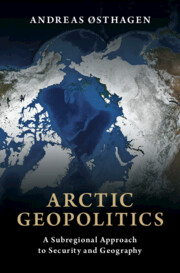
Is the Arctic destined for conflict, or can cooperation prevail? This timely book explores the complex interplay of security, geography, and regions in the Arctic. Moving beyond simplistic narratives of geopolitical rivalry, it offers a nuanced, multilevel analysis of state security practices, foreign policies, and regional cooperation across distinct subregions. Challenging conventional notions of 'regions' and re-evaluating the role of geographic proximity, it provides fresh insights into how states engage with their neighbours. It also explores the enduring relevance of geography in international relations, demonstrating how the concept of an 'Arctic region' can be a powerful framework but also rests on some false assumptions. Essential for scholars, students, and policymakers, Arctic Geopolitics reshapes our understanding of security dynamics in the Arctic and beyond. This title is also available as Open Access on Cambridge Core.
In this vivid and ambitious study, Kate Driscoll uncovers the vibrant world of women who read, supported, and transformed the works of Torquato Tasso, one of the most prodigious poets of the Italian Renaissance. Drawing on rare archival materials, overlooked manuscripts, and visual evidence, she reveals how women readers – patrons, performers, and poets – shaped Tasso's writing and contributed to his enduring legacy. Moving beyond traditional accounts that cast women as passive recipients of male authorship, she demonstrates that they were instead active collaborators whose insights, conversations, and creative responses were integral to the making and meaning of premodern literary sociability. Through the frameworks of literary hospitality and horizontal patronage, she shows how networks of readers and writers crossed social and artistic boundaries, telling a compelling new story about how communities form around reading and how they survive over time. This title is also available as open access on Cambridge Core.
Understanding Our Philanthropic Commons boldly rethinks giving and volunteering as part of a shared resource system-a philanthropic 'commons'. Drawing on the influential frameworks of Elinor and Vincent Ostrom and the Ostrom Workshop, this book equips readers with accessible tools, including the Institutional Analysis and Development (IAD) framework, Social-Ecological Systems (SES), Institutional Grammar, and Design Principles for self-governance. Using case studies ranging from giving circles and donor-advised funds to workplace campaigns and volunteer management, the authors show how rules, norms, and strategies create institutional arrangements that shape philanthropic behaviour. Fresh insights are offered into addressing philanthropic social dilemmas-such as declines in giving and volunteering-amid technological, social, and economic change. This book is ideal for scholars, nonprofit leaders, policy professionals, and students seeking to understand how to sustainably govern giving resources, and for anyone interested in philanthropy. This title is also available as Open Access on Cambridge Core.
As pointed out by the editors of this unusual volume, studying the development of contemporary Spain is important to understand the challenges, dynamics and limits of political and economic modernization. The contributors of Twisted Modernization bring the theoretical and methodological toolkit of modern political economy to study Spain's long run economic (industrialization) and institutional (capacity, constitutions) processes, the evolution of its economic, political and judicial elites, and how the country's institutional legacies condition its democracy and economic outcomes to this day. Including work from over a dozen of well-known specialists and grounded in novel and systematic data, this volume provides a sober assessment of both the country's achievements and worrying future challenges. It offers key insights on the causes of democratization and growth in general and provides a model for further research on the trajectories of other countries. This title is also available as Open Access on Cambridge Core.
Long maligned as an unrelenting moralist, Ibsen is better understood as a writer who combined tragedy with comedy in unresolved tensions that revolutionized dramatic art. While most studies focus on the serious aspects of contemporary dramas like A Doll's House and Hedda Gabler, this book demonstrates how Ibsen integrated elements borrowed extensively from specific popular entertainments in these and other plays. Ellen Rees here offers the first ever empirical study of the repertoire Ibsen encountered while working as a theater practitioner between 1851 and 1864, upending most of what has been written about the theater culture he experienced. It critiques previous attempts to link Ibsen to the melodrama and the well-made play, arguing instead that Ibsen engaged parodically and intertextually with light musical comedy genres like the vaudeville, which directly influenced his rejection of idealism and embrace of realism. This title is also available as open access on Cambridge Core.
Many believe that the power to start wars is the most important issue of constitutional war powers-and perhaps the most important issue of constitutional law altogether. Yet this fixation on the power to start wars obscures equally important questions. Who has the power to prepare for war, deter it, conduct it, decide its aims, or end it? Although many democracies wrestle with these constitutional questions, the United States stands apart in that no other written constitution has had to function over time across such dramatic transformations in national military power and radical swings in strategy for wielding it. To show the many ways that political leaders have adapted law-in war, in peace, and in the gray zones between-this book weaves together the stories of American constitutional war powers, military history, and grand strategy from the Revolutionary War to possible conflicts of the future. This title is also available as open access on Cambridge Core.
Billions flow through illicit trade annually, harming societies and economies, yet the International Community struggle to respond effectively. This book provides a groundbreaking, integrated perspective, bridging the divide between Public International Law and WTO Law to offer a cohesive strategy against illicit trade. It starts by proposing a much-needed definition and innovative typologies – like per se vs de facto – to systematically understand the phenomenon. Real-world case studies and analysis of state regulatory measures illustrate the practical challenges. The author critiques the WTO's evasive stance, dissecting key dispute settlement cases, and introduces the concept of 'International Law Against Illicit Trade' (ILAIT) based on established legal principles. Offering more than mere critique, the book culminates in specific, actionable proposals for WTO reform, making a compelling case for adapting trade rules to fight illicit trade effectively. This book is a vital resource for anyone involved in international trade law and policy.
In this transformative study, Simon Smith explores how playwrights like Shakespeare crafted their plays for demanding and varied commercial audiences. Rediscovering the many forms of judgement practised in the early modern playhouse, he investigates influences ranging from the classical tradition and grammar-school classroom to ballad and jest culture. Where many prior studies have treated 'the judicious' as a self-contained subset of playgoers, Smith reveals the variety of careful assessments made in the theatre by a wide range of playgoers, showing that judgement and pleasure were often simultaneous elements of the same response. Chapters examine specific parts of plays that were especially subject to evaluation and generative of enjoyment: spectacle, words, plot, and actorly technique. Close readings shed fresh light on much-studied plays such as Hamlet and Volpone, as well as exploring several unfairly overlooked plays. This is a Flip it Open title and may be available open access on Cambridge Core.
Progress in the Social Sciences examines the degree to which social scientists have made progress in their understanding of democracy and democratic transitions. It provides a framework to assess social science research and a comprehensive analysis of the evolution of the field of democracy studies from the late eighteenth century to the present. The book finds that sustained progress has been made by the social sciences and that progress has come through the development of concepts, theories, data, and empirical tests. Moreover, the book argues that advances in knowledge have been made via bold innovations rather than through many small incremental steps. Driven by a desire to better understand whether the social sciences contribute to knowledge about societies and their problems, Progress in the Social Sciences is an ambitious and innovative work that counters the pessimistic views about accomplishments in the social sciences. This title is also available as open access on Cambridge Core.
This innovative collected work offers a new way of understanding history, society, and climate by placing water at the center of human life. Focusing on monsoon Asia – home to nearly half the world's population – it explores how oceans, rivers, monsoons, and even humidity have shaped cultures, economies, politics, and everyday survival for centuries. Bringing together historians, anthropologists, geographers, and environmental scholars, the volume connects local waterscapes to regional and global Earth systems, showing how human actions have reshaped the hydrological cycle with planetary consequences. Through vivid case studies ranging from river basins and coastal cities to human bodies, beliefs, and technologies, the book reveals water as both a life-giving force and a source of risk, power, and conflict. This title is also available as open access on Cambridge Core.
What does it mean to know, act, and be in the world? This book explores the embodied nature of human knowledge. Drawing on phenomenology and cognitive science, it shows how bodily experience shapes the self, social understanding, and practical knowledge. Philosopher and psychologist Shogo Tanaka examines motor learning, body schema, and lived experience to shed light on this subject with chapters exploring intercorporeal sociality, social cognition, narrative identity, and cultural meaning. By reflecting on the methods and limits of studying embodied knowledge, the text reveals how habits, skilled action, and even contemplative practices disclose the body as a medium of insight. This book is also available Open Access on Cambridge Core.