To save content items to your account,
please confirm that you agree to abide by our usage policies.
If this is the first time you use this feature, you will be asked to authorise Cambridge Core to connect with your account.
Find out more about saving content to .
To save content items to your Kindle, first ensure no-reply@cambridge.org
is added to your Approved Personal Document E-mail List under your Personal Document Settings
on the Manage Your Content and Devices page of your Amazon account. Then enter the ‘name’ part
of your Kindle email address below.
Find out more about saving to your Kindle.
Note you can select to save to either the @free.kindle.com or @kindle.com variations.
‘@free.kindle.com’ emails are free but can only be saved to your device when it is connected to wi-fi.
‘@kindle.com’ emails can be delivered even when you are not connected to wi-fi, but note that service fees apply.
Chapter 8 considers a radically different version of the dynamic explored in chs 6-7: the relationships between provincial governors and Christian communities across the Mediterranean world. For much of this period, these governors were outsiders with short terms of office, who relied heavily on resident office staffs and local grandees. Recent revisionist work on the Christianization of the Roman world has thus stressed the tendency of provincial appointees to prioritise those local elite interests over the demands of bishops and ascetics in the context of religious conflict. As Brent Shaw has put it, the governor could ‘give rather short shrift to a person whom they thought had no standing to intervene in the running of the state affairs over which they had authority’ (Shaw 2015, 58). In this chapter, I seek to modify this picture by suggesting that membership of the church and relationships with provincial Christian communities, institutions, and authority figures played a more significant role for governors than has been appreciated. In this sense, bishops and ascetics were, in fact, amongst the local interest groups whose collaboration these Christian appointees had to pursue.
This chapter explores the challenge of teaching Homer and Vergil in the Roman Empire, focusing on the pleasures of fiction in epic poetry. Using the Phaeacian books of the Odyssey (6–13) and Carthaginian books of the Aeneid (1–4) as case studies, it shows how educators reckoned with the poetic seduction that threatened to derail heroic virtue and integrity. Drawing on philosophical critiques of these canonical poets, the chapter traces evolving responses to the nexus of “Phaeacian pleasures” in their episodes. In the second half, it analyzes how four educators – Plutarch, the anonymous author of the Essay on Homer, Tiberius Claudius Donatus, and Augustine – developed distinctive approaches to epic pleasure. While Plutarch disciplines poetic deception into a propaedeutic for philosophy, the Essay embraces Homeric fiction as a new pedagogy of pleasure. Donatus treats the Aeneid as rhetorical panegyric, while Augustine transforms the affective power of Aeneas and Dido into a new Christian grammar. Together, these authors reveal the centrality of epic pleasure to Imperial education and the divergent strategies by which students learned to navigate literary enchantment
In this chapter I trace the problem of killing in Christian thought. I then raise the question of whether any intentional killing can be justified; in the remainder of the book I argue that the answer to this question is “no”.
Everyone recognizes that it is, in general, wrong to intentionally kill a human being. But are there exceptions to that rule? In Killing and Christian Ethics, Christopher Tollefsen argues that there are no exceptions: the rule is absolute. The absolute view on killing that he defends has important implications for bioethical issues at the beginning and end of life, such as abortion and euthanasia. It has equally important implications for the morality of capital punishment and the morality of killing in war. Tollefsen argues that a lethal act is morally permissible only when it is an unintended side effect of one's action. In this way, some lethal acts of force, such as personal self-defense, or defense of a polity in a defensive war, may be justified -- but only if they involve no intension of causing death. Even God, Tollefsen argues, neither intends death, nor commands the intentional taking of life.
This chapter explores ideas about the origins of the self. It focuses specifically on the various accounts of the origins of the self to be found in the works of Augustine, who is Charles Taylor’s second historical reference point (after Plato) as he builds his account of the sources of the modern self. However, the chapter diverges markedly from Taylor’s emphasis on radical reflexivity, the self discovered through introspection. It studies two aspects of the self for Augustine: first, the self’s formation in what Taylor himself calls “webs of interlocution”; second, and more innovatively, the chapter explores the scattered traces of Augustine’s thoughts on the pre-natal self, and on the mystery of the moment at which soul combines with body to become a human person. Augustine ponders this mystery but never makes a declarative statement on the topic, and the chapter suggests that we should listen to the Augustinian nescio (“I don’t know”) and its resultant embrace of indeterminacy, instead of the Cartesian cogito, as we think about the nature of the self.
This chapter revisits the question of Renaissance individualism by focusing on the writings of two early propagators of the Italian Renaissance: Petrarch and Boccaccio. Through an analysis of their literary dialogues with central medieval authorities and institutions, it argues that both authors develop a highly personal, earthbound conception of a relational self. In their engagements with figures such as Augustine (for Petrarch) and Dante (for Boccaccio), they challenge traditional structures of order and meaning, questioning their relevance to contemporary experience and thereby opening a space for an individualism that may be described as “modern.” The chapter also demonstrates that these dialogues are not purely agonistic or triumphant, but reveal the costs and contradictions of this emerging individualism – whether in its lack of metaphysical grounding or its destabilizing effects on the social fabric. Rather than simply discarding old authorities, Petrarch and Boccaccio’s representations of the self often seek to reconcile the old with the new, individualism with tradition, and self with others, anticipating Charles Taylor’s emphasis on the relational nature of the self.
This article argues for a possible route by which Thomism might affirm the goodness of physical deformity as an aid to abstraction. Recent scholarship has shown how Aquinas can speak positively of bodily diversity as part of God’s providential order, without treating physical defect as a loss of dignity. I extend this line by asking whether Aquinas can also give physical deformity an intrinsic epistemic role. For Augustine, the cosmos is an intelligible whole ordered by eternal Forms in the Word, mediated by rationes seminales, so that even physical defects remain diminished likenesses of their exemplars and can serve the good of the whole. Aquinas rejects this strong Platonic imaging: he retains divine ideas as extrinsic measures determined by God’s will, treats cosmic unity as an ordo communis under providence, and identifies goodness with the actualisation of natural potency. I therefore locate physical deformity as a mixed case of David Oderberg’s notion of ‘goodness by approximation’. The paper states conditions under which a mixed case can clarify a ratio and sharpen the universal: intelligible species are entia rationis grounded in substantial similarity, and atypical cases can remove misleading accompaniments so that what belongs per se becomes more evident.
Heresy was a concept by which Joyce understood his role as evangelist of a new literature. The theology of the heretic Giordano Bruno informs mystical religiosity in a range of Joyce’s fiction; it also influenced Joyce’s overall view of his own mission to challenge Catholicism, which finds its ultimate expression in Finnegans Wake. The place that Bruno affords sensuality within pantheism appealed to Joyce. From Bruno’s thought the corporeal – and sexuality in particular – is significant to reflections on the soul in Joyce’s early fiction, such as Stephen Hero. A heretical reading of St Augustine’s felix culpa, the ‘happy sin’, is central to Joyce’s later novels, underpinning both Molly Bloom’s soliloquy and the vision of God as masturbator in Finnegans Wake. As Joyce’s last novel devotes considerable attention to the work of St Augustine and Newman, and stylistic dialogue with the Bible, the overall task of the Wake can be considered heretical.
For Pascal, our knowledge of everything from geometry and the external world to God comes not from reason or experience alone, but rather it requires a feeling of “the heart.” This central notion in Pascal, which is underexplored in the literature, is the key to understanding his philosophy. This chapter develops a “cordate” (or heart-shaped) epistemology to show how the heart replaces reason and experience as the foundation in Pascal. Once we piece together an account of the heart – no easy task, since Pascal’s notes do not explicitly define it – we can trace its role in generating belief. The heart is, roughly, an affective orientation that is the seat of the will, which in turn affects experience, feelings, and perception. It even generates its own reasons. This affective orientation includes, for example, what one fundamentally loves, hates, fears, and so on. We can then see how a feeling of the heart can generate knowledge of first principles, that we are not dreaming, and, once we consider the role of the heart in Pascal’s Augustinian theology, a kind of religious engagement with the world and ultimately a love (and consequently knowledge) of God. Applications to life today are also explored.
Philosophy is not only about beliefs but also decisions and desires. This chapter explores Pascal’s ideas about the human condition, how our desires can make us miserable even when they are satisfied, and how this condition leads us to seek distractions that only make us more miserable. Again we find Pascal’s views and prescriptions stem from the heart, as our fallen state is the source of this sad situation. At the same time, by thinking well about it we can arrive at the conclusion that life could be great, and that the fact that it is not so great confirms the theology of the Fall (and doesn’t confirm other religions, which do not predict our actual predicament). The heart, then, is the key to all of our engagement with the world: not only our beliefs about it but also our desires and happiness. Remarkably, some of the problems Pascal wrote so eloquently about seem especially applicable today, as his descriptions of the need to display a fake identity predict and diagnose TikTok culture, and his rejection of the project to “find your true self,” “love yourself,” and “go with your heart” challenges the typical self-help advice one finds today.
Any proper investigation of Machiavelli’s conceptualization of the state has to commence where his own investigation begins: with his definition of what states are. Accordingly, this chapter elucidates the particular theory of definition which informs Machiavelli’s theory of lo stato. Machiavelli is continually preoccupied with what we ‘call’ things – or how we ‘nominate’ them, as he sometimes puts it. These are matters of definition in a technical sense, pursued according to a set of argumentative procedures derived from the pages of the ancient Roman rhetorical theorists Cicero and Quintilian. This chapter reconstructs their theory of definition, showing how they classify things in rhetorical argument, before turning to illustrate the theory in action in Roman antiquity by examining how the concept of the civitas – the crucially important political noun used in classical Latin to denote ‘the city’, ‘city-state’, or ‘citizenry’ – is handled in the writings of Cicero, Seneca, and Augustine. The second section of the chapter analyses the reception of this theory and its application to the idea of the civitas in medieval and Renaissance political culture in order to explain how and why Machiavelli comes to rely upon it.
Other than Paul, no writer has had greater influence on the theology of justification than Augustine. This landmark study fills an astonishing lacuna in scholarship, offering the first comprehensive study of Augustine's theology of justification. Bringing an innovative approach to the topic, Christopher Mooney follows Augustine's own insistence that justification in Scripture is impossible to define apart from a precise understanding of faith. He argues that Augustine came to distinguish three distinct senses of faith, which are motivated by fear, hope, or love. These three types of faith result in very different accounts of justification. To demonstrate this insight, Mooney offers a developmental reading of Augustine, from his earliest to his latest writings, with special focus on the nature of justification, faith, hope, baptism, Augustine's reading of Paul, the Pelagian controversy, and Christology. Clear and engaging, Mooney's study of Augustine also illuminates numerous related issues, such as his theology of grace, the virtues, biblical exegesis, and the sacraments.
This chapter discusses the social and professional contexts for the emergence of the Italian humanists as a new cultural “class,” and traces the classical and Christian antecedents of their formation of a substantive discourse on secular vocation.
Augustine's Confessions, written between AD 394 and 400, is an autobiographical work which outlines his youth and his conversion to Christianity. It is one of the great texts of Late Antiquity, the first Western Christian autobiography ever written, and it retains its fascination for philosophers, theologians, historians, and scholars of religious studies today. This Critical Guide engages with Augustine's creative appropriation of the work of his predecessors in theology generally, in metaphysics, and in philosophy as therapy for the soul, and reframes a much discussed - but still poorly understood - passage from the Confessions with respect to recent philosophy. The volume represents the best of contemporary scholarship on Augustine's Confessions from a variety of disciplinary perspectives, and builds on existing scholarship to develop new insights, explore underappreciated themes, and situate Augustine in the thought of his own day as well as ours.
Augustine and Aquinas assume that Moses’s law figures Christ. In this piece, I show how their complementary accounts of the old law rest upon other doctrinal emphases, namely providence, God the Father, and created things as participations in divine goodness. By drawing out these themes, I advance reflection on the worth of Moses’s law, unfolding how other doctrines structure loving attention to the law as indicative of Christ.
The Origins of Scholasticism provides the first systematic account of the theological and philosophical ideas that were debated and developed by the scholars who flourished during the years immediately before and after the founding of the first official university at Paris. The period from 1150-1250 has traditionally been neglected in favor of the next century (1250-1350) which witnessed the rise of intellectual giants like Thomas Aquinas, Albert the Great, and John Duns Scotus, who famously popularized the major works of Aristotle. As this volume demonstrates, however, earlier scholastic thinkers laid the groundwork for the emergence of theology as a discipline with which such later thinkers actively engaged. Although they relied heavily on traditional theological sources, this volume highlights the extent to which they also made use of philosophy not only from the Greek but also the Arabic traditions in ways that defined the role it would play in theological contexts for generations to follow.
This Element presents an economic analysis of Augustine's Laws and Weapons Systems. It explores and evaluates their economic content and subjects them to critical analysis. The Element is both theoretical and empirical and the empirical work uses an original UK data set on military aircraft over the period 1934 to 1964. The period embraces major technical changes involving war and peace and the shift to jet powered aircraft.
This introduction establishes the overarching claim of this book: that Elizabethan and Jacobean dramatists consistently focus on the disastrous consequences of willing and will-making, while simultaneously emphasizing the vital role that wills played in defining one’s sense of identity and self-worth. English Renaissance drama can be understood, in one way, to be preoccupied with considering the influence that wills exert over human life.
Here, I provide an overview of how both the faculty of the will and the last will and testament were conceived of in the period. The will was primarily thought to be an unruly part of the soul that hinders our ability to achieve what we desire, though the performance of the will was not merely localized to the body or psyche. One way of enacting one’s will upon the world was achieved for some through the production of a last will and testament. Last wills acted as tools for testators to impose their will upon the living, dictating who will, and who will not, benefit from their death. In their immaterial and material forms, wills shaped the quality and conditions of one’s life and afterlife.
Truthfulness is, so to speak, Kant’s go-to duty. He invokes it in a wide range of philosophical settings, such as his discussion of free will in the Critique of Pure Reason, in his argument for a pure moral theory in the Groundwork, in the detailed moral philosophy of the Metaphysics of Morals and in his late lectures on education. Even though its scope and its theoretical foundation vary, the duty not to lie remains Kant’s prime example of a strict and unequivocal obligation. By way of introduction, this chapter first provides a survey of some important passages in which Kant invokes or argues for the duty of truthfulness before turning to the textbook example that is the bone of contention between him and Benjamin Constant and presenting some reactions provoked by the main thesis of Kant’s essay “On a Supposed Right to Lie”: that there is an unconditional, absolute duty to be truthful even in emergencies.
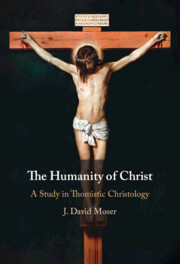
Scripture teaches that God saves humanity through God's own actions and sufferings in Christ, thereby raising a key theological question: How can God use his own human actions and sufferings to bring about those things that he causes through divine power? To answer that question, J. David Moser here explores St. Thomas Aquinas's teaching that Christ's humanity is an instrument of the divinity. Offering an informed account of how Christian salvation happens through the Incarnation of Christ, he also poses a new set of questions about the Incarnation that Aquinas himself did not consider. In response to these questions, and in conversation with a wide range of theologians, including John Duns Scotus and Matthias Joseph Scheeben, Moser argues that the instrument doctrine, an underexplored and underappreciated idea, deepens our understanding of salvation that comes through the Incarnation of Jesus Christ. He also defends the instrument doctrine as a dogmatic theological topic worthy of consideration today.