To save content items to your account,
please confirm that you agree to abide by our usage policies.
If this is the first time you use this feature, you will be asked to authorise Cambridge Core to connect with your account.
Find out more about saving content to .
To save content items to your Kindle, first ensure no-reply@cambridge.org
is added to your Approved Personal Document E-mail List under your Personal Document Settings
on the Manage Your Content and Devices page of your Amazon account. Then enter the ‘name’ part
of your Kindle email address below.
Find out more about saving to your Kindle.
Note you can select to save to either the @free.kindle.com or @kindle.com variations.
‘@free.kindle.com’ emails are free but can only be saved to your device when it is connected to wi-fi.
‘@kindle.com’ emails can be delivered even when you are not connected to wi-fi, but note that service fees apply.
Since their publication in the 1950s and 1980s respectively, the Commentaries on the Geneva Conventions of 1949 and their Additional Protocols of 1977 have become a major reference for the application and interpretation of those treaties. The International Committee of the Red Cross, together with a team of renowned experts, is currently updating these Commentaries in order to document developments and provide up-to-date interpretations of the treaty texts. This article provides an introduction to the updated Commentary on Geneva Convention IV (GC IV), published online in 2025. It describes the methodology behind the updated Commentaries before explaining the historical background of bringing civilian protection into the framework of the Geneva Conventions. It then discusses how the structure of GC IV impacts its application and explains GC IV’s personal, geographic and temporal scope of application. The article summarizes key substantive protections provided in the Convention for civilians and their property during armed conflicts, including in situations of occupation, and points to where these are addressed in the updated Commentary.
This chapter begins with the foundations and the history of international humanitarian law before discussing the scope of its application and the law governing the conduct of hostilities, namely the means and methods of warfare. The final sections discuss the law governing the protection of persons during armed conflict and the implementation and enforcement of international humanitarian law. In introducing international humanitarian law, this chapter focuses on the four Geneva Conventions of 1949 and the Additional Protocols of 1977.
This chapter, which is divided into four sections, examines the personal scope of IHL during NIAC by identifying the principal bearers of obligations and beneficiaries of protection. The first section analyses the conventional ratione personae architecture of both CA3 and APII to identify areas of convergence and divergence between the two and determine whether a single ratione personae framework exists for NIAC. The second section identifies the principal bearers of IHL obligations and explores how and when IHL creates obligations for both entities and individuals. The third section determines the primary beneficiaries of protections, with an exclusive focus on the concept of civilian during NIAC. The fourth section explores the relationship between obligations and protections by examining the phenomenon of intra-Party violence to determine whether and, if so under what conditions, IHL provides legal protection to non-opposing forces during NIAC.
This chapter challenges simplistic views and aims to show that nationalism plays a marginal role in the combat zone. It argues that in most cases, the warrior ethos is not linked directly to nationalist ideas and practices. Instead, the majority of combatants fight from a sense of moral obligation and emotional attachment to their micro-level groups. However, this is not to say that nationalism is irrelevant in the context of violent conflicts. On the contrary, the chapter aims to show how nationalist ideas and practices permeate the organisational and ideological scaffolds of the wider social world. It argues that nationalism is primarily generated and reproduced in civilian institutions and other domains of civilian life.
The First World War resulted in major economic and agricultural strains to neutral and belligerent countries alike, including shifts in trading patterns, blockades, and extensive physical destruction on a unique scale. The resulting hunger crises transformed relationships between the state, citizens, and civil society and had a profound and lasting impact on the twentieth century. As civilians across Europe and the Middle East struggled to survive, new emphasis was placed on the state's responsibility to provide food for its citizens, leading to emerging concerns about 'nutritional sovereignty', the viability of new states, and a huge expansion of international humanitarianism. This innovative history utilises both contemporary and modern maps to analyse food shortages and responses to them across Europe and the Ottoman Empire from 1914 to 1923. Through a comparative approach, the authors demonstrate the consequences of civilian hunger in its military, international, political, social, economic, and cultural dimensions.
For civilians who lived through the American Revolution, war, politics, and family life were inextricably linked. As the continent descended into civil war, violence seeped into daily life, with profound implications for the varied inhabitants of colonial North America, including Black, white, and Indigenous families; free and enslaved people; Loyalists and Revolutionaries; men and women. Civilians, even those who sought to avoid the war, inhabited a precarious position, subject to widespread violence, household invasion, and new, occasionally coercive, authorities and conflicting allegiances. These circumstances unsettled the power relations and hierarchies that governed daily life, disrupting political authorities, social interactions, labor arrangements, and economic exchanges. Rippling throughout Revolutionary society, military conflict and political shifts exposed deeply rooted societal fissures, particularly regarding race, class, and gender. Recognizing this, poor white men, white women, the enslaved, and free Black colonists advocated for a more expansive, inclusive definition of liberty – a fight that has persisted beyond the war.
This chapter highlights those displaced by the American War for Independence. In the first part this chapter explores the conceptualization of the refugee in the American context and terminology as well as the war’s varied character, notions of charity, the complexity of sickness and the differing refugee experiences of White, Black, and Native American, Patriot, Loyalist, or neither. I underscore the complexity of the refugee experience and its contrary character. In the second part this chapter highlights the refugee diaspora in a global context to form a global picture. From North America out into the rapidly expanding British empire, I explore where refugees went and what became of them. I investigate the complex ways these migrants shaped the places they traveled to and what the long-lasting effects of these journeys were. In so doing this chapter underscores the wider connections and global repercussions engendered by the refugee element in this influential war.
According to the dominant narrative in international humanitarian law, the 1949 Geneva Convention on Civilians is part of the discipline’s humanitarian progress, driven by the International Committee of the Red Cross, in response to atrocities committed during World War II. This paper argues that historical research enables a more nuanced historical account which challenges when, how and by whom the protection of civilians was developed. It demonstrates that the Convention’s protection regime was shaped by the efforts of a variety of non-state actors during the inter-war years. In particular, it focuses on attempts by the International Committee of the Red Cross, International Law Association and International Committee of Military Medicine and Pharmacy to advance the law independently and in cooperation in relation to ‘enemy civilians’ and safety zones after World War I. However, it suggests that these actors were to some extent inhibited by conceptual limitations and self-restraint, which ultimately led to some of the weaknesses in the protection regime under the 1949 ‘Civilian Convention’. The paper thus reveals the struggle over the conceptualisation of individuals who are today considered civilians in the inter-war years which is embedded in the text of the adopted treaty.
This essay provides insights into the circumstances and potential societal impact of more than 10 million evacuees who fled Japan's firebombed cities during World War II. Informed by interviews conducted by the United States Strategic Bombing Survey with Japanese citizens immediately after surrender, this analysis establishes a new vantage point from which to understand the complex social circumstances of Japan in the final months of the war.
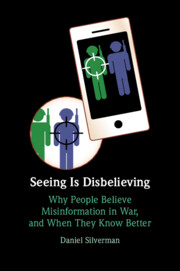
This chapter introduces the reader to the topic studied in the book, factual misinformation and its appeal in war. It poses the main research question of who believes in wartime misinformation and how people know what is happening in war. It then outlines the book’s central argument about the role of proximity and exposure to the fighting in constraining public misperceptions in conflict, and the methods and types of evidence used to test it. After clarifying some key concepts used in the book, it finally closes with a sketch of the manuscript’s main implications and an outline of its structure and contents.
This essay assesses the morality of Ukraine's use of drones to attack targets inside Russia. Following its invasion by Russian forces, Ukraine has had a just cause to wage a war of self-defense. However, its efforts to achieve that cause remain subject to moral limits. Even a state that has been unjustly attacked may not, for example, respond by deliberately targeting the attacking state's civilian population. To do so would violate the jus in bello principle of discrimination. The essay first describes how drone technology has frequently enabled long-range strikes against Russian military assets as well as other targets inside cities. It then explains why it would be morally wrong for Ukraine to attack its enemy's population centers. First, Russian civilians are not liable to attack, and this nonliability is undiminished by the injustice of Russia's invasion or by any in bello wrongs committed by the Russian military. Second, attacking Russian cities with drones would arguably achieve little or no self-defensive benefit for Ukraine, and it could even be counterproductive.
Factual misinformation is spread in conflict zones around the world, often with dire consequences. But when is this misinformation actually believed, and when is it not? Seeing is Disbelieving examines the appeal and limits of dangerous misinformation in war, and is the go-to text for understanding false beliefs and their impact in modern armed conflict. Daniel Silverman extends the burgeoning study of factual misinformation, conspiracy theories, and fake news in social and political life into a crucial new domain, while providing a powerful new argument about the limits of misinformation in high-stakes situations. Rich evidence from the US drone campaign in Pakistan, the counterinsurgency against ISIL in Iraq, and the Syrian civil war provide the backdrop for practical lessons in promoting peace, fighting wars, managing conflict, and countering misinformation more effectively.
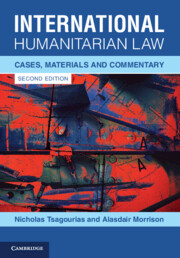
This is a general introduction to the book, explaining that the purpose of the book is to provide a concise but detailed explanation of the core rules of international humanitarian law. The contents of each chapter are summarised. It explains that the book looks at the major areas of IHL, putting them in historical context, so as to better understand how the law has evolved. This book also examines the current challenges for and pressures on the existing law, as IHL rules adopted in the time of cavalry and bayonets must adapt to deal with issues like drones, cyber warfare and autonomous weaponry. It notes that the third edition has been updated to reflect new developments in the law of armed conflict up to May 2023.
The notion of solidarity, although not new to the humanitarian sector, has re-emerged in recent discussions about effective and ethical humanitarian action, particularly in contexts such as Ukraine and Myanmar where the traditional humanitarian principles have been facing certain pressures. Because solidarity appears as a good but can also involve selectivity and privilege, and because it risks continued militarism and normalization of civilians participating within that militarism, the notion of solidarity merits rich and rigorous thinking. This article explores how the notion of solidarity is being utilized by those currently re-emphasizing its importance and what it might mean in practice in today's humanitarian contexts. The article argues that if solidary action involves not only a political stance but solidary working methods, the recent calls for solidarity demand respect for the variety of principles and practices within the humanitarian ecosystem, while nevertheless upholding mutual obligations owed within that professional community – that is, within careful limits as to what is considered humanitarian action.
The end of World War I brought not only the end of a great slaughter but also the creation of new countries, great expectations of better living conditions, and the promise of an end of scarcity. In Maribor, a contested border town occupied by Slovenian troops and annexed to the newly established State of Slovenes, Croats, and Serbs, expectations were even higher. A part of the population opposed the town's annexation to the newly established state and compared the living conditions at home with those in Austria. As early as November 1918, the Slovene City Food Council was established in Maribor to feed the city's population. It introduced measures similar to those introduced during the war, such as food ration cards. Despite these measures, food shortages and hunger were part of everyday life, especially in the winter of 1918–19. This article discusses civilians' survival strategies, as well as continuities and discontinuities between wartime and postwar measures to improve the food supply. It shows that despite the efforts of the new Yugoslav authorities, they often continued wartime practices and food remained of poor quality and difficult to access for most of the population throughout 1919.
Ordinary civilians are assumed to panic or freeze in crises, but research has shown that this is a myth. In many crises, civilians provide life-saving help to those in need. They may even form emergent groups, which are temporary organizations that are involved in crisis response activities. Their actions can be of major importance to the crisis response efforts, but professionals are often reluctant to include volunteers in formal crisis structures out of distrust and because it requires considerable adaptation. By excluding volunteers, responders are sure that trained professionals provide high-quality support to affected communities. The attitude of frontline responders to volunteers poses a dilemma. It is important to anticipate the presence of well-intentioned volunteers and build relations with them, so that their skills and intentions can be rapidly identified and potential coordination can be established early on. Civilians can be given a variety of tasks, depending on the crisis, but it should not foreclose the recognition of their possible victimhood. Open engagement enables the adaptive incorporation of civilians in frontline crisis response efforts.
Many contemporary armed conflicts are shaped by the reliance on airstrikes using traditional fighter planes or remotely piloted drones. As accounts of civilian casualties from airstrikes abound, the ethics and legality of individual airstrikes and broader targeting practices remain contested. Yet these concerns and debates are not new. In fact, a key attempt to regulate aerial warfare was made 100 years ago. In this article, we approach the regulation of aerial warfare through an examination of the 1923 Hague Draft Rules of Aerial Warfare and the contemporary scholarly discussion of these rules. While the Draft Rules have never been converted into a treaty, they embody logics of thinking about civilians, technologies of aerial warfare, and targeting that are still resonating in contemporary discussions of aerial warfare. This article argues for a contextualized understanding of the Draft Rules as an attempt to adapt International Humanitarian Law (IHL) to the new technological realities while maintaining distinctions between different kinds of spaces and non-combatants. We argue that the Draft Rules prefigure later debates about the legality of aerial bombing by tacitly operating with a narrow understanding of the civilian and by offering a range of excuses and justifications for bombing civilians.
The chapter discusses the application of the principle of distinction to combatants and civilians, the consequences of that distinction and the issue of those civilians who directly participate in hostilities both in IACs and NIACs. It then discusses the application of the concept in cyber warfare. The chapter then considers the positions of members of private military security companies, unlawful combatants and UN peacekeepers.
By drawing together key documents, case law, reports and other materials on international humanitarian law from diverse sources, the book presents in a systematic and analytically coherent manner this body of law and to offer students, teachers and practitioners an easily accessible, targeted but also critically informed account of the relevant rules and of how they apply in practice. It covers all areas of international humanitarian law and specifically addresses issues of contemporary interest such as cyber warfare, targeting, occupation, detention, human rights in armed conflict, peacekeeping, neutrality, responsibility and accountability, enforcement, reparations. The book is ideal for instruction, research, reference and application purposes either as a standalone resource or as accompaniment to textbooks and more specialist references.
This article argues that the growing involvement of civilians in activities on the digital battlefield during armed conflicts puts individuals at risk of harm and contributes to the erosion of the principle of distinction, a cornerstone of international humanitarian law (IHL). The article begins by outlining the ongoing trend of civilianization of the digital battlefield and puts forward brief scenarios to illustrate it. It then examines the narrow circumstances under which such forms of civilian involvement may qualify as direct participation in hostilities under IHL, and discusses what this means for the individuals concerned, particularly from the perspective of their loss of protection under the law. The analysis shows that certain types of State conduct which put civilians in harm's way by inducing them to directly participate in hostilities may constitute standalone violations of IHL and human rights law obligations. Beyond these specific prescriptions, the encouragement of civilian involvement undermines the principle of distinction, with dangerous ripple effects on the interpretation of those rules of IHL that flow from it. Accordingly, the article concludes that States should act to reverse the trend of civilianization of the digital battlefield and refrain as much as possible from involving civilians in the conduct of cyber hostilities.