To save content items to your account,
please confirm that you agree to abide by our usage policies.
If this is the first time you use this feature, you will be asked to authorise Cambridge Core to connect with your account.
Find out more about saving content to .
To save content items to your Kindle, first ensure no-reply@cambridge.org
is added to your Approved Personal Document E-mail List under your Personal Document Settings
on the Manage Your Content and Devices page of your Amazon account. Then enter the ‘name’ part
of your Kindle email address below.
Find out more about saving to your Kindle.
Note you can select to save to either the @free.kindle.com or @kindle.com variations.
‘@free.kindle.com’ emails are free but can only be saved to your device when it is connected to wi-fi.
‘@kindle.com’ emails can be delivered even when you are not connected to wi-fi, but note that service fees apply.
This chapter presents the matrix deviation inequality, a uniform deviation bound for random matrices over general sets. Applications include two-sided bounds for random matrices, refined estimates for random projections, covariance estimation in low dimensions, and an extension of the Johnson–Lindenstrauss lemma to infinite sets. We prove two geometric results: the M* bound, which shows how random slicing shrinks high-dimensional sets, and the escape theorem, which shows how slicing can completely miss them. These tools are applied to a fundamental data science task – learning structured high-dimensional linear models. We extend the matrix deviation inequality to arbitrary norms and use it to strengthen the Chevet inequality and derive the Dvoretzky– Milman theorem, which states that random low-dimensional projections of high-dimensional sets appear nearly round. Exercises cover matrix and process-level deviation bounds, high-dimensional estimation techniques such as the Lasso for sparse regression, the Garnaev–Gluskin theorem on random slicing of the cross-polytope, and general-norm extensions of the Johnson–Lindenstrauss lemma.
This chapter develops a non-asymptotic theory of random matrices. It starts with a quick refresher on linear algebra, including the perturbation theory for matrices and featuring a short proof of the Davis–Kahan inequality. Three key concepts are introduced – nets, covering numbers, and packing numbers – and linked to volume and error-correcting codes. Bounds on the operator norm and singular values of random matrices are established. Three applications are given: community detection in networks, covariance estimation, and spectral clustering. Exercises explore the power method to compute the top singular value, the Schur bound on the operator norm, Hermitian dilation,Walsh matrices, the Wedin theorem on matrix perturbations, a semidefinite relaxation of the cut norm, the volume of high-dimensional balls, and Gaussian mixture models.
This chapter explores methods of concentration that do not rely on independence. We introduce the isoperimetric approach and discuss concentration inequalities across a variety of metric measure spaces – including the sphere, Gaussian space, discrete and continuous cubes, the symmetric group, Riemannian manifolds, and the Grassmannian. As an application, we derive the Johnson–Lindenstrauss lemma, a fundamental result in dimensionality reduction for high-dimensional data. We then develop matrix concentration inequalities, with an emphasis on the matrix Bernstein inequality, which extends the classical Bernstein inequality to random matrices. Applications include community detection in sparse networks and covariance estimation for heavy-tailed distributions. Exercises explore binary dimension reduction, matrix calculus, additional matrix concentration results, and matrix sketching.
'High-Dimensional Probability,' winner of the 2019 PROSE Award in Mathematics, offers an accessible and friendly introduction to key probabilistic methods for mathematical data scientists. Streamlined and updated, this second edition integrates theory, core tools, and modern applications. Concentration inequalities are central, including classical results like Hoeffding's and Chernoff's inequalities, and modern ones like the matrix Bernstein inequality. The book also develops methods based on stochastic processes – Slepian's, Sudakov's, and Dudley's inequalities, generic chaining, and VC-based bounds. Applications include covariance estimation, clustering, networks, semidefinite programming, coding, dimension reduction, matrix completion, and machine learning. New to this edition are 200 additional exercises, alongside extra hints to assist with self-study. Material on analysis, probability, and linear algebra has been reworked and expanded to help bridge the gap from a typical undergraduate background to a second course in probability.
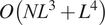
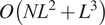
Principal component analysis (PCA) plays an important role in the analysis of cryo-electron microscopy (cryo-EM) images for various tasks such as classification, denoising, compression, and ab initio modeling. We introduce a fast method for estimating a compressed representation of the 2-D covariance matrix of noisy cryo-EM projection images affected by radial point spread functions that enables fast PCA computation. Our method is based on a new algorithm for expanding images in the Fourier–Bessel basis (the harmonics on the disk), which provides a convenient way to handle the effect of the contrast transfer functions. For $ N $ images of size $ L\times L $, our method has time complexity $ O\left({NL}^3+{L}^4\right) $ and space complexity $ O\left({NL}^2+{L}^3\right) $. In contrast to previous work, these complexities are independent of the number of different contrast transfer functions of the images. We demonstrate our approach on synthetic and experimental data and show acceleration by factors of up to two orders of magnitude.
We consider a model selection estimator of the covariance of a random process. Using the Unbiased Risk Estimation (U.R.E.) method, we build an estimator of the risk which allows to select an estimator in a collection of models. Then, we present an oracle inequality which ensures that the risk of the selected estimator is close to the risk of the oracle. Simulations show the efficiency of this methodology.
Recommend this
Email your librarian or administrator to recommend adding this to your organisation's collection.
