To save content items to your account,
please confirm that you agree to abide by our usage policies.
If this is the first time you use this feature, you will be asked to authorise Cambridge Core to connect with your account.
Find out more about saving content to .
To save content items to your Kindle, first ensure no-reply@cambridge.org
is added to your Approved Personal Document E-mail List under your Personal Document Settings
on the Manage Your Content and Devices page of your Amazon account. Then enter the ‘name’ part
of your Kindle email address below.
Find out more about saving to your Kindle.
Note you can select to save to either the @free.kindle.com or @kindle.com variations.
‘@free.kindle.com’ emails are free but can only be saved to your device when it is connected to wi-fi.
‘@kindle.com’ emails can be delivered even when you are not connected to wi-fi, but note that service fees apply.
This chapter charts the origins of the classical law of civil war. It observes the doctrine’s roots in the old Roman ius gentium and argues that the classical doctrine itself was born in the early modern period alongside the European colonial empires and the Westphalian understanding of the law of nations. The chapter then illustrates this process by examining in detail the impact of insurgent prize jurisdictions and belligerent counter-revolutionary actions on foreign diplomacy during the Dutch Revolt (1566–1648) and the English Civil War (1642–1651).In light of these events, the chapter summarises the key doctrinal developments of the law of civil war in the writings of Grotius, Gentili, and their contemporaries, and the crystallisation of the classical doctrine of civil war in Emer de Vattel’s Droit des gens. The chapter concludes here, having set the scene for the legal debates of the age of revolutions.
Pelli and Beccaria in the 1760s produced the first comprehensive critiques of the death penalty. They did not come from nowhere. For centuries, philosophers, jurists, and religious leaders produced ideas and arguments that would feed into the abolitionist cause, in a way unpredicted by their authors, none of whom were abolitionists. The starting point (ironically, as it became the standard-bearer of retributivism) was the Lex Talionis of the Code of Hammurabi, which aimed at controlling private vengeance, while advancing the principle of crime–punishment proportionality. Plato introduced the idea that punishment must be forward- rather than backward-looking, and dismissed the latter as vengeance. Jesus’s words and actions problematized the practice of capital punishment. Thomas More was the first to argue against the death penalty for a specific crime, namely, theft, while natural jurists such as Pufendorf ruled out Grotius’s assertion that capital punishment was permissible according to the law of nature. Beccaria combined social contract theory and proto-utilitarian considerations, the latter coming into play through the agency of Enlightenment philosophers, English, Scottish, and French. The advance of abolitionism was and is far from inevitable, as illustrated by the obstacles faced in England (for a time) and North America (perhaps lasting).
The death penalty was accepted almost universally until the eighteenth century, when Giuseppe Pelli of Florence and Cesare Beccaria of Milan produced works calling for its abolition. Why was this form of punishment so integrated into laws and customary practices? And what is the pre-history of the arguments in favour of its abolition? This book is the first to trace the origins of these ideas, beginning with the Lex Talionis in the Code of Hammurabi and moving across the Bible, Plato, to the Renaissance, and the emergence of utilitarianism in the 18th century. It also explores how the advance of the abolition of the death penalty was held up for a time in Britain, and stalled, apparently permanently, in America. Peter Garnsey ranges across philosophy, theology, law, and politics to provide a balanced and accessible overview of the beliefs about crime and punishment that underlay the arguments of the first abolitionists. This study is a compelling and original contribution to the history of ideas about capital punishment.
This chapter examines rights, authority, and autonomy under the Dutch East India Company (VOC) in seventeenth century Southeast Asia. Exploring how the Company managed its employees, Asian treaty partners, and diverse populations under its rule, this chapter is divided into three sections. The first delves into the instruments that granted the Company a range of powers, including the Company charter, commissions, as well as employment and disciplinary contracts. In the 1640s these were later supplemented by the Batavian Statutes. The 2nd section explores the VOC’s interactions with Asian rulers by focusing on treaties and alliances. These treaties curtailed the liberty of Asian rulers, compromised their sovereignty, and reinforced their dependency on the VOC. The 3rd section shifts attention to the VOC’s administration of ethnic and religious communities under its rule.
Since Richard Tuck published his influential study The Rights of War and Peace in 1999, the works of the Italian civil lawyer and Regius professor of civil law at the University of Oxford, Alberico Gentili (1552-1608), have received much scholarly attention. Tuck presented Gentili as the foremost representative of the ‘humanist’ tradition in the domain of the law of war, and he also attempted to show that the early political writings the Dutch jurist Hugo Grotius (1583-1643) wrote as ‘a major apology for the whole Dutch commercial expansion into the Indies’, were very much in this same tradition. Although Tuck referred in this context mainly to De Indis as well as to the first edition of De jure belli ac pacis of 1625 and conceded that Grotius introduced a different, more substantial account of human sociability in the later editions of his main work, his assessment of Grotius’ natural law theory has triggered numerous critiques and prompted scholars to compare Gentili’s and Grotius’ position on various issues.
The second chapter is devoted to the lure of India felt increasingly by the English merchant community, and the Company’s first, tentative attempts to gain a foothold in the great Mughal port of Surat. Frustrated by repeated failures to gain a favourable hearing from the emperor Jahangir, and the hostility of the Portuguese who were determined to resist any challenges to their trading privileges in the region, the EIC court petitioned James I to appoint Sir Thomas Roe as an ambassador. Although he was treated with respect, at the end of the three years of his embassy, Roe returned to London having gained few trading privileges. In the meantime, mounting hostilities between the EIC and Dutch VOC prompted protracted negotiations invoking the fledgling law of nations and culminating in the Anglo-Dutch treaty of 1619.
The question of whether or not the sea can be owned or controlled has occupied the minds of many over the centuries. The discovery of America by Columbus made the questions of ownership of the sea and how regimes to govern the sea could be created and managed gain importance on a global scale. This chapter discusses the history of the law of the sea from the perspective of ‘Renaissance Europe’, focusing on the ‘battle of the books’ dominated by the publication of Mare Liberum (1609) by Hugo de Groot (Grotius) and John Selden’s Mare clausum (1635). It shows that the concept of the free sea was perfectly compatible with the adjacent or territorial sea both in legal practice and in principle. The idea of the free sea, defended and made explicit by Grotius, was not new but originated in Roman law and its medieval interpretations. Rather than the free sea, mare clausum was the new contribution of early modern thinking on the law of the sea. The concept of mare clausum had been shaped by the division of the world’s oceans between Spain and Portugal based on the papal bull Inter Caetera (1493) and the treaties of Tordesillas (1494) and Zaragoza (1529).
This chapter explores the justification and legitimisation of war and ‘imperfect’ uses of force both in legal scholarship and diplomatic practice. The Grotian synthesis of ‘just’ and ‘formal’ war entered mainstream scholarship and reached its full explanatory force in the work of Vattel. The resilience of just war in the face of its impracticality among sovereign state in scholarship can, among other, be explained by the fact that the subtle interplay of two conceptions of law in fields of legal application - , gelled well with diplomatic practice. Whereas states applied the jus in bello and jus post bellum with regards to claims to the justice of the war, the just war doctrine remained a common discourse for the justification of resort to war and force and added an instrument to the toolbox of alliances diplomacy.
This chapter studies the elements of an interest-based natural property right. To acquire a prima facie right in a resource, the claimant must use it productively and claim exclusivity to its use in terms others will understand. But the prima facie right may be overridden by either of two provisos. The sufficiency proviso limits property rights when a proprietor’s use of a resource does not leave others sufficient access to the same type of resource for their own needs. The necessity proviso limits natural rights when someone who does not hold property in a resource needs access to it to repel some serious threat to life or property. This chapter illustrates legal doctrines for capturing animals and other articles of personal property, occupying unowned land, and appropriating water flow by use. This chapter contrasts productive use with Locke’s treatments of labor, waste, and spoliation, and it contrasts claim communication with Pufendorf and Grotius’s treatments of possession. This chapter also considers familiar criticisms of rights-based property theories, involving hypotheticals with radioactive tomato juice or ham sandwiches embedded in cement.
This chapter concentrates on the pivotal figure of Jean Barbeyrac, translator extraordinaire of Hugo Grotius, Samuel von Pufendorf, Richard Cumberland, and others. A French Huguenot refugee, Barbeyrac introduced the great Protestant natural law treatises to a French (and ultimately English) audience. But Barbeyrac was much more than a translator. He recast earlier natural law theories around individual conscience and made subjective right the foundation for society and politics. Where Grotius and Pufendorf had conceived of permission or “natural liberty” as the freedom to do whatever the law did not forbid (and thus, not really a right), Barbeyrac insisted a contrario that both natural and civil law tacitly determined – and thus legalized – what was permissible for subjects to do. For Barbeyrac, rights thus took precedence over duties, though only because every action had been made permissible by God. He extended this argument to property, which originated from a God-given natural right to first possession.
This chapter examines the history and development of collective self-defence. It is argued that – contrary to the common assertion that the concept was created in 1945 – its roots can be seen throughout history. The chapter maps that history, starting briefly with the alliances of ancient Greece and moving through to the writings of the seventeenth century, when recognisable characteristics of the modern concept truly began to emerge. It then focuses on the developments in the interwar years and during the Second World War, which saw an increase in the number of collective defence treaties. This period concluded with the emergence of a collective defence system in the Americas, which was extremely influential for the drafting of Article 51 of the UN Charter. The chapter concludes by analysing the drafting process, and the changes to collective self-defence that the adoption of the Charter brought about. It is argued that Article 51 ‘conjoined’ individual and collective self-defence in a way that had little basis in the previous historical development of collective defence arrangements under international law. This has had significant implications for how collective self-defence is understood today.
While the focus of the book is on the interstate use of force post-WWII, this chapter holds a rear mirror and offers a perspective of evolution of restraints that started long before states came into being. It recounts how human societies over the centuries became states free from widespread internal use of armed force and how great powers sought to avoid major armed conflicts through policies of balance of power and multilateral conferences. It describes how they developed common rules by concluding conventions and built institutions such as the League of Nations and the United Nations to create a rule-based order and mechanisms and methods to prevent the interstate use of force.
This chapter comprehensively discusses theoretical approaches to international law and global governance, and provides a historical overview of the development of international law
This chapter examines the role of authority in public international law, based on the preceding discussion of authority and legitimacy in the context of exercises of power. Although there is a source of power, if not authority, at the domestic level in the form of government, this does not automatically transfer to the international level. This is primarily because the international system exists without a central authority. The question automatically arises of who ought to be able to make such rules, and whether the requirement for the exercise of autonomy is still as critical as it would be at the domestic level. The discussion is based on an analysis of foundational texts, exploring the ideas of authority at the international level expounded by Grotius and Vitoria, before moving on to work by more recent authors.
In “Modern Moral Philosophy” Anscombe famously argues against the main thrust of European ethical philosophy since the mid-seventeenth century. Her main complaint is that the conceptual structure of modern moral philosophy – focusing on obligation, duty, right, and wrong, rather than the classical Greek focus of virtue and the good life – cannot be sustained without divine legislation, which many moderns have tried to avoid. Modern Moral Philosophy: From Grotius to Kant will carefully analyze both canonical and lesser known texts to demonstrate that philosophers of the period have resources to answer Anscombe’s Challenge. Many of the philosophers studied were central in this: early modern natural lawyers Grotius, Pufendorf, and Hobbes; critics of natural law, like Leibniz and Shaftesbury; moral sentimentalists Hutcheson, Hume, and Smith; rationalists like Clarke, Price, and Reid; and, of course, Kant. One of the most interesting sources of response is a connection many philosophers made between morality and accountability and insights they had about the psychological prerequisites and presuppositions of accountability.
Hugo Grotius is best known as one of the originators of international law. Philosophers of the period also saw him as making a fundamental break with ancient philosophy and Thomistic classical natural law deriving from Aristotle. Grotius carried forward an important distinction made by Francisco Suarez between “law” and “counsel.” Good moral reasons may counsel action without yet requiring it. Law, by contrast, obligates, and obligation is conceptually related to accountability. It concerns what we would be blameworthy for failing to do without excuse. Grotius develops a theory of natural rights and law and sets the philosophical agenda by asking what could ground such a law (Anscombe’s Challenge). His response is human “sociability,” by which he means not simply any desire to affiliate, but the drive to live with others on terms of mutual accountability.
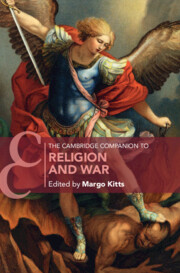
This Companion offers a global, comparative history of the interplay between religion and war from ancient times to the present. Moving beyond sensationalist theories that seek to explain why 'religion causes war,' the volume takes a thoughtful look at the connection between religion and war through a variety of lenses - historical, literary, and sociological-as well as the particular features of religious war. The twenty-three carefully nuanced and historically grounded chapters comprehensively examine the religious foundations for war, classical just war doctrines, sociological accounts of religious nationalism, and featured conflicts that illustrate interdisciplinary expressions of the intertwining of religion and war. Written by a distinguished, international team of scholars, whose essays were specially commissioned for this volume, The Cambridge Companion to Religion and War will be an indispensable resource for students and scholars of the history and sociology of religion and war, as well as other disciplines.
In several smaller essays written in the late 1760s and the 1770s, Herder discussed German political history. In How the German Bishops Became an Estate of the Realm Herder spelled out his views on the ancient German constitution and the history of the Holy Roman Empire, whilst On the Influence of Governments on the Sciences, and of the Sciences on Governments returned to the political history of wider Europe, including Germany. This chapter discusses these essays as Herder’s contributions to the debate on German national spirit, highlighting the relevance of Möser’s History of Osnabrück to the development of Herder’s views on German history. I argue that Herder sought to understand the causal origins of modern European states, including, most importantly, the Holy Roman Empire. Like Möser, Herder was fascinated by Tacitus’s account of ancient German freedom, while being very critical of the Frankish polity. Both also rejected Montesquieu’s history of modern monarchy. Although Herder acknowledged some advantages of the constitution of the Holy Roman Empire, he was not a Reichspatriot. The 1779 essay restated Herder’s fundamental commitment to modern liberty and trade, whilst arguing that German imperial government was badly in need of reforms.
This chapter revisits Herder’s debate with Kant in his Ideas for the Philosophy of History of Mankind, paying particular attention to Herder’s ideas on individual self-determination and his history of modern liberty and enlightenment. In this work, Herder reinterpreted human self-determination as a distinctive capacity and moral duty, whilst also viewing it as the highest form of self-preservation and sociability exhibited across the spectrum of natural beings. Kant, by contrast, invoked human ‘unsocial sociability’, presenting morality as a late development in human history as well as underlining the role of the modern state in facilitating this development. Herder rejected all the constitutive elements of Kant’s idea for a universal history, whilst also seeking to refine his account of the history of ‘state-machines’ and political government in Europe. He accordingly proposed an alternative vision of the prospects for greater peace in Europe and the world, drawing attention to a moral learning process in human history and the role of commercial cities in the rise of modern liberty. He set up the ‘Hanseatic league’ as an example for a future European union as well as predicted the empowerment of the subjugated peoples of Europe thanks to growing international trade and improved government.
This chapter introduces the most significant aspects of Thucydidean interpretation in the Renaissance and Reformation. It outlines key developments in the accessibility of the text (through knowledge of Greek and through translation into Latin and other European languages). It also analyses a number of key responses to the work. These include the group centred around Philipp Melanchthon, who saw Thucydides as a source of both rhetorical and moral lessons; Calvinist readings, which enlisted Thucydides to rebut Machiavelli’s views on statecraft; Grotius, who appealed to Thucydides in formulating his theory of Just War; and Thomas Hobbes’ influential translation of the text.