To save content items to your account,
please confirm that you agree to abide by our usage policies.
If this is the first time you use this feature, you will be asked to authorise Cambridge Core to connect with your account.
Find out more about saving content to .
To save content items to your Kindle, first ensure no-reply@cambridge.org
is added to your Approved Personal Document E-mail List under your Personal Document Settings
on the Manage Your Content and Devices page of your Amazon account. Then enter the ‘name’ part
of your Kindle email address below.
Find out more about saving to your Kindle.
Note you can select to save to either the @free.kindle.com or @kindle.com variations.
‘@free.kindle.com’ emails are free but can only be saved to your device when it is connected to wi-fi.
‘@kindle.com’ emails can be delivered even when you are not connected to wi-fi, but note that service fees apply.
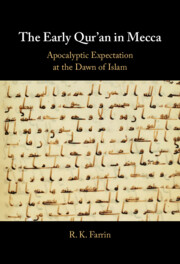
In this study, R. K. Farrin offers a fresh perspective on the emergence of Islam by tracing the structural and thematic development of the Qur'an in Mecca. He analyzes the form and content of the Qur'an at its earliest stage (ca. 609–14 CE), when it grew from a few verses to a scriptural corpus. From quantitative and literary evidence, Farrin argues that a Qur'anic nucleus – carrying a particularly urgent message – most likely formed during this period, to which units were then added as revelation continued in Mecca and Medina (ca. 615–32 CE). His study also situates the emerging Qur'an in the context of late antique Arabia, where monotheism's spread was still resisted by resident pagans. It also draws connections to contemporary Jewish and Christian ideas, especially regarding the anticipated Last Day. Significantly, Farrin's study peels back layers of Islamic history to consider the Qur'an and the environment in which it was first being recited.
In previous chapters, we focused on the structure and content of the books in the Pentateuch. Here, we will explore the religion of Moses that emerges from these materials. Specifically, we will observe the way in which divine revelation developed from direct communication with individuals such as Abraham and Moses to mediated revelation through a written Torah and the priesthood. We will explore the significant concepts of holiness, covenant, and practical monotheism, particularly as compared to the religion of the ancestral narratives (Genesis) and that of surrounding ancient Near Eastern cultures.
It will be important that we consider the characteristics of Mosaic religion against the backdrop of the ancient Near East at a time when certain polytheistic cultures are known to have elevated a single deity above their other gods – known as a “theology of exaltation.” Furthermore, we will explore some possible influences and origins for the Yahwistic faith – the religion so foundational for the remaining Old Testament and whose roots belong to monotheistic religions down to the present.
In this chapter we will move into the heart of the Pentateuch and explore narrative highlights from the books of Exodus and Numbers. The story begins in Egypt, where God’s people are enslaved. Yahweh reveals himself through a burning bush to Moses and instructs him to confront the pharaoh. Ten plagues challenge the Egyptian pantheon, but they also reveal the unique nature of Yahweh. He delivers his people and leads them into the desert wilderness, en route to the promised land. The journey is punctuated by episodes of Israelite rebellion, Yahweh’s responses, and tabernacle plans, but most importantly, by another covenant – Yahweh’s covenant with Israel at Mount Sinai.
We will observe that archaeology does not provide answers to many historical questions we might have regarding this ancient people and their wilderness sojourn, but it has brought to light Near Eastern political treaties remarkably similar to those of Israel. In striking contrast, no other nation perceived of its deity as a treaty partner. Yahweh, the all-sufficient covenant-making God, demanded a loyalty and exclusivity that marked the radically new idea of Israel’s monolatrous henotheism, and ultimately its concept of monotheism.
This chapter lays out two key tasks in reading Scripture that Augustine identifies in the Confessions, and especially in his exegesis of Genesis: “the task of grasping meaning” and “the task of grasping truth.” The first task is that of discerning authorial intention; the second is that of “seeing for oneself that what the author is saying is in fact the case.” The task of grasping meaning is difficult in part because of the peculiar character of the Scriptures; they are both accessible to all, using ordinary language (which is open to misinterpretation), and yet full of profundities that only the wisest readers can come to appreciate. It is also difficult because we cannot really know what is in another person’s mind; any judgments about authorial intention are provisional at best, and only pride would claim to have identified the uniquely correct interpretation. The task of grasping truth is likewise difficult. When it comes to intelligible realities, Truth speaks inwardly, not through any text, even that of Scripture. When it comes to historical realities, including the central truths about the life of the Incarnate Word, we cannot have knowledge in the fullest sense.
Veiling meant many things to the ancients. On women, veils could signify virtue, beauty, piety, self-control, and status. On men, covering the head could signify piety or an emotion such as grief. Late Roman mosaics show people covering their hands with veils when receiving or giving something precious. They covered their altars, doorways, shrines, and temples; and many covered their heads when sacrificing to their gods. Early Christian intellectuals such as Origen and Gregory of Nyssa used these everyday practices of veiling to interpret sacred texts. These writers understood the divine as veiled, and the notion of a veiled spiritual truth informed their interpretation of the bible. Veiling in the Late Antique World provides the first assessment of textual and material evidence for veiling in the late antique Mediterranean world. Susanna Drake here explores the relation between the social history of the veil and the intellectual history of the concept of truth as veiled/revealed.
Augustine and Aquinas assume that Moses’s law figures Christ. In this piece, I show how their complementary accounts of the old law rest upon other doctrinal emphases, namely providence, God the Father, and created things as participations in divine goodness. By drawing out these themes, I advance reflection on the worth of Moses’s law, unfolding how other doctrines structure loving attention to the law as indicative of Christ.
This chapter, the first of two devoted to Julian’s Against the Galileans, begins by mapping the narrative structure of Julian’s text. It then traces Julian’s first major step in re-narrating the Christian tradition: casting the ancient Hebrew tradition as existing harmoniously within the broad contours of the Hellenic tradition. Focusing on Moses’s teachings about the creation of the cosmos and about its governance by a hierarchy of gods, Julian shows that the Hebrew tradition, though not terribly impressive, has teachings compatible with Julian’s Hellenic tradition
This second chapter on Julian’s Against the Galileans traces the second movement of Julian’s strategy of narrative subsumption: charting the apostasies that cascaded from, first, the Hellenic and, then, the Hebrew traditions, culminating in the Christian sect. Having pointed out the basic compatibility between Hebrew and Hellenic doctrine, Julian emphasizes next the most significant difference between the two: the glaring inferiority of the Hebrew to the Hellenic tradition. This basic framework makes sense of Julian’s claim that Christians are double apostates: Christians started out as Hellenes, and their first mistake was of degree rather than kind: they opted for the lesser Hebrew tradition, rather than the Hellenic one. They latched onto a deviation within the Hebrew tradition, however, which became the grounds for their second apostasy, now away from the Hebrews, to create a new sect.
This chapter uses a case study from Julian’s and Cyril’s engagement to introduce the central argument of the book: that Julian and Cyril are in narrative conflict, a type of intellectual disagreement that can obtain when strong traditions do not share adequate language or criteria by which their representatives can adjudicate weighty differences. The case study revolves around Julian’s and Cyril’s competing interpretation Leviticus 16, and of one ambiguous word: apopompaios. Julian and Cyril each offer confident interpretations, grounded in their traditions’ constituting narrative, but those interpretations look absolutely nothing alike. The chapter briefly explains the concept of narrative conflict and then summarizes the books’ chapters.
Humor functions as a form of civic engagement and social protest in Zora Neale Hurston’s Moses, Man of the Mountain (1939) and Gertrude Stein’s Mrs. Reynolds (1947), novels that respond to the rise of fascism with complex satire. Despite a common view of Hurston and Stein as either apolitical or conservative, both authors reveal a keen understanding of conversion’s historical legacy in the justification of imperialism. The point both Hurston and Stein make is that humorous incongruity keeps the mind turning and, in the process, forestalls the “settling” of thought into place and “the fixation of belief” associated with totalitarianism. As outsiders for whom conversion—religious or secular—could mean a form of psychic death, they developed distinctive modes of ironic humor involving self-lacerating and self-satirizing critique.
This chapter discusses the development of Jewish synagogue architecture in Late Antiquity, tracing its evolution from the early centuries to the more monumental structures of the fourth to sixth centuries. Drawing on a range of sources, it explores how synagogue architecture varied across regions, reflecting local styles, communal preferences and interactions with surrounding Christian and pagan cultures. While early synagogues primarily functioned as spaces for Torah readings, later structures became more elaborate, incorporating decorative elements such as Jewish symbols (e.g. the menorah, Torah shrine and ritual objects) and even figural representations – challenging traditional assumptions about aniconism in Judaism. The chapter also addresses debates over synagogue chronology, arguing that established typologies, such as Galilean-type and Byzantine-type synagogues, require re-evaluation in the light of recent archaeological discoveries. It emphasises that synagogue architecture was shaped not only by religious traditions but also by broader social and political factors. The presence of monumental synagogues in Late Antiquity suggests that Jewish communities remained active and resilient even under Christian rule.
The second book of the Bible, Exodus, is the subject of this essay, covering the growth and enslavement of the Israelite nation, early career of Moses, rescue from Egypt, and covenant on Sinai.
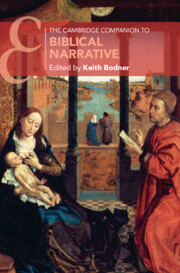
The Cambridge Companion to Biblical Narrative offers an overview and a concise introduction to an exciting field within literary interpretation of the Hebrew Scriptures and New Testament. Analysis of biblical narrative has enjoyed a resurgence in recent decades, and this volume features essays that explore many of the artistic techniques that readers encounter in an array of texts. Specially commissioned for this volume, the chapters analyze various scenes in Genesis, Exodus and the wilderness wanderings, Israel's experience in the land and royal experiment in Kings and Chronicles, along with short stories like Ruth, Jonah, Esther, and Daniel. New Testament essays examine each of the four gospels, the book of Acts, stories from the letters of Paul, and reading for the plot in the book of Revelation. Designed for use in undergraduate and graduate courses, this Companion will serve as an excellent resource for instructors and students interested in understanding and interpreting biblical narrative.
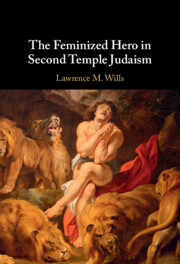
The turbulent Second Temple period produced searching biblical texts whose protagonists, unlike heroes like Noah, Abraham, and Moses, were more everyday figures who expressed their moral uncertainties more vocally. Reflecting on a new type of Jewish moral agent, these tales depict men who are feminized, and women who are masculinized. In this volume, Lawrence M. Wills offers a deep interrogation of these stories, uncovering the psychological aspects of Jewish identity, moral life, and decisions that they explore. Often written as novellas, the stories investigate emotions, psychological interiorizing, the self, agency, and character. Recent insights from gender and postcolonial theory inform Wills' study, as he shows how one can study and compare modern and ancient gender constructs. Wills also reconstructs the social fabric of the Second Temple period and demonstrates how a focus on emotions, the self, and moral psychology, often associated with both ancient Greek and modern literature, are present in biblical texts, albeit in a subtle, unassuming manner.
This chapter is a reading of the first rock-water episode (Exodus 17). It navigates through three layers of literary stratigraphy – evident in shifting emotional responses, character roles, and settings – in order to uncover a version of the episode in which Moses plays the role of a king held to account by his people for ensuring their survivial in a crisis. This version does not stand on its own but is part of a version of the exodus narrative modeled on the Sargon birth legend. The character of Moses develops through a series of acts of striking, as he realizes his destiny as one who draws (water), expressed in his name. Like its Assyrian model, this narrative is a work of political allegory. It relates to Hezekiah’s abandonment of Egyptian ties as the Assyrians threaten siege of Jerusalem and may have played a role in negotiating Judah’s continued independence. The exodus story thus does not originate in the northern kingdom of Israel, as is usually thought, but is is implicated in a decidedly Judean situation.
This chapter tracks the hierocratic version through revisions of the manna and rock-water episodes (Exodus 16–17) and the scouts episode (Numbers 13–14), but its primary focus is a new version that begins at the sea (Exodus 14). This version is tracked through another revision of the scouts episode and readings of the episodes involving bitter water (Exodus 15), divine fire, quail, objection to Moses’s foreign wife (Numbers 11–12), and snakes (Numbers 21). The bitter water episode bypasses Aaron as mediator of torah and introduces the wilderness as a period of testing. The divine fire episode decentralizes the sanctuary and provides a way to mitigate threat of divine wrath as Moses intercedes with God. The quail episode initially protects Aaron’s control of meat consumption but is revised to reimagine the structure of Israel’s political leadership. Miriam’s complaint initially construes ritual impurity as a punishment for sin and transforms social isolation into banishment, but a revision sidelines Aaron and reestablishes Moses as a trustworthy mediator. Finally, God, the divine healer, prescribes the manufacture of a snake icon, which does not instill fear-driven obedience but prompts viewers to studiously reflect on uses and abuses of sovereignty.
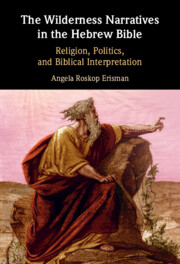
In this volume, Angela Erisman offers a new way to think about the Pentateuch/Torah and its relationship to history. She returns to the seventeenth-century origins of modern biblical scholarship and charts a new course – not through Julius Wellhausen and the Documentary Hypothesis, but through Herrman Gunkel. Erisman reimagines his vision of a literary history grounded in communal experience as a history of responses to political threat before, during, and after the demise of Judah in 586 BCE. She explores creative transformations of genre and offers groundbreaking new readings of key episodes in the wilderness narratives. Offering new answers to old questions about the nature of the exodus, the identity of Moses, and his death in the wilderness, Erisman's study draws from literary and historical criticism. Her synthesis of approaches enables us to situate the wilderness narratives historically, and to understand how and why they continue to be meaningful for readers today.
The apostle Paul was a Jew. He was born, lived, undertook his apostolic work, and died within the milieu of ancient Judaism. And yet, many readers have found, and continue to find, Paul's thought so radical, so Christian, even so anti-Jewish – despite the fact that it, too, is Jewish through and through. This paradox, and the question how we are to explain it, are the foci of Matthew Novenson's groundbreaking book. The solution, says the author, lies in Paul's particular understanding of time. This too is altogether Jewish, with the twist that Paul sees the end of history as present, not future. In the wake of Christ's resurrection, Jews are perfected in righteousness and – like the angels – enabled to live forever, in fulfilment of God's ancient promises to the patriarchs. What is more, gentiles are included in the same pneumatic existence promised to the Jews. This peculiar combination of ethnicity and eschatology yields something that looks not quite like Judaism or Christianity as we are used to thinking of them.
Chapter 7 discusses how the Transfiguration is seen within the Synoptic Gospels – and especially in the careful New Testament and Patristic scholarship of Daniel Kirk, Teresa Morgan and Peter Anthony-- as the principal occasion when the moral and spiritual perfection of Jesus received divine affirmation. Alongside the patriarch Moses and the prophet Elijah, Jesus is glimpsed in the Transfiguration narratives, falteringly, as someone immensely special and divinely endorsed, by three of his disciples, who (in Luke and two sixth-century church mosaics) are themselves included within the cloud (perhaps even theösis) that envelops Jesus, Moses and Elijah. This chapter examines both Aquinas’ and recent Eastern Orthodox accounts of the social implications of transfiguration. It also notes that transfiguration has been deeply disfigured by the atomic bombing of Hiroshima on the Feast of the Transfiguration in 1945.
Between the sixth and eighth centuries CE, the image emerged as a rhetorical category in religious literature produced in the Mediterranean basin. The development was not a uniquely Christian phenomenon. Rather, it emerged in the context of broader debates about symbolic forms that took place across a wide range of ethnic, linguistic, and religious groups who inhabited the late Roman and early Byzantine world. In this book, Alexei Sivertsev demonstrates how Jewish texts serve as an important, and until recently overlooked, witness to the formation of image discourse and associated practices of image veneration in late antiquity and the early Middle Ages. Addressing the role of the image as a rhetorical device in Jewish liturgical poetry, Sivertsev also considers the theme of the engraved image of Jacob in its early Byzantine context and the aesthetics of spaces that bridge the gap between the material and the immaterial in early Byzantine imagination.