To save content items to your account,
please confirm that you agree to abide by our usage policies.
If this is the first time you use this feature, you will be asked to authorise Cambridge Core to connect with your account.
Find out more about saving content to .
To save content items to your Kindle, first ensure no-reply@cambridge.org
is added to your Approved Personal Document E-mail List under your Personal Document Settings
on the Manage Your Content and Devices page of your Amazon account. Then enter the ‘name’ part
of your Kindle email address below.
Find out more about saving to your Kindle.
Note you can select to save to either the @free.kindle.com or @kindle.com variations.
‘@free.kindle.com’ emails are free but can only be saved to your device when it is connected to wi-fi.
‘@kindle.com’ emails can be delivered even when you are not connected to wi-fi, but note that service fees apply.
Chapter 3 examines the blood libel invented by Hyppolitus Guarinoni in 1619, Tyrol, Austria. The fictional murder of the boy, Andreas of Rinn, would have taken place in July of 1462. The accepted explanation for this unusual blood libel is a response to Protestant incursions into the Tyrol area, where Rinn is located. The chapter provides a systemic account of the blood libel, which includes complex responses to drought, plague, famine, along with the continuing influence of pagan magic. These elements created an internal dissonance within the Catholic system that Guarinoni was trying to fortify.
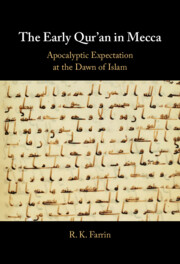
In this study, R. K. Farrin offers a fresh perspective on the emergence of Islam by tracing the structural and thematic development of the Qur'an in Mecca. He analyzes the form and content of the Qur'an at its earliest stage (ca. 609–14 CE), when it grew from a few verses to a scriptural corpus. From quantitative and literary evidence, Farrin argues that a Qur'anic nucleus – carrying a particularly urgent message – most likely formed during this period, to which units were then added as revelation continued in Mecca and Medina (ca. 615–32 CE). His study also situates the emerging Qur'an in the context of late antique Arabia, where monotheism's spread was still resisted by resident pagans. It also draws connections to contemporary Jewish and Christian ideas, especially regarding the anticipated Last Day. Significantly, Farrin's study peels back layers of Islamic history to consider the Qur'an and the environment in which it was first being recited.
Folk dance remains a diffuse and contested concept and yet its performances and meanings retain contemporary saliency to many people across the world. This chapter reflects on definitional issues, the relationship of folk dance to ritual and folk dance’s embodied ideology in Europe and beyond. Given that nineteenth-century thinking haunts the later literature and manifestations of folk dance, I re-visit Felix Hoerburger’s concepts of ‘first existence’ and ‘second existence’ folk dance, together with their critique and key modifications by Andriy Nahachewsky and Anthony Shay. I consider contemporary ritual folk dancing that draws upon evolutionist theory for inspiration and discuss examples of folk dance as cultural heritage that bear performative testimony to perceived unbroken connections between land, people, gender, race and nation. I conclude by urging both persistent critical interrogation of folk dance as ideology in a global frame and further investigation of the choreographic and artistic relevance of folk dance to its widespread practitioners and audiences.
This chapter explores Augustine’s monumental City of God, written in the wake of the 410 sack of Rome, as a response to critics who blamed Christianity for the empire’s decline. Augustine constructs a dual vision of history structured around two metaphorical cities: the City of Man, grounded in pride and temporal ambition, and the City of God, formed by love of God and oriented toward eternal peace. The chapter examines Augustine’s theological reframing of history as linear, purposeful, and governed by divine providence, in contrast to the cyclical models of ancient historians. It analyzes his critique of pagan religion, his nuanced appropriation of Platonism, and his demonology, all of which served to delegitimize traditional Roman cults while affirming Christianity’s supremacy. At the heart of the chapter is Augustine’s doctrine of predestination and his unsettling insistence on humanity’s dependence on divine grace. The City of God emerges as both a critique of Roman imperial pretensions and a charter for a Christian understanding of time, politics, and salvation, whose legacy would profoundly shape medieval and modern thought.
Although new religious movements (NRMs) are characterized as diverse and unique, this Element analyzes the cultural logic underlying this apparent diversity from a sociological approach. Section 1 demonstrates that NRMs are substantially shaped by the Romantic counterculture emerging around the 1960s and its critique of churched religion, modern industries, science, and capitalism. Section 2 shows how these Romantic NRMs shaped the Western mainstream in the twenty-first century. Subsequent sections discuss the institutionalization of New Age spirituality in health care and business; the mediatization of modern paganism in film, television series, and online games; and the emergence of new NRMs in Silicon Valley that are formed around technologies of salvation (virtual reality, artificial intelligence, and biotechnology). The Element concludes that the Romantic spirit of the NRMs – once distinctly countercultural – has paradoxically developed into a driving ideological force that now consolidates and strengthens the machineries of late-modern institutions.
Gerald Gardner (1884–1964) provided the central inspiration for Wicca, as a modern, revived, form of Pagan witchcraft. As such, his cultural and religious significance has grown exponentially over the 60 years since his death. 'A Rough Magic' re-evaluates the sources of Gardner's inspiration, redefines his early life within the context of colonial Malaya and the opium trade, and emphasises his vision and ability in fashioning an entirely new synthesis of magical beliefs drawn from both Eastern and Western traditions. In so doing, he stripped away the demonic elements of witchcraft and emphasised Wicca as a creative, mutable and undogmatic nature religion, serving as both fertility cult and a unique source of personal empowerment, that was capable of transforming the world.
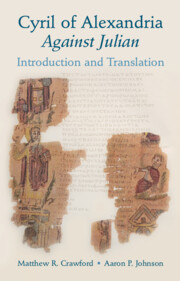
In 362/363 the Roman emperor Julian composed a treatise titled Against the Galileans in which he set forth his reasons for abandoning Christianity and returning to devotion to the traditional Greco-Roman deities. Sixty years later Cyril, bishop of Alexandria, composed a response. His resulting treatise Against Julian would dwarf the size of Julian's original work and in fact serves as our primary source for the fragments of it that have survived. Julian's treatise was the most sophisticated critique of Christianity to have been composed in antiquity and Cyril's rebuttal was equally learned. The Christian bishop not only responded directly to Julian's own words but drew upon a wide range of ancient literature, including poetry, history, philosophy, and religious works to undermine the emperor's critiques of the Christian Bible and bolster the intellectual legitimacy of Christian belief and practice. This is the first full translation of the work into English.
This chapter focuses on the companion volumes Mystic Trees and Poems of Adoration to explore the ways Michael Field’s poetry changed following Katharine Bradley and Edith Cooper’s 1907 conversion to Roman Catholicism. This chapter reviews prior scholarship on Field’s devotional poetry, which has often emphasised the continuity between Field’s pre- and post- conversion work. The chapter builds on this scholarship by arguing that Field’s devotional poetry, informed by their newfound faith, explores new ways of thinking about time, suffering, and the purpose of art. Furthermore, this chapter explores the significance of studying Victorian devotional and religious verse, and the ways women and queer people were able to use the genre to engage with and build upon theological concepts, outside the bounds of ecclesiastical authority.
This chapter discusses the evolution of pagan iconography in Late Antiquity, examining how depictions of traditional gods and rituals changed between 300 and 700 CE. It challenges earlier interpretations that associate this period with artistic decline, instead emphasising continuity and transformation in the representation of pagan themes across various media. Drawing on legal, literary, epigraphic and archaeological evidence, the chapter provides a comprehensive perspective on the artistic and religious landscape of the period. It discusses key examples such as the Arch of Constantine, which repurposed older sacrificial motifs, and later fourth-century artworks like the Symmachi ivory diptych, which continued to depict pagan sacrifices despite the growing influence of Christianity. The chapter also examines the selective destruction of pagan imagery, particularly the mutilated reliefs from the Aphrodisias Sebasteion, demonstrating how sacrificial depictions were specifically targeted. The chapter concludes by noting that while sacrificial iconography faded, other pagan motifs – especially those associated with gods like Dionysus and Venus – remained prevalent in mosaics, silverware and textiles. This enduring presence underscores the adaptability of pagan imagery, which continued to influence artistic traditions long after the fall of the Roman Empire.
The formal conversion to Christianity in 1387 of the Grand Duchy of Lithuania seemingly marked the end of Europe's last 'pagan' peoples. But the reality was different. At the margins, often under the radar, around the dusky edgelands, pre-Christian religions endured and indeed continued to flourish for an astonishing five centuries. Silence of the Gods tells, for the first time, the remarkable story of these forgotten peoples: belated adopters of Christian belief on the outer periphery of Christendom, from the Sámi of the frozen north to the Estonians, Latvians and Lithuanians around the Baltic, as well as the Finno-Ugric peoples of Russia's Volga-Ural Plain. These communities, Dr Young reveals, responded creatively to Christianity's challenge, but for centuries stopped short of embracing it. His book addresses why this was so, uncovering stories of fierce resistance, unlikely survival and considerable ingenuity. He revolutionises understandings of the lost religions of the last pagans.
The introduction deals with the problematic concept of ‘paganism’ and the nature and variety of Europe’s pre-Christian religions, examining concepts such as animism, religious creolisation, ‘shamanism’, syncretism, and the ‘Christianesque’, as well as exploring the difference between conversion and Christianisation. The introduction argues for the use of the term ‘unchristianised peoples’ as the best one to describe its subject. It surveys the historiography of the last pre-Christian peoples and delineates and justifies the book’s chronological and geographical scope. The introduction critiques the concept of ‘pagan survivals’ in the traditional historiography of European religions, arguing for a tighter definition of pre-Christian religions, and outlines the nature and limitations of the sources available for studying pre-Christian cults.
Caesarius was born in the Burgundian city of Chalons-sur-Saône around 470. At the age of seventeen, he entered the island monastery of Lérins. But after a few years he was sent to Arles to regain his health, which he had ruined through intense asceticism. Aeonius, the bishop of Arles and a relative of Caesarius, ordained him to the diaconate and the priesthood, then appointed him the abbot of Trinquetaille, a monastery in the suburbs of Arles. When Aeonius died in 501 or 502, Caesarius succeeded him as bishop, a position that embroiled Caesarius in the politics of the area, in which the interests of the Visigoths, the Franks, and the Gallo-Romans were often in conflict. He became the most prominent bishop in the Gallic church when pope Symmachus of Rome confirmed him as metropolitan and papal vicar for Gaul in 514. He presided over a number of synods and councils in Gaul, the most important being the Council of Orange in 529, which condemned the teaching on grace that predominated in southern Gaul in favor of a modified Augustinian position.
One of the most remarkable features of the current religious landscape in the West is the emergence of new Pagan religions. Here the author will use techniques from recent analytic philosophy of religion to try to clarify and understand the major themes in contemporary Paganisms. They will discuss Pagan concepts of nature, looking at nature as a network of animated agents. They will examine several Pagan theologies, and Pagan ways of relating to deities, such as theurgy. They will discuss Pagan practices like divination, visualization, and magic. And they will talk about Pagan ethics. Their discussions are based on extensive references to contemporary Pagan writings, from many different traditions. New Pagan religions, and new Pagan philosophies, have much to contribute to the religious future of the West, and to contemporary analytic philosophy of religion.
Lucian of Samosata emerges as a complex character through his writings, showcasing a deliberate engagement with ambiguity and boundary transgressions. From his caustic and comedic attitude towards Olympian deities to later categorisations as an enemy of Christianity in the tenth-century Suda lexicon, Lucian remains elusive in his spiritual allegiances as well. Similarly, the diverse reception of his theocentric writings prompts a valid inquiry into the best approach to understanding his work. Situating Lucian within the context of the Greco-Roman author’s perceptions of the divine and scholarly inquiries into Greco-Roman religion, this chapter considers his stance regarding religion in general and Christianity in particular. The chapter suggests viewing Lucian as a social anthropologist studying human perceptions of the divine. By delving into the socio-pragmatics of religious practices, Lucian verbalises long-standing debates, shedding light on the realities of belief and disbelief in the contemporary pagan and Christian divine systems.
The fin-de-siècle aesthetes, of course, react against the moral project expressed in realist novels like Eliot’s and Ward’s. Indeed, Oscar Wilde uses liturgy to attack what he sees as realism’s stunted imagination. But, as this chapter and the next show, aestheticism too is deeply suspicious of how excarnation separates the material and the spiritual. Again, if modernity typically sunders these realms, liturgy joins them. It therefore offers the perfect channel for aestheticism’s veneration of material reality – of beautiful bodies, lovely objects, and stimulating experiences. Such devotion pervades Walter Pater’s novel Marius the Epicurean (1885) – itself a kind of liturgical and aesthetic bildungsroman. Set in second-century Italy, the novel follows the pious Marius, who cherishes the pagan rituals of his boyhood and finds their fulfillment in the early Christian Mass. For Marius, the Eucharist not only sacralizes material objects but also defends matter – specifically the body – against the ritual violence of imperial Rome. Just as Wordsworth depicts industrialism as a liturgy of desecration, Pater sees Roman imperial power in similar terms.
The terms 'witch' and 'witchcraft' have been used to mean many different things over the years. In the twentieth century, some people began referring to themselves as witches and espousing esoteric new religions that they called witchcraft. Some of these new religions – most notably Wicca – were forms of modern Paganism, devoted to the veneration of ancient divinities. Others constituted types of Satanism or Luciferianism, embracing the early modern idea of the witch as a Devil worshipper. Recent years have seen growing numbers of Black Americans who practice African diasporic religions adopt the term 'witch' too. This Element explores why the image of the witch is so appealing to numerous people living in modern Western countries, examining how witchcraft offers people a connection to the past, a vehicle for liberation, and a means of empowering themselves in an often-troubling world.
Jesus was a Jewish preacher and, for some Jews, a Messiah. His first followers lived in Jewish contexts. Only gradually did the differences between Christians and the followers of other religions become visible. Thus, there was a parting of the ways between Christians and Jews, but it was never complete. Jews and Christians always observed and influenced each other. Christians also set themselves apart from the many groups they called pagans. Although they believed in the existence of the gods, they considered them to be demons. They also developed their own rituals and created places where they met, so that Christianity became increasingly recognisable as a religion in its own right.
The early Christians were by no means a homogeneous group, let alone a church. This is the fascinating story of the beliefs, practices and experience of individual Christians of antiquity, their relationships to Jewish tradition and the wider Roman world, and the shockwaves they caused among their contemporaries. Ancient Christians are closely connected to today's world through a living memory and a common textual heritage - the Bible - even for those who maintain a distance from Christianity. Yet, paradoxically, much about the early Christians is foreign to us and far removed from what passes for this faith as it currently stands. The distinguished historian Hartmut Leppin explores this paradox, and considers how such a small, diverse band of followers originating on the edge of the Roman Empire was able within less than three centuries to grow and become its dominant force under Emperor Constantine and his successors.
The introduction articulates the problem of the origins of Britain’s folkloric beings and traces the various ways in which scholars have tackled (or sidestepped) the problem, from John Aubrey to the present day. The introduction seeks to explain why scholars became wary of engaging with folkloric origins as a historical question, critiques previous approaches to the history of folkloric beings, and presents the book’s new approach in the context of current methodologies in the study of the history of popular religion. The introduction then outlines the structure of the book
Having previously investigated the political and religious milieux of the north and the south of the Arabian Peninsula, this chapter sheds some light on the history of the Ḥijāz at the time of the rise of Islam. It aims to answer the following questions: what factors made the Ḥijāz a favourable environment for the emergence of a third scriptural monotheism? What was the religious context of sixth- and seventh-century Ḥijāz? What picture emerges from a comparative reading of the epigraphical and literary sources? The chapter discusses the polytheistic milieu of pre-Islamic Arabia immediately after the introduction. This discussion includes an analysis of the Qurʾānic passages which mention pagan idols, and argues the case for the existence of a henotheist Ḥijāz at the end of the sixth century. In the third section, an overview of the scriptural communities documented in the Ḥijāz is given. These scriptural groups heavily influenced and shaped the rise of Islam, as evident from even a superficial reading of the Qur’ān. Finally, section four analyses Muḥammad’s prophetic career.