Refine search
Actions for selected content:
6 results
THE BLOODY SYRINX: BUCOLIC AND MEDICAL METAPOETICS OF LOVE CURES IN APOLLONIUS RHODIUS’ TALOS EPISODE
-
- Journal:
- The Classical Quarterly , First View
- Published online by Cambridge University Press:
- 20 February 2026, pp. 1-13
-
- Article
-
- You have access
- Open access
- HTML
- Export citation
Chapter 4 - The Cyclops (Cyclops inhospitalis)
-
- Book:
- The Trojan Horse and Other Stories
- Published online:
- 09 November 2023
- Print publication:
- 11 January 2024, pp 85-108
-
- Chapter
- Export citation
Chapter 5 - Odysseus the Schedographer
-
-
- Book:
- Byzantine Commentaries on Ancient Greek Texts, 12th–15th Centuries
- Published online:
- 07 August 2023
- Print publication:
- 08 September 2022, pp 148-168
-
- Chapter
- Export citation
Two - The Tenderness of Monsters
-
- Book:
- Painting, Poetry, and the Invention of Tenderness in the Early Roman Empire
- Published online:
- 26 November 2020
- Print publication:
- 17 December 2020, pp 84-139
-
- Chapter
- Export citation
Chapter 2 - Dante Alighieri, Poet without a City
-
- Book:
- The City of Poetry
- Published online:
- 03 December 2020
- Print publication:
- 17 December 2020, pp 63-111
-
- Chapter
- Export citation
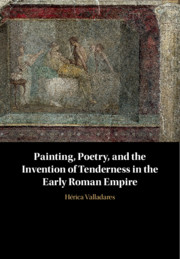
Painting, Poetry, and the Invention of Tenderness in the Early Roman Empire
-
- Published online:
- 26 November 2020
- Print publication:
- 17 December 2020
