To save content items to your account,
please confirm that you agree to abide by our usage policies.
If this is the first time you use this feature, you will be asked to authorise Cambridge Core to connect with your account.
Find out more about saving content to .
To save content items to your Kindle, first ensure no-reply@cambridge.org
is added to your Approved Personal Document E-mail List under your Personal Document Settings
on the Manage Your Content and Devices page of your Amazon account. Then enter the ‘name’ part
of your Kindle email address below.
Find out more about saving to your Kindle.
Note you can select to save to either the @free.kindle.com or @kindle.com variations.
‘@free.kindle.com’ emails are free but can only be saved to your device when it is connected to wi-fi.
‘@kindle.com’ emails can be delivered even when you are not connected to wi-fi, but note that service fees apply.
The Epilogue reflects on the ways that nineteenth-century texts consistently acknowledge the post-lapsarian state of human existence. The literary works discussed in this book all, to some extent, either recreate the events of Milton’s epic in a world that is fallen or tell the story of what happens after the expulsion. Drawing on Christopher Ricks, the Epilogue identifies a single word – ‘error’ – as emblematic of Milton’s nineteenth-century legacy. ‘Error’ points to its post-lapsarian meanings even when used to describe Eden before the Fall. After opening with the 1790 disinterment of Milton’s corpse, the Epilogue turns to another disturbing anecdote to illustrate the complexity of Milton’s nineteenth-century reception: the history of a Victorian edition of Milton’s poetry, bound in tanned human skin. The skin in question belonged to George Cudmore, executed for murder in the 1830s. This instance of anthropodermic bibliopegy reveals that Milton’s works, while revered and respected by the Victorians – his body parts were treated as relics – were also open to disruption and reinterpretation.
Chapter 4 reads the fiction of Thomas Hardy alongside biblical illustration and iconographic tradition to reveal both Hardy’s Miltonic way of seeing and his literary idiosyncrasy. The chapter begins by analysing Hardy’s use of Miltonic shifts in perspective and scale – described by critics as proto-cinematic – to shape Wessex as a post-lapsarian, sublime landscape. In The Return of the Native and Tess of the d’Urbervilles, Hardy’s characters re-enact the Fall, situating themselves within a cyclical Miltonic genealogy. The chapter then turns to Hardy’s allusions to Milton through his focus on hands, in ‘handed moments’ that recall Milton’s haptic imagery to recreate an unstable Eden in Wessex. Finally, the chapter compares biblical and Miltonic illustrations that are brought together in nineteenth-century extra-illustrated Bibles such as the Kitto Bible: this comparison reveals how Milton’s text and its focus on hands reshaped biblical illustration, and supports a reading of Hardy as a writer attuned to the differences between Milton’s Eden and that of Genesis.
The Introduction outlines the intermedial method of this book, which brings together Milton with nineteenth-century writers and artists who engage with each other’s work at the same time as reading Milton directly. It provides an overview of Milton’s place in the visual and material culture of the long nineteenth century. This includes the literary galleries of the late eighteenth century, the development of proto-cinematic technologies and stage spectacles, illustration on canvas and the page, and interventions in books such as extra-illustration and marginalia. The Introduction also addresses the various metaphors drawn from Milton’s writing that scholars have used to explain his influence, comparing him to a ghost, a troll, a father, even God. It then proposes the epic simile as a useful model for the way Milton is understood in this book: just as Milton’s similes describing Satan suggest, a powerful figure can be like many disparate things at the same time.
Today's environmental decimation and climate crises have arisen from our drive for individual material prosperity. We even appreciate nature primarily for its fulfilment of our interests, whether economic productivity, aesthetic pleasure, or personal well-being. And yet, we still ask how we have reached this dire ecological condition and what it is that has kept us from acting effectively to maintain a thriving and diverse biosphere. This collection of essays by major scholars from around the world analyzes how the industrial, imperialist Victorian era gave rise to today's unwillingness to move beyond our acquisitive drive. But it also explores the Victorians' initiation of the modern environmentalist movement, formulation of the first legislation defending rights of nonhuman animals, and invention of literary forms for contesting environmental degradation. In this most unlikely of eras, the volume uncovers both valuable insights into the limitations of our own environmentalism and innovative suggestions for overcoming them.
The intermedial legacy of John Milton in nineteenth-century literature and visual culture features writers not only engaging with Milton's works but also responding to each other's rich and varied interpretations. Challenging linear models of literary tradition, Laura Fox Gill proposes a method of cross-disciplinary reading that stages triangular conversations across media. Through case studies pairing Milton with Mary Shelley and John Martin, Herman Melville and J. M. W. Turner, A. C. Swinburne and William Blake, and Thomas Hardy and Biblical illustrators, she uncovers a rich network of creative exchange. While Milton's legacy was often mediated through Romantic predecessors, his texts – especially Paradise Lost – remained vital touchstones for Victorian readers and viewers. Gill sheds new light on how Milton's works were reimagined in a multimedia culture, expanding our understanding of literary influence, reception, and the visual imagination of the nineteenth century.
Disability is central to the Gothic imagination. This Element draws together disability and Gothic literature in ways that show the interplay between them. The first chapter offers a brief history of Critical Disability Studies, and the manner in which Gothic has been integral to the evolution of disability theory. It shows the increasing centrality of the Gothic to the development of Critical Disability Studies, and describes the emergence of the subfield of Gothic Disability Studies. The second chapter and third chapters offer close readings of particular texts, showing how Gothic bodies and minds articulate and shift their relationship to the aesthetic and affective frameworks of the nineteenth century. While disability sometimes represents the 'other' in Gothic literature, this positioning far from exhausts the ways in which disability is presented in this genre.
Traces the readership and use of Matthew Paris’ manuscripts after his death and in subsequent centuries before and after the Reformation dissolution of the monasteries as far as the modern era.
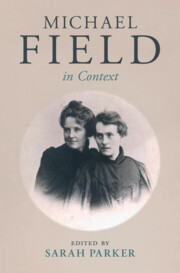
Few authors attract as much fascination as 'Michael Field', thecollaborative pseudonym of Katharine Bradley (1846–1914) and Edith Cooper (1862–1913), an aunt and niece living and working together in devoted fellowship. As Michael Field, Bradley and Cooper published over thirty volumes of poetry and verse drama across a career lasting from the 1880s to the 1910s. Here, chapters by thirty-six experts introduce the historical and cultural contexts crucial to understanding Field's work, including the late-Victorian aesthetic and decadent movements, fin-de-siècle poetry, and debates around gender and sexuality. Michael Field's connections with other authors, including Wilde, Pater, and New Women writers are also explored. Experimental in lyric poetry, ekphrasis, verse drama, and the prose poem, and fascinated by the ancient worlds of Greece, Rome and Egypt, the Renaissance, and the Romantic era, Michael Field's work remains profoundly relevant to current debates, including ecology, race, empire, and gender non-conformity.
The preface considers why historical context is such a rich and complicated lens through which to approach Michael Field and their work, given the complexity of Katharine Bradley and Edith Cooper’s lives and collaborative identity as Michael Field, and the startling range of past historical periods with which their work engaged, including Ancient Greece, Rome, Egypt, and Renaissance Italy, among other periods. The Preface approaches Michael Field as firmly situated within the cultures of the fin de siècle or 1890s, and discusses how their work develops in the twentieth century or modernist era. Finally, the Preface approaches the more difficult aspects of Michael Field’s identity, addressing issues of gender, sexuality, and the incestual dimension of Bradley and Cooper’s relationship.
This chapter considers Michael Field’s position as ‘Victorian decadents’ in the early twentieth century. It outlines Katharine Bradley and Edith Cooper’s ambivalent response to fin-de-siècle decadence, as seen in their reactions to the likes of Oscar Wilde and The Yellow Book. The chapter then proposes that Michael Field actually became more attached to decadence as the ‘yellow nineties’ waned, focusing on how Bradley and Cooper’s dedication to decadence is expressed most clearly in poems about Whym Chow, their beloved dog whose death in 1906 catalysed their conversion to Catholicism. The chapter finally discusses the decadent tropes found in Whym Chow: Flame of Love (1914) and Michael Field’s Catholic poems.
Though Michael Field most readily identified with the poetry of their male contemporaries, including Swinburne, reading their poetry volumes of 1889, 1893, 1908, 1912, and 1913 against the backdrop of nineteenth- and early twentieth-century women poets reveals multiple affinities in form, genre, theme, and symbolism. Beginning with Sappho and ending with Alice Meynell, with whom Michael Field corresponded after 1906, this chapter notes the connections of Michael Field’s poetry with Romantic poets Mary Robinson, Letitia Elizabeth Landon, and Felicia Hemans; with Victorian poets Elizabeth Barrett Browning, Christina Rossetti, Augusta Webster, Rosamund Marriott Watson, Katharine Tynan, and Mathilde Blind; and with modernist poets H.D. and Amy Lowell. Reading Michael Field ‘among’ women poets reveals another layer of complexity in their poetic career, redresses a less-studied aspect of their work, and extends their central role in studies of nineteenth- and early twentieth-century literary history and poetics.
This chapter examines Michael Field’s queer aestheticism by focusing on their complicated relationship to Walter Pater. It explores how Bradley and Cooper, as women writers and same-sex lovers, adapted Pater’s notably queer aesthetic philosophy to craft their own distinctively modern poetics. They shared Pater’s vision of aesthetic modernity, characterised by an emphasis on personal sensation, sexual dissidence, and intellectual rebellion. However, they also critiqued his masculinist biases and his shift towards respectability later in life. Through their poetic works, diary, and intimate correspondence, they creatively revised Pater’s ideas, positioning themselves as both heirs and innovators within the queer aesthetic tradition and building upon his insights to realise a broader and more inclusive artistic legacy.
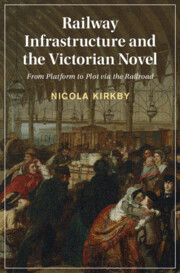
How did the novel come to be entangled with large-scale public infrastructure in nineteenth-century Britain? Sixteen years after the first purpose-built passenger railway opened in 1830, an anonymous writer for Chambers’s Edinburgh Journal pondered the formal compatibility of railways and fiction. ‘One half of the romantic stories of the country are more or less connected with stage-coach travelling’, the author muses, ‘but the railway, with its formal lines and prosaic punctuality, appears to be almost entirely given up to business’.1 By claiming (however hyperbolically) that ‘one half’ of ‘romantic’ stories in the 1840s work through stagecoach infrastructure, this author puts the untapped potential of railway travel under the spotlight. Yet the exact proportion of fictional references to popular transport is less important than public perception of plotlines and travel as closely intertwined modes. There was an inevitability about novelists exploring the possibilities of passenger railways in fiction.
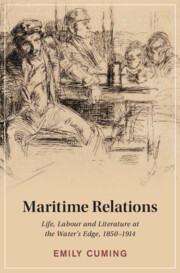
Detailing the lives of ordinary sailors, their families and the role of the sea in Britain's long nineteenth century, Maritime Relations presents a powerful literary history from below. It draws on archival memoirs and logbooks, children's fiction and social surveys, as well as the work of canonical writers such as Gaskell, Dickens, Conrad and Joyce. Maritime Relations highlights the workings of gender, the family, and emotions, with particular attention to the lives of women and girls. The result is an innovative reading of neglected kinship relations that spanned cities and oceans in the Victorian period and beyond. Working at the intersection of literary criticism, the blue humanities and life writing studies, Emily Cuming creatively redefines the relations between life, labour and literature at the waterly edge of the nineteenth century.
From 1830 onwards, railway infrastructure and novel infrastructure worked together to set nineteenth-century British society moving in new directions. At the same time, they introduced new periods of relative stasis into everyday life – whether waiting for a train or for the next instalment of a serial – that were keenly felt. Here, Nicola Kirkby maps out the plot mechanisms that drive canonical nineteenth-century fiction by authors including Charles Dickens, Elizabeth Gaskell, Anthony Trollope, George Eliot, Thomas Hardy and E. M. Forster. Her cross-disciplinary approach, as enjoyable to follow as it is thorough, draws logistical challenges of multiplot, serial, and collaborative fiction into dialogue with large-scale public infrastructure. If stations, termini, tracks and tunnels reshaped the way that people moved and met both on and off the rails in the nineteenth century, Kirkby asks, then what new mechanisms did these spaces of encounter, entanglement, and disconnection offer the novel?
The conclusion, Victorian Ignorance, places the history that Selling Sexual Knowledge has traced into conversation with the emergence of a new history of sexual knowledge at the dawn of the twentieth century. While considering how well publishing activities that the book explores would have served Victorian readers, it argues that the ways Victorians discussed their reading experiences evince what the historian Kate Fisher has called an “epistemology of sexual ignorance,” in which sexual knowledge is thought of as a set of facts that must be learned through interaction with an expert. It further argues that commercial and rhetorical practices explored in the book not only encouraged this way of conceptualizing sexual knowledge, but helped foster the emergence of a historical narrative about Victorian censorship that would serve as a powerful justification for sexual-scientific research and sex reform movements in the twentieth century. At the same time, this narrative would obfuscate the extent to which Victorians enjoyed access to sexual information in the new age of mass print.
This introduction outlines how studying the book trade can help us better understand the circulation of medical knowledge about sex and reproduction during the Victorian period, and the development of busineses, institutions, and narratives that claimed authority over it. Weaving a historiographic overview with an overview of the book’s approach and argument, it turns readers’ attention to medical works’ status as more than texts, highlighting the fact that they are material objects that must be made, promoted, and distributed, and that these actions accrue meanings of their own. It then articulates the book’s focus on the activities of four differently identified groups of players – pornographers, radicals, regular practitioners, and irregular practitioners – who brought sexual knowledge into non-expert readers’ hands and, in various ways, became embroiled in debates about medical obscenity. The introduction then outlines how the book tracks these agents’ intersecting activities to open up an argument about how and why allegations of obscenity became a means of selling books, contesting authority, and consolidating emergent collective identities.
Bringing together perspectives from the histories of medicine, sexuality, and the book, Sarah Bull presents the first study of how medical publications on sexual matters were made, promoted, and sold in Victorian Britain. Drawing on pamphlets, manuals, textbooks, periodicals, and more, this innovative book illustrates the free and unruly circulation of sexual information through a rapidly expanding publishing industry. Bull demonstrates how the ease with which print could be copied and claimed, recast and repurposed, presented persistent challenges to those seeking to position themselves as authorities over sexual knowledge at this pivotal moment. Medical publishers, practitioners, and activists embraced allegations of obscenity and censorship to promote ideas, contest authority, and consolidate emergent collective identities. Layer by layer, their actions helped create and sustain one of the most potent myths ever made about the Victorians: their sexual ignorance.This title is also available as open access on Cambridge Core.
In 1893 Clara Lindow sang the ballad Dreamtide to her own guitar accompaniment in the Cumbrian hamlet of Lowick. A writer for the local newspaper not only admired her 'marked skill and ability' but also considered the concert to be a sign of 'the onward march of light and learning in our time'. Amateurs like Miss Lindow were at the heart of a Victorian revival of guitar playing, especially for accompanying the voice, which has never been fully acknowledged and has often been denied. This book is a ground-breaking history of the guitar and its players during the era when the Victorians were making modern Britain. The abundant newspaper record of the period, much of which is now searchable with digital tools, reveals an increasingly buoyant guitar scene from the 1860s onwards. No part of Victorian life, from palace to pavement, remained untouched by the revival.