To save content items to your account,
please confirm that you agree to abide by our usage policies.
If this is the first time you use this feature, you will be asked to authorise Cambridge Core to connect with your account.
Find out more about saving content to .
To save content items to your Kindle, first ensure no-reply@cambridge.org
is added to your Approved Personal Document E-mail List under your Personal Document Settings
on the Manage Your Content and Devices page of your Amazon account. Then enter the ‘name’ part
of your Kindle email address below.
Find out more about saving to your Kindle.
Note you can select to save to either the @free.kindle.com or @kindle.com variations.
‘@free.kindle.com’ emails are free but can only be saved to your device when it is connected to wi-fi.
‘@kindle.com’ emails can be delivered even when you are not connected to wi-fi, but note that service fees apply.
How did the songs of Pindar solicit the language of Greek polytheism? How could their words generate ritual knowledge and provoke experience? Pindar was long recognised as a master of piety and an authority on divine matters, and his poems remained privileged points of reference for thinking ritual occasions like festivals, the sanctuaries where they were held, and ritual types like sacrifice. Focusing on sacrifice, this chapter looks at the ritual language produced by Pindaric poetry, rather than the one it reflects, and its inscription in the ritual archive of Greek culture. It is concerned with the poet’s enduring role as an agent in the dynamic system of Greek polytheism. After a brief survey of the prominence of sacrifice in the Pindaric biographical tradition, different aspects of the sacrifices found in the poems of Pindar are reviewed and illustrated through case studies, most notably passages from Pythian 5, Isthmian 4, and Olympian 10.
By the time of his death, Lincoln had earned substantial recognition as a great president, even admiration as a statesman of outstanding quality. His assassination heightened the sense of loss and mourning Americans and others felt, in tributes, eulogies and sermons.
The image in Plate 13 is now housed in the City Museum of Münster. The museum dates it to 1491. On the back, their website informs us, is the name of an otherwise unknown painter, Seewald. The museum lists it as “Faces without Eyes,” in which the eyes of all but Christ and two others have been “carefully removed such that one can often see the wood beneath.” The online description glosses the removal of the paint designating eyes as “destructions,” evoking “the immediate association” of “iconoclasts of the Reformation period.” As the Museum’s website suggests, there is a long tradition of using the word “iconoclasm” to name a part of what happened in the sixteenth century and a rich and dense body of scholarship on “the destruction of art.” But, as the painting materializes, the word has never fit as a name for what Evangelicals did.
When they became acquainted with Crete, the Mycenaeans were influenced by the Minoans, not only in artistic matters but also in the whole system of organization of their socio-economic life and most importantly in the field of religion; but a thorough examination shows that the ancestral religion of the Mycenaeans differs from the Minoan one, even if at first sight there are similarities. The Mycenaean religion is polytheistic; the nameless Cretan Great goddess is worshipped but also a number of male gods (though without any iconography), named Zeus, Poseidon or Hermes; syncretism was its central characteristic. In later times, as the Cretan spiritual dominance waned, typically Minoan symbols lost their prime symbolic power to the benefit of Mycenaean conceptions. Official and popular religion, the function of open-air and built sanctuaries, the symbols, rituals and Linear B tablets are subjects constantly debated, and yet the essence of Mycenaean religion, the related ideas and concepts escape us.
This chapter explores the priestly theology of space within the tabernacle and how this expands to the holy land where Israel will dwell. The tabernacle and God’s abiding presence are the center of all holiness for the priestly authors. Only ordained priests may approach his holiness. The consecration of the altar is a high point in the theology of Leviticus and has an impact on its theology of the land and the Jubilee.
Leviticus is often considered to be one of the most challenging books of the Bible because of its focus on blood sacrifice, infectious diseases, and complicated dietary restrictions. Moreover, scholarly approaches have focused primarily on divisions in the text without considering its overarching theological message. In this volume, Mark W. Scarlata analyses Leviticus' theology, establishing the connection between God's divine presence and Israel's life. Exploring the symbols and rituals of ancient Israel, he traces how Leviticus develops a theology of holiness in space and time, one that weaves together the homes of the Israelites with the home of God. Seen through this theological lens, Leviticus' text demonstrates how to live in the fullness of God's holy presence and in harmony with one another and the land. Its theological vision also offers insights into how we might live today in a re-sacralized world that cherishes human dignity and cares for creation.
This article examines a report in Dio of a vow made by Augustus in response to a prophecy. It establishes the setting as a festival for the Magna Mater rather than ludi magni, as has recently been suggested. Based on calendar entries and a passage from Ovid, the article then associates the content of the vow with altars of Ceres and Ops established in 7 c.e.
An altar to Mars dedicated by a soldier of legio XI Claudia is shown to have been removed from the fabric of Marton church during restoration work and, along with much of the other stone for the Romanesque tower, nave and chancel probably derived from the Roman small town of Segelocum, Littleborough on Trent. The name of the dedicator, G. IVLIVS ANTONINUS, is discussed in the context of legio XI Claudia deployment on the Lower Danube.
This chapter traces the consequences of the Laudians’ view of the church as the house of God for the internal arrangements and beautification of the church and its fabric. It draws out the full practical and theological significance of the Laudian ideal of the beauty of holiness. Their claims that their policies and practices were based in part on the Jewish temple and in part on the cathedrals and the Chapel Royal are outlined and assessed.
This chapter shows how the Laudians conceived the history of the church as a succession of sacrifices and altars stretching from Adam or Abel through the actual sacrifices of the Jews, under first natural, and then Mosaic law, and then through the spiritual sacrifices offered up by and in Christian churches. Where there were sacrifices there also altars and priests, and so the history of the church was conceived as a succession of consecrated persons and spaces, centred on altars, and then on episcopal chairs, stretching from the apostles to the present. The chapter shows the Laudians attempting to trace the presence in the primitive church, and then in the church of England, of the basic triad of priest, sacrifice and altar. They encountered some issues in so doing in the post-reformation church of England and the chapter shows some of their critics, most notably Bishop Williams, pointing that out and the Laudians responding with difficulty to those criticisms.
The Laudian view of the sacraments as the places where Christ’s presence in its church reached its apogee and of the altar as the site of the most intense divine presence in the church are expounded. The Laudians placed the reception of the sacrament at the centre of the collective worship of the church and of the life of faith, and thus made the altar the focal point of divine worship. The life of faith was defined in sacramental terms as a journey from font to altar, and stress placed on the need to give physical expression to these views and priorities through bowing towards the altar and worshipping towards the east. The Laudian altar policy, which placed railed-off communion tables altarwise at the east end of the church and reoriented worship towards them was the logical expression of such views. Through a case study of the church at East Knoyle, the communion room and altar are shown to have been that part of the church where the Laudians conceived the church triumphant and church militant came into closest contact in this life; something rendered explicit by their repeated insistence that angels attended the reception of the sacrament.
This chapter discusses Hadrian’s taste in poetry (a preference for Ennius over Vergil; Antimachus over Homer); his own surviving poems, with discussion of some dedicatory and sepulchral epigrams, and with a proposal about the nature of the possibly polymetric Catachannae mentioned by the Augustan History; and poetry composed with an eye to his approval, like the Altar of the high equestrian official L. Iulius Vestinus (perhaps dateable precisely to 24 January AD 132) and the mysterious inscribed elegiacs from Baetica, signed by ‘Arrian the proconsul’, on a hunter’s proper offerings to Artemis.
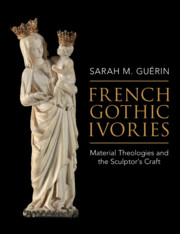
This volume is the first to consider the golden century of Gothic ivory sculpture (1230-1330) in its material, theological, and artistic contexts. Providing a range of new sources and interpretations, Sarah Guérin charts the progressive development and deepening of material resonances expressed in these small-scale carvings. Guérin traces the journey of ivory tusks, from the intercontinental trade routes that delivered ivory tusks to northern Europe, to the workbenches of specialist artisans in medieval Paris, and, ultimately, the altars and private chapels in which these objects were venerated. She also studies the rich social lives and uses of a diverse range of art works fashioned from ivory, including standalone statuettes, diptychs, tabernacles, and altarpieces. Offering new insights into the resonances that ivory sculpture held for their makers and viewers, Guérin's study contributes to our understanding of the history of materials, craft, and later medieval devotional practices.
This third chapter of Part II continues the study of the Narrative of the Transjordanian Tribes, examiningtexts in Deuteronomy and Joshua that document these tribes’ wartime service. The chapter devotes particular attention to the culminating episode that depicts a dramatic turn of events in which Israel comes close to waging war against these tribes.
Homeric supplication is a customary type of earnest entreaty associated with Zeus, Hikesios, and other gods and occurring either between individuals or at altars that give the suppliant access to a household or community.
Homeric offerings take forms including animal sacrifice, vegetal offerings, dedications, and libations serving purposes such as propitiation, thanksgiving, and fulfilling vows.
From a comparison of the much-discussed and supposedly epoch-making Neo-Modernist ‘Jubilee church’ in Rome and a new study of John Ninian Comper's church architecture, the article enquires into theologically informed principles of church design and in their light considers some crucial elements in the symbolics of ecclesial space, notably altar, screen, communion rails and tabernacle.
Recommend this
Email your librarian or administrator to recommend adding this to your organisation's collection.