To save content items to your account,
please confirm that you agree to abide by our usage policies.
If this is the first time you use this feature, you will be asked to authorise Cambridge Core to connect with your account.
Find out more about saving content to .
To save content items to your Kindle, first ensure no-reply@cambridge.org
is added to your Approved Personal Document E-mail List under your Personal Document Settings
on the Manage Your Content and Devices page of your Amazon account. Then enter the ‘name’ part
of your Kindle email address below.
Find out more about saving to your Kindle.
Note you can select to save to either the @free.kindle.com or @kindle.com variations.
‘@free.kindle.com’ emails are free but can only be saved to your device when it is connected to wi-fi.
‘@kindle.com’ emails can be delivered even when you are not connected to wi-fi, but note that service fees apply.
This chapter introduces the central ideas in Darwin’s Expression, poses the main interpretive questions that scholars have raised, and outlines my answers to those questions. Why does Darwin analyze expressions in terms of heritable habits, recalling Lamarck’s debunked theory of evolution, when his own theory of natural selection provides a superior alternative? My answer is that Darwin embraces Hartley’s associationist theory of mind, which posits habit as the basis of thought. I claim that multiple puzzling features of Expression are resolved once we view Darwin as an associationist philosopher.
This chapter traces the development of Darwin’s theory of emotion and expression from 1838 to 1872, emphasizing his many engagements with associationist philosophers. I demonstrate that all three of Darwin’s principles of expression are derived from the works of associationist philosophers, especially David Hartley, Erasmus Darwin, Herbert Spencer, and Alexander Bain.
This chapter surveys associationist theories of emotion leading up to Darwin’s Expression. These theories analyze emotions as sequences of thoughts, feelings, and actions, linked together by principles of association. Thomas Hobbes contributes to this tradition the idea that emotions can be analyzed as “trains of thoughts.” John Locke contributes the idea that these trains are connected by the “association of ideas.” David Hume contributes the idea that association can occur via contiguity, resemblance, or cause and effect. David Hartley puts these ideas together to present the first full-fledged associationist theory of mind and emotion. Harley’s ideas are developed further by Joseph Priestley, Erasmus Darwin (Charles’s grandfather), Thomas Brown, James Mill, Alexander Bain, and Herbert Spencer, among others. This tradition in the philosophy of emotion has never before been described or analyzed.
For many readers, Hume’s lengthy analysis of the passions in Book 2 has questionable philosophical returns compared to the rest of the Treatise. This paper provides a guide to a philosophically rich reading of Book 2. Instead of a disconnected series of individual arguments, Book 2 is the second half of Hume’s theory of human cognition as started in Book 1. Guided by a comparison with Hume’s A Dissertation on the Passions, I argue that Hume is not merely applying Book 1 principles to the passions, but introducing new principles governing how feeling attends to and transfers between our perceptions. Employing his methodology of experimental reasoning, Hume identifies differences between ideas and impressions, and explores how their interactions impact the movement and quality of affectivity. This is a significant expansion on the associationism of Book 1 of the Treatise, providing more sophisticated explanations and predictions concerning mental life.
Charles Darwin is known as a biologist, geologist, and naturalist, but he was also a philosopher. This book uncovers Darwin's forgotten philosophical theory of emotion, which combines earlier associationist theories with his theory of evolution. The British associationists of the eighteenth and nineteenth centuries argued that the mind operates primarily through the association of ideas, and that emotions are strings of thoughts, feelings, and outward expressions, connected by habit and association. Charles Darwin's early notebooks on emotion reveal a keen interest in associationist philosophy. This book shows that one of his final works, The Expression of the Emotions in Man and Animals (1872), is a work of associationist philosophy, and analyzes Darwin's revolutionary idea: that if the associations that produce emotions can be inherited, then the theory of evolution can explain how emotions first occurred in simpler organisms and then developed and were compounded into the complex experiences humans have today.
Among Americans in the nineteenth century, literary interest in the image, idea, and practice of “community” extended beyond any conventional historical understanding of national togetherness. The abiding conception of community that obtained in the United States between the American Revolution and World War I was also informed by an emergent theory and practice of communitarianism. This was especially the case for those contemporaries who regarded the changes to an increasingly modern society and economy from a collectivist, and typically socialist, perspective. Across a range of early national, antebellum, and postbellum phases of the communitarian experiment in the United States, American writers gave expression to communitarianism’s unique reformist program through a variety of genres and political positions. Among the former were works of fiction, nonfiction, and polemic. Among the latter (in both book and short-form formats) were writings by several generations of authors and journalists that reveal a complex array of interpretive positions and ideologies, ranging from advocacy at one end of the political spectrum to skepticism at the other. The differences in their politics notwithstanding, many of the era’s communitarian-minded writers shared a desire to shape the course of events in American life with their work.
Through a case study of the ‘speaking machine’ constructed by doctor-poet Erasmus Darwin between 1770 and 1771, this chapter aims to demonstrate that Romantic-era projects on the mechanics of speech were both new and controversial in their potential to undermine the religious, political, and philosophical status quo. It explores how Darwin’s simultaneous investigations of anatomy and machinery are suggestive of a materialist approach to the human, and particularly the speaking, body and how his materialist model of speech production simultaneously allows and is allowed by Darwin’s dual identity as philosopher and physician which informs the interdisciplinarity of his thought and practice. The chapter concludes by making the case that Darwin’s multidisciplinary approach to speech underpins both politicised reactions to his work and his own account of the role that a materialist understanding of speech and the voice can play in the development and improvement of society.
This chapter explores a line of influence in the architecture of American intentional communities from the Associationist movement of the nineteenth century down to the hippy communes that emerged in 1965, built, after Drop City, around the shape of the geodesic dome. This hippy modernism borrowed freely from the ideas of Charles Fourier and Buckminster Fuller and fostered a community that included Stewart Brand, who went on to think about the shape of space colonies and early models of the Internet.
The primary goal of Chapter 3 is to introduce some of the important themes that have come up when philosophers think about the (human) mind, where it comes from and how it relates to the body and to the surrounding world. To this end, we visit a division of philosophy called the philosophy of mind, which will involve a review of a variety of “-isms” (such as rationalism, empiricism, mind–body dualism, monism, materialism, idealism, behaviorism, physicalism, associationism, and so on). We also meet a number of important philosophers who have developed various and often opposing views on the nature–nurture issue. We conclude with a discussion of what philosophers of mind call “the hard problem,” how to explain the notion of consciousness.
This chapter explores the extensive discussion of the sublime in eighteenth-century English, Irish and Scottish philosophy, often considered as laying the groundwork for the Romantic sublime. The chapter also examines academic histories of these eighteenth-century discussions of the sublime, showing how such histories have at times over-simplified the relationship between competing philosophical approaches and national traditions. The chapter pays particular attention to the increasing centrality of the association of ideas to descriptions of the sublime in Anglophone philosophy, identifying it as a key marker of difference from the German idealist tradition that has been the focus of so many scholarly accounts of the Romantic sublime.
The idea that memory behavior relies on a gradually changing internal state has a long history in mathematical psychology. This chapter traces this line of thought from statistical learning theory in the 1950s, through distributed memory models in the latter part of the twentieth century and early part of the twenty-first century through to modern models based on a scale-invariant temporal history. We discuss the neural phenomena consistent with this form of representation and sketch the kinds of cognitive models that can be constructed and connections with formal models of various memory tasks.
This new collection enables students and general readers to appreciate Coleridge’s renewed relevance 250 years after his birth. An indispensable guide to his writing for twenty-first-century readers, it contains new perspectives that reframe his work in relation to slavery, race, war, post-traumatic stress disorder and ecological crisis. Through detailed engagement with Coleridge’s pioneering poetry, the reader is invited to explore fundamental questions on themes ranging from nature and trauma to gender and sexuality. Essays by leading Coleridge scholars analyse and render accessible his extraordinarily innovative thinking about dreams, psychoanalysis, genius and symbolism. Coleridge is often a direct and gripping writer, yet he is also elusive and diverse. This Companion’s great achievement is to offer a one-volume entry point into his incomparably rich and varied world.
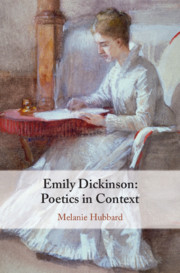
This book re-assesses Dickinson's manuscripts, style, and statements to arrive at a historically appropriate conception of poetics. It compares her composition practices, such as variant generation and writing on already-marked scraps, with those of her peers in nineteenth-century American popular manuscript culture, tracing them to the pervasive influence of Scottish Common Sense philosophy, Hume's scepticism, and associationism in philosophy of mind and early neuroscience. The argument consults the archives and considers Dickinson's reading, in and out of school, in philosophy, rhetoric, and semiotic theory, as well as her training in inductive science and her familiarity with ideas about electricity, evolution, emotion, sympathy, and the brain. Combining close readings of poems with contextualizing information about contemporary conflicts in intellectual history, the book contends that Dickinson takes the making of poems to be her philosophical praxis. It depicts a Dickinson committed to thinking about the physical constitution of human consciousness and the historicity and materiality of one of its chief modes, language.
Locke’s skeptical semiotics suggested that language could never grasp reality, but Reidian Common Sense philosophers insisted we could know the world directly and intuitively. Dickinson’s poems engage Common Sense theories which seem to discount the role of language in forming our perceptions. In her poetry, she works through and plays with Common Sense ideas about language, perception, and knowing, testing them against skeptical associationist ideas she found congenial to her work as a poet. In fact, Dickinson’s Upham textbook struggles to fend off the skeptical consequences of Brown’s Humean associationism as it undoes the Reidian realism in the perceptual process. In the course of reading several poems, I show that Dickinson’s poems work out the idea that language presents to us the only world we can know. Dickinson’s epistemological thinking works out a poetics content with “terms” and uncertainty, since the mediations of language produce and nurture human community.
Pavlov's contribution to experimental psychology was to invent a technique that allowed him to undertake a prolonged and systematic series of well-controlled experiments that, astonishingly enough, uncovered many if not most of the phenomena of what is rightly called Pavlovian conditioning. It was not for another 30 years or more that English-speaking psychologists began to match that achievement. Of course there have been new developments and discoveries since his time. Two examples are discussed: the important role of variable associability or attention even in simple conditioning, and the rigorous application of associative learning theory to the behavior of adult humans.
Recommend this
Email your librarian or administrator to recommend adding this to your organisation's collection.