To save content items to your account,
please confirm that you agree to abide by our usage policies.
If this is the first time you use this feature, you will be asked to authorise Cambridge Core to connect with your account.
Find out more about saving content to .
To save content items to your Kindle, first ensure no-reply@cambridge.org
is added to your Approved Personal Document E-mail List under your Personal Document Settings
on the Manage Your Content and Devices page of your Amazon account. Then enter the ‘name’ part
of your Kindle email address below.
Find out more about saving to your Kindle.
Note you can select to save to either the @free.kindle.com or @kindle.com variations.
‘@free.kindle.com’ emails are free but can only be saved to your device when it is connected to wi-fi.
‘@kindle.com’ emails can be delivered even when you are not connected to wi-fi, but note that service fees apply.
This chapter discusses modern approaches to understanding Hensel’s music and future scholarly challenges for its interpretation. Nowadays Hensel’s music is written about and performed widely and she has become one of the best-known woman composers. Yet this was not always the case. What had to happen to transform Hensel – in the eyes of scholars, performers, students and lay listeners – from an overlooked and sometimes maligned figure into someone now regarded as one of the most gifted composers of her generation? What lessons can we learn from considering how she moved from the margins toward the centre of the canon? And what challenges lie ahead? Looking back on the past forty years of Hensel studies reveals three main, interlinked developments that have shaped our understanding of her music: a greater awareness of the relationship and differences between her and her brother’s musical styles; a more sophisticated analytical understanding of her music; and a drastic increase in the amount of her music available for study.
The article describes the history and the process of editing the Czech Journal of Political Science. First, it puts the journal into the general context of the development of Czech political science. The journal is now one of three well-established political science journals in the Czech Republic, and invites contributions in all subfields of the discipline. The article discusses the limitations of a social scientific journal published predominantly in a small-nation language. Second, it focuses on the particular steps of the editing process. It primarily describes the peer review process.
We present new data on peer review practices in linguistics journals, reporting the results of an online survey of editors. This paper aims to increase understanding of the processes and practices of peer review for everyone involved—editors, authors, reviewers, and readers. Apprehending concretely how peer review happens from beginning to end and how editors think about it should help to demystify the process, especially for graduate students and early career researchers, and make the experience somewhat less stressful across the board. Editors, authors, and reviewers all share, we trust, a desire for high professional standards and best practices. We hope to stimulate further discussion of these issues in the field and development of field-wide standards.
Editing a journal like the European Journal of Political Research means in the first place the organisation of a constant reviewing process. Finding referees and making sure that they provide useful reports is needed for making wise decisions. Double-blind refereeing is indeed the generally accepted procedure for selecting publishable articles. This blind refereeing process is also believed to be the best way to select high-quality manuscripts. It is a sacred ritual. Yet the real life of refereeing can sometimes be quite messy and is not at all free from biases. It tends to be a fairly conservative selection process.
How to interrogate and improve your writing. Correcting errors; removing redundant phrases; trimming or augmenting attribution in speech; integrating action and speech; checking dialogue for authenticity; monitoring sentence length; balancing the extent of detail and description; scrutinising the chronology of description; checking narrative viewpoint is secure.
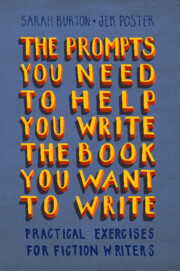
How can you take your writing to the next level? In this follow-up to their acclaimed handbook The Book You Need to Read to Write the Book You Want to Write, Sarah Burton and Jem Poster offer exercises and practical advice designed to set aspiring authors of fiction on their way to creating compelling short stories and novels. Carefully explaining the purpose and value of each exercise and encouraging writers to reflect on what they have learned in tackling each task, this themed collection of writing prompts provides both encouragement and inspiration. There are many books of prompts already available, but this one is different. Its structured, in-depth approach significantly increases the impact of the exercises, ensuring that storytellers use their time and talent to best effect – not only exploring their own creativity but also developing a wider and clearer understanding of the writer's craft.
This chapter explores the personal letter in the history of English through textual and material conventions of letter-writing, community aspects of letter-writing and language, and the role of editors and the reliability of edited epistolary sources. Community context is viewed as contemporary letter-writing practices, the involvement and influence of social networks and social relationships in letter-writing and language use, and the human factor and community aspects inherent in editing letters and compiling corpora.
Adopting a broad understanding of editing, this chapter views medieval and early modern text producers as precursors of present-day scholarly textual editors. The chapter surveys how editors from the fifteenth to the twenty-first century discuss their choices concerning the selection and reproduction of texts when making them available to contemporary audiences. Editors’ awareness of the historical nature of their project makes their work philological. The comments examined in the chapter are obtained from editors’ prefatory materials from three time periods: 1. the fifteenth to the seventeenth centuries, before the emergence of scholarly editing and the disciplinisation of English studies; 2. the mid nineteenth century – characterised by a more systematised activity in vernacular text editing and societies promoting it; 3. the twenty-first century, dominated by the rise of digital editing. The survey shows that editors of all three periods address textual selection and reproduction in their comments. Although editors in all periods sometimes arrive at similar editorial solutions, for example in favour of the faithful linguistic reproduction of the source, their decisions do not necessarily spring from similar motives. Throughout the three periods, editors convey their ideas of the target audience; readability is identified as a major editorial concern from early on.
This chapter examines the serialization of Ulysses in The Little Review (New York) and The Egoist (London). Each and every issue of The Egoist and The Little Review in which Ulysses appears has a specific geography, cultural meaning, and temporality. Though there are overviews dealing with the whole process of serialization, the significance of the individual periodical issues in which Ulysses appeared has not been closely examined, particularly in respect of The Egoist. This chapter pays close attention to the contexts of periodical publication, including editorial matters, and focuses in particular on early versions and revisions to the episode ‘Nestor’.
The sociology of the text has been instrumental in the development of the discipline of book history, but it has also had (and is still having) an impact on genetic criticism. This chapter argues that a rapprochement between both disciplines can be mutually beneficial, exploring a sociology of writing. Joyce was well aware of the ‘human agency’ involved in his literary enterprises. He had a knack for finding all kinds of textual agents to help him produce his works. The increased attention to human agency beyond the myth of solitary authorship has had quite an impact on textual scholarship, including in Joyce studies. The chapter discusses how this development impacts on our study of the writing, reading, revising, editing, and archiving of Joyce’s works, as well as on the ways in which we present them in the digital age, enabling a next generation of Joyce scholars to examine not only the teleological development of Joyce’s works towards a published text but also the dysteleological dead ends, the ‘vestigial’ notes that did not make it into Joyce’s published texts yet played a discreet, but no less valuable, role in the creative ecology of Joyce’s writing practice.
Chapter 1, Holywell Street Medicine, traces the pornography trade’s birth out of the collapse of revolutionary politics in the 1820s, and shows how early agents in the trade scavenged for content to fill lists of sexual material. This fostered a vibrant mid-century traffic in cheap reprints and reworkings of works on contraception, venereal disease, fertility, and midwifery alongside pornographic novels and prints, bawdy songbooks, and other sexual material, operating out of London’s Holywell Street and other thoroughfares near the Strand. While showing how these agents harnessed the expanding infrastructures of the press and the post to sell their wares works across the nation, this chapter demonstrates that they framed medical works through two different, but compatible, lenses. Following a long line of disreputable publishers, Holywell Street publishers framed medical works as titillating reading material. However, they also adapted earlier radical arguments for sex education and female sexual pleasure, marketing medical works as containers of practical information about the body that readers could apply to support safe, active, and pleasurable sex lives.
This is about how the group came together and how the stories developed through discussions, as welll as the feelings that people experienced during writing.
The chapter opens with an account of human translation and the working conditions that human translators should be able to enjoy. A look at translators’ accounts of their métier emphasizes their enjoyment of the translating activity and the responsibility that they typically feel towards their source texts. The chapter also discusses machine translation (MT) and translation memories (TM), which are sometimes considered threats to human translation. However, it is equally possible that automation will enhance the roles of translators. The distinction between editing and revision is introduced and both post-editing and pre-editing are considered: pre-editing is undertaken to ensure that a first-written text can be rendered into another language as unproblematically as possible, using so-called controlled language, which contains rules for what must and what must not occur. The final section discusses the important issue of quality control of translators’ output. A set of stages of translation are identified, along with the practical measures that can be taken at each stage to ensure that the translation reaches the quality agreed between client and translation provider.
The later nineteenth century saw expanded editions of Pepys’s diary by Lord Braybrooke (1848-49), Mynors Bright (1875–79), and Henry Wheatley (1893–99). This chapter surveys the publication of these editions and the responses to them as Pepys’s fame grew. Each new edition was accompanied by swirling rumours about what was left out. The diary inspired parodies, paintings, historical fiction, and articles in children’s magazines. A dominant theme in these creative responses was imagining what the censored texts had omitted, especially about the women in Pepys’s life. By the late nineteenth century, Pepys featured in formal education as a representative of the Restoration, but his name was also shorthand for unorthodox and fun history. The popularity of the comical version of Pepys sparked discussions about the purpose of history, notably via stress on Pepys’s role in naval and imperial history.
Pepys’s diary was first published in 1825, in a highly selective version edited by Lord Braybrooke. This was a starkly different journal from the versions read today, cutting most of Pepys’s personal life, his details of everyday London and (with the exception of some court scandal) all the sex. This chapter investigates how the diary came to be published, including the shrewd tactics of the diary’s shorthand transcriber John Smith and its publisher Henry Colburn. On release, the diary drew influential admirers such as the novelist Walter Scott and the historian Thomas Macaulay. Early responses focused on the diary’s value as entertainment, on censorship, and on the questions that it raised about historical value. The chapter considers how the diary changed – or did not change – ideas of the Restoration period, the diary’s influence on the writing of social history, and the extent to which its publication followed Pepys’s plans for his library.
The afterword draws together arguments made in previous chapters about the creation, publication, and reception of Pepys’s diary. It briefly surveys the reputation and uses of the diary in the early twenty-first century and considers what the future of the diary might hold.
This chapter tells the story of how the uncensored text of Pepys’s diary was finally published in the late twentieth century, before turning to the diary’s online presence in the twenty-first century. The complete text, edited by Latham and Matthews, appeared between 1970 and 1983. However, the decision to publish the diary in full was made much earlier, at the time of the controversial Lady Chatterley trial (1960). Getting all the diary into print required navigating the new law against obscene publications, with implications for how the diary is read today. International collaboration – and behind-the-scenes controversy – also shaped this edition. Collaboration is likewise a feature of the site pepysdiary.com (2003-present), which attracts an international community of readers. As the COVID-19 pandemic hit, this site became a record of how readers worldwide used Pepys’s history to interpret a contemporary plague.
Throughout his life, Johnson’s heroes were the humanist scholars – Erasmus, Roger Ascham, and above all Joseph Scaliger – who had pioneered the close textual analysis of classical texts. Unlike Swift and Pope, Johnson was not satirical about true scholarship, and he produced two major feats of scholarship in their own right: The Dictionary of the English Language and The Plays of William Shakespeare. The Dictionary’s innovation was that, following the example of the humanist lexicographers of Latin, it was compiled by reading books and recording their use of English words. The book’s most striking feature is its more than 100,000 quotations; its weakest is Johnson’s etymologies. Compiling it helped to Johnson to cement his close knowledge of Shakespeare’s plays, and so to edit them – sometimes proposing imaginative emendations, but with the caution his humanist exemplars recommended. Some of his comments, meanwhile, amount to moralistic mini-essays.
Interest in material culture has produced a rigorous body of scholarship that considers the dynamics of licensing, permissions, and patronage - an ongoing history of the estrangement of works from their authors. Additionally, translation studies is enabling new ways to think about the emergence of European vernaculars and the reappropriation of classical and early Christian texts. This Element emerges from these intersecting stories. How did early modern authors say goodbye to their works; how do translators and editors articulate their duty to the dead or those incapable of caring for their work; what happens once censorship is invoked in the name of other forms of protection? The notion of the work as orphan, sent out and unable to return to its author, will take us from Horace to Dante, Montaigne, Anne Bradstreet, and others as we reflect on the relevance of the vocabularies of loss, charity, and licence for literature.
Concision is about more than writing like Hemingway or following Strunk & White’s edict to eliminate unnecessary words. Instead, concision relies on writers recognizing the myriad redundancies in English, a reflection of its evolution from the collision of Latin, French, and Old English in the decades following the Norman Conquest. Moreover, redundancies also litter English in the form of redundant modifiers, throat-clearing, and metadiscourse. By recognizing these words and phrases, writers can quickly pare sentences to their essentials, without fretting over the havoc deletions can wreak on the meaning of their sentences.