To save content items to your account,
please confirm that you agree to abide by our usage policies.
If this is the first time you use this feature, you will be asked to authorise Cambridge Core to connect with your account.
Find out more about saving content to .
To save content items to your Kindle, first ensure no-reply@cambridge.org
is added to your Approved Personal Document E-mail List under your Personal Document Settings
on the Manage Your Content and Devices page of your Amazon account. Then enter the ‘name’ part
of your Kindle email address below.
Find out more about saving to your Kindle.
Note you can select to save to either the @free.kindle.com or @kindle.com variations.
‘@free.kindle.com’ emails are free but can only be saved to your device when it is connected to wi-fi.
‘@kindle.com’ emails can be delivered even when you are not connected to wi-fi, but note that service fees apply.
Edited by
Latika Chaudhary, Naval Postgraduate School, Monterey, California,Tirthankar Roy, London School of Economics and Political Science,Anand V. Swamy, Williams College, Massachusetts
Before the emergence of British imperial rule, India consisted of regions ruled by different states and frequently representing somewhat different ecologies and economic bases. The historiography of economic change in the late eighteenth and early nineteenth centuries, therefore, has developed as a set of regional studies. It is a rapidly evolving literature. What are its key concerns? One shared theme is the need to have a credible prehistory of colonial expansion, which should help to better understand the pattern of change that came after. With two case studies, Gujarat and Bengal, and attention to livelihoods, connections and varieties of capitalism, the chapter offers tentative conclusions on what this historiography tells us.
Edited by
Latika Chaudhary, Naval Postgraduate School, Monterey, California,Tirthankar Roy, London School of Economics and Political Science,Anand V. Swamy, Williams College, Massachusetts
This chapter deals with the aspects of political economy in British India from c. 1850 to c. 1950, focusing on the major debates and controversies about economic policies, which concerned the role of the colonial state and its implications for British imperial policies. British India had wider economic relations with surrounding Asian and African regions, located as it was within dense regional trading networks, as a hub of transactions of goods, money, people (migration), services and information. Through the development of global economic history, new works and interpretations are presented as a new paradigm against the traditional Eurocentric approach. Using recent works by Asian and Japanese scholars, this chapter analyses a changing economic shift from trade to finance in British India and the transformation of the economic international order of Asia and the role of India in the interwar years, with a special focus on the drastic impacts of the Second World War.
Edited by
Latika Chaudhary, Naval Postgraduate School, Monterey, California,Tirthankar Roy, London School of Economics and Political Science,Anand V. Swamy, Williams College, Massachusetts
By the end of the nineteenth century, British-ruled India faced an ecological crisis due to the extension of cultivation, deforestation and desiccation. Famines since the 1870s had led to a decline in population in some regions. While colonial authorities attributed the famines to climatic factors, others held taxation, institutional reforms and economic policies responsible for these disasters. Colonial science emerged as a significant tool in managing and monitoring environments at the same time. The chapter examines the interlinked economic and ecological history of India in these times and the responses by the British imperial authorities and scientists to the perceived crisis.
For the last fifty years, scholars have accepted that the political philosophies associated with the Enlightenment and British country ideology played a central role in provoking the American Revolution. This chapter moves away from this approach to consider the broad spectrum of political thought in colonial America in the decades immediately before independence. The bulk of this thought was neither as secularized, nor as hostile to imperial authority, nor as egalitarian, nor as American as scholars have assumed. This broader perspective makes it evident that the Revolutionary breach did not grow in any meaningful way from the Enlightenment or British country thought. I argue instead that it was political thought normalized within the empire – indeed central to imperial authority’s proper functioning – and familiar to British Americans that served as the primary intellectual basis for resistance to the London authorities as the imperial crisis intensified. Colonists used Protestant political idioms that warned of the continuing dangers of popery and tyranny to indict the imperial ministry’s actions, formed arguments about the nature of the British constitution drawn from mainstream imperial political theory to undermine the London government’s authority, and invoked episodes from Britain’s tortured seventeenth-century history to legitimate their acts of resistance. This appropriation ultimately destroyed the logic of empire in British America. argue in stead that it was the colonists’ understanding of the British constitution, their use of mainstream imperial Protestant political idioms that denounced popery and Catholicism to indict the imperial
This chapter is the first of three examinations of dominant copyright reversion traditions (UK, US, EU) throughout this book. It traces how reversion rights were present in the very first copyright statute, the 1710 Statute of Anne. It demonstrates how different iterations of reversion rights were hamstrung by poor design and undermining by rightsholders (e.g. by contracting around the intended effects of these provisions). It then canvasses modern developments in reversion rights across the Commonwealth (like in Canada and South Africa).
This chapter examines the interplay and boundaries between ancient heroic and didactic epic poetry, particularly in the Hellenistic and imperial periods, treating didactic poets such as Aratus, Nicander, Dionysius the Periegete, Oppian, ps.-Oppian, and ps.-Manetho, whose poems are rooted in the early didactic epic tradition associated with Hesiod. Emphasising that didactic poetry was widely deemed a subset of the epic genre by ancient literary critics, the chapter examines didactic epic as both a controversial form of verse and a perceived vehicle for cultural prestige and wider cosmic truths in the ancient world. Setting didactic poetry against prose literature, heroic epic poems and allegorical readings of the Homeric epics, Kneebone draws attention to the rich and assimilative traditions of post-classical didactic epics.
This chapter examines the colonial novel of the 1920s–1940s as a form that mediates and distils the imperial logic that connects the nation and the colony. Divided into two sections, the chapter argues that the colonial novel thinks about the difference – even as it brings that difference into being – between that which is the imperial-national and that which constitutes the colonial, and the relationship between the two. The first section focuses on the representations of the colonial club – the center of political, economic, social and affective energy – as the natural site for exploring the emergence and decline of the British colonial sphere and its relationship with the imperial structures of the nation. The second section examines how two late colonial novels depict the impotence, misery and accrued weariness of imperial rule. The novels carefully and deliberately unravel any notion of imperial authority, in institutions or in individuals, and foreground the distance between imperial rhetoric and colonial reality.
Chapter 3 focuses on the Lamb’s place on a heavenly throne, which is viewed in light of the ancient practice of divine throne-sharing. Widely attested in the ancient Mediterranean world, throne-sharing occurred when one entity shared the throne of a deity or occupied a throne in close proximity to a deity. Most often throne-sharers were kings, and the king’s place on a divine throne functioned to demonstrate the divine legitimacy of their rule. Chapter 3 surveys the evidence for throne-sharing in various ancient Mediterranean contexts in order to shed light on the appropriation of this ideology in Revelation. In short, the Lamb’s position on the heavenly throne thus designates the Lamb as a divinely-elected king. At the same time, it functioned as an implicit rejection of imperial claims of the divine legitimacy of the emperor’s rule.
Federation is an inherently flexible form of political organisation that involves ongoing negotiation, coordination and compromise to meet changing local and temporal conditions.The history of Australian Federation illustrates this: from the origins of the federal idea in the mid-nineteenth century, amid the emergence of quasi-federal arrangements within the British Empire (1847-1890); to the creative outcomes of Australia’s constitution-making decade, when American and other influences garnered attention (1891-1901); and through the subsequent outworkings of the Australian Constitution as it has been interpreted and applied alongside the growth of the nation. The proven adaptability of Federation may inform contemporary approaches to the constitutional recognition of Australia’s First Peoples.
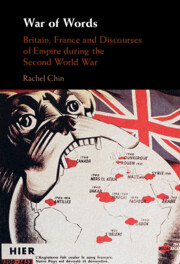
War of Words argues that the conflicts that erupted over French colonial territory between 1940 and 1945 are central to understanding British, Vichy and Free French policy-making throughout the war. By analysing the rhetoric that surrounded these clashes, Rachel Chin demonstrates that imperial holdings were valued as more than material and strategic resources. They were formidable symbols of power, prestige and national legitimacy. She shows that having and holding imperial territory was at the core of competing Vichy and Free French claims to represent the true French nation and that opposing images of Franco-British cooperation and rivalry were at the heart of these arguments. The selected case studies show how British-Vichy-Free French relations evolved throughout the war and demonstrate that the French colonial empire played a decisive role in these shifts.
This chapter discusses how the preceding analysis has wider, portable, comparative implications for understanding the drivers of variations in shades of authoritarianism and illiberalism in other communist legacy countries. I structure the chapter as follows. I first sketch out an analytical framework for a comparative analysis of two new cases: Hungary and China. The section also delineates limitations of scope and restrictions in applications to the universe of communist states and beyond. I then proceed to analyze each case with reference to the key variables of interest. A final section concludes with reflections on the utility of the framework for understanding social inequalities and the long shadow of premodern societies in effecting democratic vulnerabilities and resilience in the present-day illiberal world.
Mary Pat Brady’s chapter poses an alternative approach to hemispheric fiction by reading not according the scales of concentric geometries of space (local, regional, national, transnational), but instead reconceptualizing what she terms “pluriversal novels of the 21st century.” She argues for attending to the complexly mixed temporalities, perspectives, and languages of novels that reject the dualism of monoworlds (center/periphery) for the unpredictability of stories anchored in multiple space-times. While this is not an exclusively 21st-century phenomenon, she shows that pluriveral fiction has flourished recently, as works by Linda Hogan, Jennine Capó Crucet, Julia Alvarez, Gabby Rivera, Karen Tei Yamashita, Ana-Maurine Lara, and Evelina Zuni Lucero demonstrate.
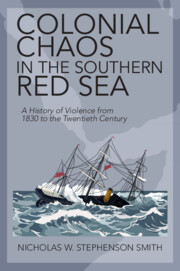
Today, the countries bordering the Red Sea are riven with instability. Why are the region's contemporary problems so persistent and interlinked? Through the stories of three compelling characters, Colonial Chaos sheds light on the unfurling of anarchy and violence during the colonial era. A noble Somali sultan, a cunning Yemeni militia leader, and a Machiavellian French merchant ran amok in the southern Red Sea in the nineteenth and twentieth century. In response to colonial hostility and gunboat diplomacy, they attacked shipwrecks, launched piratical attacks, and traded arms, slaves, and drugs. Their actions contributed to the transformation of the region's international relations, redrew the political map, upended its diplomatic culture, and remodelled its traditions of maritime law, sowing the seeds of future unrest. Colonisation created chaos in the southern Red Sea. Colonial Chaos offers an interdisciplinary approach to understanding the relationship between the region's colonial past and its contemporary instability.
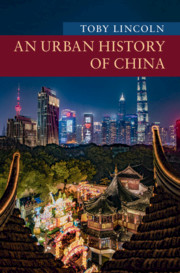
This book is a history of Chinese cities from their origins to the present. Despite being an agricultural society for thousands of years, China had a dynamic imperial urban civilization. This consisted of a complex empire-wide urban system linking cities, towns, and villages. Although there was variation across the empire, there was a recognizable Chinese urban form, especially in imperial capitals. At the same time, cities were managed by a mixture of Chinese officials and organizations such as migrant associations. Finally, a vibrant urban culture developed that distinguished cities from the countryside that surrounded them. Then, over the past century, because of a number of historical forces, including industrialization and the emergence of governments committed to urbanization, this urban civilization was transformed into the world’s largest modern urban society. Indeed now, with some of the largest cities and most densely populated and networked cities in the world, China is shaping what it means to be a modern urban society. Like those throughout China’s history, these cities are connected to others around the world, and by highlighting these links, this book writes China into the history of how the world has become a modern urban society.
In this accessible new study, Toby Lincoln offers the first history of Chinese cities from their origins to the present. Despite being an agricultural society for thousands of years, China had an imperial urban civilization. Over the last century, this urban civilization has been transformed into the world's largest modern urban society. Throughout their long history, Chinese cities have been shaped by interactions with those around the world, and the story of urban China is a crucial part of the history of how the world has become an urban society. Exploring the global connections of Chinese cities, the urban system, urban governance, and daily life alongside introductions to major historical debates and extracts from primary sources, this is essential reading for all those interested in China and in urban history.
Patronage and commissioning of public events and buildings was a key tool in the attainment and replication of social status in antiquity. In the early Middle Ages, new ideals emerged around Christian forms of wealth and support, and different values were attached to the acquisition of agricultural land. Urban properties took on new relevance, and agricultural property became socially valuable in new ways. Cultivated spaces within cities came to be newly prestigious. This chapter considers the principal means by which aristocrats and rulers performed status and power within the late antique and early medieval cities of Italy, marshalling the new evidence of urban cultivation to inform our understanding of power in the built environment. It then develops three examples of this process from the mid eighth century to the early tenth, in Rome, Ravenna, and Naples. These examples show clearly the sophisticated strategies employed by rulers, ecclesiastical institutions, and families alike to control cultivated spaces, and the social status which came with successful strategies.
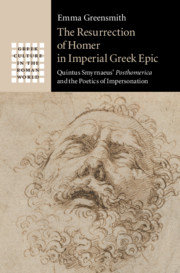
Sets out the book’s critical framework and methodology. Outlines the current scholarly consensus regarding the Posthomerica and its place within imperial Greek epic. Emphasises the strong relationship between these readings and the ‘supplementary’ poetics attached to Roman, and particularly silver Latin, poetry.It then demonstrates the ways in which this book will depart from these readings. Introduces the concept of the ‘poetics of the interval’ as the key aspect of this departure: Quintus’ new formative poetics. Sets this poetics within and against various relevant traditions: pseudoepigraphia, the epic cycle, Latin literature. And sets up the political and cultural implications of this new framework: shows Quintus’ politically engaged interaction with imperial Greek performance culture,declamation and rhetoric, and other imperial Greek epic. Ends by establishing the ‘terms of engagement’: the book’s approach to key concepts such as intertextuality, allusion, postmodernism and ‘metapoetics’.
This book offers a radically new reading of Quintus' Posthomerica, the first account to combine a literary and cultural-historical understanding of what is the most important Greek epic written at the height of the Roman Empire. In Emma Greensmith's ground-breaking analysis, Quintus emerges as a key poet in the history of epic and of Homeric reception. Writing as if he is Homer himself, and occupying the space between the Iliad and the Odyssey, Quintus constructs a new 'poetics of the interval'. At all levels, from its philology to its plotting, the Posthomerica manipulates the language of affiliation, succession and repetition not just to articulate its own position within the inherited epic tradition but also to contribute to the literary and identity politics of imperial society. This book changes how we understand the role of epic and Homer in Greco-Roman culture - and completely re-evaluates Quintus' status as a poet.