To save content items to your account,
please confirm that you agree to abide by our usage policies.
If this is the first time you use this feature, you will be asked to authorise Cambridge Core to connect with your account.
Find out more about saving content to .
To save content items to your Kindle, first ensure no-reply@cambridge.org
is added to your Approved Personal Document E-mail List under your Personal Document Settings
on the Manage Your Content and Devices page of your Amazon account. Then enter the ‘name’ part
of your Kindle email address below.
Find out more about saving to your Kindle.
Note you can select to save to either the @free.kindle.com or @kindle.com variations.
‘@free.kindle.com’ emails are free but can only be saved to your device when it is connected to wi-fi.
‘@kindle.com’ emails can be delivered even when you are not connected to wi-fi, but note that service fees apply.
Successor to the dime novel, pulp fiction is cheap, paperback, pocket-sized novels with colorful, lurid covers. It includes many genres: crime and detective stories, horror, westerns, science fiction, romance. Pulp fiction reshaped literature from an intellectual pastime into fantasies packaged for laborers to read anywhere, anytime. Frequently banned or censored, pulp’s reputation as depraved, sexually promiscuous stories only made them more popular. Pulps also presented stories of African Americans or gay and lesbian heroes in a culture that suppressed these groups. Their popularity drew Hollywood’s attention, and many titles became movies with cross-media advertising and images. These portable fantasies were among the few entertainments available to American GIs deployed on ships and at the front during World War II. After the war, soldiers left behind millions of copies in foreign countries, where postwar pulp publication became a global phenomenon. Pulps convey American values to a mass, international audience.
Before 1970, media rarely addressed LGBTQ+ identity and only as a curiosity, disease, or deviation from heteronormativity, making visibility the biggest issue. The few 1960s films addressing queerness still displayed society’s intolerance. 1970s–1990s Hollywood occasionally produced queer-identified characters through straight viewpoints. There were alternatives: camp operated in gay subculture, and lesbian subculture flourished in feminist bars and events. A pivotal moment occurred when comedian Ellen DeGeneres’s 1997 sitcom Ellen depicted her coming out. However, after that media event, the show’s storytelling about her life as a lesbian led to its swift cancellation. DeGeneres then began a talk show dependent on her personal style of warmth, humor, likeability – basically, a non-threatening lesbian. Since Ellen, television regularly incorporates LGBTQ+ characters/plots due to television’s more fragmented, narrowly defined audience programming in cable channel proliferation and streaming services. Movies and cyberculture likewise more frequently adopt queer sensibilities.
This chapter concentrates on the ways that writers improvised with the discourse of what Amy Kaplan first described as “manifest domesticity”—a discourse pressing domestic life in the US into the service of empire-building. Their improvisations are a courageous attempt to do nothing less than insert queer lives into the national narrative. Beginning with Walt Whitman’s antebellum fiction, the chapter takes readers all the way into the twentieth century, collating a wide range of writers (some canonical, others now obscure) who shared an interest in queer lives avant la lettre—before, that is, same-sex desire was codified and transformed into an identity rather than a behavior. What emerges astonishes the twenty-first–century’s commonsense of nineteenth-century America: a culture surprisingly open-minded about non-normative desires that is, in many ways, less restrictive than our own; models of domesticity that challenge, rather than reinforce, the rapacious elements of empire; gay sex published and, in some cases, canonized.
Sexual orientation refers principally to a person’s sexual behavior, sexual self-identification, and sexual attraction to others, whether they are of the same sex, different sex, all sexes, or no sex. The chapter first breaks down the LGBTQIA acronym and shows that the acronym does not represent the same general population. It then discusses two basic strategies for conceptualizing sexual orientation, seven different dimensions of sexual orientation, and survey data for measuring the prevalence of sexual orientation. These are followed by empirical analyses of sexual orientation for females, for males, and for asexuals.
This chapter considers the emergence of gay and lesbian voices in the late 1960s and 1970s in relation to political activism and forums such as small press culture, the visual arts and performances. It discusses how some of these were associated with the women’s movement. It notes how an early coalitionist approach transformed into separatism between the lesbian and gay communities, followed by a return to coalitionist approaches in light of the AIDS crisis. The chapter analyses the print culture supporting gay and lesbian writing during these decades. It tracks the emergence of queer poetries that rejected identity categories, including queer Aboriginal poetry. It discusses the mainstreaming of LGBTQ+ writing, including the film adaptation of Dorothy Porter’s The Monkey’s Mask. Lastly, the chapter considers the proliferation of publications by gay, lesbian, queer, trans and non-binary poets from 2010 onwards, contextualising them in light of public debates around the Australian Marriage Law postal survey, the Safe Schools Coalition, and protests around police participation in and corporate sponsorship of the Mardi Gras Parade.
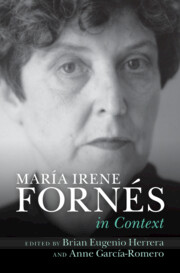
María Irene Fornés is both one of the most influential and one of the least well-known US theatermakers of the late twentieth century, with former students including leading US playwrights, directors and scholars. This is the first major scholarly collection to elucidate Fornés' rich life, work, and legacy. Providing concise and wide-ranging contributions from notable scholars, practitioners and advocates drawn from the academic and artistic communities most informed and inspired by her work, this engaging volume provides diverse points of entry to specialists and students alike.
Alisa Solomon excavates the fragmented evidence of María Irene Fornés’s intimate relationship with noted public intellectual Susan Sontag. Arguing that the two came together at a pivotal time in their lives, Solomon demonstrates how Fornés and Sontag galvanized each other as they embarked on their disparate professional careers as writers, producing a persistent synergy in spite of their radically different backgrounds and career trajectories. Carefully charting how Fornés and Sontag cryptically acknowledged and deliberately effaced their history as romantic and creative partners, Solomon argues the relationship was foundational to both writers as not so much a matter of mutual influence as confluence rippled through both of their careers long after their romantic relationship ended.
Lesbianism figures into María Irene Fornés’s writing in every decade of her career but bears significantly on only a quarter of her more than forty published plays and manuscripts. Through close readings of four plays (Tango Palace, Fefu and Her Friends, Enter THE NIGHT, The House at 27 Rue de Fleurus), Nicole Stodard evinces the the evocative stylistic ways that Fornés’s embodied queerness becomes visible in her body of work through characters’ gender and sexual embodiment, romantic triangulation, shapeshifting categorization, and queer suffering and joy. Stodard argues that Fornés’s work embodied a sexual philosophy that was more expansive and connected with a larger life quest. From depicting couples, queer and straight, to queering coupling through the representation of triangular affection, her legacy ultimately advances an abundant love that is plural, communal, uninhibited, transcendent, and joyful.
Japan's Takarazuka Revue is arguably the most commercially successful all-female theatre company in the world. Renowned for its glamour-laden staging of musicals and revues, the company's signature shows are heterosexual Western romances where women play both male and female roles. Since its audience consists almost entirely of women, Takarazuka creates a space for queer intimacy between performers and ardent female fans. This Element analyses the recent experimental show, The Poe Clan, directed by Koike Shūichirō, which portrays a male homoerotic relationship, argued as a façade for a queer, kin-like relationship between women. It also explores works by the female director Ueda Kumiko, which depict an anti-capitalist shared commons for female intimacy. These shows exhibit resistant girls' aesthetics, expressed in the company's two-dimensional performance style.
This chapter introduces the book’s motivation: to understand how activists use identity to manage the apparent contradiction between the promises of legal inclusion and persistent forms of marginalization. The chapter illustrates the importance of the issue through discussion of the activism of two lesbian groups – Free Gender in Cape Town, South Africa, and La Fulana in Buenos Aires, Argentina – that form the focus on the book. Both organizations strategize sexual identity in tandem with other racial, class, and gender identities, albeit in different ways. The chapter presents the conceptual background of the book, which adopts a historical approach to understanding LGBT inclusion into citizenship and explains the relevance of intersectionality to contemporary LGBT organizing. The chapter previews the theoretical framework developed in Chapter 1 that accounts for key differences in how the two organizations strategically use multiple identities. The chapter concludes with a discussion of some of the methodological aspects of the research and presents the plan for the rest of the book.
Chapter 1 lays out the theoretical framework that guides the rest of the book. The chapter makes the case that social movement scholars have not yet fully integrated the insights of intersectional theory on social movements’ strategic identity work. The first part of the chapter reviews the literature on collective identity, collective action framing, and identity strategies to generate a synthetic picture of the factors that influence identity strategizing: political and discursive opportunities, opposition and oppositional discourses, and intramovement and organizational dynamics. Through applying an intersectional lens to these factors, the chapter explains the conditions under which organizations choose to strategize multiple identity categories at once. The chapter continues with an intersectional approach to illuminate the political effects of identity strategies. An intersectional approach focuses on the embodied dimension of identity deployment. This section develops the idea that when activists embody identity strategies in public, they challenge the concept of the universal subject of rights by giving rights a specific form. This conceptualization of identity strategies clarifies the influence that they allow organizations to have on politics even without directly engaging the formal political system.
This chapter offers an intersectional feminist reading of West Side Story that shows how women of color and the gender non-conforming character Anybodys are central to the (partial) redemptive arc of the musical. The narrative and characterizations—as expressed through songs, dances, and score—suggest a path to a better “Somewhere” that requires us to step outside the confines of normative masculinity and femininity which reinforce the boundaries of race and class. Throughout the musical, Anita and Maria must navigate the tensions within the concepts of assimilation and multiculturalism, as well as a social landscape dominated by an anxious and often violent masculinity. Careful attention to performances of these roles, and the character Anybodys, make clear that the belonging they (and we the audience) seek might be found somewhere beyond the reductive and destructive strictures of the gender binary.
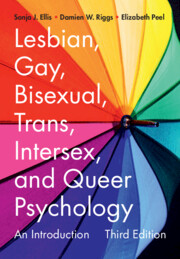
The third edition of this award-winning textbook provides an accessible and engaging introduction to the field of LGBTIQ+ psychology. Comprehensive in scope and international in outlook, it offers an integrated overview of key topical areas, from history and context, identities and fluidity, families and relationships, to health and wellbeing. This third edition includes updates across all chapters that provide a greater focus on diversity and utilize new terminology throughout to reflect changes in the field. It addresses recent developments in the field of trans studies, and explicitly references emerging work around pansexuality and asexuality. An entirely new chapter focuses on a diversity of topics receiving increased attention including LGBTIQ+ people in foster care, LGBTIQ+ refugees, disabled people accessing services, and trans and intersex people in sport. The fallout of increasing far-right extremism in Europe and America is also discussed. This groundbreaking textbook is an essential resource for undergraduate courses on sex, gender and sexuality in psychology and related disciplines, such as sociology, health studies, social work, education and counselling.
This chapter provides an overview of the longue durée of Russian literature’s engagement with non-heteronormative sexuality and non-normative genders as well as a more extended focus on the Modernist period as a time when queerness operated as a particularly generative cultural mechanism, stimulating new modes of literary production. While queer literary expression can be observed since the beginning of literature in Russia, the chapter argues that the early twentieth century saw the development of specific forms of literary poetics that were at once expressive of queerness and associated with it. The chapter also considers the history and philosophical connections of the most significant of these forms: the existential prosaic fragment.
An examination of a varied set of linguistic phenomena that can be understood as processes of complexification at work in Ur-Aeolic as a variety of Greek that took shape in the context of an isolated speech community –specifically one situated in western Anatolian locales during the Bronze Age.
This chapter explores the interplay between identification and distance that Lucian sets up for his readers in relationship to the speaking characters in the Dialogues of the Courtesans. While readers are, at times, invited to identify with the plights of these ‘others’ as partners in restrictive power structures, at other times, the otherness of the courtesans is emphasised through female verbal markers, female-specific cults, and women-only sexuality. Again and again, the subjectivity of the courtesan is offered to the reader, only to be withdrawn from their grasp. And, in fact, in its current form, the collection begins with a soldier and ends with a virgin – the courtesan managing to slip away. Lucian’s play with the courtesan’s subjectivity leaves his readers full of suspicions about intentional misdirection, both by the characters within the stories and by the author Lucian himself.
A synthetic, concluding discussion addressing the relationship between Ur-Aeolic and Special Mycenean and providing a historical framework for, especially, the introduction of Aeolic language and culture (pre-Thessalian/Boeotian) into European Greece following the Bronze-Age collapses and for the spread of pre-Aeolians (Iron-Age Ahhiyawans) eastward into Cilicia.
A linguistic investigation of the Aeolic dialect group, examining linguistic traits of the Lesbian, Thessalian, and Boeotian dialects and those traits common to all three and thus traits belonging to ancestral Aeolic.
The aim of this 4-year follow-up study was to examine the predictive effects of demographics, three types of sexual stigma, three types of self-identity confusion, anxiety, depression, family support and problematic Internet use before the coronavirus disease 2019 (COVID-19) pandemic on new-onset suicide risk and persistent suicide risk in young adult lesbian, gay and bisexual individuals who experienced the COVID-19 pandemic in Taiwan.
Methods
Baseline data were collected from 1,000 lesbian, gay and bisexual individuals in 2018 and 2019. Outcome data on suicide risk were collected again in 2023. The suicide module of the Mini International Neuropsychiatric Interview was used to assess suicide risk in terms of thoughts of death, desire to self-harm, thoughts of suicide, plans for suicide and suicide attempts in the preceding month at the initial and follow-up assessments. Baseline three types of sexual stigma, self-identity disturbance, depression, anxiety and problematic Internet use were used to examine their prediction of new-onset suicide risk and persistent suicide risk at follow-up.
Results
In total, 673 individuals participated in the follow-up survey. Notably, 16.5% of the participants who had no suicide risk at baseline had new-onset suicide risk at follow-up; 46.4% of the participants who had suicide risk at baseline also had suicide risk at follow-up. Participants who were transgender (p = .003), who perceived greater levels of microaggression (p < .001), and who had greater levels of problematic Internet use at baseline (p = .024) were more likely to have new-onset suicide risk at follow-up. Participants who had greater levels of self-identity confusion were more likely to have persistent suicide risk at follow-up (p = .023).
Conclusion
Intervention strategies for reducing suicide risk in lesbian, gay and bisexual individuals should be developed with consideration of the predictors identified in this study.
Those identifying as LGBTQ+ experience an excess of mental health problems and suicide in our society, and their mental health needs are poorly catered for. In the recent past, aversion therapy was given to lesbian and transwomen and conversion therapy remains legal. The ‘gender wars’ have also opened up spaces within society and feminism that can be difficult to negotiate. For transwomen, timely access to adequate care remains a major problem causing considerable emotional distress while public anti-trans sentiment has increased. Repeated denial of the lived experience of trans people is causing psychological harm. The rise in gender dysphoria in assigned female at birth (AFAB; or natal female) girls and their treatment has caused major controvery. We must to acknowledge both the distress of trans people, who feel frustrated and angry at having to jump through the hoops of psychiatric assessment and being blamed for male violence from which they are also at risk, and the distress and fear of women who have been conditioned lifelong to fear, and/or have experienced violence, at losing their safe spaces. Seeking ways to ensure that everyone feels welcomed not only in services but also in society.