To save content items to your account,
please confirm that you agree to abide by our usage policies.
If this is the first time you use this feature, you will be asked to authorise Cambridge Core to connect with your account.
Find out more about saving content to .
To save content items to your Kindle, first ensure no-reply@cambridge.org
is added to your Approved Personal Document E-mail List under your Personal Document Settings
on the Manage Your Content and Devices page of your Amazon account. Then enter the ‘name’ part
of your Kindle email address below.
Find out more about saving to your Kindle.
Note you can select to save to either the @free.kindle.com or @kindle.com variations.
‘@free.kindle.com’ emails are free but can only be saved to your device when it is connected to wi-fi.
‘@kindle.com’ emails can be delivered even when you are not connected to wi-fi, but note that service fees apply.
This chapter explores the varied facets through which conceptions of materialism manifest across the larger ecologies of literary production bundled under the rubric “African literature.” It deliberately treats both of these terms – materialism and literature – in their broadest senses. The chapter begins with a brief consideration of the various manifestations of materialism which have emerged in studies of African literature, reading materialism variously as critique (in its Marxist/socialist guise), aesthetic (what Zimblar and Etherington call the “materials” of world literature), and context (material worlds and worldings). The chapter then expands on these ideas through a set of literary-focused readings which draw on anglophone, francophone, and other African literatures, largely emphasizing the global circulations of the novel form from 1960 to the present day. This chapter finally concludes by looking at materialism through the twinned concepts of circulation and mediation, exploring the ways in which the material structures which allow a literature to “emerge,” in market terms, simultaneously impact the constitution of the African literary text and its publics.
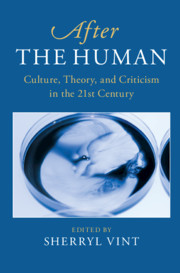
After the Human provides a comprehensive overview of how a range of philosophical, ethical, and political ideas under the framework of posthumanism have transformed humanities scholarship today. Bringing together a range of interdisciplinary scholars and perspectives, it puts into dialogue the major influences from philosophy, literary study, anthropology, and science studies that set the stage for a range of new questions to be asked about the relationship of the human to other life. The book's central argument is that posthumanism's challenge to and disruption of traditional humanist knowledge is so significant as to presage a sea-change from the humanities into the posthumanities. After the Human documents the emergence of posthumanist ideas in the fractures within traditional disciplines, examines the new objects of analysis that thus came into prominence, and theorizes new interdisciplinary methods of study that followed.
Recommend this
Email your librarian or administrator to recommend adding this to your organisation's collection.