To save content items to your account,
please confirm that you agree to abide by our usage policies.
If this is the first time you use this feature, you will be asked to authorise Cambridge Core to connect with your account.
Find out more about saving content to .
To save content items to your Kindle, first ensure no-reply@cambridge.org
is added to your Approved Personal Document E-mail List under your Personal Document Settings
on the Manage Your Content and Devices page of your Amazon account. Then enter the ‘name’ part
of your Kindle email address below.
Find out more about saving to your Kindle.
Note you can select to save to either the @free.kindle.com or @kindle.com variations.
‘@free.kindle.com’ emails are free but can only be saved to your device when it is connected to wi-fi.
‘@kindle.com’ emails can be delivered even when you are not connected to wi-fi, but note that service fees apply.
This chapter explores Egypt’s interactions with Greeks and Greek culture during the Iron Age, particularly from 1000 to the early sixth century BCE. These interactions stemmed from Egypt’s integration (or lack thereof) into broader Mediterranean and Near Eastern trade and political networks. While evidence of Greek presence in Egypt before the seventh century BCE is limited, Egyptian or Egyptianizing goods were widely circulated in the Aegean, suggesting indirect contact through intermediaries like Phoenician traders. The Third Intermediate Period (1069–664 BCE) was marked by political fragmentation and foreign dynasties, leading to an internal focus and limited engagement with Greek material culture. However, by the early Saite Period (664–332 BCE), foreign mercenaries and traders began settling in Egypt, culminating in the Greek emporion at Naukratis under Psamtik I. Archaeological evidence, including imported Greek pottery and Egyptian bronzes found in Greek sanctuaries, underscores the shifting dynamics of these interactions. The Saite rulers embraced foreign goods and influences as strategic tools for consolidating power, in stark contrast to their predecessors. This study emphasizes the role of archaeological data over Greek literary sources, offering insights into the evolving relationship between Egypt and Greece and the broader implications for Mediterranean trade and cultural exchange.
The mid-fifteenth century saw the slow emergence of new states across mainland and island South-East Asia after a period of substantial political decentralisation and fragmentation, on the one hand, and the withdrawal or ejection of Chinese armies, on the other. The new or reinvigorated states of the region – including Ava (Upper Burma), Pegu (Lower Burma), Ayudhya (today Thailand), and Dai Viet (today Vietnam) – stimulated a new period of martial vigour from the 1450s as they expanded at the expense of their neighbours. In successful campaigns in the 1450s and in 1471, Dai Viet conquered Champa on its southern frontier twice, leaving the Vietnamese state as the permanent hegemon over mainland South-East Asia’s eastern littoral, relegating Champa to a mere tributary shadow of its former self. (See Map 14.) Ava and Pegu waged a bitter war for decades for dominance over the Irrawaddy valley, a contest that spilled over into Arakan, on the Bay of Bengal, mainland South-East Asia’s thin, western littoral. Ayudhya, in the central mainland, made itself the dominant political and military power in the Chao Phraya river valley.
Russia emerged as a European power in the early eighteenth century with a suddenness that alarmed its neighbors – and indeed some of its more distant potential supporters. Russia’s newfound prominence was in large part the outcome of a series of international conflicts often referred to as “the Northern Wars.” Conflict over the fate of the eastern Baltic littoral had entered a new phase near the middle of the sixteenth century with the decline of the Livonian Order and the growing territorial ambitions of nearby states. Aside from the crusading Order itself, which had formally disbanded by 1561, the nearby states of Denmark, Sweden, Muscovy, Poland-Lithuania, and Brandenburg persistently battled one another over the fate of the littoral, in varying configurations but with surprisingly few intermissions until 1721. The more important of these multilateral conflicts are conventionally identified as the Livonian War (1558–83), the mid-seventeenth-century conflicts among Sweden, the Commonwealth, Muscovy, Brandenburg, and Denmark that included the Thirteen-Years’ War (1654–67), and finally the “Great Northern War” (1720–21) which ended in Russian victory. While the earlier conflicts remained relatively confined, in diplomatic and military terms, to Northern and Eastern Europe, the outcome of the last Northern War not only established the Russian Empire as the dominant Baltic state; it also led to Russia’s broader recognition as a major force in the broader European diplomatic world.
Chapter 5 discusses the Congo Crisis, one where India was involved between 1960 and 1963. The contention in this chapter is that India’s involvement in the crisis, particularly in the form of heavy military support to the UN, was rooted in Nehru’s idea of Africa. The advent of peacekeeping and the UN’s reliance on India’s troop contribution for its continued survival and success in the Congo exposed India to rapid alienation from African member-states and cost Indian lives on the ground. In turn, this exposed Nehru’s administration and foreign policy to criticism from within the domestic realm in India. The crisis was soon overshadowed by border problems with the Chinese and the eventual Sino-Indian War of 1962, but the Congo Crisis shows how India chose to strengthen the UN by military means, in complete contradiction of its stated position a decade earlier.
While peacekeeping operations have always been heavily dependent on host-state support and international political backing, changes in the global geopolitical and technological landscapes have presented new forms of state interference intended to influence, undermine, and impair the activities of missions on the ground. Emerging parallel security actors, notably the Wagner Group, have cast themselves as directly or implicitly in competition with the security guarantee provided by peacekeepers, while the proliferation of mis- and disinformation and growing cybersecurity vulnerabilities present novel challenges for missions’ relationships with host states and populations, operational security, and the protection of staff and their local sources. Together, these trends undermine missions’ efforts to protect civilians, operate safely, and implement long-term political settlements. This essay analyzes these trends and the dilemmas they present for in-country UN officials attempting to induce respect for international norms and implement their mandates. It describes nascent strategies taken by missions to maintain their impartiality, communicate effectively, and maintain the trust of those they are charged with protecting, and highlights early good practices for monitoring and analyzing this new operation environment, for reporting on and promoting human rights, and for operating safely.
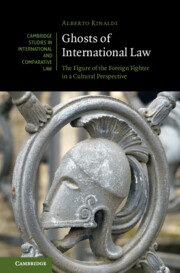
Heroes and villains, idealists and mercenaries, freedom fighters and religious fanatics. Foreign fighters tend to defy easy classification. Good and bad images of the foreign combatant epitomize different conceptions of freedom and are used to characterize the rightness or wrongness of this actor in civil wars. The book traces the history of these figures and their afterlife. It does so through an interdisciplinary methodology employing law, history, and psychoanalytical theory, showing how different images of the foreign combatant are utilized to proscribe or endorse foreign fighters in different historical moments. By linking the Spanish, Angolan, and Syrian civil wars, the book demonstrates how these figures function as a precedent for later periods and how their heritage keeps haunting the imaginary of legal actors in the present.
Little appeared to change with Brazilian independence regarding the establishment of colonies. The new imperial government continued to sponsor the settlements established during the Joanine years and kept signing on agricultural workers in Europe for similar endeavors. While colonies grew in economic and demographic terms, many of them did so at the expense of enslaved Africans and their descendants in direct contravention of their founding principles. Additionally, migrants contracted in Europe as field hands were in fact mercenary soldiers for Pedro I’s forces. This chapter explores how colonization informed a foundational rift in Brazilian politics. As constitutional order struggled to establish itself, colonization pitted an entrenched executive with imperial ambitions and an emergent legislature trying to assert itself.
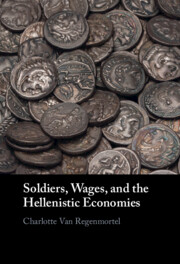
This book explains the military and economic developments that engulfed the ancient Mediterranean in the late Classical and early Hellenistic periods from the perspective of labour history. It examines the changing nature of military service in the vast armies of Philip and Alexander, the Successors, and the early Hellenistic kingdoms and argues that the paid soldiers who staffed them were not just 'mercenaries', but rather the Greek world's first large-scale instance of wage labour. Using a wide range of sources, Charlotte Van Regenmortel not only offers a detailed social history of military service in these armies but also provides a novel explanation for the economic transformation of the Hellenistic age, positioning military wage-labourers as the driving force behind the period's nascent market economies. This title is part of the Flip it Open Programme and may also be available Open Access. Check our website Cambridge Core for details.
Taking as starting point the lives of an Irish general and a Cretan naval officer, both involved in the 1820 revolution in Sicily, the chapter explores the ways in which mobility and conflict interacted in the post-Napoleonic period across the Mediterranean, and connected revolution and counter-revolution in North Africa, Sicily, Naples, Spain, Portugal, and the Aegean Sea in the 1820s. These case studies show the overlap between the categories of volunteer and mercenary, imperial agent and freedom fighter, refugee and economic migrant, as well as their fluidity. More generally, they point to the very different ways in which one could become a revolutionary and the plurality of motivations behind such a decision. They suggest that while the Napoleonic Wars were crucial to produce new types of displacement, it is important to consider them also in continuity with longer-term, Early Modern patterns of mobility across the Mediterranean.
This chapter provides the historical and scholarly context to the book’s main argument, and hence treats the military and economic developments that engulfed the Greek world in the late Classical and early Hellenistic periods. arguing that these should be seen as intrinsically connected. Following discussion of scholarly approaches to the economic transformation of the Greek world at this time, paying special attention to the old formalist–substantivist debate, the chapter advocates a closer look at the types of markets available, especially the market for labour. This market, the book contends, first appeared in a full form in the military sphere; accordingly, the chapter questions scholarly approaches and attitudes towards paid military service, debating especially the notion of ‘mercenary’ soldiers, who should better be conceived of as military wage labourers.
To ascertain soldiers’ potential status as wage labourers, this chapter discusses the process of initial enlistment and the ensuing terms of service, questioning especially whether soldiers enlisted of their own accord and retained their free status. It emerges that, from the reforms by Philip II of Macedonia onwards, political circumstances dictated a strong drift towards greater and at times complete reliance on so-called voluntary troops, who enlisted in exchange for pay. Thus, while the bulk of troops under Philip and Alexander were conscripts, these armies from the outset encouraged the enlistment of hired, voluntary troops in both elite and ordinary divisions. The lines between different troop types were blurred significantly under Alexander, whose conscript forces re-enlisted as hired men mid-way through his campaign. The Successors, whose often fickle claims to territory complicated the conscription of troops, were almost wholly reliant on voluntary troops. Accordingly, it is at this point that the epigraphic record attests military contracts, in which soldiers’ continued freedom of movement is guaranteed, alongside other terms of service. In the subsequent Hellenistic kingdoms, we see a return to conscription, especially in times of greatest need, alongside an enduring preference for professional, hired soldiers to man the standing armies.
Chapter 4 looks at the concept of combatants and non-combatants, and its connected status, that of prisoner of war (POW). It examines who is entitled under IHL to combatant status, and examines those persons who have been denied combatant and POW status under IHL. Particular attention is paid to the status of resistance fighters, national liberation and guerrilla fighters, those participating in a levée en masse, and participants in non-international armed conflicts. The chapter outlines those categories of participant not entitled to combatant status such as spies, mercenaries, so-called unlawful combatants, and private military and security contractors. Chapter 4 also explores the current legal thinking regarding a contentious area of the law – that of civilians taking direct part in hostilities. The rules regarding POW status and the treatment of POWs are described. The chapter concludes by examining another developing area of the law: the power of detention in non-international armed conflicts.
Despite its often poor reputation and the scaremongering that accompanied its growth, the private military and security industry does not threaten the content or spirit of international humanitarian law (IHL). Nonetheless, concerns remain about both the behaviour of actors within the industry – private military and security companies (PMSCs), their employees, and employers – as well as the interest and capacity of states to hold these actors to account. There is a tension, therefore, between the clear applicability of IHL to PMSCs and doubts about its enforcement. The private military and security industry illustrates the gap between the ideals of IHL and its operational reality, and how this gap has then informed the creation of new soft law frameworks. In recent decades, international efforts have sought to further establish such guidance for the behaviour and use of PMSCs. One such effort, the Montreux Document, is an initiative of the International Committee of the Red Cross (ICRC) and Swiss Government, restating existing standards. While the Document has seen success in terms of state engagement and participation, PMSCs and their employers, as well as the broader regulatory climate around PMSCs, appear largely unaffected.
In many of his comedies, Menander puts on stage the figure of the mercenary soldier. A survey of extant plays confirms that these characters are no lawless brutes but sympathetic figures, good Athenian citizens who act according to the laws and social norms of the polis. Previous scholarship has interpreted Menander's characterization of soldiers as a stylistic innovation from the stock type of the braggart soldier. Instead, I argue that his comedies reflect Athenian popular perception of mercenary service. A comparison with the depiction of mercenaries in Isaeus’ speeches confirms that Athenians did not look down on individuals who chose to serve abroad for money.
The conclusion draws together the main themes discussed in the book, and briefly examines what happened after the end of the war, in 1815. Suddenly, with the decommissioning of the fleet, most (though not all) ‘foreign’ seamen were no longer needed, and many of them were reduced to beg in the streets. The utilitarian system of ‘pragmatic inclusiveness’ that had directed naval recruitment collapsed, and displacement was the trigger for legal and cultural forms of discrimination which had been suppressed by the Navy during the war. Thus, its exceptional bubble eventually burst. Different types of labels and demarcations, which had been treated as, and proven to be, utterly unimportant, all of a sudden became a convenient framework for both individuals and the state to harken onto, crystallising ‘foreign Jack Tars’ into a group. The legal categories that were twisted in one direction during wartime now further proved their flimsiness by being twisted in the opposite direction. Caught in between states, the same men who were previously wanted by all were now rejected by all.
The introduction lays out the book’s main arguments and themes, and compares the Royal Navy to the two different contexts which it straddled: the maritime world, and the armed forces. Naval service was more strictly regulated and anchored in the structures of the state than work in the merchant marine, and it was invested with explicit national and patriotic meaning. However, it also differed from service in the Army, as it required a good proportion of recruits to have specialised skills, and usually integrated them all into mixed crews, rather than establishing separate ‘foreign’ units. The Navy’s peculiar status, suspended between the military and national on the one hand, and the maritime and transnational on the other, is what makes it an important case study. If ‘foreign Jack Tars’ were in some senses mercenary fighters, they were also primarily – like ‘British’ Jack Tars themselves – a transnational, mobile, and often highly professionalised seafaring workforce. Studying them in the crucial historical juncture of the French Wars allows us to present a transnational history of a national institution, expose the compromises and contradictions underlying the power of modern states, and probe and deconstruct the very meaning of the term ‘foreigner’.
Section E seeks to show how the law on the conduct of hostilities that would apply in relation to the use of conventional weapons also applies in respect of nuclear weapon operations. The Rules and Commentaries deal with persons participating in the hostilities, who are distinguished from protected civilians, and with specific issues of naval and air warfare. The Rules and Commentaries on nuclear targeting address the notion of ‘attack’, the principle of distinction, prohibited nuclear attacks, the definition of military objectives, proportionality and active and passive precautions. As to methods of nuclear warfare, the Section addresses perfidy and ruses, the improper use of protective indicators and emblems, as well as the concept of zones. The Section further includes Rules and Commentaries on persons and objects entitled to specific protection and on the protection of the natural environment in times of armed conflict.
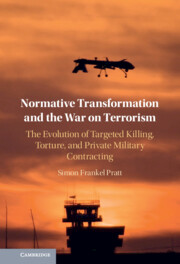
In Chapter 6 I investigate the increasing use of Private Security and Military Contractors as armed guards, mainly in the war zones of Afghanistan and Iraq, during the USA’s lengthy occupations there, but also elsewhere. I question whether this represents the erosion of international and domestic US prohibitions on mercenarism and find that it does not; as with the previous two cases, these prohibitions changed rather than disappeared. This process occurred as the US government incorporated armed contractors into its operational command and control structures, while the private firms themselves developed mechanisms of self-regulation through a code of conduct and a professional association. Communications technology played a major role in process at first, but then bureaucratic dynamics took precedence. The boundaries between public and private violence have shifted, but most recognisable forms of mercenarism remain prohibited.
In this Introduction to the book, I raise the question of the possible erosion of prohibitions on assassination, torture, and mercenarism. I discuss the limits of ‘norm death’ as an explanation and propose instead that a ‘normative transformation’ has occurred. I outline how pragmatism, practice theory, and relational sociology will inform my perspective, how I will critique and build on theories of norm change in IR, and how I will analyse the three cases: the USA’s targeted killing programme, the CIA’s detention and interrogation programme, and the USA’s extensive employment of armed contractors in war zones.
Pratt investigates the potential erosion of prohibiting assassination, torture, and mercenarism during the US's War on Terrorism. In examining the emergence and history of the US's targeted killing programme, detention and interrogation programme, and employment of armed contractors in warzones, he proposes that a 'normative transformation' has occurred, which has changed the meaning and content of these prohibitions, even though they still exist. Drawing on pragmatist philosophy, practice theory, and relational sociology, this book develops a new theory of normativity and institutional change, and offers new data about the decisions and activities of security practitioners. It is both a critical and constructive addition to the current literature on norm change, and addresses enduring debates about the role of culture and ethical judgement in the use of force. It will appeal to students and scholars of foreign and defence policy, international relations theory, international security, social theory, and American politics.