To save content items to your account,
please confirm that you agree to abide by our usage policies.
If this is the first time you use this feature, you will be asked to authorise Cambridge Core to connect with your account.
Find out more about saving content to .
To save content items to your Kindle, first ensure no-reply@cambridge.org
is added to your Approved Personal Document E-mail List under your Personal Document Settings
on the Manage Your Content and Devices page of your Amazon account. Then enter the ‘name’ part
of your Kindle email address below.
Find out more about saving to your Kindle.
Note you can select to save to either the @free.kindle.com or @kindle.com variations.
‘@free.kindle.com’ emails are free but can only be saved to your device when it is connected to wi-fi.
‘@kindle.com’ emails can be delivered even when you are not connected to wi-fi, but note that service fees apply.
This chapter introduces the main argument and themes of the book, and positions it within earlier and existing scholarship on archaic and classical Greek literature, religion and philosophy. Particular points of focus include the relationship between Greek tragedy, ritual and theology, and influential mid-twentieth-century research on Sophocles (the ’classics’ of Sophoclean scholarship). The chapter also discusses ancient biographical traditions surrounding Sophocles’ religiosity and piety.
Ireland’s five provinces were ruled over by multiple over and under-kings, with headquarters at Tara, in Midhe/Meath, Cashel in Mumha (later Munster) and Emain Macha in Uladh (later Ulster). Christian settlements from the fifth century (founded by Patrick, Brigid, Columcille, Finnian, Ciarán, Brendan, Íte and many others) forged strong links with Britain and Europe. Learning Latin led to the writing of Irish from the sixth century, and scholarship flourished. Everyone – kings, monks, traders and labourers, bards and the powerful lawyer class, lived in ring fort settlements. They ate mainly the dairy produce abundant in Ireland’s mild climate, meat occasionally, fish near coasts and rivers, pulses, and grains congenial to the region – oats, barley, wheat, rye. A legal tract was devoted to beekeeping. Scandinavian invaders from the late eighth century settled in the trading ports they established – Dublin, Wexford, Waterford, Cork and Limerick – and were gradually absorbed into Irish life. A high-kingship emerged in the tenth and eleventh centuries. Religion went through several cycles of decay and reform. Dioceses were established in 1152. Conflicts between Irish kings facilitated the invasion of the Anglo-Normans under Strongbow in 1169, bringing the English crown into Irish politics.
The future of Mendelssohn and Hensel studies holds out some exciting prospects. What might be the most profitable directions to take, and what are the ongoing challenges that still face scholarly scrutiny? Taking bearings from this volume’s final section on reception and placing the preceding book as a whole ‘in context’ of the present and its concerns, this brief epilogue looks to the two siblings’ current standing in scholarship and public perception, summing up the state of research from the last couple of decades, identifying some persisting ideological problems that require addressing, and outlining some possible future directions that might be taken.
This perspective article is to celebrate the 30th birthday of the Journal of Management & Organization. To remember its achievements and to reflect on its successes a number of management academics were quizzed about their thoughts. This helps to identify future growth areas of management interest and to project new developments. By doing so it enables a holistic view about the role of management in practice, policy and society.
After several decades of institutionalization of political science as a scholarly discipline in Russia, its quantitative output is quite impressive. This article offers a critical reconsideration of its substantive impact on scholarship in political science – and considers why that output has not been so impressive in terms of increasing knowledge about politics, both in Russia and beyond. It presents an overview of the state of Russian political science, with an emphasis on its major theoretical, methodological, and empirical shortcomings. It also considers the role of historical, institutional, and political factors for its developmental trajectory, and offers some suggestions for overcoming them.
An epilogue assesses the impact of the antiwar movement. Both activists and scholars disagree over its significance. Despite common misperceptions of the movement by the public, antiwar activists generally represented mainstream American political values. While the movement did not stop the war by itself, it imposed real limits upon presidential decisions to escalate American military expansion. Movement activists overwhelmingly waged peace using the tools of democracy to align the nation’s practice with its most righteous vision.
This chapter introduces the volume, explaining how O’Casey’s work has been widely read at school and university level, and frequently performed on the stage. The introduction points out that few major studies of O’Casey have been published in recent years, and argues that, by contrast with writers such as Joyce and Yeats, O’Casey is in need of updated critical reframing.
Parallel to the anti-Jewish policy of the National Socialists that culminated in mass murder, so-called “Judenforschung” was established in the Third Reich as an independent field of study, outside traditional disciplines, through a number of institutions, publications, and public events. In Nazi “Judenforschung,” antisemitism was the leading principle, and the antisemitically constructed “Jewish Question” was the focus of research activity. Thereby, contrary to the tradition of German academia, themes of Jewish history became in themselves respectable subjects of research. The chapter gives an overview of the different institutions for “Judenforschung” in the Third Reich and the dynamics of the field from the mid 1930s until the end of the Second World War; presents different responses to and perceptions of Nazi “Judenforschung” during and after the Second World War; analyzes the relationship between scholarship and antisemitism in Nazi “Judenforschung” that is crucial for the whole research field and its practice in the Third Reich; discusses the role of scholarship in the Holocaust; and finally explores the role of scholars in perpetrating Nazi crimes.
First, this chapter provides a general framework of international law at the time of the League of Nations, taking into account the practice of international law; second, a sample of the international legal literature of the period concerning a number of key and recurrent topics is offered; finally, a few historical treatments of international law that were recounted at the time are briefly summarised to show that certain developments in practice and in theory had repercussions also in the historical conceptualisations of international law.
Cultural objects are sold via global, public networks, where market stakeholders rely on the services of other actors such as academics, authenticators, and restorers to facilitate and legitimate this trade. This article will build on Neil Brodie’s examination of the role scholarly facilitators play in the illicit trade in cultural objects by exploring the harmful consequences of such scholarship, using the case studies of Emma Bunker and Mary Slusser as examples. This article argues that those of us with intellectual authority and control interacting with cultural objects should reflect on the broader social context of our research and the consequences of our knowledge production—and reckon with the exploitative and colonial foundations of the knowledge we build on. Ongoing ethical awareness and reflexivity need to be integrated into our practice to support and foster social justice. The article ends with some recommendations on how to incorporate these ideas into academic practice.
This chapter addresses the role of, and prospects for, interdisciplinary scholarship in the law of international organisations. It argues that collaboration between scholars only works when those scholars share similar intuitions and sensibilities, and more generally adopts a broad approach: scholarship in the law of international organisations is at its best when informed by insights from a wide variety of academic disciplines. Yet (and this is often a problem) it should remain recognisably legal scholarship, if only because political and economic developments inevitably are channelled through law and legal procedure. Inter-disciplinarity means more than bowing to insights from International Relations scholarship, and should be driven by curiosity rather than theory or method.
The public history movement in North America that was born amid the academic job crisis of the late 1970s aspired to a radical reformation of professional history’s audience from an inward focused conversation among professionals to one working with government and corporate institutions and in dialogue with the public. This essay focuses on the institutional evolution of the National Council on Public History (NCPH) to illustrate the unexpected, but not entirely unpropitious outcome that flowed from the failure of the organization’s original goals. How that movement failed and what it succeeded in creating may hold useful lessons for the contemporary public humanities campaign. In the late twentieth century, the public history movement failed to bring about a major reorientation of professional and academic history. In the attempt, however, it created an off shot of public history as one of a number of new but distinctly separate fields of academic historical practice. Unexpectedly, public history became a new academic specialty alongside other new fields from that era: native American history, environmental history, and gender history.
This chapter takes seriously the concerns of Eliot’s early reviewers with a tension in her fiction between the devoted depiction of life later associated with realism, and a didactic impulse to which they increasingly felt she succumbed. Asking why Eliot interrupted representation with theorisation, the chapter takes as a case study her alternating dramatisation and analysis of incongruous versions of history in Chapter 20 of Middlemarch. It traces the lineage of such alternation, via an allusion to her friend John Sibree’s translation of Hegel’s Lectures on the Philosophy of History, into one of the notebooks Eliot used as she developed Middlemarch, which is read less as a source for either the novel’s theories or its facts than as a laboratory for its experiments in moving between them. The chapter suggests that Eliot valued the dissonance her reviewers detected when dogma intruded upon depiction. It thereby elucidates her contribution to the dialectical novel of ideas this book explores.
Chapter 3 addresses the suggestion that for a special regime to exist, there must be a mutual engagement of community members. As the chapter argues, in the context of international law, a mutual engagement among a group of international law specialists can be inferred from their participation in a distinct legal discourse, and from their further specialization and distinct way of ascribing functions to legal agents. More specifically, it can be inferred from: the publication of specialized international law journals; the way of organization of conferences and workshops; the creation of inter-governmental organization; the work of NGOs; the specialized research profile of international scholars and description of chairs; their separation of tasks and division of labour; and the function that they ascribe to the judiciary and to the international legal scholar.
This chapter demonstrates the growth and broadening reach of Jewish–Christian dialogue, and especially Christian reflections on the significance of the Holocaust. Documents discuss the significance of the Jewishness of Jesus and Paul, alongside fraught discussions about the State of Israel.
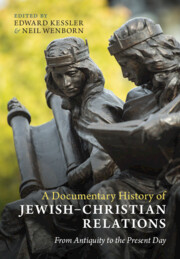
Jews and Christians have interacted for two millennia, yet there is no comprehensive, global study of their shared history. This book offers a chronological and thematic approach to that 2,000-year history, based on some 200 primary documents chosen for their centrality to the encounter. A systematic and authoritative work on the relationship between the two religions, it reflects both the often troubled history of that relationship and the massive changes of attitude and approach in more recent centuries. Written by a team leading international scholars in the field, each chapter introduces the context for its historical period, draws out the key themes arising from the relevant documents, and provides a detailed commentary on each document to shed light on its significance in the history of the Jewish–Christian relationship. The volume is aimed at scholars, teachers and students, clerics and lay people, and anyone interested in the history of religion.
Seattle Children’s Research Institute is identifying the amount and type of health equity scholarship being conducted institution wide. However, methods for categorizing how scholarship is equity-focused are lacking. We developed and evaluated the reliability of a health equity scholarship coding schema applied to Seattle Children’s affiliated scholarship.
Methods:
A 2021–2022 Ovid MEDLINE affiliation search yielded 3551 affiliated scholarship records, with 1079 records identified via an existing filter as scholarship addressing social determinants of health. Through reliability testing and examining concordance and discordance across three independent coders of these records, we developed a coding schema to classify health equity scholarship (yes/no). When health equity scholarship proved positive/Yes, the coders assigned a one through five maturity rating of the scholarship towards addressing inequities. Subsequent reliability testing including a new coder was conducted for 992 subsequent affiliated scholarship records (Oct 2022–June 2023), with additional testing of the sensitivity and specificity of the existing filter relative to the new coding schema.
Results:
Reliability for identifying health equity scholarship was consistently high (Fleiss kappas ≥ .78) and categorization of health equity scholarship into maturity levels was moderate (Fleiss kappas ≥ .47). The coding schema identified additional health equity scholarship not captured in an existing filter for social determinants of health scholarship. Based on the new schema, 23.3% of Seattle Childrens’ affiliated scholarship published October 2002–June 2023 was health equity focused.
Conclusions:
This new coding schema can be used to identify and categorize health equity scholarship to help quantitate the health equity focus of portfolios of human-focused research.
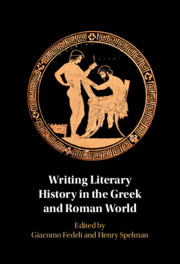
Covering a wide variety of Greek and Latin texts that span from the Archaic period down to Late Antiquity, this volume represents the first concerted attempt to understand ancient literary history in its full complexity and on its own terms. Abandoning long-standing misconceptions derived from the misleading application of modern assumptions and standards, the volume rehabilitates an often neglected but fundamentally important subject: the Greeks' and Romans' representations of the origins and development of their own literary traditions. The fifteen contributors to this volume evince the pervasiveness and diversity of ancient literary history as well as the manifold connections between its manifestations in a variety of texts. Taken as a whole, this volume argues that studying ancient literary history should not only provide insight into the Greek and Roman world but also provoke us to think reflexively about how we go about writing the history of ancient literature today.
This chapter examines the ontological questions raised by the encounter with poems in archives, whether in the form of drafts, post-publication revisions, or unique or multiple versions circulating in manuscript alone. Most poems in most archives prompt the same question – what is this? – and they thereby challenge expectations of what a poem will be. When are two related texts versions of the same poem, for instance, and when are they instead two different poems? What about poems that were never finished or were never originally conceived of as “poems”? And how are poems in archives framed by surrounding materials, be those materials other poems or other kinds of writing altogether? Through a close study of Thomas Gray's commonplace book, this chapter focuses on the interpretative challenges prompted by such ontological questions. Using Gray's methods as its example, the chapter experiments with what it means to read manuscript poems synchronically within the archival documents in which they are found, rather than diachronically in search of sources or variants.
From the start of his career, Jonathan Swift was caught up in debates about the relative value of ancient and modern cultures. Swift’s first masterpieces, ‘The Battel of the Books’ and A Tale of a Tub (both pub. 1704), were brilliant satirical interventions on the side of ancient cultures against the moderns. This chapter unpicks the density of allusion in these works, explaining how they relate to the broader ‘quarrel’ between the ancients and moderns. A final section traces the legacy of this dispute in Gulliver’s Travels (1726), in which Swift invokes ancient Sparta as a model for social integrity.