To save content items to your account,
please confirm that you agree to abide by our usage policies.
If this is the first time you use this feature, you will be asked to authorise Cambridge Core to connect with your account.
Find out more about saving content to .
To save content items to your Kindle, first ensure no-reply@cambridge.org
is added to your Approved Personal Document E-mail List under your Personal Document Settings
on the Manage Your Content and Devices page of your Amazon account. Then enter the ‘name’ part
of your Kindle email address below.
Find out more about saving to your Kindle.
Note you can select to save to either the @free.kindle.com or @kindle.com variations.
‘@free.kindle.com’ emails are free but can only be saved to your device when it is connected to wi-fi.
‘@kindle.com’ emails can be delivered even when you are not connected to wi-fi, but note that service fees apply.
This chapter further explores the concept of chunking, showing that rules that describe various syntactic patterns are not linear in nature. The special focus is on the phenomenon of binding, especially reflexives, which are used as a litmus test at various level of language. It is shown that concepts of subject and object, although important to describing syntax, are not enough to describe the distribution of reflexives.
This chapter continues with the themes in the previous two chapters but applies the same concepts to languages other than English. In particular, languages that at first glance present a possible counterexample to the idea of non-linearity of language are considered. It is shown that even languages as varied as Irish Gaelic, Malagasy, and Warlpiri follow the same non-linear principles discussed throughout the book.
International Law is the definitive and authoritative text on the subject. It has long been established as a leading authority in the field, offering an unbeatable combination of clarity of expression and academic rigour, ensuring understanding and analysis in an engaging and authoritative style. Explaining the leading rules, practice and caselaw, this treatise retains and develops the detailed referencing which encourages and assists the reader in further study. The 10th edition has been updated to reflect the most recent developments in the field, offering expanded coverage of the law of outer space, the law of the sea, the International Court of Justice, and international humanitarian law. Additional material has also been added to sections on cyber operations and non-state actors. International Law is invaluable for students and for those occupied in private practice, governmental service and international organisations.
A framing case study examines South Africa’s allegation in early 2024 that Israel committed genocide in Gaza. Then the chapter examines: (1) the history of international law, from ancient societies through the Middle Ages and the classical, positivist, and modern eras; (2) important actors in international law, including states, international organizations, peoples (groups), individuals, and non-governmental groups; and (3) the critical, contractual, and sociological perspectives on how international law can influence politics.
With its assessment of cases involving Oscar Wilde, Cindy Lee Garcia, Arne Svenson, and Hulk Hogan and analysis of authorial inquiries raised by slavery daguerreotypes, surveillance art, paparazzi photographs, revenge porn, and celebrity sex tapes, Chapter 1 identifies and critiques the problematic conflation of copyright’s authorship and fixation requirements that functions to deny performers property interests in creative works. Copyright’s authorship-as-fixation regime rests on a faulty premise, betrays copyright law’s role in recognizing and rewarding creativity, and denies authorial rights to a class of individuals – subjects – who provide significant original contributions to works within copyright’s traditional subject matter. Just as significantly, given the dramatic disparities in capital accumulation and control over the tools of creative production and continuing inequalities in the representation of women and persons of color behind the camera, the authorship-as-fixation doctrine has had far-reaching societal consequences by propertizing the white male gaze and giving legal bite to a system of production and ownership that imbues rightsholders with the power to control representations of female and non-white bodies.
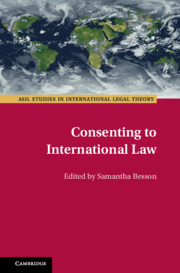
The obligations stemming from international law are still predominantly considered, despite important normative and descriptive critiques, as being 'based' on (State) consent. To that extent, international law differs from domestic law where consent to the law has long been considered irrelevant to law-making, whether as a criterion of validity or as a ground of legitimacy. In addition to a renewed historical and philosophical interest in (State) consent to international law, including from a democratic theory perspective, the issue has also recently regained in importance in practice. Various specialists of international law and the philosophy of international law have been invited to explore the different questions this raises in what is the first edited volume on consent to international law in English language. The collection addresses three groups of issues: the notions and roles of consent in contemporary international law; its objects and types; and its subjects and institutions.
The constitution of any state, whether written or unwritten, is the set of political, governmental and legal structures and shared values within which the business of everyday politics and governance operate. In fourteenth-century England there occurred the first two depositions in post-Conquest English history, which were precipitated by ‘unconstitutional’ behaviour by the monarchs in question and were effected by ‘unconstitutional’ legal devices on the part of the community of the realm. It was a century of cataclysmic demographic transformation brought about by the Black Death, of almost constant warfare with Scotland and France and of spectacular governmental growth and legal change. It is therefore ironic that, when English constitutional history was at its height, in the late nineteenth and early twentieth centuries, the fourteenth century, parliamentary developments apart, was regarded as a sorry backwater. It was useful only to reflect on how a wrong turning had been taken. ‘We pass’, Bishop Stubbs lamented, ‘from an age of heroism to the age of chivalry, from a century ennobled by devotion and self-sacrifice to one in which the gloss of superficial refinement fails to hide the reality of heartless selfishness and moral degradation’.1
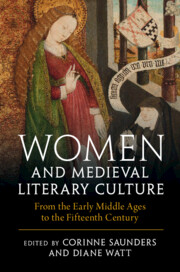
The introduction explores womenߣs authorship and addresses the range of works by or attributed to women that were in circulation in England in the Middle Ages in the context of their contributions to a multilingual and inclusive literary culture. It examines the importance of collaboration, arguing that womenߣs writings may be collaborative in different ways: through amanuenses, through translation and adaptation, and through their historical and literary relationships with the men who write their lives. It explores other collaborative aspects of womenߣs literary culture, including womenߣs contributions as patrons, scribes, readers, and subjects of texts. It considers the importance of womenߣs religious communities, as well as the ways in which devotional books were owned by women and exchanged between nuns and by lay women, and it considers the active engagement of women with secular writing as owners and commissioners of books as well as writers. It argues that English womenߣs networks extend from Britain to the Continent and beyond.
Focusing on England but covering a wide range of European and global traditions and influences, this authoritative volume examines the central role of medieval women in the production and circulation of books and considers their representation in medieval literary texts, as authors, readers and subjects, assessing how these change over time. Engaging with Latin, French, German, Welsh and Gaelic literary culture, it places British writing in wider European contexts while also considering more distant influences such as Arabic. Essays span topics including book production and authorship; reception; linguistic, literary, and cultural contexts and influences; women's education and spheres of knowledge; women as writers, scribes and translators; women as patrons, readers and book owners; and women as subjects. Reflecting recent trends in scholarship, the volume spans the early Middle Ages through to the eve of the Reformation and emphasises the multilingual, multicultural and international contexts of women's literary culture.
In the mirror literature, power and sovereignty are identified with the king’s person. The king’s conduct established a model, which his subjects would follow; consequently, the ruler’s actions and behaviour determined the nature of the polity. The king’s cultivation of virtue is, in consequence, a pragmatic as well as a moral imperative. The mirror-writers insist on the importance of the king’s self-discipline as a prerequisite for his governing other people; if he is unable to govern himself, he will be incapable of governing anyone else. The three extracts in this section describe the virtuous and effective king. From different perspectives, they treat some of the ethical and philosophical problems of human nature; in particular, they discuss how to strengthen, acquire and practise virtues and how to overcome and eradicate vices. The texts in this section are drawn from Yūsuf Khāṣṣ Ḥājib, Kutadgu bilig; al-Māwardī, Tashīl al-naẓar wa-taʿjīl al-ẓafar; and Kaykāʾūs, Qābūsnāmeh.
Chapter 2 – Humanisation in IR Theory and International Law – critically reviews the relevant IR and IL literature. The objective of this chapter is to identify gaps, strengths, and weaknesses of several approaches in both disciplines concerning the book’s objective, arguments, and research questions. In addition, it provides an answer to whether alternative approaches to the chosen framework provide a viable pathway to conceptualise the humanisation of global politics. Regarding alternatives approaches in IR, I discuss realist and liberal approaches, the literature on human rights and human security, and literature dealing with concepts such as self, identity, and agency. Regarding IL, I discuss, for similar reasons, the notion of mediation and how the individual human being, the international community, and the state relate to each other. And I offer a discussion of international law and the individual human being.
Knowing when to stop: define your parameters. ‘The past is a foreign country: they do things differently there’ – take no small detail of everyday life for granted. Start broad and shallow; later go deep and narrow. The big story and the little story – keeping the balance right. Keeping research unobtrusive. Historical fiction: checklist of areas for initial research and suggested sources.
‘We’re not looking for historical truth but for fictive plausibility, on terms the writer must establish with the reader. A better question than ""Is this true?"" is “Have I made this seem plausible?”’
Not all inhabitants of Saint-Louis embrace the history of colonialism. The descendants of the colonial subjects remember colonialism very differently from the elites who celebrate the Fanal. They remember that the founder of the Muridiyya Sufi order, Cheikh Ahmadou Bamba, was tried by the privy council in Saint-Louis in 1895 and sent into exile. On 5 September of each year, the disciples of the Sufi marabout commemorate a prayer of emergency said by their saint at that trial. This chapter analyses the history of that prayer and examines it as a palimpsest performance that accumulates many different histories and remembers them at once. It analyses the commemoration as a hybrid of different temporalities aligned to repair the legacy of colonial domination for the disciples of a Muslim marabout whose resistance is remembered as the foundation moment of the independent nation. In an interpretation inflected by Afro-nationalism and Sufi spirituality, the disciples credit the prayer with bringing about national independence through occult means. They remember it as a miracle performed by the Sufi leader that established Senegal’s political independence.
Drawing upon Foucauldian ideas this chapter explores how the ‘datafication’ of modern life shifts the modes of power acting upon the individual and social body. Through a brief exploration of three banal everyday social practices (driving, health, gambling) it argues that the construction of the data-self marks an emergent algorithmic govermentality centred simultaneously upon intimate knowledge of the individual (subjectivities) and the population. The intersection of technology, data and subjectivation, reproduces a ‘neoliberal subject’ – one closely monitored and policed to freely perform ‘correct’ forms of action or behaviour, and one increasingly governed by the imperatives of private capital. This chapter explores how this nexus between power and knowledge is central to debates about the relocation (or appropriation) of personal and population data from state to non-state institutions, with private corporations increasingly managing the health and wellbeing of individuals and society. It makes an argument for critical engagement with the complex interactions, intersections, effects and unintended consequences of multiple technologies that, through the use of data, make the simultaneous government of individuals and populations their targets of action.
Scientific research areas and their development in Africa vary. In this chapter, the nature of science that is produced in Africa is gleaned from the analysis of the scientific research areas. Using large quantities of publication data, a closer look is taken at all scientific research areas in African countries. The analysis shows the contribution of countries to specific scientific areas, strengths in specific research areas, and recent research foci. Using two time periods, not only the trends in the production of science according to the scientific research areas but also to the shifting foci of countries in scientific research are revealed. Countries and their focused research areas are shown in this analysis. Some countries, in contrast to others, were in the forefront of producing the highest number of publications for African science. They are the key science producers in specific areas of research that are very relevant for the development of Africa. Clear differentiation between North Africa and sub-Saharan Africa in research areas is seen in the analysis. The attention and focus on specific research areas by African countries are influenced by developmental needs, interests and scientific capabilities.
Scientific collaboration is an unavoidable practice in science. Science is growing with collaboration, which is itself increasing. The chapter examines the kinds of collaboration, from regional to international, that prevail in Africa. Bibliometric data forms the basis of this analysis. Collaboration in Africa can be explained by the core-periphery theoretical model. Regional collaboration within Africa was not as strong as international collaboration that is mostly with the USA, France, the UK, Germany and Belgium. The colonial ties of Africa have not been severed in the current collaborative links and continue to have prominence in international scientific collaboration. Some neocolonial ties are also evident in international collaboration in recent years. International partners, apart from their past ties, look for scientifically strong countries in Africa to associate with. Within the continent, South Africa is the centre of regional collaboration, maintaining scientific ties with many other African countries. Specific scientific fields and collaboration are related. Scientific alliances between specific countries in Africa and other countries are found in the analysis. Forms of collaboration also vary across African countries. While international collaboration is useful, the comparative benefits gained are not equally beneficial for Africa.
This chapter explores two kinds of intra-clausal relations: grammatical functions and semantic roles. Each such relation allows us to describe the dependencies that exist between a predicator and the units that it combines with to make phrases of various kinds. The grammatical functions discussed include subject, (direct and indirect) object, predicative complement, oblique complement, and modifier. The chapter explores diagnostics used to identify each of these grammatical functions in a sentence. For instance, tag questions, agreement, and subject-auxiliary inversion can tell us if a given constituent is a subject or not. We note here that a key to understanding the syntax of English is the recognition that the mapping between form (categorial type) and function is not one-to-one; mismatches, as when a clause or even a PP serves as a subject, are possible. The chapter describes cases in which a given grammatical function can have various categorical realizations. We see that semantic roles (or participant roles) are combined in the manner they are because they reflect what kind of event, state, or relation the sentence depicts. One cannot, for example, have an event of transfer without a donor, gift, and recipient. The chapter gives examples of semantic roles like agent, theme, patient, location, source, and goal. We observe that, although there are instances in which it is difficult to diagnose an argument’s semantic role, semantic roles can be of use in classifying verbs into distinct subclasses.
Experiments allow researchers to determine cause and effect relations between variables. As such, they are a critical component in the advance of scientific psychology. In this chapter, we discuss the theory behind the design of good experiments, and provide a sample study for evaluation. We outline three important types of replication, and give an overview of historical events that led to a renewed vigilance regarding replicability. Finally, we discuss generalizability of research in terms of four factors: Subjects (or participants), materials used in the experiment, dependent measures, and the experimental situation. Effects that generalize across these sets of factors are robust. We end the chapter with a set of 18 critical-thinking questions that should be borne in mind while reading and evaluating experimental research. Referring to these questions will help to sharpen critical thinking skills about experimental research.