Refine search
Actions for selected content:
19 results for 9781107279704
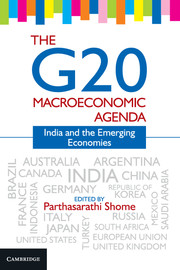
The G20 Macroeconomic Agenda
- India and the Emerging Economies
-
- Published online:
- 05 July 2014
- Print publication:
- 14 July 2014
Preface
-
- Book:
- The G20 Macroeconomic Agenda
- Published online:
- 05 July 2014
- Print publication:
- 14 July 2014, pp ix-xii
-
- Chapter
- Export citation
6 - Capital Controls: Instruments and Effectiveness
- from Section 3 - Global Macroeconomic Coordination and Reforming International Financial Institutions
-
-
- Book:
- The G20 Macroeconomic Agenda
- Published online:
- 05 July 2014
- Print publication:
- 14 July 2014, pp 157-187
-
- Chapter
- Export citation
Section 2 - Financial Sector Reforms and Regulation
-
- Book:
- The G20 Macroeconomic Agenda
- Published online:
- 05 July 2014
- Print publication:
- 14 July 2014, pp 17-90
-
- Chapter
- Export citation
3 - Financial Sector Reforms under G20 and the Indian Banks
- from Section 2 - Financial Sector Reforms and Regulation
-
-
- Book:
- The G20 Macroeconomic Agenda
- Published online:
- 05 July 2014
- Print publication:
- 14 July 2014, pp 57-90
-
- Chapter
- Export citation
4 - The G20MAP, Sustaining Global Economic Growth and Global Imbalances: India’s Role in Supporting Cooperation among Global Macroeconomic Policymakers
- from Section 3 - Global Macroeconomic Coordination and Reforming International Financial Institutions
-
-
- Book:
- The G20 Macroeconomic Agenda
- Published online:
- 05 July 2014
- Print publication:
- 14 July 2014, pp 93-124
-
- Chapter
- Export citation
Section 3 - Global Macroeconomic Coordination and Reforming International Financial Institutions
-
- Book:
- The G20 Macroeconomic Agenda
- Published online:
- 05 July 2014
- Print publication:
- 14 July 2014, pp 91-294
-
- Chapter
- Export citation
List of Tables and Figures
-
- Book:
- The G20 Macroeconomic Agenda
- Published online:
- 05 July 2014
- Print publication:
- 14 July 2014, pp v-viii
-
- Chapter
- Export citation
Section 1 - Introduction
-
- Book:
- The G20 Macroeconomic Agenda
- Published online:
- 05 July 2014
- Print publication:
- 14 July 2014, pp 1-16
-
- Chapter
- Export citation
2 - Financial Regulation and the G20: Options for India
- from Section 2 - Financial Sector Reforms and Regulation
-
-
- Book:
- The G20 Macroeconomic Agenda
- Published online:
- 05 July 2014
- Print publication:
- 14 July 2014, pp 19-56
-
- Chapter
- Export citation
Copyright page
-
- Book:
- The G20 Macroeconomic Agenda
- Published online:
- 05 July 2014
- Print publication:
- 14 July 2014, pp ii-ii
-
- Chapter
- Export citation
8 - Challenges in IMS Reforms: Emerging Markets’ Perspective1
- from Section 3 - Global Macroeconomic Coordination and Reforming International Financial Institutions
-
-
- Book:
- The G20 Macroeconomic Agenda
- Published online:
- 05 July 2014
- Print publication:
- 14 July 2014, pp 234-252
-
- Chapter
- Export citation
7 - The International Monetary System: Mitigating Risks from Dominance of the Dollar and India’s Stance
- from Section 3 - Global Macroeconomic Coordination and Reforming International Financial Institutions
-
-
- Book:
- The G20 Macroeconomic Agenda
- Published online:
- 05 July 2014
- Print publication:
- 14 July 2014, pp 188-233
-
- Chapter
- Export citation
1 - The G20: Evolution, Functioning and Prospects
- from Section 1 - Introduction
-
-
- Book:
- The G20 Macroeconomic Agenda
- Published online:
- 05 July 2014
- Print publication:
- 14 July 2014, pp 3-16
-
- Chapter
- Export citation
5 - Reform of International Financial Institutions
- from Section 3 - Global Macroeconomic Coordination and Reforming International Financial Institutions
-
-
- Book:
- The G20 Macroeconomic Agenda
- Published online:
- 05 July 2014
- Print publication:
- 14 July 2014, pp 125-156
-
- Chapter
- Export citation
Contributors
-
- Book:
- The G20 Macroeconomic Agenda
- Published online:
- 05 July 2014
- Print publication:
- 14 July 2014, pp 295-298
-
- Chapter
- Export citation
Index
-
- Book:
- The G20 Macroeconomic Agenda
- Published online:
- 05 July 2014
- Print publication:
- 14 July 2014, pp 299-304
-
- Chapter
- Export citation
9 - The Chiang Mai Initiative and its Relevance for India1
- from Section 3 - Global Macroeconomic Coordination and Reforming International Financial Institutions
-
-
- Book:
- The G20 Macroeconomic Agenda
- Published online:
- 05 July 2014
- Print publication:
- 14 July 2014, pp 253-294
-
- Chapter
- Export citation
Contents
-
- Book:
- The G20 Macroeconomic Agenda
- Published online:
- 05 July 2014
- Print publication:
- 14 July 2014, pp iii-iv
-
- Chapter
- Export citation
