To save content items to your account,
please confirm that you agree to abide by our usage policies.
If this is the first time you use this feature, you will be asked to authorise Cambridge Core to connect with your account.
Find out more about saving content to .
To save content items to your Kindle, first ensure no-reply@cambridge.org
is added to your Approved Personal Document E-mail List under your Personal Document Settings
on the Manage Your Content and Devices page of your Amazon account. Then enter the ‘name’ part
of your Kindle email address below.
Find out more about saving to your Kindle.
Note you can select to save to either the @free.kindle.com or @kindle.com variations.
‘@free.kindle.com’ emails are free but can only be saved to your device when it is connected to wi-fi.
‘@kindle.com’ emails can be delivered even when you are not connected to wi-fi, but note that service fees apply.
This classic textbook, thoroughly revised and updated for its third edition, introduces the basic methods of computational physics. Clear, concise and practical, the new edition includes an additional chapter on machine learning and is supported with sample programs in Python. First, readers are presented with the numerical techniques that every computational scientist should have in their toolbox, including approximation of functions, numerical calculus, differential and partial differential equations, spectral analysis, linear algebra and matrix operations. The author then provides self-contained introductions to the research areas of molecular dynamics, fluid dynamics, Monte Carlo simulations, genetic algorithms and machine learning. Important concepts are illustrated with relevant examples, and each chapter concludes with a selection of exercises. Suitable for upper-division undergraduate to graduate courses on computational physics and scientific computing, this book is also a useful resource for anyone interested in using computation to solve scientific problems.
This textbook offers a foundational overview of cognitive psychology, balancing accessible writing, practical applications, and research. By incorporating biological perspectives throughout, the authors provide a concise introduction to human cognition and its evolution over time as a means of adapting to our environment. Chapters cover key topics including cognitive neuroscience, attention and consciousness, perception, memory, knowledge representation, language, problem-solving and creativity, decision-making and reasoning, cognitive development, and intelligence. This seventh edition also introduces new content on human intelligence, consolidated into a final chapter. With its 'from lab to life' approach, the authors provide thorough coverage of theory, lab, and field research, while continually highlighting real-world applications to everyday life.
Total Intravenous Anaesthesia (TIVA) does not have to be complicated. This fully updated second edition translates TIVA into an engaging, and practical guide for anaesthesia practitioners at all levels. Written in clear, straightforward language and enriched with insights from international experts, the book covers everything from core principles to advanced techniques, including pharmacokinetic models, dosage calculations, and emergency applications. Featuring practical advice for treating a wide range of patients - from routine elective cases to paediatric, geriatric, obese, and pregnant individuals - making it an essential resource for safe, confident anaesthetic care. Including real-world examples, diagrams, and step-by-step evidence-based guidance on TIVA techniques, drug pharmacology, and protocols, the authors bring fresh perspectives and updated knowledge to reflect the latest research and innovations. Whether you're starting out or refining your skills, this handbook delivers the clarity, confidence, and practical guidance needed to master TIVA in everyday clinical settings – an essential companion.
Building on its critical and optimistic approach, the fully revised second edition of this textbook utilizes international relations theory and coverage of key historical events to give students a comprehensive, unbiased understanding of international politics backed by up-to-date research. Broad in scope, the book covers topics ranging from leadership and warfare to terrorism and global environmental threats. New to this edition is in-depth coverage of the Russo-Ukraine War and the Israel, Palestine, and Middle East Wars, and up-to-date context is added throughout with the inclusion of issues such as the Covid-19 pandemic and Brexit. The text is enhanced by box features and 'Close Up' sections providing further information, and 'Critical Case Studies' highlighting complex historical and current affairs. Through the evaluation of past and contemporary real-world issues and institutions, this textbook provides students of political science and international relations with the tools they need to think critically about global politics.
With contributions from a team of renowned scholars, this two-volume Handbook is a comprehensive guide to the Distributed Morphology (DM) framework, providing an overview of all major theoretical issues in morphology. This volume, the second, looks at morphology post-syntax within the Distributed Morphology (DM) framework, exploring its phonological and semantic aspects. It is divided into three parts; Parts I and II focus on morphology post-syntax, exploring its phonological and semantic aspects. Part III broadens the discussion to interfaces between morphology and other areas of linguistics and cognitive science, extending DM's reach well beyond core language components. Each chapter focuses on different theoretical issues, as well as empirical phenomena across a variety of languages. Filling a crucial gap in the domain of morphology, this volume is an essential resource for anyone who wants to understand the depth and scope of Distributed Morphology research.
With contributions from a team of renowned scholars, this two-volume Handbook is a comprehensive guide to the Distributed Morphology (DM) framework, providing an overview of all major theoretical issues in morphology. This volume, the first, covers the core components of DM, its historical context, and its foundational principles. It is divided into three parts; Part I introduces the basics of DM and compares it with alternative models, Part II delves into the core components of DM, and Part III addresses key issues for the syntax-morphology interface. Each chapter focuses on different theoretical issues, as well as empirical phenomena across a variety of languages. Filling a crucial gap in the domain of morphology, this volume is an essential resource for anyone who wants to understand the depth and scope of Distributed Morphology research.
Covering the earliest known Anglophone literature for children from its medieval forms, its evolution in the early modern period and towards its emergence in the world of print culture, this volume explores the very foundations of the field through to its establishment as a popular genre for nineteenth-century consumers. In-depth discussion of specific sub-periods is provided in the opening chapters, while the remainder trace both major and more subtle changes in genre and style over time, charting an age of experimentation in form including both successful innovations and frequent failed attempts. The geographical range primarily focuses on the British Isles, but chapters also investigate early developments in children's books from North America and the wider impacts of colonialism and slavery. The shifting currents of didacticism and reading for pleasure across a variety of genres, bolstered by Enlightenment educational ideals, intersect here with new thinking about politics, sex, science, and faith.
What is the moral foundation of human rights, justice, and the rule of law? In a time of deep cultural and political division, this volume charts the rich history of one of the most enduring ideas in Western thought: that moral and legal norms are rooted in human nature and accessible to reason. Spanning ancient, medieval, early modern, and contemporary traditions-including Islamic and African-American perspectives-the volume shows how Natural Law has evolved and how it continues to shape debates in ethics, politics, and jurisprudence. With chapters on Aristotle, Aquinas, Grotius, Locke, and the American Founders, as well as modern voices like Jacques Maritain and Martin Luther King, it offers both historical depth and philosophical clarity. Essential reading for students and scholars in philosophy, law, theology, and political theory, it invites readers to rediscover a tradition that speaks urgently to the moral challenges of our time.
Aquinas argues that, abstracting from divine revelation, God's existence can be argued for successfully, and that God is the source of the existence of all that is not divine for as long as it exists. His philosophical thought about God has been seminal for later thinkers, but can be hard to grasp as it is scattered across a broad range of his writings. This book provides a comprehensive and accessible single-volume account of Aquinas's philosophy of God which also evaluates it in the light both of various criticisms that have been made of it, and of philosophical thought more generally. It situates Aquinas's thinking about God in relation to major philosophers of the past and a number of important philosophers writing today, which will enable readers to understand Aquinas's philosophy of God in the context of centuries of philosophical thought.
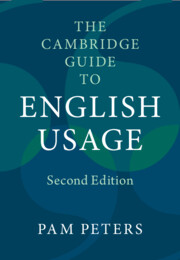
American and British English in the twenty-first century are still divided by a common language. Now in its second edition, this highly readable guide provides an authoritative reference to English usage, covering the differences, and some emerging similarities, between British, American and international English. It has been thoroughly updated and expanded to document hundreds of variable points of usage for the benefit of British and American readers, and for those seeking international forms of English for written communication, as first- or second-language users. It discusses the current status of each usage item with quantitative evidence from the NOW (News on the Web) corpus and contemporary research. Lively examples of usage are provided to capture aspects of twenty-first century culture world-wide. It also discusses issues in the use of personal names and ethnic naming practices, as well as sexist and homophobic words, and person-centred words for those living with a disability.
This exceptional guide to pancreatic pathology and cytopathology, incorporates extensive illustrations, videos, and infographics for easy understanding and diagnosis. The content is presented in an easy-to-digest, bulleted format, complemented by richly annotated videos that provide a visual learning experience. This practical guide addresses key diagnostic challenges, uniquely integrating cytopathology and histopathology. Four major topics are covered including inflammatory diseases of the pancreas, solid pancreatic neoplasms, cystic pancreatic neoplasms, and primary biliary lesions. This is an indispensable resource for pathologists, gastroenterologists, pancreatic surgeons, and researchers, offering a comprehensive and visual approach to a complex medical field.