Monografías publishes critical studies covering a wide range of topics in the literature, culture and history of the Iberian Peninsula and Latin America from the Middle Ages to the present day. It aims to promote intellectually stimulating and innovative scholarship that will make a major contribution to the fields of Hispanic and Lusophone studies. Work on un- or under-explored sources and themes or utilising new methodological and theoretical approaches, as well as interdisciplinary studies, are particularly encouraged. Both monographs and essay collections, in English, Spanish, English/Spanish or English/Portuguese, are welcome.
To save content items to your account,
please confirm that you agree to abide by our usage policies.
If this is the first time you use this feature, you will be asked to authorise Cambridge Core to connect with your account.
Find out more about saving content to .
To save content items to your Kindle, first ensure no-reply@cambridge.org
is added to your Approved Personal Document E-mail List under your Personal Document Settings
on the Manage Your Content and Devices page of your Amazon account. Then enter the ‘name’ part
of your Kindle email address below.
Find out more about saving to your Kindle.
Note you can select to save to either the @free.kindle.com or @kindle.com variations.
‘@free.kindle.com’ emails are free but can only be saved to your device when it is connected to wi-fi.
‘@kindle.com’ emails can be delivered even when you are not connected to wi-fi, but note that service fees apply.
Was Franco's Spain really a pariah in the Anglosphere?
This book examines pro-Francoism and the significant influence of a "Spanish lobby" in shaping US and British policy towards Spain during the Second World War and the years leading up to the Pact of Madrid in 1953. This lobby included not only pressure groups but also legislators and members of the executive as well as the armed forces, who shared economic and strategic interests and ideological sympathies in the growing anti-Communist atmosphere of the First Cold War.
The first two chapters provide the historical background to this rapprochement, examining monetary and credit policies in the United States and Spain during the 1930s and 40s, focusing in particular on the key roles played by American financial and business sectors, including Chase National Bank, to further the clandestine economic activities of US state companies and agencies in Spain during the Second World War. The book then turns to the role of the Spanish lobby in post-war US-Spanish diplomatic relations, looking at American individuals directly courted by the Spanish embassy in Washington as well as pro-Francoist congressmen who favored a closer relationship with Spain. The next chapter moves from Washington and New York to the West Coast to analyze local Spanish consular efforts to 'normalize' Spain in the eyes of the United States. Finally, the book turns to British relations with Spain during and after the Second World War and shows how the government's dependency on the US led to Britain becoming the junior partner in the formulation of Western policy towards Franco.
What lessons did readers take from the Espill (The Mirror)?
This book examines key marginalia in sixteenth-century printed copies of the fictional, pedagogic tale about the alleged dangers of earthly women composed by Valencian physician Jaume Roig. Written in Catalan verse in approximately 1460, the Espill focuses on two main themes, misogyny and religious material, including the critique of religious personnel but also absolute praise of the Virgin Mary. More than 50 printed copies of the work exist today, an extraordinary number for the period.
The book argues that readers seemed to interpret contrasting secular misogyny and holy topics as harmonious, with the Espill's misogyny synchronizing with its religious message and materials. Readers appear to have considered the Espill as a guide, whether with regard to biblical stories and lessons, women's menstruation, or women's shameful character, and did not demonstrate outrage or perplexity about women's portrayal. The annotative evidence, previously overlooked, sheds light on misogyny's relationship to larger systems of power and on the broader connection between women's depiction in the Espill and in Isabel de Villena's proto-feminist Vita Christi, both of which derived from Valencia's same late fifteenth-century social and professional milieu.
Why did Alfonso X of Castile-Leon-Galicia relentlessly pursue his claims to the imperial thrones of the Holy Roman Empire and the Iberian 'empire', despite the high costs and probability of failure?
This book examines how the concept of imperium shapes the structure and ideology of the Estoria de España, the first major history of Spain in the vernacular, written under Alfonso's patronage. Through a detailed analysis of its Roman section, it explores how Alfonso's scriptorium translated, adapted, and expanded sources to bolster his imperial claim. More than a chronicle, the Estoria served as propaganda, reinforcing Alfonso's legitimacy by challenging papal authority in imperial elections and appealing to both the Castilian-Leonese nobility-whose financial support was crucial-and other Iberian monarchs.
Alfonso's imperial vision drew not only on the Imperium Hispanicum of his father, Fernando III, but also on his Staufen lineage through his mother, Beatriz of Swabia, whose ties to the Holy Roman Empire likely influenced the historiographical models of the Estoria. By blending Iberian and European traditions, Alfonso positioned Castile as heir to both the Roman and Hohenstaufen legacies, setting a new standard for Iberian historiography that endured for centuries.
Whether unicorns, phoenix, and chimera, or axolotl, jaguars, and giant snakes, animals have often had the human experience grafted onto them, in a conscious or unconscious reflection of a society's beliefs, ambitions, and inequalities.
This volume seeks to explore different representations of real and imaginary animals across Hispanic literary production from the early modern era to the present day in order to gain a better understanding of how they serve as projections of human identities, knowledge, values, and vices. How do beasts enable the colonizing gaze and its reaches? How might beasts offer a means of decolonizing the Hispanophone world? And how do beasts articulate social unrest and a desire to resist inequality, poverty, and other ills of the modern world that collectively reinforce the status quo?
Working to better understand how Spanish and Latin American authors, illustrators, and graphic artists have understood animals and beasts, and how they interacted with them, contributors from the United States, Canada, Mexico, and Spain shed light on the use of animals as symbols and emblems, as well as how they have been employed to construct others as monstrous and less human.
A nuanced and complex portrayal of female voices which have long been silenced, offering a fresh perspective on the history of Brazilian journalism and restoring women's rightful place in Brazil's cultural memory.
This book examines the groundbreaking contributions of Maria Amália de Carvalho, Júlia Lopes de Almeida, Emília Moncorvo Bandeira de Melo (pseudonym Carmen Dolores), and Maria Benedita Câmara Bormann (pseudonym Délia) in Brazil's mainstream press, focusing on their writings published in the influential newspaper O País between 1884 and 1912. Employing psychoanalysis, gender studies, media theory and literary criticism, the chapters in this book explore how these four writers cultivated a collective intellectual network and how their columns became a forum for a critical engagement with the conservative narratives of the male-dominated public sphere. This book questions why their legacies have been marginalised in traditional literary histories and aims to restore their rightful place in Brazil's cultural memory. By presenting a nuanced analysis of these silenced voices, it challenges the persistent myth that women's writing was limited to the 'small press'. A vital reassessment of press history, this book demands a more inclusive understanding of Brazil's journalistic and intellectual heritage, one that properly recognises women as active participants in shaping the Brazilian literary system.
ANA CLÁUDIA SURIANI DA SILVA is Associate Professor in Brazilian Studies at University College London (UCL), UK.
TANIA REGINA DE LUCA is Professor in the History of Brazilian Republic at São Paulo State University (Unesp), Brazil.
CONTRIBUTORS: Alexandro Henrique Paixão, Álvaro Santos Simões Junior, Ana Cláudia Suriani da Silva, Milena Ribeiro Martins, Tania Regina de Luca.
Does dance tell a story? What, if anything, is it intended to represent? How was it conceived in the early modern period?
This book examines the theories and political uses of dance in Spain during the period preceding and following the 'Poetics turn', which coincided with the rule of Philip III (1598-1621), also known as the Dancing King, and the onset of the reign of Philip IV. While this turning point finalised the definition of dance as an art form, it was also paradoxical. Indeed, this development saw the emergence of an aesthetic thought of dance within Aristotelian poetics, thanks to a common court culture, yet it never led to the formulation of a poetics of ballet.
By recontextualising this turning point, the book examines the relationship between dance and representation during Spain's Golden Age. It revisits the initial codifications of dance in Italy and figurative experiments at the Burgundian court during the second half of the 15th century, as well as their influence on subsequent practices and humanist theories of dance at the courts of Charles V and Philip II. Subsequently, it focuses on the various shifts in court dance as it became a scenic art at the beginning of the seventeenth century, interrogating the possibility of the king performing dance himself. The book concludes that, in Spain, neo-Aristotelian ideas enabled a shift from an ethical to an aesthetic problematic, which saw dance, whether symbolic or purely kinetic in nature, as a legitimate art form to be placed at the service of the monarchy.
Is Spain really still tied - culturally, politically, and emotionally - to the dictator Francisco Franco? What was (and is) his place in the public imaginary? What remains today of the man and his legacy?
This book examines the public image of Franco and the social construction(s) of his public biography over four different periods: the Spanish Civil War (1936-1939), the post-civil war period (1939-1949), the rest of the dictatorship (1950-1975), and the democratic period and recent times (1975-2020). Delving into biography, narratives, and public and political motivations, it analyses the role that the idea of Franco has played and continues to play in contemporary Spain. It argues that the multiplicity of narratives that have existed in Spain and abroad regarding the figure of Franco are closely related to both the rhetoric and images generated by those in power and a sort of popular 'banal Franco' which takes in multiple stereotypes. This latter concept is central to understanding not only Franco's importance in contemporary Spain but also the fervent allegiance to his figures by a substantial part of Spanish society. Providing a complex picture of how the public image of the dictator has been constructed over time, the book addresses how ordinary Spaniards have imagined Franco and what their sources for doing so were.
Escritora, no hay camino... explores Mexican travel literature -from early nineteenth-century publications to the contemporary era- to reveal how the experiences of six women writers reconfigured perceptions of themselves and the foreign.
From a feminist and transcultural critique, this book delves into how Laura Méndez de Cuenca, Elena Garro, Rosario Castellanos, María Luisa Puga, Esther Seligson and Myriam Moscona confront cultural normativity in their narratives, drawing on their cultural interactions in Spain, Germany, Kenya, England, Israel and Bulgaria, among other countries.
The cross-cultural performativities studied here allow us to analyse how the authors incorporate categories such as sex, gender, class, nationality and ethnicity in their works. The comparative chapters explore themes such as transatlantic intellectual exchanges, the border identities' critique of normativity, and the relationship of genealogy to literary and cultural re-appropriations. This book offers an analytical insight into how Mexican women writers have contributed to travel literature by subverting and reconfiguring their identity and relationship to the world.
Escritora, no hay camino... explora la literatura de viaje mexicana -desde las primeras publicaciones del siglo XIX hasta la época contemporánea- para revelar cómo las experiencias de seis escritoras reconfiguraron percepciones sobre sí mismas y lo extranjero.
Desde una crítica feminista y transcultural, el libro profundiza en cómo Laura Méndez de Cuenca, Elena Garro, Rosario Castellanos, María Luisa Puga, Esther Seligson y Myriam Moscona enfrentan las normatividades culturales en sus relatos, a partir de sus interacciones culturales en España, Alemania, Kenia, Inglaterra, Israel y Bulgaria, entre otros países.
Las performatividades transculturales que aquí se estudian permiten analizar cómo las autoras incorporan categorías como sexo, género, clase social, nacionalidad y etnicidad en sus obras. En los capítulos comparativos se exploran temas como los intercambios intelectuales transatlánticos, la crítica a las normatividades de las identidades fronterizas y la relación de la genealogía con las reapropiaciones literarias y culturales. Este libro ofrece una mirada analítica para comprender cómo las escritoras mexicanas han contribuido a la literatura de viaje, subvirtiendo y reconfigurando tanto su identidad como su relación con el mundo.
Este libro explora la atracción de los "Siglos de oro" por lo monstruoso. Varios trabajos recientes ya han arrojado luz sobre la abundante representación de cuerpos excesivos que afloran en los siglosXVI y XVI y que parecen, acaso, reflejar el lenguaje inflado y deformado a través del cual son descritos en la literatura de la época. Sin obviar sus logros, el libro intenta ir más allá para mostrar que lo más sorprendente de la monstruosidad en este periodo no es la manera en que representa un exceso barroco, sino la forma en que el exceso mismo está estructurado en una imagen dual. Muchos deestos "monstruos" (hermafroditas, bicéfalos o licántropos) ostentan un diseño geminado que permanece, de hecho, inexplicado. Qué explica tal anomalía? Cómo contribuirá esta excepción a modelar la imagen misma de lo normal? Qué tiene que ver con la configuración del nuevo cuerpo político a través del cual las relaciones sociales iban a ser imaginadas, a partir de entonces, en el mundo occidental?
Víctor M. Pueyo es profesor titular en el Departamento de Español y Portugués de Temple University.
This is a book about the obsession of the Spanish "Golden Age" with the monstrous. Recent research has begun to cast light upon the abundant representation of excessive bodies that mirrors the swelled and deformed language through which they are depicted in early modern literature. Without disregarding its representational approach, the book goes beyond this body of research by arguing that the most surprising element about monstrosity in the sixteenth and seventeenth centuries is not the way it represents Baroque excess, but the way excess itself is structured into a dual image. Most of these "monsters" (hermaphrodites, lycanthropes, two-headed creatures) have a geminated form that remains, indeed, largely unaccounted. What explains such an anomaly? How will it shape the rule? What does it have to do with the configuration of the new body politic through which social relations were going to be imagined in the Western World?
Víctor Pueyo is associate professor in the Department of Spanish and Portuguese at Temple University.
César Vallejo paradoxically discounted the modernist significance of his avant-garde masterpiece,Trilce, published in 1922. Yet, in these poems, the renowned Peruvian writer played with the Spanish language, incorporating neologisms, typographic innovations, radical syntax, symbols and shocking imagery.
Did Spain fall into decline or flourish in the seventeenth century?
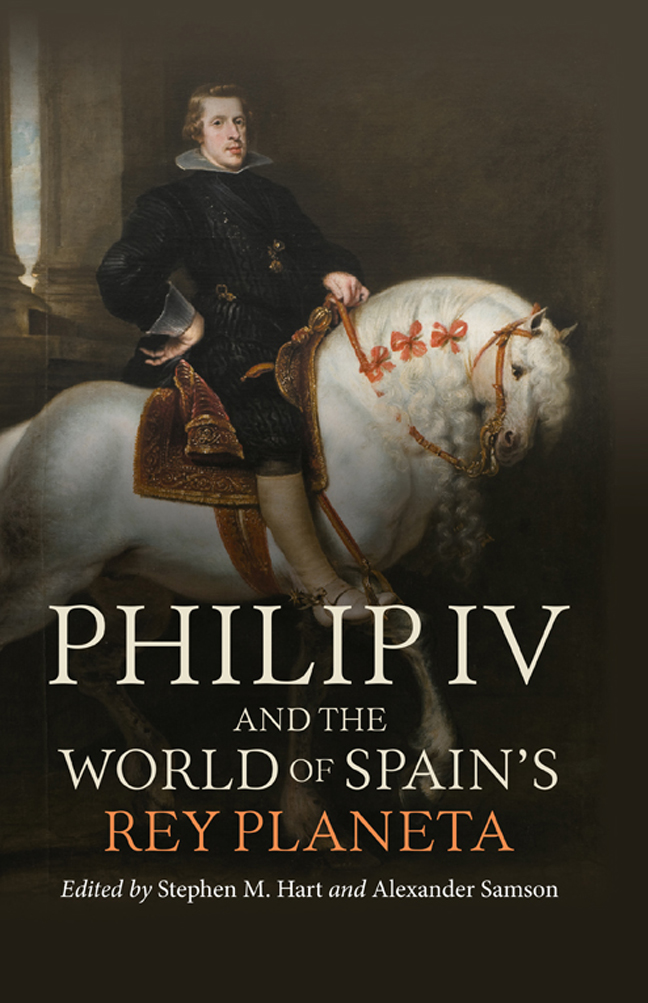
This edited collection looks at perceptions and representations of Philip IV, Spain's 'Planet King', and his government against the backdrop of the seventeenth-century General Crisis in Europe, wars, revolutions and a sovereign debt crisis. Scholars often associate Philip's reign (1621-1665) with decline, decadence, crisis, stagnation and adversity (as did many contemporaries); yet the glittering cultural and artistic achievements (enhanced by his patronage) of the period led it to be dubbed 'the' Golden Age. The book analyses these contradictions, examining Philip's own understanding of kingship and how he and his courtiers used art and ceremony to project an image of strength, tradition, culture and prestige, while, at the same time, the empire grappled with revolts in Europe and falling trade with its New World colonies.
A celebrity in his own day, who gave lectures dressed as Napoleon or seated on the back of an elephant, Ramón Gómez de la Serna is the most representative writer of the interwar Spanish avant-garde.
How did liberationist Christianity develop in Argentina between the 1930s and early 1970s? How did it respond to state terrorism during the Dirty War? This book answers these questions.
Spanish writer Carmen Martín Gaite (1925-2000) defined religioso as the reconnection of that which was previously united, namely, the day-to-day and supernatural worlds - here defined as consciousness and the unconscious, bringing awareness and wholeness. In this book, Martín Gaite's religious outlook is explored through the inner journeys of five female characters in 'El balneario', 'Lo raro es vivir', 'Irse de casa' and 'Nubosidad variable'.