Epilogue
Published online by Cambridge University Press: 07 September 2011

Summary
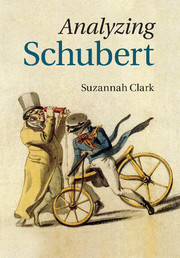
I opened this book with an examination of a watercolor by Kupelwieser (see Introduction, Plate 1) and used the cylinder shape of the kaleidoscope and the wheel of the draisine in order to speak of a clash between hexatonic and diatonic perspectives of Schubert’s music. In closing this book, I want to draw attention to a third, much fainter object in Kupelwieser’s painting, which serves as a metaphor to draw the strands of this book together.
Dangling from Schubert’s left wrist is his schoolmaster’s cane – no doubt included in the picture because it is an effective visual means of identifying Schubert’s profession at the time. Schubert was widely reported to have hated teaching, and he left the profession as soon as he could. The cane also symbolizes discipline, order, obedience, and learning. The question of whether these traits are present or absent in Schubert’s music is the central matter of debate that runs throughout Schubert’s reception.
Information
- Type
- Chapter
- Information
- Analyzing Schubert , pp. 268 - 271Publisher: Cambridge University PressPrint publication year: 2011
Accessibility standard: Unknown
Why this information is here
This section outlines the accessibility features of this content - including support for screen readers, full keyboard navigation and high-contrast display options. This may not be relevant for you.Accessibility Information
Accessibility compliance for the PDF of this chapter is currently unknown
and may be updated in the future.