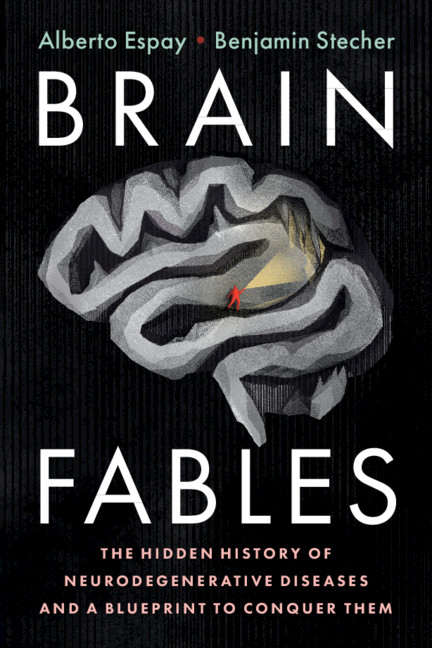

An estimated 80 million people live with a neurodegenerative disease. That number is expected to increase rapidly as populations age, lifespans increase, and exposure to toxins rises. Despite decades of research and billions in funding, there are no medications that can slow, much less stop, the progress of these diseases. This is because diseases such as Parkinson's and Alzheimer's do not exist in biology. Yet, hundreds of clinical trials around the world are examining the potential of single therapies in thousands of people sharing one of these labels. Compounding the problem, these therapies were developed on evidence from models that do not come close to capturing the complexity of these diseases in the affected humans. These practices must end. Brain Fables is a call to refocus on understanding living and aging to create the personalized treatments each affected individual desperately needs.
Winner, 2021 PROSE Award - Neuroscience, Association of American Publishers
‘This book attempts to incorporate overarching scientific themes with a detailed overview of pathophysiology and clinical features of Parkinson's disease. The chapters examine clinical features, subtypes and progression of the disease, ways of looking at the disease scientifically, a comparison to oncology, and a review of disease modifying treatments versus symptomatic treatment. The diagrams and tables are outstanding and the production values are excellent. The book, however, is limited by the attempt to tackle big concepts for a more lay public with very technical writing, an unimaginative look at theory and facts, and the distinctly different styles between the two authors.’
Rohit Das Source: Doody's Book Review Service
Loading metrics...
* Views captured on Cambridge Core between #date#. This data will be updated every 24 hours.
Usage data cannot currently be displayed.
This section outlines the accessibility features of this content - including support for screen readers, full keyboard navigation and high-contrast display options. This may not be relevant for you.
Accessibility compliance for the PDF of this book is currently unknown and may be updated in the future.
