Book contents
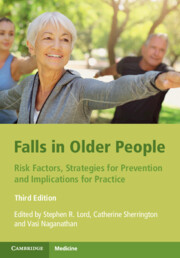
- Falls in Older People
- Falls in Older People
- Copyright page
- Contents
- Preface
- Contributors
- Part I Epidemiology and Risk Factors for Falls
- 1 Epidemiology of Falls and Fall-Related Injuries
- 2 Postural Stability and Falls
- 3 Gait Characteristics and Falls
- 4 Sensory and Neuromuscular Risk Factors for Falls
- 5 Biomechanics of Balance and Falling
- 6 Foot Problems, Footwear, and Falls
- 7 Brain Function and Falls
- 8 Impaired Cognition and Falls
- 9 The Psychology of Fall Risk: Fear, Anxiety, Depression, and Balance Confidence
- 10 Medical Risk Factors for Falls
- 11 Medications as Risk Factors for Falls
- 12 Environmental Risk Factors for Falls
- 13 Fall Detection and Risk Assessment with New Technologies
- 14 Fall Risk Screening and Assessment
- 15 The Relative Importance of Fall Risk Factors: Analysis and Summary
- Part II Strategies for Prevention
- Part III Implications for Practice
- Index
- References
7 - Brain Function and Falls
from Part I - Epidemiology and Risk Factors for Falls
Published online by Cambridge University Press: 04 November 2021

Book contents
- Falls in Older People
- Falls in Older People
- Copyright page
- Contents
- Preface
- Contributors
- Part I Epidemiology and Risk Factors for Falls
- 1 Epidemiology of Falls and Fall-Related Injuries
- 2 Postural Stability and Falls
- 3 Gait Characteristics and Falls
- 4 Sensory and Neuromuscular Risk Factors for Falls
- 5 Biomechanics of Balance and Falling
- 6 Foot Problems, Footwear, and Falls
- 7 Brain Function and Falls
- 8 Impaired Cognition and Falls
- 9 The Psychology of Fall Risk: Fear, Anxiety, Depression, and Balance Confidence
- 10 Medical Risk Factors for Falls
- 11 Medications as Risk Factors for Falls
- 12 Environmental Risk Factors for Falls
- 13 Fall Detection and Risk Assessment with New Technologies
- 14 Fall Risk Screening and Assessment
- 15 The Relative Importance of Fall Risk Factors: Analysis and Summary
- Part II Strategies for Prevention
- Part III Implications for Practice
- Index
- References
Summary
Ageing is associated with a wide range of changes in the brain, including grey and white matter atrophy, as well as markers of small vessel disease such as white matter hyperintensities, microbleeds, and infarcts. Furthermore, beta-amyloid plaques and tau (the hallmarks of Alzheimer’s disease) are evident in the brain years before symptoms of dementia appear. A brain free of disease, with intact grey and white matter, is essential for the fast and efficient operation of the neural networks during daily life activities, and therefore also in reducing the risk of falling.
Information
- Type
- Chapter
- Information
- Falls in Older PeopleRisk Factors, Strategies for Prevention and Implications for Practice, pp. 130 - 143Publisher: Cambridge University PressPrint publication year: 2021
References
Raz, N, Rodrigue, KM, Haacke, EM. Brain aging and its modifiers: insights from in vivo neuromorphometry and susceptibility weighted imaging. Ann NY Acad Sci. 2007;1097:84–93.CrossRefGoogle ScholarPubMed
Webb, SJ, Monk, CS, Nelson, CA. Mechanisms of postnatal neurobiological development: implications for human development. Dev Neurospcyhol. 2001;19:147–71.Google ScholarPubMed
Callisaya, ML, Beare, R, Phan, TG et al. Global and regional associations of smaller cerebral gray and white matter volumes with gait in older people. PloS One. 2014;9:e84909.Google Scholar
Rosano, C, Aizenstein, HJ, Studenski, S et al. A regions-of-interest volumetric analysis of mobility limitations in community-dwelling older adults. J Gerontol A Biol Sci Med Sci. 2007;62:1048–55.CrossRefGoogle ScholarPubMed
Callisaya, ML, Beare, R, Phan, TG et al. Brain structural change and gait decline: a longitudinal population-based study. J Am Geriatr Soc. 2013;61:1074–9.CrossRefGoogle ScholarPubMed
Rosano, C, Sigurdsson, S, Siggeirsdottir, K et al. Magnetization transfer imaging, white matter hyperintensities, brain atrophy and slower gait in older men and women. Neurobiol Aging. 2010;31:1197–204.CrossRefGoogle ScholarPubMed
Davis, JC, Nagamatsu, LS, Hsu, CL et al. Self-efficacy is independently associated with brain volume in older women. Age Ageing. 2012;41:495–501.Google Scholar
Tuerk, C, Zhang, H, Sachdev, P et al. Regional gray matter volumes are related to concern about falling in older people: a voxel-based morphometric study. J Gerontol A Biol Sci Med Sci. 2016;71:138–44.CrossRefGoogle ScholarPubMed
Hayakawa, YK, Sasaki, H, Takao, H et al. Structural brain abnormalities in women with subclinical depression, as revealed by voxel-based morphometry and diffusion tensor imaging. J Affect Disord. 2013;144:263–8.CrossRefGoogle ScholarPubMed
Tabatabaei-Jafari, H, Shaw, ME, Cherbuin, N. Cerebral atrophy in mild cognitive impairment: a systematic review with meta-analysis. Alzheimers Dement. 2015;1:487–504.Google ScholarPubMed
Muir, SW, Gopaul, K, Montero Odasso, MM. The role of cognitive impairment in fall risk among older adults: a systematic review and meta-analysis. Age Ageing. 2012;41:299–308.Google Scholar
Davis, JC, Best, JR, Khan, KM et al. Slow processing speed predicts falls in older adults with a falls history: 1-Year prospective cohort study. J Am Geriatr Soc. 2017;65:916–23.CrossRefGoogle ScholarPubMed
Rosano, C, Studenski, SA, Aizenstein, HJ et al. Slower gait, slower information processing and smaller prefrontal area in older adults. Age Ageing. 2012;41:58–64.Google Scholar
Rosano, C, Brach, J, Longstreth, WT, Jr et al. Quantitative measures of gait characteristics indicate prevalence of underlying subclinical structural brain abnormalities in high-functioning older adults. Neuroepidemiology. 2006;26:52–60.CrossRefGoogle ScholarPubMed
Verghese, J, Wang, C, Ayers, E et al. Brain activation in high-functioning older adults and falls: prospective cohort study. Neurology. 2017;88:191–7.CrossRefGoogle ScholarPubMed
Blumen, HM, Brown, LL, Habeck, C et al. Gray matter volume covariance patterns associated with gait speed in older adults: a multi-cohort MRI study. Brain Imaging Behav. 2018;13:446–60.Google Scholar
Beauchet, O, Launay, CP, Barden, J et al. Association between falls and brain subvolumes: results from a cross-sectional analysis in healthy older adults. Brain Topogr. 2017;30:272–80.CrossRefGoogle ScholarPubMed
Makizako, H, Shimada, H, Doi, T et al. Poor balance and lower gray matter volume predict falls in older adults with mild cognitive impairment. BMC Neurol. 2013;13:102.CrossRefGoogle ScholarPubMed
Wardlaw, JM, Smith, EE, Biessels, GJ et al. Neuroimaging standards for research into small vessel disease and its contribution to ageing and neurodegeneration. Lancet Neurol. 2013;12:822–38.Google Scholar
Moran, C, Phan, TG, Srikanth, VK. Cerebral small vessel disease: a review of clinical, radiological, and histopathological phenotypes. Int J Stroke. 2012;7:36–46.CrossRefGoogle ScholarPubMed
Wardlaw, JM, Valdes Hernandez, MC, Munoz-Maniega, S. What are white matter hyperintensities made of? Relevance to vascular cognitive impairment. J Am Heart Assoc. 2015;4:001140.CrossRefGoogle ScholarPubMed
Srikanth, V, Beare, R, Blizzard, L et al. Cerebral white matter lesions, gait, and the risk of incident falls: a prospective population-based study. Stroke. 2009;40:175–80.CrossRefGoogle Scholar
Whitman, GT, Tang, Y, Lin, A et al. A prospective study of cerebral white matter abnormalities in older people with gait dysfunction. Neurology. 2001;57:990–4.CrossRefGoogle ScholarPubMed
Baloh, RW, Ying, SH, Jacobson, KM. A longitudinal study of gait and balance dysfunction in normal older people. Arch Neurol. 2003;60:835–9.Google Scholar
Zheng, JJ, Delbaere, K, Close, JC et al. White matter hyperintensities are an independent predictor of physical decline in community-dwelling older people. Gerontology. 2012;58:398–406.CrossRefGoogle ScholarPubMed
Zheng, JJ, Delbaere, K, Close, JC et al. Impact of white matter lesions on physical functioning and fall risk in older people: a systematic review. Stroke. 2011;42:2086–90.Google Scholar
Baezner, H, Blahak, C, Poggesi, A et al. Association of gait and balance disorders with age-related white matter changes: the LADIS study. Neurology. 2008;70:935–42.CrossRefGoogle ScholarPubMed
de Groot, JC, de Leeuw, FE, Oudkerk, M et al. Cerebral white matter lesions and depressive symptoms in elderly adults. Arch Gen Psychiatry. 2000;57:1071–6.Google Scholar
van der Flier, WM, van Straaten, EC, Barkhof, F et al. Small vessel disease and general cognitive function in nondisabled elderly: the LADIS study. Stroke. 2005;36:2116–20.CrossRefGoogle ScholarPubMed
de Groot, JC, de Leeuw, FE, Oudkerk, M et al. Cerebral white matter lesions and cognitive function: the Rotterdam Scan Study. Ann Neurol. 2000;47:145–51.Google ScholarPubMed
Zheng, JJ, Lord, SR, Close, JC et al. Brain white matter hyperintensities, executive dysfunction, instability, and falls in older people: a prospective cohort study. J Gerontol A Biol Sci Med Sci. 2012;67:1085–91.Google Scholar
Bolandzadeh, N, Davis, JC, Tam, R et al. The association between cognitive function and white matter lesion location in older adults: a systematic review. BMC Neurol. 2012;12:126.CrossRefGoogle ScholarPubMed
Callisaya, ML, Beare, R, Phan, T et al. Progression of white matter hyperintensities of presumed vascular origin increases the risk of falls in older people. J Gerontol A Biol Sci Med Sci. 2014;70:360–6.Google Scholar
Taylor, ME, Lord, SR, Delbaere, K et al. White matter hyperintensities are associated with falls in older people with dementia. Brain Imaging Behav. 2018;13:1265–72.Google Scholar
Corti, MC, Baggio, G, Sartori, L et al. White matter lesions and the risk of incident hip fracture in older persons: results from the progetto veneto anziani study. Arch Intern Med. 2007;167:1745–51.Google Scholar
Srikanth, V, Phan, TG, Chen, J et al. The location of white matter lesions and gait: a voxel-based study. Ann Neurol. 2010;67:265–9.CrossRefGoogle Scholar
de Laat, KF, Tuladhar, AM, van Norden, AG et al. Loss of white matter integrity is associated with gait disorders in cerebral small vessel disease. Brain. 2011;134:73–83.CrossRefGoogle ScholarPubMed
Moscufo, N, Guttmann, CR, Meier, D et al. Brain regional lesion burden and impaired mobility in the elderly. Neurobiol Aging. 2011;32:646–54.CrossRefGoogle ScholarPubMed
Blahak, C, Baezner, H, Pantoni, L et al. Deep frontal and periventricular age related white matter changes but not basal ganglia and infratentorial hyperintensities are associated with falls: cross sectional results from the LADIS study. J Neurol Neurosurg Psychiatry. 2009;80:608–13.CrossRefGoogle Scholar
Srikanth, VK, Sanders, LM, Callisaya, ML et al. Brain ageing and gait. Aging Health. 2010;6:123–31.Google Scholar
Jeerakathil, T, Wolf, PA, Beiser, A et al. Stroke risk profile predicts white matter hyperintensity volume: the Framingham Study. Stroke. 2004;35:1857–61.Google Scholar
Davis, SW, Dennis, NA, Buchler, NG et al. Assessing the effects of age on long white matter tracts using diffusion tensor tractography. Neuroimage. 2009;46:530–41.CrossRefGoogle Scholar
Werring, DJ, Clark, CA, Barker, GJ et al. Diffusion tensor imaging of lesions and normal-appearing white matter in multiple sclerosis. Neurology. 1999;52:1626–32.CrossRefGoogle ScholarPubMed
Salat, D, Tuch, D, Greve, D et al. Age-related alterations in white matter microstructure measured by diffusion tensor imaging. Neurobiol Aging. 2005;26:1215–27.Google Scholar
de Laat, KF, van Norden, AG, Gons, RA et al. Diffusion tensor imaging and gait in elderly persons with cerebral small vessel disease. Stroke. 2011;42:373–9.Google Scholar
Ghanavati, T, Smitt, MS, Lord, SR et al. Deep white matter hyperintensities, microstructural integrity and dual task walking in older people. Brain Imaging Behav. 2018;12:1488–96.CrossRefGoogle ScholarPubMed
Van Impe, A, Coxon, JP, Goble, DJ et al. White matter fractional anisotropy predicts balance performance in older adults. Neurobiol Aging. 2012;33:1900–12.CrossRefGoogle ScholarPubMed
Ryberg, C, Rostrup, E, Stegmann, MB et al. Clinical significance of corpus callosum atrophy in a mixed elderly population. Neurobiol Aging. 2007;28:955–63.CrossRefGoogle Scholar
Bhadelia, RA, Price, LL, Tedesco, KL et al. Diffusion tensor imaging, white matter lesions, the corpus callosum, and gait in the elderly. Stroke. 2009;40:3816–20.CrossRefGoogle ScholarPubMed
Wong, YQ, Tan, LK, Seow, P et al. Microstructural integrity of white matter tracts amongst older fallers: a DTI study. PloS One. 2017;12:e0179895.CrossRefGoogle ScholarPubMed
Choi, P, Ren, M, Phan, TG et al. Silent infarcts and cerebral microbleeds modify the associations of white matter lesions with gait and postural stability: population-based study. Stroke. 2012;43:1505–10.CrossRefGoogle ScholarPubMed
Callisaya, ML, Srikanth, VK, Lord, SR et al. Sub-cortical infarcts and the risk of falls in older people: combined results of TASCOG and Sydney MAS studies. Int J Stroke. 2014;9:55–60.CrossRefGoogle ScholarPubMed
Ince, PG, Minett, T, Forster, G et al. Microinfarcts in an older population-representative brain donor cohort (MRC CFAS): prevalence, relation to dementia and mobility, and implications for the evaluation of cerebral Small Vessel Disease. Neuropathol Appl Neurobiol. 2017;43:409–18.Google Scholar
Richardson, K, Hunter, S, Dening, T et al. Neuropathological correlates of falling in the CC75C population-based sample of the older old. Curr Alzheimer Res. 2012;9:697–708.Google Scholar
Jack, CR, Jr, Bennett, DA, Blennow, K et al. NIA-AA Research Framework: toward a biological definition of Alzheimer’s disease. Alzheimers Dement. 2018;14:535–62.Google Scholar
Villemagne, VL, Dore, V, Bourgeat, P et al. Aβ-amyloid and Tau imaging in dementia. Semin Nucl Med. 2017;47:75–88.CrossRefGoogle ScholarPubMed
Dao, E, Best, JR, Hsiung, GR et al. Associations between cerebral amyloid and changes in cognitive function and falls risk in subcortical ischemic vascular cognitive impairment. BMC Geriatr. 2017;17:133.Google Scholar
Pike, KE, Savage, G, Villemagne, VL et al. Beta-amyloid imaging and memory in non-demented individuals: evidence for preclinical Alzheimer’s disease. Brain. 2007;130:2837–44.CrossRefGoogle ScholarPubMed
Rowe, CC, Bourgeat, P, Ellis, KA et al. Predicting Alzheimer disease with beta-amyloid imaging: results from the Australian imaging, biomarkers, and lifestyle study of ageing. Ann Neurol. 2013;74:905–13.CrossRefGoogle ScholarPubMed
Del Campo, N, Payoux, P, Djilali, A et al. Relationship of regional brain beta-amyloid to gait speed. Neurology. 2016;86:36–43.CrossRefGoogle ScholarPubMed
Nadkarni, NK, Perera, S, Snitz, BE et al. Association of brain amyloid-beta with slow gait in elderly individuals without dementia: influence of cognition and apolipoprotein E epsilon4 genotype. JAMA Neurol. 2017;74:82–90.Google Scholar
Schneider, JA, Li, JL, Li, Y et al. Substantia nigra tangles are related to gait impairment in older persons. Ann Neurol. 2006;59:166–73.CrossRefGoogle ScholarPubMed
Stark, SL, Roe, CM, Grant, EA et al. Preclinical Alzheimer disease and risk of falls. Neurology. 2013;81:437–43.CrossRefGoogle ScholarPubMed
Cham, R, Perera, S, Studenski, SA et al. Striatal dopamine denervation and sensory integration for balance in middle-aged and older adults. Gait Posture. 2007;26:516–25.Google Scholar
Cham, R, Studenski, S, Perera, S et al. Striatal dopaminergic denervation and gait in healthy adults. Exp Brain Res. 2008;185:391–8.Google Scholar
Bohnen, NI, Muller, ML, Kuwabara, H et al. Age-associated striatal dopaminergic denervation and falls in community-dwelling subjects. J Rehabil Res Dev. 2009;46:1045–52.Google Scholar
Bohnen, N, Müller, M, Koeppe, R et al. History of falls in Parkinson disease is associated with reduced cholinergic activity. Neurology. 2009;73:1670–6.CrossRefGoogle ScholarPubMed
Sakurai, R, Fujiwara, Y, Yasunaga, M et al. Regional cerebral glucose metabolism and gait speed in healthy community-dwelling older women. J Gerontol A Biol Sci Med Sci. 2014;69:1519–27.Google Scholar
Martin, KL, Blizzard, L, Wood, AG et al. Cognitive function, gait, and gait variability in older people: a population-based study. J Gerontol A Biol Sci Med Sci. 2013;68:726–32.CrossRefGoogle ScholarPubMed
Martin, KL, Blizzard, L, Srikanth, VK et al. Cognitive function modifies the effect of physiological function on the risk of multiple falls: a population-based study. J Gerontol A Biol Sci Med Sci. 2013;68:1091–7.CrossRefGoogle ScholarPubMed
Glover, GH. Overview of functional magnetic resonance imaging. Neurosurg Clin N Am. 2011;22:133–9, vii.Google Scholar
Cabeza, R. Cognitive neuroscience of aging: contributions of functional neuroimaging. Scand J Psychol. 2001;42:277–86.CrossRefGoogle ScholarPubMed
Hsu, CL, Voss, MW, Handy, TC et al. Disruptions in brain networks of older fallers are associated with subsequent cognitive decline: a 12-month prospective exploratory study. PloS One. 2014;9:e93673.Google Scholar
Scholkmann, F, Kleiser, S, Metz, AJ et al. A review on continuous wave functional near-infrared spectroscopy and imaging instrumentation and methodology. NeuroImage. 2014;85:6–27.CrossRefGoogle ScholarPubMed
Holtzer, R, Epstein, N, Mahoney, JR et al. Neuroimaging of mobility in aging: a targeted review. J Gerontol A Biol Sci Med Sci. 2014;69:1375–88.Google Scholar
Holtzer, R, Mahoney, JR, Izzetoglu, M et al. fNIRS study of walking and walking while talking in young and old individuals. J Gerontol A Biol Sci Med Sci. 2011;66:879–87.Google Scholar
Accessibility standard: Unknown
Why this information is here
This section outlines the accessibility features of this content - including support for screen readers, full keyboard navigation and high-contrast display options. This may not be relevant for you.Accessibility Information
Accessibility compliance for the PDF of this book is currently unknown
and may be updated in the future.