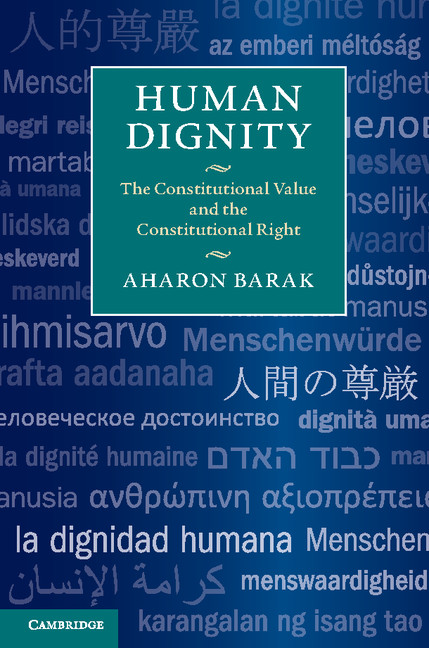

Human dignity is now a central feature of many modern constitutions and international documents. As a constitutional value, human dignity involves a person's free will, autonomy, and ability to write a life story within the framework of society. As a constitutional right, it gives full expression to the value of human dignity, subject to the specific demands of constitutional architecture. This analytical study of human dignity as both a constitutional value and a constitutional right adopts a legal-interpretive perspective. It explores the sources of human dignity as a legal concept, its role in constitutional documents, its content, and its scope. The analysis is augmented by examples from comparative legal experience, including chapters devoted to the role of human dignity in American, Canadian, German, South African, and Israeli constitutional law.
'An engaging explication of a legal value whose time has come. The twenty-first century will be the century of dignity.'
Source: Human Rights Law Review
Loading metrics...
* Views captured on Cambridge Core between #date#. This data will be updated every 24 hours.
Usage data cannot currently be displayed.
This section outlines the accessibility features of this content - including support for screen readers, full keyboard navigation and high-contrast display options. This may not be relevant for you.
Accessibility compliance for the PDF of this book is currently unknown and may be updated in the future.
