Book contents
- Frontmatter
- Contents
- Illustrations
- Preface and Acknowledgements
- Introduction
- 1 Early Closing
- 2 The Music of Northampton
- 3 A Number of Scotsmen
- 4 Olive
- 5 Union and Exile
- 6 A Purpose for Cinema
- 7 A War of his Own
- 8 Is Your Journey Really Necessary?
- 9 A Coming British Woman Composer
- 10 Towards a Festival
- 11 Questions of Inspiration
- 13 The Late Romantic
- 14 E-Day
- 15 Symphonic Reflections
- 16 Soundless Music
- 17 The Other Suffolk Composer
- 18 The Blythburgh Operas
- 19 The Stillness
- 20 Living and Learning
- 21 Precious Toy
- Epilogue
- Notes
- List of Alwyn’s Works
- Discography
- Bibliography
- General Index
- Index of Alwyn’s Works
Book contents
- Frontmatter
- Contents
- Illustrations
- Preface and Acknowledgements
- Introduction
- 1 Early Closing
- 2 The Music of Northampton
- 3 A Number of Scotsmen
- 4 Olive
- 5 Union and Exile
- 6 A Purpose for Cinema
- 7 A War of his Own
- 8 Is Your Journey Really Necessary?
- 9 A Coming British Woman Composer
- 10 Towards a Festival
- 11 Questions of Inspiration
- 13 The Late Romantic
- 14 E-Day
- 15 Symphonic Reflections
- 16 Soundless Music
- 17 The Other Suffolk Composer
- 18 The Blythburgh Operas
- 19 The Stillness
- 20 Living and Learning
- 21 Precious Toy
- Epilogue
- Notes
- List of Alwyn’s Works
- Discography
- Bibliography
- General Index
- Index of Alwyn’s Works
Summary
In a small notebook (the ‘Report’ ) he took with him on a trip to Lausanne in 1970, William Alwyn wrote, ‘I was born an Englishman of good English stock – and that was my first disastrous mistake.’ He was considering writing his autobiography (perhaps this was an opening sentence) and compared himself to other composers who had taken up the pen. ‘I am a better composer than Berlioz’, he wrote, ‘and certainly a better poet. Perhaps I shall write a better autobiography, who knows?’ Another note stares back at the biographer, as if in warning: ‘My own musical works are the story of my life, my own autobiography.’ No need, then, to look beyond them. And then something that gives an immediate clue to the life:
I love silence. I love the beauty that lies hidden in silence. For silence in music, said Mozart, is of equal importance to sound. I was born in a time when silence could still be heard …
When William Alwyn boasted that there was no musical background in his family he had overlooked his Uncle Ernest and Auntie May. One of Alwyn’s earliest experiences of the power of music was seeing Uncle Ernest perform with his wife May Erne on the music-hall stage. As a solo act May’s bill-matter on variety posters was ‘Ambi-‘Pe’–Dexter’, but after teaming up with Ernest they worked as ‘May Erne and He of the Voice’ (‘Patched Ballads and Pot Shots’ was their bill matter). The theatre had turned Ernest Smith, small and bright eyed, into Erne Chester, while Alwyn’s Auntie May – he remembered her as full-bosomed and cocooned in furs – accompanied ‘He’ on the xylophone. The resourceful May had not only struggled for five years to perfect her turn, but patented a portable glockenspiel and (with its separate patent) an instrument with which to strike it. Ernest’s voice never broke effectively, enabling him to deliver his ‘patched ballads’ (whatever they were) in a distinctive manner as May happily hammered away by his side. Together, they played the London Coliseum, the old Bedford in Camden and the London Alhambra.
Information
- Type
- Chapter
- Information
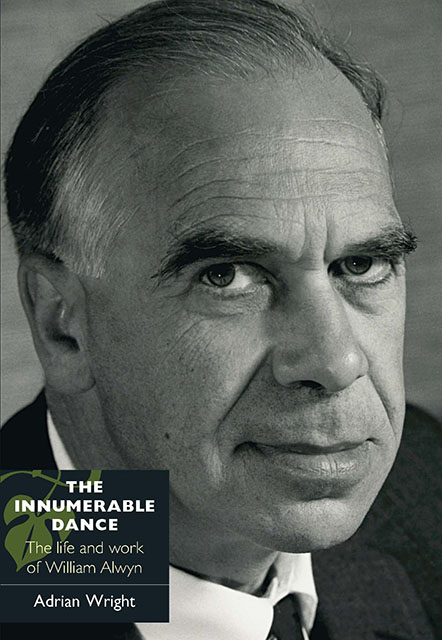
- The Innumerable DanceThe Life and Work of William Alwyn, pp. 4 - 9Publisher: Boydell & BrewerPrint publication year: 2008
Accessibility standard: Unknown
Why this information is here
This section outlines the accessibility features of this content - including support for screen readers, full keyboard navigation and high-contrast display options. This may not be relevant for you.Accessibility Information
Accessibility compliance for the PDF of this chapter is currently unknown
and may be updated in the future.