Introduction
Published online by Cambridge University Press: 06 March 2025

Summary
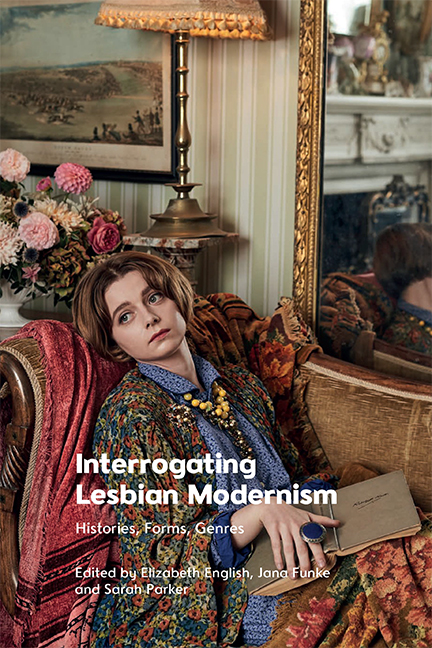
In April 2018, we organised two panels on lesbian modernism as part of a conference at the University of Oxford entitled Queer Modernism(s) II: Intersectional Identities. During our panel sessions, we asked several questions with the aim of interrogating lesbian modernism from various angles, including in the context of queer modernist scholarship and in relation to the potential inclusions and exclusions of this term. What do scholars mean when we use the term ‘lesbian modernism’? What is the relationship between lesbian modernism and queer modernism? Are these overlapping, mutually informative categories, or does one effectively displace the other? Have we, for example, moved on from lesbian modernism, into the era of queer modernism? If so, what might we lose and what might we gain in leaving lesbian modernism behind? What are our personal and affective investments in lesbian modernism as a field and how do they shape our work? As these discussions provoked lively debate between our panels and our audiences, we realised that our enquiries into lesbian modernism extended beyond the confines of a conference programme and required space for further consideration in a volume. We also understood how timely these interrogations were, both within modernist studies as an ever-evolving field and within our present-day cultural and political contexts, in which terms like ‘lesbian,’ ‘queer’ and ‘transgender’ are often contested. In writing about lesbian modernism, we wanted to keep these discussions, disjunctions, affinities and intersections in play; to avoid taking either ‘lesbian’ or ‘modernism’ for granted, to probe and examine these categories, both in tandem and apart. Interrogating Lesbian Modernism: Histories, Forms, Genres is the result of this endeavour, presenting twelve chapters that address and challenge lesbian modernism from a variety of perspectives.
What Is Lesbian Modernism?
Makiko Minow is often credited with coining the phrase ‘lesbian modernism’ in a review article on ‘Versions of Female Modernism’ in 1989. Minow was responding to a wave of feminist scholarship in the 1970s and 1980s that had significantly expanded the predominantly male modernist canon and drawn attention to the important contributions lesbian, bisexual and queer women had made to the formation and development of modernist literature and culture.
Information
- Type
- Chapter
- Information
- Interrogating Lesbian ModernismHistories, Forms, Genres, pp. 1 - 28Publisher: Edinburgh University PressPrint publication year: 2023
Accessibility standard: Unknown
Why this information is here
This section outlines the accessibility features of this content - including support for screen readers, full keyboard navigation and high-contrast display options. This may not be relevant for you.Accessibility Information
Accessibility compliance for the PDF of this book is currently unknown
and may be updated in the future.