

James Mill’s Man in the Closet
Just after the 1813 charter renewal, the young writer James Mill took it upon himself to compose a new history of the Company’s empire in Asia. At the time, Mill had been barely supporting himself and his large family through his prolific journalism work. Devoting precious hours to a History of British India was a gamble, especially for someone who had never worked for the Company or set foot anywhere in Asia. Writing from a liberal perspective that heavily critiqued the monopoly was even riskier. But the book turned out to be a great success for Mill; most importantly, it landed him, a year later, a coveted salaried position at India House as an assistant in the Committee of Correspondence. At that time, it was extremely unusual for someone without any experience in Asia to join the upper administration at India House. But the supposed expertise of the “British Indian” (i.e. a Briton who has spent time in Asia) is precisely what Mill criticizes in the opening pages of the work that made his India House career possible. Whereas – as in the case of Orme, Dalrymple, Wilkins, Marsden, Colebrooke and so many other orientalists and administrators – experience in India had long been seen as the essential basis for being considered an authority on India, Mill boldly asserted that it was now time for that quaint old idea to be retired. One line of the argument proposes that experience in India leads to bias and partiality, which leads to defective reasoning about India.Footnote 1 The other key to his argument was to do with the new collections in Britain:
Whatever is worth seeing or hearing in India, can be expressed in writing. As soon as every thing of importance is expressed in writing, a man who is duly qualified may attain more knowledge of India, in one year, in his closet in England, than he could obtain during the course of the longest life, by the use of his eyes and his ears in India.Footnote 2
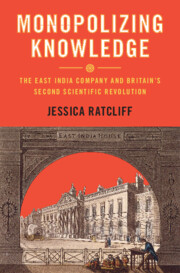
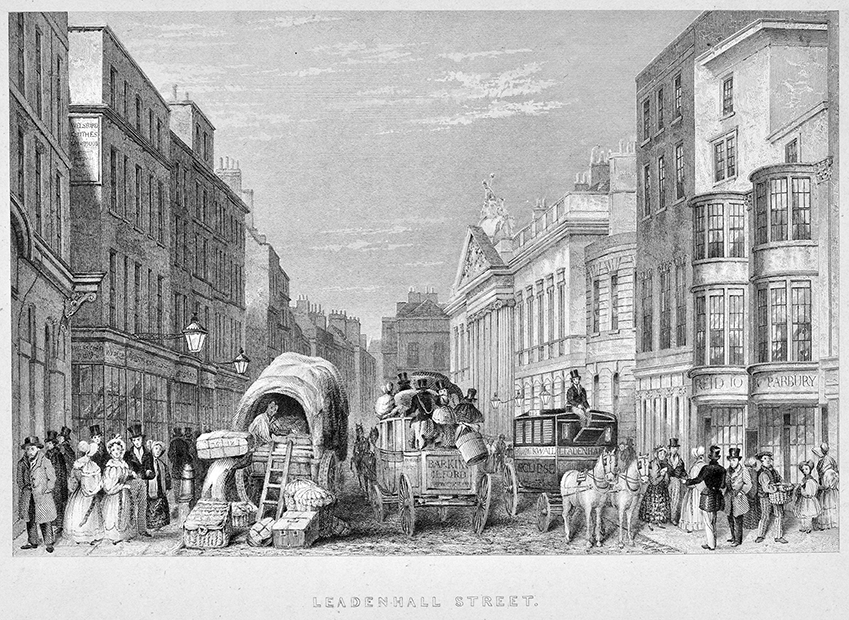
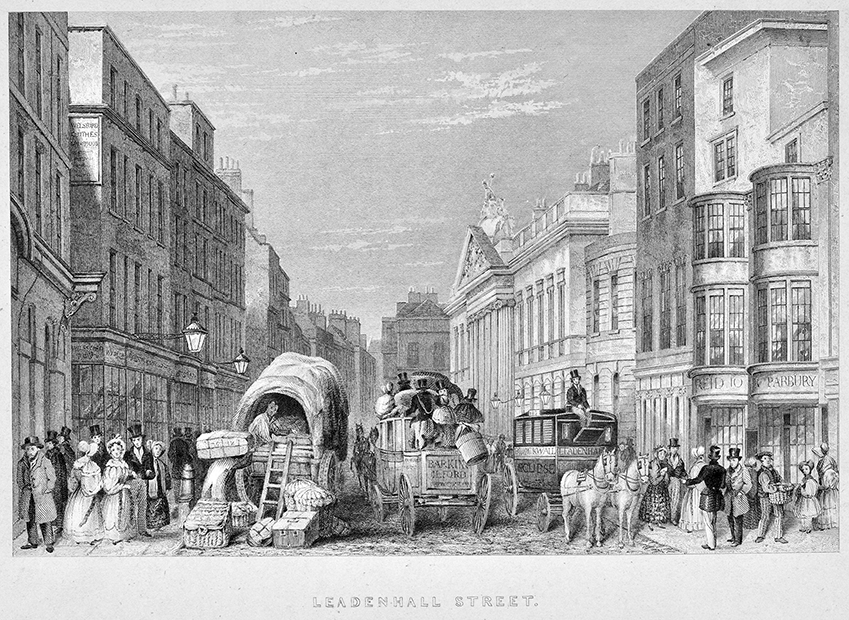
Leadenhall Street looking west toward India House, with the booksellers Parbury and Allen in the foreground.
Mill’s preface infamously makes the case for the superior power of the home-country imperial archive, of not only the possibility of knowing at a distance but also the likely superiority of knowledge generated out of imperial centers. Mill’s preface to the History of British India is a remarkable construction of a new metropolitan imperial authority based on the archival record. It is one prominent example of how the growth of collections and archives about Asia in Britain would begin to transform scientific practice. To some contemporaries, Mill’s new imperial epistemology crystalized what had heretofore been a rather hazy vision of the utility of the kind of knowledge management institutions now growing at India House. And, although his epistemological critique of experience goes much farther than his contemporaries, it also came just at the start of a general trend in just that direction within government in Britain generally.Footnote 3 It is in this new perspective that some historians have seen the origins of a uniquely Victorian obsession with an imperial “total archive.”Footnote 4
This chapter and the next turn to the methods and practices of science at India House in the first three decades of the library-museum’s growth. The first section focuses on the orientalists working at India House and Haileybury, and on how the material related to Asian languages, culture and history would be put to use for both specific administrative purposes and grand philosophical arguments. The second section turns to the naturalists at India House and the Company’s colleges, and similarly explores the way Company science was engaged with both specific colonial projects and natural philosophical debates. For both orientalists and naturalists – that is, for both philosophical history and philosophical natural history – questions of classification and ordering were paramount. The unprecedented scope of information available would lead to an active search for new methods and practices. In nearly every discipline, the growing mass of information was seen as both a boon and a crisis. Orientalists, political economists and naturalists at work at India House and the colleges thus focused in similar ways on questions of systematics; that is, how to produce knowledge through the sorting, classification and comparison of information.
The increase in the quantity of knowledge resources in Britain was, in part, a consequence of the increasingly centralized organization of scientific labor across the empire. It was more and more common for naturalists and orientalists to argue that “theoretical” work was best pursued in Britain, while data collection should be the focus of the colonies. As Mill would put it: “The man best qualified for dealing with evidence is the man best qualified for writing the history of India. It will not, I presume, admit of much dispute, that the habits which are subservient to the successful exploration of evidence are more likely to be acquired in Europe, than in India.”Footnote 5 For example, for Mill, the work of making a “really useful history” (a scientific endeavor for him) now involved more than anything having the ability to process “evidence”; that is, the records and reports of “observers.”Footnote 6 The scholar located at the center of imperial administrative accumulation should therefore act as a “judge” relative to colonial officers, who are like “witnesses”:Footnote 7
He who, without having been a percipient witness in India, undertakes, in Europe, to digest the materials of Indian history, is placed, with regard to the numerous individuals who have been in India, and of whom one has seen and reported one thing, another has seen and reported another thing, in a situation very analogous to that of the Judge, in regard to the witnesses who give their evidence before him.
Mill’s claim – that observers on the ground gathering particulars are less well adapted to “philosophize” – is not so idiosyncratic as one might think; at around the same time, similar debates were emerging among the British-based naturalists and their peers in the colonies, this time the question being who was qualified to identify new species (rather than mere varieties), with the metropolitan actors claiming only they had the necessary training and materials. Such distinctions were always contested by those based outside the metropolitan centers, and they were also sometimes drawn within metropole and province in the colonies as well. But the debate over the geography of scientific production was itself spurred by the relative growth of knowledge resources in the imperial home country, and that would, in turn, go on to support a Eurocentric distribution of scientific labor in the long term.
In the final section of this chapter, I turn to the place of Company science within the growing networks of civic science in Britain. Well beyond the confines of Leadenhall Street, Company science was in this period shaping the matter at hand available for knowledge production in Britain. Out of the materials extracted from India and gathered at India House and elsewhere would be built an increasingly profitable web of what would now be called intellectual property resources, generally owned and traded by Europe-based actors. The folding of information about Asia into Britain’s provincial systems of ordering and classification would contribute to the growth of European sciences at the time, while also generating social, intellectual and financial capital for the authors. This systematic possession of Asia in Europe was the stuff out of which not only careers and intellectual property but also whole disciplines and institutions could be made.
Philosophical Histories
Well before Mill’s time, British orientalists from Jones and Wilkins onward were constructing relationship between Britain and Asia, between home and colony, that served and reflected political purposes in Britain. The publication of Wilkins’s translation of the Bhagavad Gita in 1785 had been promoted by Hastings as a way of translating Indian culture for the understanding of Britons, a way of bridging physically disparate cultures supposedly united under the empire. Thirty years later, at Calcutta College, India House and Haileybury, the study of Sanskrit was now a cornerstone of both administrative training and philosophical study. At Haileybury, it remained the case that, most fundamentally, language skills were taught as part of the basic training for the Indian civil service. Sanskrit held out special promise, since the leading Sanskrit scholars of the day – Jones, Colebrooke, Wilkins and Hamilton – agreed that dozens of vernacular languages were derived from Sanskrit. In much the same way as Latin was studied as an entry into a range of Latin-based languages, so Wilkins and others now saw Sanskrit as key to the efficient mastery of multiple other languages of India. Sanskrit was also believed to be a powerful and flexible language, especially in relation to philosophical or scientific topics; without it, “the power of expressing abstract ideas, or terms in science, would be absolutely reduced to a state of barbarism.”Footnote 8
Like Latin and Greek, Sanskrit was thought by some to impart a particularly refined mentality upon the speaker. For the comparative philologist and Haileybury professor Alexander Hamilton, even more important was what the study of Sanskrit would reveal about the mind of the Sanskrit-speaker past and present. If, as Hamilton believed, languages were mirrors of the mind, then Sanskrit opened a path for the British to (finally!) comprehend their subjects; and it also raised, for Hamilton, the larger puzzle of how such a “perfect” language (suggesting a highly advanced intellectual culture) could have developed historically under such “despotic” conditions of governance as were (widely assumed by the British to be) prevalent in ancient Asia. Studying Sanskrit, Wilkins argued, would attract, “uplift” and amuse Haileybury students, as well as fascinate the “lover of science, the antiquary, the historian, the moralist, the poet, and the man of taste.”Footnote 9 The “extraordinary” language, was, in the famous estimation of William Jones, “of a wonderful structure; more perfect than the Greek, more copious than the Latin, and more excellently refined than either.”Footnote 10
Because of its antiquity, its widespread influence and its tantalizing similarities to Latin and Greek, Sanskrit philology was believed by some to hold the key to a new understanding of the history of civilization.Footnote 11 Hamilton and other Haileybury philologists argued that Sanskrit was the means to uncovering the genealogical connections between the world’s civilizations. For example, in his review of Wilkins’s Grammar in the Edinburgh Review in 1809, Hamilton uses the Grammar to make the case for a structural “analogy,” as he called it, between Sanskrit and Latin, Persian, German and English, including in the review his own comparative wordlists to illustrate the argument.Footnote 12 Critically, this work required the construction of a history of the civilizations of the subcontinent, which in turn justified even more, and broader, antiquarian collecting. As Bernard Cohn has put it: “Each phase of European effort to unlock the secrets of the Indian past called for more and more collecting, more and more systems of classification, more and more building of repositories for the study of the past and the representation of the European history of India to Indians as well as themselves.”Footnote 13
Comparative philology was also important to the conjectural or philosophical histories of Adam Smith and later the Edinburgh professor James Ferguson (who influenced James Mill). Smith and others proposed models of different stages of society, moving stepwise from barbaric to civilized, and attempted to define metrics for different stages according to cultural markers such as the complexity of legal codes, or modes of agricultural production, or systems of governance.Footnote 14 These stage-based, or stadial, theories of history were, essentially, works of historical-political economy, and the political economists at Haileybury were tackling similar philosophical-historical questions. For Malthus, as with Ferguson and Hamilton, language was a window onto the mind, and understanding the natural philosophy of the mind was essential to any theory of political economy.Footnote 15 The first edition of his Essay on the Principles of Population began with two chapters on naturalist philosophy of mind. For Malthus, the critical question of how and whether societies can be “improved” came down to the question of how mind and body limited one another. He argued there was a natural limit on how much the mind can influence the body, and thus on how much improvement an individual and a society could make: “We can be quite sure,” he wrote, “there is a limit to the improvement, though we do not exactly know where it is.”Footnote 16 Referring to this edition, the natural philosopher and collector Alfred Russel Wallace called Malthus’s Essay “the first work of philosophical biology” he had ever read.Footnote 17
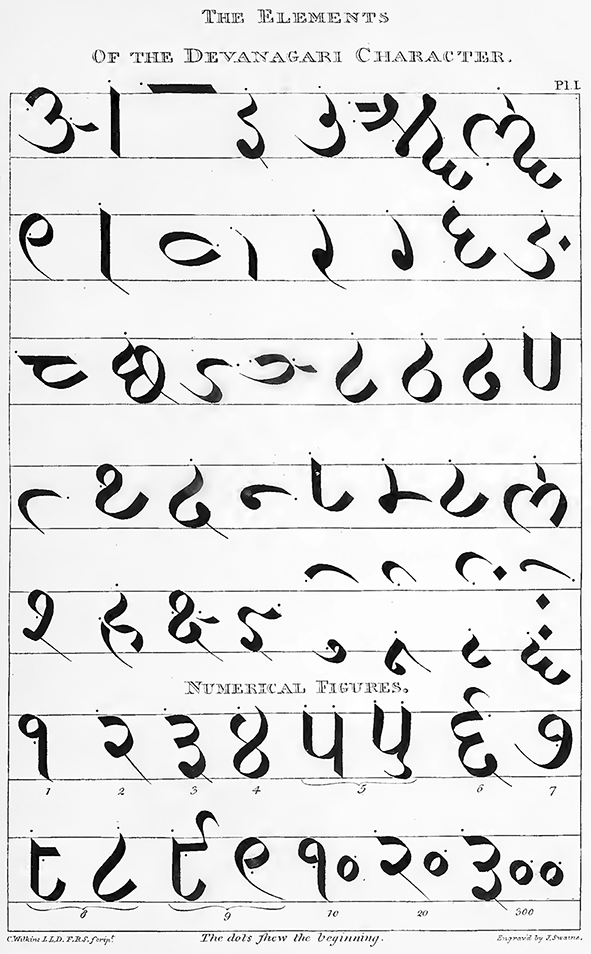
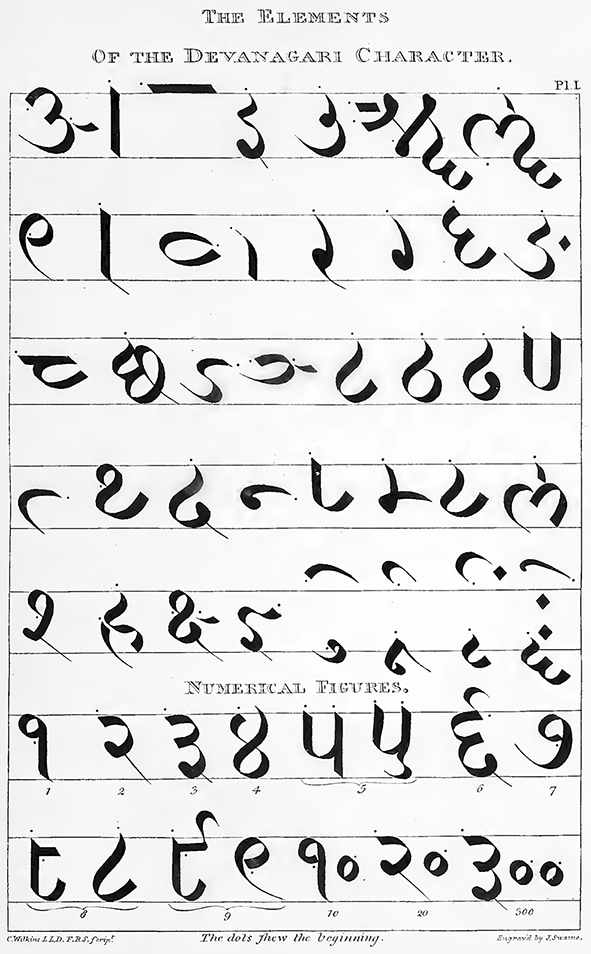
When Haileybury opened, although it may have been readily agreed that Sanskrit should be taught, the material for doing so was not available in England. There were no grammar books, no dictionaries, no workbooks. But among Wilkins’s collections were manuscript copies of at least six of the manuscript grammars that the pandits of Benares had used, some dating back to at least the twelfth century. And so he set about compiling from these and other sources a Grammar of the Sanskrita Language for the use of the college (see Figure 5.2).Footnote 18 To print it, however (and to teach the students how to write Sanskrit), Devanagari typeface was needed. Wilkins designed, cut and cast the typeface himself Wilkins’s Grammar was published in 1808 and immediately put to use in the Company colleges (giving Wilkins a nice side-stream of income).Footnote 19 Wilkins also worked with the printer J. & H. Cox to bring printing in various foreign typefaces to London. At several points in 1813, Cox would make use of the Company’s collections of type, borrowing from the library “casts of Sanskrita Types” and “five Devanagari Copper plates and One Persian Plate” (March 17).Footnote 20 Wilkins also worked with Cox to produce textbooks for Haileybury and Addiscombe. Other professors were also busy publishing for the growing print market. In 1813, Cox printed for the Company 100 copies of the Addiscombe professor John Shakespear’s Hindustani Grammar. Hamilton published the Hitopadeśa (1810), the first edition of a Sanskrit text to be published outside India, as well as a Grammatical Analysis of the Sanskrita Hitopadeśa (1810–11) and Terms of Sanskrit Grammar (1814).Footnote 21 A few years later Professor Charles Stewart published a descriptive catalog of the library of Tipu Sultan, as well as translations of some memoirs of Hyder Ali and Tipu Sultan.Footnote 22 Professor Dealtry published a mathematics textbook, The Principles of Fluxions (1810).Footnote 23 Professor Bridge published two volumes of Mathematical Lectures (1810 and 1811), as well as textbooks on mechanics, algebra and trigonometry.Footnote 24 Malthus was publishing articles on various political economic issues (the problems in Ireland, currency, principles of commerce, and currency and bullion) in the Edinburgh Review.Footnote 25 And as books flowed out from Haileybury professors, textbooks and other publications flowed in from the Company’s library and its warehouses, where newly printed books for the library and colleges also arrived by the cartload from Bengal and Madras.
Wilkins’s table of the elements of the Devanagari characters and numerals. From Wilkins, Charles. A Grammar of the Sanskrîta Language. London: Printed for the author by W. Bulmer, 1808.
The world of Company politics was never far removed from the teaching and publishing of the Company’s professors and curators. Malthus, through correspondence with former pupils such as Brian Houghton Hodgson, also sought to collect data from India and other regions with which to test his theory that civilizational development was dependent upon achieving agricultural surplus.Footnote 26 The Histories, Travels and Journeys of the surveyors, collectors and administrators were usually written or commissioned with broad policy aims in mind. The administrator, explorer and future secretary of the Admiralty John Barrow produced what Ja Yun Choi has argued is a distinctly “philosophical” account of China in his Travels in China (1804), which declares in the subtitle that the book attempts “to appreciate the rank that this extraordinary empire may be considered to hold in the scale of civilized nations.”Footnote 27 Raffles’s History of Java (1817) was undoubtedly intended to repair Raffles’s somewhat battered reputation but it was also an impassioned argument in favor of maintaining British colonial interests in the region, a view that ran against those of many in both Parliament and India House. To make his argument, Raffles mobilized the information gathered over the past five years to paint a picture of a rich, fertile, productive, peaceful, pliant and strategically significant region.Footnote 28 Raffles’s History of Java reads like a policy brief with its strong economic optimism. Even with Raffles’s glowing optimism about the future value of having in Singapore a foothold in the region, the Company only very reluctantly (and after six years of legal wrangling with the Dutch) defended and ratified Raffles’s acquisition of Singapore.
Buchanan’s Journey from Madras was also written with a particular policy aim to hand. Buchanan’s survey was the governor-general’s chance to convince London that the war had been worth it, that these were possessions that would serve the Company’s interests and aims.Footnote 29 But the argument for the value of this acquisition to the Company is cast in a very different light than that of Raffles’s depiction of Java as a frontier of endless resources. David Arnold notes that Buchanan’s instructions contain many references to the opportunities for “improvement”; and that Buchanan is asked to report in particular on the opportunities for improvement.Footnote 30 Thus, for example, with regard to the inhabitants, Buchanan’s instructions were to note in particular the condition and treatment – the “protection, security, and comfort” of “the lower orders of the people.” Under “manufactures and manufacturers” he is asked to pay attention to “how far the introduction of any of the manufactures of Mysore into any other of the Company’s possessions might be productive of advantage, and respectively whether Mysore might derive advantage from the importation of the growth, produce or manufacture of Bengal.”Footnote 31 Or, under “Farms,” he is asked to comment on “how far the cultivation of the country may be improved.”Footnote 32 He is even asked to inspect the cattle to consider possibilities for “the improvement of the breed.”Footnote 33
Buchanan responded with a multi-layered argument for the economic benefits – the better management of the “household” economy – that would be guaranteed by British rule. The overall depiction of the region provided by Buchanan is, however, and again in contrast to Raffles’s Java, of a barren, unproductive landscape: traveling through Mysore in the dry season (but not distinguishing the two seasons), he found the landscape “sterile,” lacking “verdure,” having a “desert appearance.”Footnote 34 The farmers he described as “indolent” and “slovenly.”Footnote 35 In terms of “improvement,” he presented the land itself as having great potential, and suggested it was “perfectly fitted for the English manner of cultivation” and should be “enclosed …. And planted with hedge-rows.”Footnote 36 The great similarity between Raffles’s History and Buchanan’s Journey is that both lay primary blame for the present circumstances upon the prior political system and blame the countries’ poverty, wants, waste and neglect on the policies of the vanquished states (and Tipu’s reign is much more harshly depicted than that of the Dutch). Thus, through the surveys of the natural productions and farmlands (neglected), domestic culture (oppressed by monarchical laws), agricultural technology (backwards), commerce (repressively controlled), religions (silenced), monuments (destroyed) and so on, a case is made for a desperate need for a new domestic policy to rebuild the economy of the region.Footnote 37
Thus, when published in 1817, Mill’s History of British India was far from unique in being designed as a vehicle for particular political economic purposes. What does distinguish Mill’s History, however, is both methodological and philosophical. Methodologically, the distinction lies, again, in his claim to authority by way of the imperial archive (in conjunction with a liberal education) rather than by way of experience (often also in conjunction with a liberal education). Philosophically, Mill’s History stands out for its investment in a particular liberal utilitarian vision of the British Empire in Asia.Footnote 38 For Mill, history was a philosophical exercise, one that begins with theory and proceeds to marshal evidence in support of that theory. This results in (or, rather, begins with) a deeply negative depiction of the culture and society of “British India.” Mill’s remarkable claims about the backwardness of India, for example, draw heavily from his affinity with both the philosophy of mind and the historical traditions of the Scottish Enlightenment, in what Jennifer Pitts has called an “uneasy alliance of conjectural history and utilitarianism.”Footnote 39 Even more than the epistemological arguments in the preface, Mill’s History is now well known for the image of India that the book constructs, and for the widespread influence that image had for many years. According to Thomas Trautmann, it is “the single most important source of British Indophobia and hostility to Orientalism.”Footnote 40
Throughout the book, Mill uses his own utilitarian rules for inserting “India” into a worldwide civilizational hierarchy. He makes many comparisons between not only “Indians” and “Chinese” but also “Indians” and “Africans,” and “Indians” and “Mexicans.” All of these societies and cultures, or more accurately all of the accounts, interpretation and reflections on these societies and cultures made by European travelers, were compared and ranked by Mill according to the strictures of liberal utilitarianism, wherein liberty of a particular form was calculated to generate the greatest happiness for the greatest number. The end result is to package “India” into a case study designed to prove the utility of liberalism for Britain and the necessity of imperial despotism for India.
The mission of Mill’s “critical history” is to convince the reader that the societies of Asia are “uncivilized” or on the lowest rung of the ladder of civilization. But to do this he has to try to sweep away any argument for literary, scientific, moral, religious and artistic accomplishments – not an easy task when, for example, Sanskrit was then being studied with such reverence and enthusiasm. In chapter 10 of the notoriously bigoted “Of the Hindoos,” Mill addresses the reasons scholars such as Jones, Wilkins and Colebrooke have so much praise for Asian cultures, arguing in essence that the scholars were simply overawed by the exotic.Footnote 41 In these and other ways, Mill disparages the orientalist histories, survey reports and administrator histories. But the rest of his research for the book also inevitably draws on the very scholarship that the preface criticizes. It is heavily dependent upon the work of Company officers or connected figures, including John Bruce (cited three times); Francis Buchanan (twenty-five times); Edmund Burke (twenty-one); John Barrow (eight); Clive; Colebrooke; Elphinstone; Teignmouth; Nathaniel Halhed (ten); William Jones (thirty-three); and James Rennell and Charles Wilkins.Footnote 42 For Mill, however, to use “flawed” sources such as he has, in order to build up a factual – a “really useful” – history is not contradictory. This just means that the sources must be evaluated and compared by a capable third party, someone qualified to act as a “judge” before these textual “witnesses.”Footnote 43 Interestingly, Mill’s methodology for his science of history is strikingly similar to methods becoming popular in astronomy at the time for correcting for perceptual differences across observers – what would become known as the “personal equation” – averaged out through the method of least squares. Mill talks of “comparing the whole collection of statements with the general probabilities of the case … collected from the testimony of a great number of individuals.”
The rhetorical use of this “scientific” history is very different from that of the earlier generation of orientalists. Recall that in Hastings’s preface to Wilkins’s Bhagavad Gita, he argued that “every accumulation of knowledge … attracts and conciliates distant affections; it lessens the weight of the chain by which the natives are held in subjection; and it imprints on the hearts of our own countrymen the sense of obligation and benevolence.”Footnote 44 This is precisely the “cosmopolitanism of sentiments” that Uday Singh Mehta ascribes to Edmund Burke as representative of the proto-“conservative” political ideology. In contrast, Mill, in rejecting experience and sentiments (and thus, says Mehta, any ability to truly engage and understand the strange and unfamiliar) in favor of the primacy of his philosophy of history, is engaged in a “cosmopolitanism of reason.”Footnote 45
The directors’ decision to hire James Mill in 1819 was controversial. Not only was Mill’s History critical of Company rule but Mill was also a vocal anti-imperialist generally, arguing that the colonies were only beneficial to “the few” – that is, a small group of investors – and were financially detrimental to Britain as a whole. But Mill was also convinced that utilitarian principles of governance were the only way to alleviate poverty in British India, and on this point he had key supporters.Footnote 46 Mill would become an immensely influential figure within the Company (and he pushed for expanding the roster of utilitarian political economists in the Company; he tried, for example, to get Ricardo to join the Court of Directors).Footnote 47 His long tenure influenced the future direction of British policy in Asia and its organization in Britain. But Mill’s attempt to overturn the authority of experience, and of those with direct experience of India, was immediately debated and never uncontroversial, a reminder of the ever-present ideological hybridity within the ranks of the Company. Most famously, T. B. Macaulay attacked Mill’s claims in “Mill on Government” (1829). Here Macaulay directly addresses the question of how political knowledge is acquired and what a “science” of government would look like. Arguing against Mill’s abstract approach to the production of (politically useful) knowledge, Macaulay defends an inductive, empirical approach and argues for the utility of direct experience in acquiring politically useful knowledge.Footnote 48 It was also immediately critiqued as unjustly negative, and in later editions of the History, which the Company librarian was required to update, editorial additions would attempt to soften some of Mill’s claims.Footnote 49
Philosophical Natural Histories
1821, January 5 – Delivered to Dr Horsfield for delineation – Eight birds from Sumatra as specified on fileFootnote 50
While the orientalists and political economists worked to insert Asia into their historical orders of the world’s civilizations, the naturalists were doing something similar with respect to orders of nature. The main focus of Company naturalists at India House in the 1820s would be to bring the Company’s collection to bear on the contested question of the fundamental organization of nature, and whether or how it may be discovered. The period between 1820 and 1860 was the heyday of “philosophical natural history” in Britain.Footnote 51 Just around this time, natural history was taking on a much more geographical, or biogeographical, focus. The question of how distinct kinds emerge was increasingly answered with reasons of climate, altitude, topography and other geographical issues. Works like Alexander von Humboldt’s biogeographical treatise on the Americas (and his proposed work in the Himalayas) not only enumerated species but also mapped their distribution and speculated as to the reason for their particular geographical range.
These discourses were in constant dialogue with the civilizational theories of the conjectural historians. Groups of plants and animals were described as populations, using statistics similar to those of census taking, sometimes organized into categories like “province,” “county” or “nation.” Both Darwin and Wallace were deeply influenced by Malthus. Interactions between groups and species were often described as wars or acts of colonization, of “obtaining the possession of the earth by conquest” and a “struggle against the encroachments of other plants and animals,” as geologist and naturalist Charles Lyell put it.Footnote 52 Even more directly, the history, distribution and diversity of humankind itself was always part of the subject matter of natural history as well, and even the geographical origins of theories, philosophies and sciences were at the forefront of many of the naturalists’ minds. For example, James Smith, longtime president of the Linnaean Society, in a survey of scientific methods concluded that “in those northern ungenial climates, where the intellect of man indeed has flourished in its highest perfection, but where the productions of nature are comparatively sparingly bestowed, her laws have been most investigated and best understood.”Footnote 53 All of this, as Janet Browne has shown, was symbiotic with the Company’s war-based imperial expansion.Footnote 54
The cornerstone of classification in natural history had, since the late eighteenth century, been dominated by Carl Linnaeus’s system of binomial nomenclature. Linnaeus was widely influential in Europe and his classification system was avidly taken up in colonial collecting. Linnaeus’s “artificial” system was so called because it was not represented as capturing the essential distinctions between types in nature but instead was a useful human-made imposition of structure. It was based on distinguishing groups according to a few simple external characteristics, which themselves were chosen for ease of identification. The system of Linnaeus had, in the late eighteenth and early nineteenth centuries, been especially popular in Britain; the purchase of Linnaeus’s own collection, and the founding of the Linnaean Society in London in 1788, extended that influence.
After the end of the Napoleonic wars, however, the Linnaean system increasingly came under attack in Britain. There was a general revival of philosophical debate over the aims and methods of species classification. Part of this revival of interest in systematics was related to identity and distinction among scientific laborers: at a time when the pursuit of natural history was being taken up by more and more classes of people, including army and navy subalterns and working-class men and women, a small group sought distinction as “scientific” or “philosophical” naturalists.Footnote 55 Part of this involved drawing distinctions between naturalist in the colonies and those working at metropolitan or imperial centers. Along the same lines that James Mill had argued in the preface to his History of British India, heads of imperial collections, such as Joseph Hooker at Kew Gardens, argued that the naturalist’s “philosophical” work, such as deciding when a new species had been discovered, should be left to the scientists in Britain and other centers of science.Footnote 56
For those who were becoming unsatisfied with Linnaeus’s Systema Naturae, the limitations of that system were now becoming clear because of the great new volume of material from all parts of the world being subjected to classification. The Linnaean system was, they claimed, both too “artificial” and too restrictive. Thus began an active search for a new theoretical foundation for describing the distribution and diversity of life on earth. In the early nineteenth century, the French theorist Antoine Laurent de Jussieu’s proposed “natural” system revived debate about the validity and value of “artificial” versus “natural” systems of classification. The British botanist William Roscoe, for example, in 1815 defended the use of artificial systems on the grounds that the natural system, if indeed there was one, was currently unknown beyond “mere fragments,” and quite likely unknowable:Footnote 57
[Nature’s] vegetable productions are so numerous, their characteristics often so difficult to ascertain, they are related to each other by so many ties, that it is vain to expect that we shall ever be able clearly to define them, and accurately to seize upon the true distinctions; so as to combine the whole in the precise order in which they were primarily disposed by her hand.
Roscoe compared the rejection of Linnaeus’s widely used artificial system in favor of Jussieu’s new proposal to “those who, having a convenient and well roofed house, overturn it, in order to build one in the place of it of which they are unable to finish the roof.”Footnote 58
At India House, philosophical natural history arrived in the wake of a large collection of specimens from Java. A year after Humboldt’s last visit, and at just about the same time that Mill joined the Committee of Correspondence at India House, Thomas Horsfield arrived to take up the post of assistant curator and naturalist (see Chapter 4). Like Wilkins, much of Horsfield’s time was spent managing the library, including supervising visitors and fetching books for visiting scholars and readers. As the naturalist at India House, Horsfield was also responsible for a vast amount of correspondence, of which only some materials survive. Some are from Company naturalists in the colonies asking for assistance, such as the letters of Edward Blyth, the influential zoologist and curator of the Asiatic Society of Bengal’s museum, repeatedly complaining to Horsfield of a lack of communication from naturalists in Britain.Footnote 59 Others are to do with arranging visits to the India House collections or borrowing materials; for example, on November 23, 1820, William Buckland, the theologian and Oxford geology professor, sends a letter of thanks for a recent visit and a reference for an unnamed friend who would like to visit the entomology collections; on February 14, 1829, the geologist Charles Lyell, then in Paris, asks Horsfield to help an assistant of Baron Cuvier by allowing him access to any of the drawings of fishes at India House; on July 7, 1829, George Ord, the American naturalist and secretary of the American Philosophical Society, sends the first of a series of letters describing a trip to Paris, noting for his curator-friend such interesting facts as that the “[Parisian] men of science … are not very communicative … [but] the great collections are open to every one; and the libraries, which are extensive, may be enjoyed without either trouble or expense.”Footnote 60 On August 1, 1835, a letter from David Don, botanist, professor at King’s College and secretary of the Linnaean Society, asks Horsfield to go with him to see the collection at the Duke of Northumberland’s Syon House. On October 3, 1837, John Joseph Bennett, assistant keeper at the Banksian Herbarium at the British Museum, asks Horsfield to exchange notes in preparation for a meeting with the head keeper, Robert Brown. On March 22, 1841, J. T. Peale of Government House Calcutta forwards a “circular” he had printed and distributed, which advertises the governor-general’s interest in obtaining zoological specimens for the menagerie at Barrackpore, the Zoological Society and the East India Company’s museum, clarifying that payment will be made on receipt of the live animals (while “only mere subsistence money” will be reimbursed “if they die on the road”).Footnote 61
In between all of this, from his office adjacent to the reading rooms, Horsfield was also at work on some of the most basic questions in natural philosophy: Is there an order or pattern to the organization of life, and if so, what explains it? Horsfield initially set to work displaying, describing and classifying the birds of the Company’s museum. His primary source of reference was the Dutch aristocrat, bird collector and naturalist Coenraad Temminck.Footnote 62 In 1820, Temminck had founded the new National Museum of Natural History (the Rijksmuseum van Natuurlijke Histoire) in Leiden. (If Raffles hadn’t convinced Horsfield to leave Java with his vast collection, much of it collected before the Company’s brief takeover, before the Dutch returned, it is likely Horsfield’s collections would have ended up in that institution instead of London.) Horsfield had first read his paper on the birds of Java at the Linnaean Society in 1820. A few years later, the Society itself splintered under the pressure of the nomenclature debates. Those who tended to be more radically opposed to the Linnaean system formed the Zoological Club in 1822. Horsfield was an early member and here he developed a friendship with William Sharp Macleay.
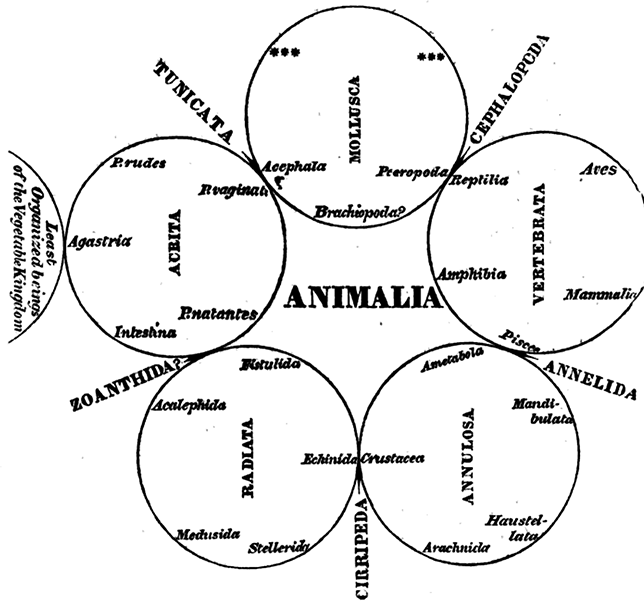
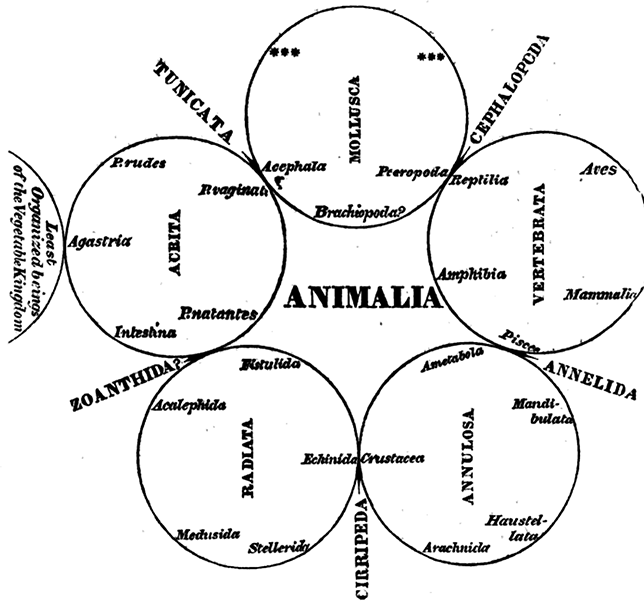
Macleay was a civil servant and entomologist, the son of Alexander Macleay, a collector of beetles and secretary of the Linnaean Society. The younger Macleay, working from his father’s beetle collection, developed what came to be known as Quinarianism, which emerged as one of the most influential new “natural” systems of classification in Britain (and only Britain) in this period. In direct rebuttal to Roscoe, William Sharp Macleay believed that the search for a natural system should be the primary aim of natural history. He accused naturalists of “indolence,” dismissing those who were content with filling out the Linnaean system as “mere practical botanists,” like “the village herbalist,” or worse: “The truth is that, like the religion of Mahomet, the Linnaean system has given rise in some parts of Europe to an unfortunate species of self-content, a barbarous state of semi-civilization, which is so far worse than absolute ignorance, that the existence of it seems to preclude every attempt at further improvement.”Footnote 63 And so he went in search of the “natural” system. He believed he found evidence of it in the scarabs of his father’s cabinet. One of Macleay’s main critiques of the Linnaean system was that its linear, branching structure was unable to capture the gradual and continuous change from one group to the next that is observed in nature. Macleay’s circular “Quinarian” system was, he claimed, able to capture this continuous spectrum of change. The basic assumption was that all natural groups form circular chains of members with what Macleay termed “affinities.” Individuals had an affinity if they shared multiple points of subtle similarity (based on comparative anatomy), and the more points of similarity, the stronger the affinity. This is in contrast to “analogy,” which also played an organizing role in the system, and which denoted a small number of major anatomical similarities. Furthermore (and controversially), all groups had five members. Thus, in a family of groups A–E, a chain of affinity would be described in which A had affinity with B, B with C, C with D, D with E, and E with A, closing the circle. Groups are nested within other groups in the same circular structure of affinities. The process of classification required detailed analysis of each specimen in order to rank the level of affinities and construct the circular chain. As a whole, as should be clear, the system was a radical departure from the system of Linnaeus.
All of this was first proposed in Macleay’s Horae Entomologicae of 1819 and 1821. Volume 1 is a classification of Scarabeus according to the new system. The convoluted system of five-part nested circular chains worked beautifully in this limited case. Volume 2 is an audacious attempt at expanding the system to cover the whole animal kingdom. Importantly, as Aaron Novick has recently made clear, this second move was a conscious effort on Macleay’s part to provoke challenges and tests to his proposed system.Footnote 64 For Macleay, this was how the discovery of the natural system must proceed. Remarkably, Macleay’s difficult challenge was taken up by a number of contemporaries. Thomas Horsfield was one of them. Henry Colebrooke also adopted the Quinarian system in the 1820s. But, as with so many other areas, there was no single systematics dogma within the Company; other Company naturalists, such as Edward Blyth and Hugh Strickland, were harsh critics of the search for a “natural” system.Footnote 65
In order to deal with the mass of specimens from Java, Horsfield had to divide up the work. He offered the opportunity to organize the insect collection to Macleay, and the plant classification to Robert Brown, future curator of the Botanical Department of the British Museum.Footnote 66 Both Macleay and Brown accepted, and Horsfield himself took up the project of classifying and describing the birds and mammals. So it was that Macleay next moved on to attempt to apply his system to the Company’s insects from Java, what he called “the most valuable mass of entomological information … a near-complete sample of forms” that had ever been collected “in the tropics.”Footnote 67
William Sharp Macleay’s sample classification of the animal kingdom, showing “how the classes into which the animal kingdom may be resolved are thus found to return into themselves.” Macleay, William Sharp. Horae Entomologicae: Or, Essays on the Annulose Animals. S. Bagster, 1819, pp. 317–318.
In justifying some of his bold rearranging, Macleay discusses at length the bloated state of Linnaeus’s classifications, such as the genus Carabus to which was now assigned 1,600 species. “We every day hear of the difficulty of natural history having increased,” says Macleay, “and doubtless it is increasing every hour; but this is owing to the number of new species which are pouring in upon us.”Footnote 68 And yet, as he continues, the great advantage of this increase to science is that it had allowed the discovery of natural affinities, “which is now within reach of every person who does not allow himself to be frightened by the multitude of names which necessarily crowd the pages of the best modern works on natural history.”Footnote 69
Horsfield’s Zoological Researches in Java (see Figures 5.4, 5.5 and 5.6) was also completed in 1825. Both works were published by the “Company’s booksellers” Kingsbury, Parbury and Allen located just down the road from India House on Leadenhall Street, but the Zoological Researches was a very different type of publication than Macleay’s Annulosa. It contained technically advanced illustrations (twenty-four of which were after drawings by William Daniell) and descriptions of seventy-six mammals and birds. As the keeper of zoology at the British Museum John Edward Gray would later recommend for all zoological cataloging, the work was issued in a series, and each description was given its own unnumbered pages, so that the collection could potentially be arranged according to different systems.Footnote 70 The plates were lithographed, only the second English work of natural history to use this expensive new technique.Footnote 71 In the introduction, Horsfield introduced a few new genera and engaged critically at various points with the Linnaean models of his day and the endless debate over whether naturalists (particularly those in the field who collect) were becoming too quick to name variations as new species. Horsfield’s style of objections to the Linnaean system can be seen in a lengthy discussion of the Javanese otter (Lutra Leptonyx):Footnote 72
The Common Otter, the Javanese Otter, and the American Otter (including both the Canadian and the Brazilian Otter) are so nearly alike in external appearance, that the specific character drawn by Linnaeus for the Mustela Lutra, applies to them all. But as research is extended, and as new subjects are added to our Collections, a greater amplitude is required, both in the specific character and in the descriptions, in order to afford means to the naturalist to discriminate those species, which from an agreement in several external characters, are liable to be confounded.
In his 1828 Descriptive Catalogue of the Lepidopterous Insects Contained in the Museum of the Honourable East-India Company Horsfield takes on the task of further extending and testing the Quinarian system.Footnote 73 The introduction makes clear that Horsfield intends this work to be an extension of Macleay’s Annulosa Javanicae and a further elaboration of the Quinarian system. In a long passage, he tries to explain the logic of the system, and the way in which each of the five “tribes” (as Macleay calls them) of a given group slowly edge into another, with the last of the group edging back into the first (see Figure 5.3):Footnote 74
I have now traced the whole order of Lepidoptera in a rapid manner. I have attempted to show that it consists of five tribes, and that in the metamorphosis of each tribe, certain prominent or typical forms are manifested, indicating the subdivisions next in rank …. The gradual passage of one tribe into another, or the connexion of these higher groups by a natural affinity, has been only superficially stated; but it will be sufficiently apparent, I trust, that in the disposition of these tribes, I have attempted to follow the most gradual succession of nature; and I shall leave the proofs of this to the progress of the work itself. There is, however, one point regarding the connexion of the two principal tribes which presents itself for immediate notice. If the position above advanced be conformable to truth, we are now enabled to show with cogency, that the whole order of Lepidoptera constitutes a series returning into itself … the circle is completed.
The centrality of classification and taxonomy to the scientific practices of European imperialism, and particularly the popularity of Linnaeus’s system, has sometimes been interpreted by scholars as an attempt to impose an eminently practical but also hierarchical and gendered order upon the colonial world; the Linnaean system was, as one scholar puts it, a “grid that could aid in the rational ordering of the natural and social world.”Footnote 75 On this reading, the draw of so many colonial naturalists to the Linnaean system was also a performance of Enlightenment reason (akin to the “cosmopolitanism of reason” Mehta attributes to Mill) that also served to justify European superiority and imperial expansion. From this perspective, it is surprising, then, to find India House in the 1820s and 1830s to be a center for the pursuit of a radically different system, one that is rooted in “affinities” and circularity (“a series returning into itself”).
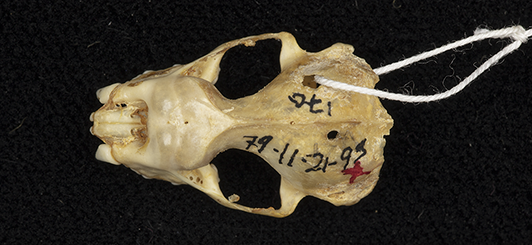
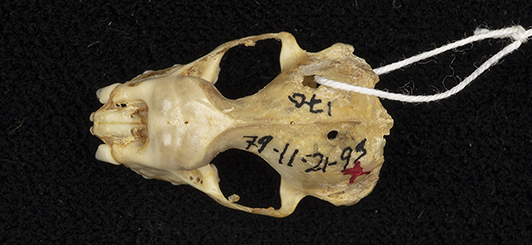
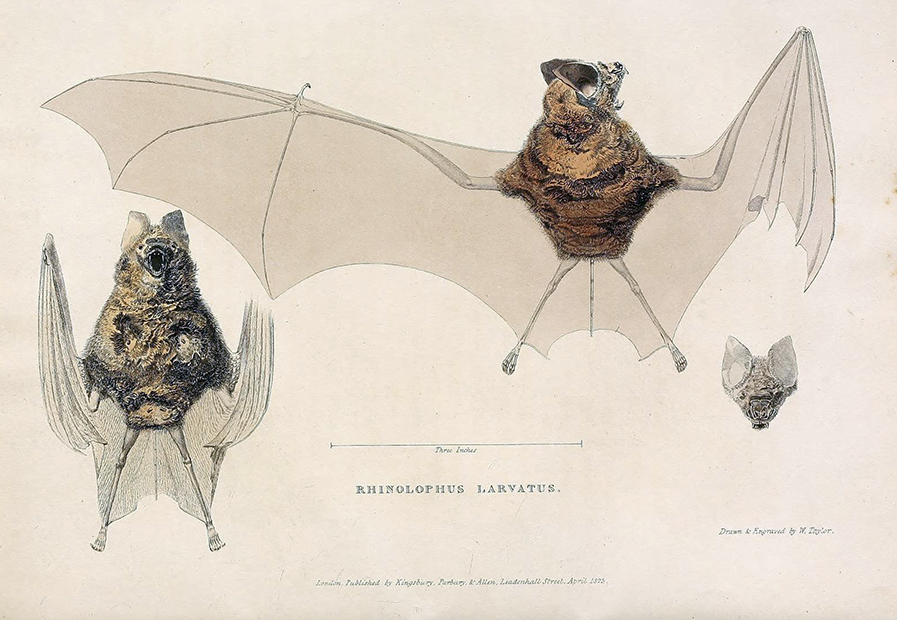
Rhinolophus Lavartus (horseshoe bat) type specimen collected by Thomas Horsfield in Java. Skull and label from the Natural History Museum, London (NHMUK ZD 1879.11.21.93).
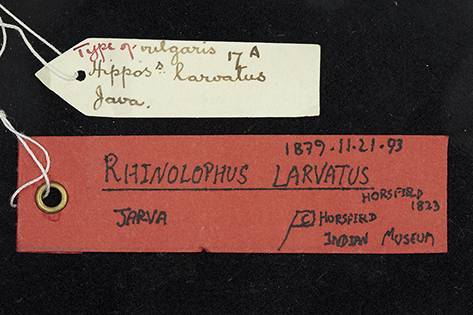
Label for Rhinolophus Lavartus (horseshoe bat) type specimen collected by Thomas Horsfield in Java. Skull and label from the Natural History Museum, London (NHMUK ZD 1879.11.21.93).
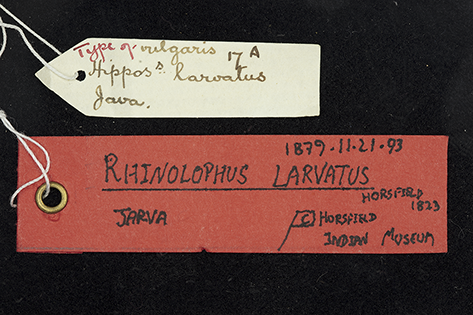
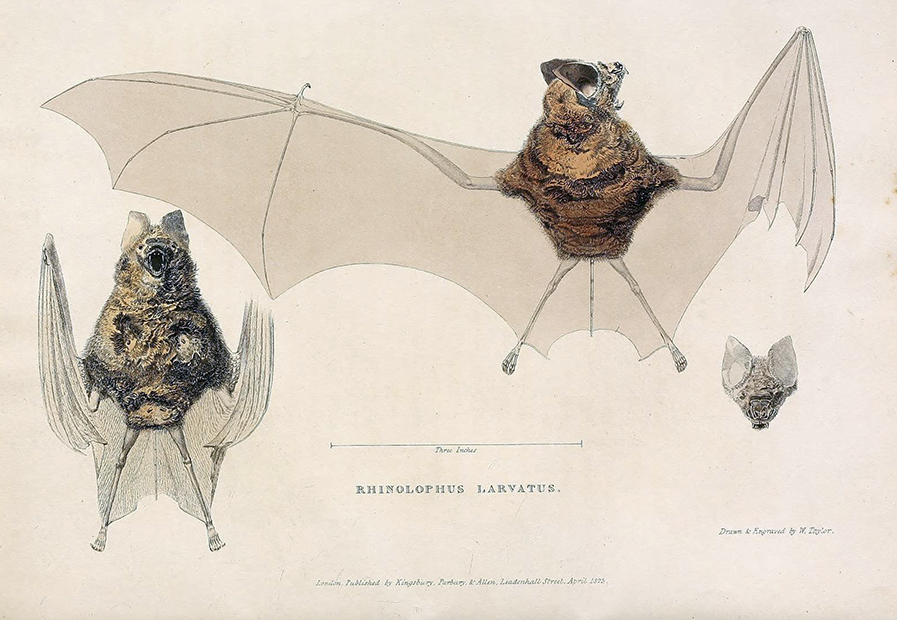
Illustration of a horseshoe bat (Rhinolophus Lavartus) from Horsfield, Thomas. Zoological Researches in Java, and the Neighbouring Islands.
But perhaps the most fundamentally “imperial” aspect of Linnaean classification is not the taxonomic structure but the application of the system itself, as an exercise of renaming, and thus taking a certain kind of intellectual ownership of the matter at hand. In this way, the Linnaeans and the Quinarians are equally rooted in, and helping to extend, the colonial political economy of science. Just as British scholars constructed both Anglicist and Orientalist versions of “India” for their stadial theories of history, so too did both Quinarians and Linnaeans voraciously order and name and take systematic possession of the natural history of Asia. Cumulatively, the result was that a robust business of knowledge production about Asia grew within, and for, Europe.Footnote 76
Monopolies and Networks
By 1830, the material impact of the collections was also felt well beyond India House. Company science was also growing in tandem with the new professions, societies and intellectual networks of Britain’s second scientific revolution. Between 1820 and 1840, the social organization of what was once called natural philosophy began to take on modern disciplinary distinctions. These changes happened in and around the growing collections of libraries and museums, as new subject-specific societies often formed around a perceived need to accumulate and manage information specific to their domain. In London alone, some of the new societies included: the Royal Horticultural Society (founded 1804, chartered 1861), the Geological Society (f. 1807, c. 1825), the Royal Astronomical Society (f. 1820, c. 1831), the Society for the Diffusion of Useful Knowledge (f. 1826), the Zoological Society (f. 1829), the Geographical Society (f. 1830, c. 1859), the British Association for the Advancement of Science (f. 1831), the Entomological Society (f. 1833), the Ethnological Society (f. 1843) and the Hakluyt Society (f. 1846). Privately organized and funded through individual membership subscription, Britain’s thriving scientific societies figure prominently in the standard picture of a uniquely British form of private, civic scientific enterprise. Here, as has often been argued, is where Britain’s unique culture of grand amateurs thrived, and space and resources were created for the dedicated practice of science in a time before university science faculties or other professional positions existed. Meanwhile, as Charles Babbage and other “declinists” worried about the status of British science often asserted, state support for science, even in the case of the Royal Society or the British Association, was minimal.Footnote 77
However, in ways large and small scientific clubs and societies benefited greatly from the free labor of state and Company resources: Company servants, members of the military, politicians and government bureaucrats were all well represented in the new scientific society movement. Taking the Zoological Society, for example, the first president (and on many accounts the “founder”) was the former lieutenant-governor of Java, Sir Stamford Raffles. As a group, the founding members listed in the Society’s charter are remarkably diverse but the aristocracy and state servants are well represented. The list includes a landed aristocrat (Nicholas Vigors), a liberal Member of Parliament and “fashionable aesthete” (Charles Baring Wall – son of the private merchant Charles Wall), a tax bureaucrat (Joseph Sabine), a secretary of state (Henry Lansdowne) and a Whig politician who was both First Lord of the Admiralty and governor-general of India for the Company (George Eden). The role of wealthy amateurs and the political elite within scientific and literary societies would become the subject of much debate and much criticism.Footnote 78 Nevertheless, the existence of state connections through these elite participants was certainly there, bringing scientific societies at least partly within the orbit of political culture. In the case of the Zoological Society, these connections to the Crown would be especially fruitful, since it was through such channels that Queen Victoria was persuaded to grant the Society a portion of Regent’s Park for their growing menagerie.Footnote 79
As with members of the Royal Army and Navy, Company scientists and scholars were active in a wide array of clubs and societies. As will be seen in the next chapter, the society most closely related to the Company was the Royal Asiatic Society (f. 1824) (later the Royal Asiatic Society of Great Britain and Ireland), modeled on the Asiatic Society of Bengal, in which Henry Thomas Colebrooke, George Staunton, Charles Wilkins and Horace Hayman Wilson (Wilkins’s successor) were all very involved.Footnote 80 To give just a few other examples, James Mill, T. R. Malthus and a group of friends founded the influential Political Economy Club in 1821. Mill was also central to the founding of the Society for the Diffusion of Useful Knowledge, and Mill and William Sykes were founding members of the Statistical Society in 1824.Footnote 81 Thomas Horsfield was also a founding member of the Zoological Society (along with Stamford Raffles) and the Entomological Society (where he was founding vice president).Footnote 82 John Forbes Royle (future India House curator; see Chapter 6) was a member of the Geological Society, the Linnaean Society, the British Association for the Advancement of Science and the Royal Society (where he was sometimes vice president). In addition to being a founding member of the Royal Asiatic Society, Royle also helped found the Philosophical Club of the Royal Society, the Royal Horticultural Society and the Royal Asiatic Society. But perhaps no Company servant was more involved in scientific society culture than Thomas Henry Colebrooke, who was, as Rosane and Ludo Rocher have shown, a “primary conduit” for connecting Company people and collections to the sciences in Britain.Footnote 83 Since his return to Britain, as the Rochers argue, Colebrooke’s main concern “had been to integrate data on India into the purview of a vast range of scientific societies.”Footnote 84 In addition to being the primary driver behind the founding of the Royal Asiatic Society, Colebrooke was also an inaugural member of the Royal Astronomical Society, where he contributed work on Hindu astronomy, and for whom he convinced the directors to house the records and reports of the Madras Observatory. He was also a founding member of the Zoological Society, helped get the literary magazine The Athenaeum off the ground and was an active member of the Geological Society, where he channeled specimens and reports from the Company’s museum to the society meetings, as well as a member of the Linnaean Society, the Medico-Botanical Society of London and the Royal Institution.Footnote 85
For present purposes, it is important to stress just how central collections were to these new societies, the majority of which formed around an existing or proposed library or museum. Much of the early work of the Zoological Society, for example, was devoted to getting their collections off the ground. One of the very first orders of the first council meetings in 1825 was to secure arrangements with the keepers of the menageries at the Tower of London and Exeter in exchange for the temporary keeping of “such animals as may be presented to the society, until their own establishment is completed.” The next several items record the status of their current small collection, including several new presents offered to the Society (two “rapacious birds” from Joshua Brooks and a deer taken by a naval captain from an island off the coast of Calcutta). The remainder of the business involved setting up the four main committees to manage, in addition to the finances, the Society’s menagerie, the museum and the library.Footnote 86 Then, when the Zoological Society received its Royal Charter in 1829, the investments already made in accumulating a collection were key to the standing and status of the Society. The charter notes both that the Society has been formed for “the introduction of new and curious subjects of the Animal Kingdom” and that the members have already “subscribed and expended considerable sums of money for that purpose.”Footnote 87 Similarly, the Geological Society’s charter, adopted in 1827, stresses that the members have already “expended considerable sums of money in the purchase and collection of Books, Maps, Specimens and other objects and in the publication of various works.”Footnote 88
The Company’s museum supplied materials to many of the new society collections. For years, it had been the practice to share so-called duplicate specimens with other collectors, as when, for example, in 1828 the directors permitted members of the Medico-Botanical Society of London to visit “the Herbarium of the Company … and [take] duplicates of such medical plants as are therein contained.”Footnote 89 By 1830, the Company was sending duplicate specimens to the British Museum as well as other institutions such as at Oxford, Cambridge, the Zoological Society and the University Museum in Geneva.Footnote 90 It was also donating manuscripts and works of literature to literary societies.Footnote 91 In general, and like other museums at the time, the Company’s museum often operated less as a final resting place for inflows from the empire and more as a sorting house or sieve.Footnote 92 Well-preserved and rare items were first offered to (or requested by – as sometimes happened when the museum put duplicates on display) the “other national collections,” as Horsfield referred to the British Museum and Kew. An agreement of formal regular exchanges of publications with the British Museum began in 1852. The many different grades of other unwanted specimens would be wound outward across Britain to Europe and abroad. While Kew, the British Museum and then, usually, Cambridge and Oxford were the first in line within a hierarchy of outflow recipients, a surprisingly broad number and type of institutions were also in line to receive the museum’s donations.
An oft-repeated justification for moving collections from the colonies to London was climatic. Horsfield and other European curators worried that the specimens and manuscripts would rot in the heat and humidity of the tropics. They also argued that institutions in the colonies were not capable of proper preservation and care. Ironically, however, the Company’s own voracious collecting would lead to the neglect and mistreatment of stored specimens. With the cellars in Leadenhall Street packed full by the 1830s, crates of documents, artworks or specimens would sometimes be left in the dockyard warehouses in New Street, vulnerable to “city dust, rats & other vermin.”Footnote 93 Kew Gardens eventually rescued a huge quantity of materials from the basement of India House.Footnote 94 The Linnaean Society, the Zoological Society and the Geological Society were also regularly fed from the Leadenhall Street stores. The Horticultural Society helped to distribute seeds that came through the museum’s doors. Smaller municipal societies also benefited, such as at Manchester, Liverpool, the Isle of Wight, Cornwall, Dublin, Boston, Philadelphia and even farther afield in Missouri. Most of the Company material organized by Joseph Hooker (see Chapter 7) was sent on to other repositories around the world. As we will see in the next chapter, half of the Siwalik Hills fossils of Hugh Falconer were sent directly to the British Museum, and into the early 1850s the Company produced plaster-casts of its share of fossils and shipped them on to Oxford and Cambridge, the St. Petersburg Academy of Science, the Military Academy at Addiscombe, and institutions in Australia, Sweden, the United States, Germany, India and beyond. Especially after 1833, war trophies from Company wars such as the Afghan and Opium wars would be donated to the new United Services Museum, an even larger military-linked museum, which had new display rooms in Whitehall near the War Office. Altogether, Ray Desmond reckons, sixty-four universities, museums, societies and individuals benefited from the Company’s disgorging.Footnote 95 The East India Company thus became a prominent participant in an economy of barter, exchange, purchase and donation of material among hundreds of repositories across the world (Table 5.1).
|
|
|
*
This chapter has explored some of the ways in which, after the establishment of the Company’s library, museum and colleges in Britain, an imperial, Eurocentric geography of knowledge production would begin to take shape. Part of this had to do with physical ownership of and access to knowledge resources. The Company’s remarkable ability to control access to Asia, and to dominate the accumulation of information about Asia in Britain, had, by the 1830s, given Company science a prominent role in shaping the material culture of science in Britain. The Company’s influence was now exercised not only through restriction and protection but also through selectively opening access and sharing resources. The Company’s formal monopoly was gone, but Company science now operated within a different social configuration of access and exclusion: the narrow social networks of club-society cultures of science.Footnote 96 This selective opening up also coincided, as the next chapter will make clear, with even more radical changes to the Company’s remaining monopoly rights and its sovereignty with respect to the Crown. In consequence, even within Britain, there was a growing debate and disagreement over the nature and scope of access to the Company’s library and museum, including accusations that the Company was maintaining an illegal knowledge monopoly.
But the establishment of British dominance within the colonial political economy of science also had to do with how the material was put to use, and in particular, at this moment, the systematic, intellectual possession of Asia through the placing of data about Asia within local theoretical and taxonomic systems. It would only be later in the nineteenth century, when modes and practices of European science began to establish a global presence, that the long-term consequences of the growing cultures of science in Britain would become clear. In the early nineteenth century, however, the philosophical and taxonomic work of Company science in Britain was – although certainly acquisitive and possessive – by and large a provincial, inward-looking world. Taxonomic debates were not aimed, in Horsfield’s time, at capturing or overtaking the ordering and naming systems of Asia and imposing a new British order of things. Rather, the battle was much more provincial, between the Linnaean Society and the Zoological Club, or between those influenced by German naturphilosophie and those wedded to distribution studies akin to that of Humboldt.Footnote 97 That provincial battle was nevertheless still over intellectual property claims (as they would be called today). And, with such a prize, the issue of priority of naming – and the general rule that the first “scientific” name given would remain the name – was equally critical.Footnote 98
It is hard to find a more direct statement of the power of naming systems as generators of valuable property than William Kirby’s address at the opening meeting of the Zoological Club, which Horsfield no doubt attended. Here, in a speech about the reasons for the new club, he also lays out in explicit terms how the philosophical issue of classification resolves into concrete material benefits:
“Nomina si pereunt, perit et cognitio rerum,” says Linne. Names are the foundation of knowledge; and unless they have “a name” as well as a “local habitation” with us, the zoological treasures that we so highly prize might almost as well have been left to perish in their native deserts or forests, as have grown moldy in our drawers or repositories. But when once an animal subject is named and described, it becomes a possession for ever, and the value of every individual specimen of it, even in a mercantile view, is enhanced.Footnote 99
The Company’s collections were now being used in policy debates, in the construction of philosophical theories and as the resources out of which the reputations and careers of Company scientists were made. And beyond India House, Company science was also coextensive with the new professions, societies and intellectual networks of Britain’s so-called second scientific revolution. Out of these fragile networks would grow, over the next century, some of the key structures for the European dominance of the business of modern science.

 Open access