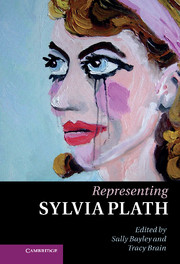
Book contents
- Frontmatter
- Contents
- Illustrations
- Notes on contributors
- Acknowledgements
- Abbreviations
- Introduction
- Part I Contexts
- Chapter 1 ‘Mailed into space’
- Chapter 2 ‘The photographic chamber of the eye’
- Chapter 3 ‘O the tangles of that old bed’: fantasies of incest and the ‘Daddy’ narrative in Ariel
- Chapter 4 Plath and torture: cultural contexts for Plath’s imagery of the Holocaust
- Part II Poetics and composition
- Part III Representation
- Bibliography
- Index
- References
Chapter 4 - Plath and torture: cultural contexts for Plath’s imagery of the Holocaust
from Part I - Contexts
Published online by Cambridge University Press: 07 September 2011

Book contents
- Frontmatter
- Contents
- Illustrations
- Notes on contributors
- Acknowledgements
- Abbreviations
- Introduction
- Part I Contexts
- Chapter 1 ‘Mailed into space’
- Chapter 2 ‘The photographic chamber of the eye’
- Chapter 3 ‘O the tangles of that old bed’: fantasies of incest and the ‘Daddy’ narrative in Ariel
- Chapter 4 Plath and torture: cultural contexts for Plath’s imagery of the Holocaust
- Part II Poetics and composition
- Part III Representation
- Bibliography
- Index
- References
Summary
Sylvia Plath’s torture texts are the eye of the needle though which pass various chronological and tropological threads: World War II and the ‘war on terror’, political trauma and familial abuse. In order to expose the presence of those threads in some of Plath’s most intense poems, I begin this essay in the post-9/11 era and move backwards to World War II, situating Plath’s Cold War texts, especially ‘The Jailer’ and ‘Lady Lazarus’, between the two. My examination suggests that Plath’s poems echo and swerve from the World War II torture texts that inspired them, set guidelines for interpreting the renewed torture discourse of the twenty-first century and crucially connect the representation of torture to that of domesticity.
The attacks of 9/11 precipitated in the United States an era of torture. The zeitgeist propelled a new ruthlessness. It was not so much that Christianity was endangered as that our masculinity was on trial – female masculinity as well as male, as we see in the case of Lynndie England and other women soldiers convicted of abuse at Abu Ghraib. We did not want to be ‘pansies’ or sitting ducks. We fought aggression with torture, or perhaps we decided that the shock of 9/11 permitted us to explore for ourselves what Dick Cheney famously called ‘the dark side’.
Information
- Type
- Chapter
- Information
- Representing Sylvia Plath , pp. 67 - 88Publisher: Cambridge University PressPrint publication year: 2011
References
2007
2007
2007
2008
2007
Accessibility standard: Unknown
Why this information is here
This section outlines the accessibility features of this content - including support for screen readers, full keyboard navigation and high-contrast display options. This may not be relevant for you.Accessibility Information
Accessibility compliance for the PDF of this book is currently unknown
and may be updated in the future.
- 1
- Cited by