Preface
Published online by Cambridge University Press: 08 June 2018

Summary
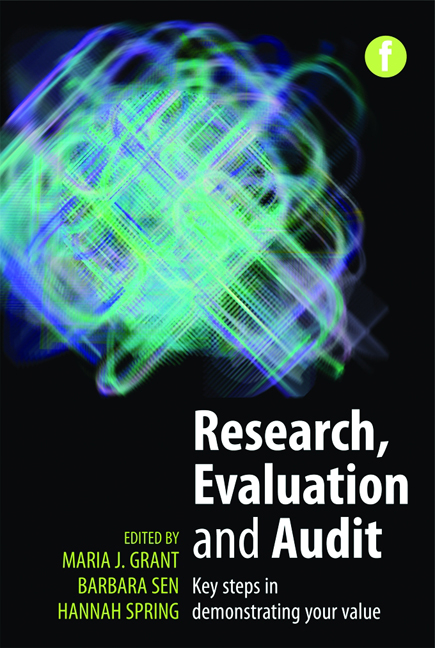
This handbook has been written specifically to meet the needs of library and information science (LIS) practitioners interested in doing research to inform their own practice and the wider library and information evidence base. Whether you are a complete novice or have limited experience of undertaking evaluations, audits or ‘research’, this handbook is about you and, rather than supporting the research activities of others, it seeks to support your development and explains how evidence based library and information practice is relevant to you. It is based on the ten steps of the HEALER research toolkit and is divided into three sections, guiding those new to research through the key phases of a planning, doing and disseminating research.
In Part 1 the handbook introduces the concept of research and provides strategies for novice researchers to build their confidence as they seek to define their research question, write their research plan and consider the ethical implications of their research.
In Part 2 you get down to the nitty gritty of research, covering familiar topics such as reviewing literature as well as being introduced to the range of qualitative and quantitative methods available. It provides a pain free overview to data analysis techniques and explores the range of easy touse tools available to assist you along the way.
In Part 3 you consider how best to maximize the impact of your research in terms of writing the project up for internal and external audiences, implementing your findings into practice and the potential for the wider dissemination of your work.
Each chapter is structured to begin with a comprehensive introduction to a discrete topic area complemented with case studies drawn from a broad range of LIS contexts to illustrate the issues raised and provide lessons transferable to your own context. There are also opportunities to reflect on what you have learnt, with the intention of enabling you to apply your learning practically within your own setting.
The authors are LIS practitioners and researchers from a diverse range of sectors and geographical locations, including business, finance, national information services, public libraries, research bodies, sixthform colleges and universities from areas including Australia, the UK and the USA.
Information
- Type
- Chapter
- Information
- Research, Evaluation and AuditKey steps in demonstrating your value, pp. xvii - xviiiPublisher: FacetPrint publication year: 2013
Accessibility standard: Unknown
Why this information is here
This section outlines the accessibility features of this content - including support for screen readers, full keyboard navigation and high-contrast display options. This may not be relevant for you.Accessibility Information
Accessibility compliance for the PDF of this chapter is currently unknown
and may be updated in the future.