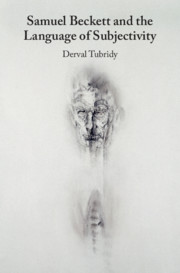
Samuel Beckett and the Language of Subjectivity is the first sustained exploration of aporia as a vital, subversive, and productive figure within Beckett's writing as it moves between prose and theatre. Informed by key developments in analytic and continental philosophies of language, Tubridy's fluent analysis demonstrates how Beckett's translations - between languages, genres, bodies, and genders - offer a way out of the impasse outlined in his early aesthetics. The primary modes of the self's extension into the world are linguistic (speaking, listening) and material (engaging with bodies, spaces and objects). Yet what we mean by language has changed in the twenty-first century. Beckett's concern with words must be read through the information economy in which contemporary identities are forged. Derval Tubridy provides the groundwork for new insights on Beckett in terms of the posthuman: the materialist, vitalist and relational subject cathected within differential mechanisms of power.
‘… the book injects new energy into well-rehearsed debates, intervening in conversations on the primacy of gesture and rhythm in Beckett, on the correspondences between his experiments in drama and narrative, and on the irreducible distance between bodily existence and self-relation.’
Ruben Borg Source: Journal of Modern Literature
Loading metrics...
* Views captured on Cambridge Core between #date#. This data will be updated every 24 hours.
Usage data cannot currently be displayed.
This section outlines the accessibility features of this content - including support for screen readers, full keyboard navigation and high-contrast display options. This may not be relevant for you.
Accessibility compliance for the HTML of this book is currently unknown and may be updated in the future.

