This chapter is part of a book that is no longer available to purchase from Cambridge Core
9 - Organization and Complementary Policy Measures
Summary
The best proposals can turn into a bureaucratic nightmare, or fail to serve their intended aims, if their implementation is inadequate. The challenge is made harder by the fact that organizational issues are no fun. Internet users and creative people (two very much overlapping categories) are not particularly keen on creating organizations, specially not when they have to deal with the large-scale management of money. They often create ad hoc organizations that handle the complex logistics of a project, or art and advocacy collectives. They are often entrepreneurs, engineers of these lightweight virtual corporations which have recently received some legal recognition in a Vermont law (Bollier 2008). But sitting on steering committees and management boards is not the activity of choice for most of them, and they ignore or outsource (when they can afford it) most of the interface with collective management organizations, except to complain about the misgovernance of the latter. To involve Internet users and a much wider set of producers and contributors to works in the management of the Creative Contribution, we will have to use innovative means.
A non-fiction writer and analyst must also show some caution here. Organizations are not created, or even designed, by writing books. The organization of the Creative Contribution will differ from country to country. Moreover, putting it in place must be the first step in a participatory process, not the execution of a set plan. To cope with these challenges, we limit this chapter to the description of the key components that will have to be present in any organization for the Creative Contribution or a similar system. We then outline how the governance of a particularly difficult decision (the split of rewards to different media) could be handled. And, finally we stress the need for a number of complementary policy measures that would maximize the benefits of the Creative Contribution.
Principle and essential components
Let us leave aside legal aspects such as the recognition of the right of non-market sharing of digital works between individuals and the reaffirmation that providing means of doing so is also legal. The system of reward and support to creation embodied in the Creative Contribution is not based on copyright. It is an autonomous recognition of the social rights of creators and users in the information technology and Internet era.
Information
- Type
- Chapter
- Information
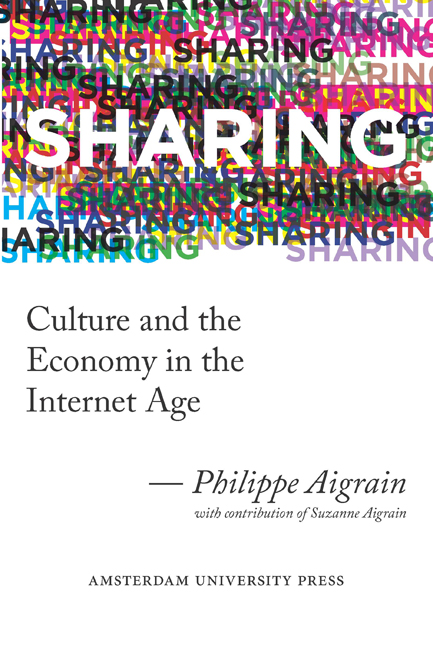
- SharingCulture and the Economy in the Internet Age, pp. 137 - 144Publisher: Amsterdam University PressPrint publication year: 2012
Accessibility standard: Unknown
Why this information is here
This section outlines the accessibility features of this content - including support for screen readers, full keyboard navigation and high-contrast display options. This may not be relevant for you.Accessibility Information
Accessibility compliance for the PDF of this book is currently unknown
and may be updated in the future.