
Book contents
- Uncommon Causes of Stroke
- Uncommon Causes of Stroke
- Copyright page
- Contents
- Contributors
- Preface
- Section 1 Infectious Conditions
- Section 2 Inflammatory Conditions
- Section 3 Hereditary and Genetic Conditions and Malformations
- Section 4 Vascular Conditions of the Eyes, Ears, and Brain
- Section 5 Disorders Involving Abnormal Coagulation
- Chapter 41 Antiphospholipid Antibody Syndrome
- Chapter 42 Disseminated Intravascular Coagulation
- Chapter 43 Bleeding Disorders
- Chapter 44 Thrombophilias
- Chapter 45 Thrombotic Thrombocytopenic Purpura
- Chapter 46 Cerebrovascular Complications of Henoch–Schönlein Purpura
- Section 6 Systemic Disorders That Also Involve the Cerebrovascular System
- Section 7 Non-Inflammatory Disorders of the Arterial Wall
- Section 8 Venous Occlusive Conditions
- Section 9 Vasospastic Conditions and Other Miscellaneous Vasculopathies
- Index
- Plate Section (PDF Only)
- References
Chapter 42 - Disseminated Intravascular Coagulation
from Section 5 - Disorders Involving Abnormal Coagulation
Published online by Cambridge University Press: 15 June 2018

Book contents
- Uncommon Causes of Stroke
- Uncommon Causes of Stroke
- Copyright page
- Contents
- Contributors
- Preface
- Section 1 Infectious Conditions
- Section 2 Inflammatory Conditions
- Section 3 Hereditary and Genetic Conditions and Malformations
- Section 4 Vascular Conditions of the Eyes, Ears, and Brain
- Section 5 Disorders Involving Abnormal Coagulation
- Chapter 41 Antiphospholipid Antibody Syndrome
- Chapter 42 Disseminated Intravascular Coagulation
- Chapter 43 Bleeding Disorders
- Chapter 44 Thrombophilias
- Chapter 45 Thrombotic Thrombocytopenic Purpura
- Chapter 46 Cerebrovascular Complications of Henoch–Schönlein Purpura
- Section 6 Systemic Disorders That Also Involve the Cerebrovascular System
- Section 7 Non-Inflammatory Disorders of the Arterial Wall
- Section 8 Venous Occlusive Conditions
- Section 9 Vasospastic Conditions and Other Miscellaneous Vasculopathies
- Index
- Plate Section (PDF Only)
- References
Summary
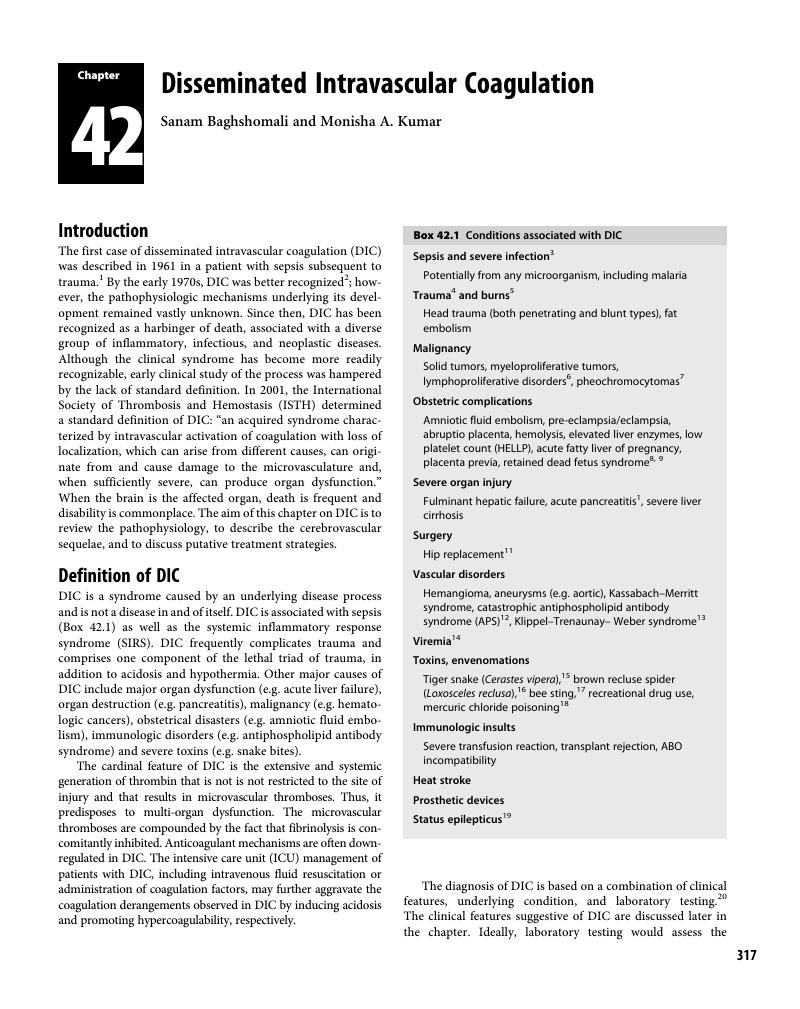
A summary is not available for this content so a preview has been provided. Please use the Get access link above for information on how to access this content.
Information
- Type
- Chapter
- Information
- Uncommon Causes of Stroke , pp. 317 - 327Publisher: Cambridge University PressPrint publication year: 2018
References
Hardaway, R. M. Disseminated intravascular coagulation syndromes. Arch. Surg. Chic. Ill. 1960 83, 842–50 (1961).Google ScholarPubMed
Goodnight, S. H. et al. Defibrination after brain-tissue destruction: A serious complication of head injury. N. Engl. J. Med. 290, 1043–7 (1974).CrossRefGoogle ScholarPubMed
Gando, S., Nanzaki, S., Sasaki, S. & Kemmotsu, O. Significant correlations between tissue factor and thrombin markers in trauma and septic patients with disseminated intravascular coagulation. Thromb. Haemost. 79, 1111–15 (1998).Google ScholarPubMed
Gando, S. Disseminated intravascular coagulation in trauma patients. Semin. Thromb. Hemost. 27, 585–92 (2001).10.1055/s-2001-18864CrossRefGoogle ScholarPubMed
García-Avello, A. et al. Degree of hypercoagulability and hyperfibrinolysis is related to organ failure and prognosis after burn trauma. Thromb. Res. 89, 59–64 (1998).CrossRefGoogle ScholarPubMed
Barbui, T. & Falanga, A. Disseminated intravascular coagulation in acute leukemia. Semin. Thromb. Hemost. 27, 593–604 (2001).CrossRefGoogle ScholarPubMed
Arai, A. et al. Cardiac malignant pheochromocytoma with bone metastases. Intern. Med. Tokyo Jpn. 37, 940–4 (1998).Google ScholarPubMed
Letsky, E. A. Disseminated intravascular coagulation. Best Pract. Res. Clin. Obstet. Gynaecol. 15, 623–44 (2001).CrossRefGoogle ScholarPubMed
Hossain, N. & Paidas, M. J. Disseminated intravascular coagulation. Semin. Perinatol. 37, 257–66 (2013).CrossRefGoogle ScholarPubMed
Breakwell, L. M., Getty, C. J., & Austin, C. Disseminated intravascular coagulation in elective primary total hip replacement. J. Arthroplasty 14, 239–42 (1999).CrossRefGoogle ScholarPubMed
Asherson, R. A. The catastrophic antiphospholipid syndrome, 1998. A review of the clinical features, possible pathogenesis and treatment. Lupus 7, S55–62 (1998).CrossRefGoogle ScholarPubMed
Katsaros, D. & Grundfest-Broniatowski, S. Successful management of visceral Klippel–Trenaunay–Weber syndrome with the antifibrinolytic agent tranexamic acid (cyclocapron): A case report. Am. Surg. 64, 302–4 (1998).Google ScholarPubMed
Persoons, M. C., Stals, F. S., van dam Mieras, M. C., & Bruggeman, C. A. Multiple organ involvement during experimental cytomegalovirus infection is associated with disseminated vascular pathology. J. Pathol. 184, 103–9 (1998).10.1002/(SICI)1096-9896(199801)184:1<103::AID-PATH964>3.0.CO;2-C3.0.CO;2-C>CrossRefGoogle ScholarPubMed
Lifshitz, M., Kapelushnik, J., Ben-Harosh, M., & Sofer, S. Disseminated intravascular coagulation after Cerastes vipera envenomation in a 3-year-old child: A case report. Toxicon Off. J. Int. Soc. Toxinology 38, 1593–8 (2000).CrossRefGoogle Scholar
Bey, T. A. et al. Loxosceles arizonica bite associated with shock. Ann. Emerg. Med. 30, 701–3 (1997).10.1016/S0196-0644(97)70092-1CrossRefGoogle ScholarPubMed
Jung, J. W. et al. A fatal case of intravascular coagulation after bee sting acupuncture. Allergy Asthma Immunol. Res. 4, 107–9 (2012).10.4168/aair.2012.4.2.107CrossRefGoogle ScholarPubMed
Dhanapriya, J. et al. Acute kidney injury and disseminated intravascular coagulation due to mercuric chloride poisoning. Indian J. Nephrol. 26, 206 (2016).10.4103/0971-4065.164230CrossRefGoogle ScholarPubMed
Felcher, A. et al. Disseminated intravascular coagulation and status epilepticus. Neurology 51, 629–31 (1998).CrossRefGoogle ScholarPubMed
Bick, R. L. Disseminated intravascular coagulation. Hematol. Oncol. Clin. North Am. 6, 1259–85 (1992).10.1016/S0889-8588(18)30274-0CrossRefGoogle ScholarPubMed
Gando, S., Levi, M., & Toh, C.-H. Disseminated intravascular coagulation. Nat. Rev. Dis. Primer 2, 16037 (2016).CrossRefGoogle ScholarPubMed
Dhainaut, J.-F., Macias, W. L., & Nelson, D. R. Would patients with more subtle signs of coagulopathy have benefited from treatment with activated protein C? Crit. Care Med. 33, 1670–1 (2005).10.1097/01.CCM.0000166889.11063.07CrossRefGoogle Scholar
Taylor, F. B. et al. Towards definition, clinical and laboratory criteria, and a scoring system for disseminated intravascular coagulation. Thromb. Haemost. 86, 1327–30 (2001).CrossRefGoogle Scholar
Favaloro, E. J. & Adcock, D. M. Standardization of the INR: How good is your laboratory’s INR and can it be improved? Semin. Thromb. Hemost. 34, 593–603 (2008).CrossRefGoogle ScholarPubMed
Gando, S. et al. A multicenter, prospective validation of disseminated intravascular coagulation diagnostic criteria for critically ill patients: Comparing current criteria. Crit. Care Med. 34, 625–31 (2006).CrossRefGoogle ScholarPubMed
Prechel, M. & Walenga, J. M. The laboratory diagnosis and clinical management of patients with heparin-induced thrombocytopenia: An update. Semin. Thromb. Hemost. 34, 86–96 (2008).10.1055/s-2008-1066027CrossRefGoogle ScholarPubMed
Selleng, K., Selleng, S., & Greinacher, A. Heparin-induced thrombocytopenia in intensive care patients. Semin. Thromb. Hemost. 34, 425–38 (2008).CrossRefGoogle ScholarPubMed
Schwartzman, R. J. & Hill, J. B. Neurologic complications of disseminated intravascular coagulation. Neurology 32, 791–7 (1982).10.1212/WNL.32.8.791CrossRefGoogle ScholarPubMed
Shebuski, R. J. & Kilgore, K. S. Role of inflammatory mediators in thrombogenesis. J. Pharmacol. Exp. Ther. 300, 729–35 (2002).CrossRefGoogle ScholarPubMed
Wada, H. et al. Hemostatic molecular markers before the onset of disseminated intravascular coagulation. Am. J. Hematol. 60, 273–8 (1999).10.1002/(SICI)1096-8652(199904)60:4<273::AID-AJH4>3.0.CO;2-N3.0.CO;2-N>CrossRefGoogle ScholarPubMed
Favaloro, E. J. Laboratory testing in disseminated intravascular coagulation. Semin. Thromb. Hemost. 36, 458–67 (2010).10.1055/s-0030-1254055CrossRefGoogle ScholarPubMed
Levi, M. & van der Poll, T. The role of natural anticoagulants in the pathogenesis and management of systemic activation of coagulation and inflammation in critically ill patients. Semin. Thromb. Hemost. 34, 459–68 (2008).10.1055/s-0028-1092876CrossRefGoogle ScholarPubMed
de Jonge, E., van der Poll, T., Kesecioglu, J. & Levi, M. Anticoagulant factor concentrates in disseminated intravascular coagulation: Rationale for use and clinical experience. Semin. Thromb. Hemost. 27, 667–74 (2001).10.1055/s-2001-18871CrossRefGoogle ScholarPubMed
Naidech, A. M. & Kumar, M. A., and the participants in the International Multidisciplinary Consensus Conference on Multimodality Monitoring. Monitoring of hematological and hemostatic parameters in neurocritical care patients. Neurocrit. Care 21, 168–76 (2014).CrossRefGoogle ScholarPubMed
Johansson, P. I., Stensballe, J., Vindeløv, N., Perner, A., & Espersen, K. Hypocoagulability, as evaluated by thromboelastography, at admission to the ICU is associated with increased 30-day mortality. Blood Coagul. Fibrinolysis 21, 168–74 (2010).CrossRefGoogle Scholar
Park, M. S. et al. Thromboelastography as a better indicator of hypercoagulable state after injury than prothrombin time or activated partial thromboplastin time. J. Trauma 67, 266–76 (2009).Google ScholarPubMed
Bakhtiari, K., Meijers, J. C. M., de Jonge, E., & Levi, M. Prospective validation of the International Society of Thrombosis and Haemostasis scoring system for disseminated intravascular coagulation. Crit. Care Med. 32, 2416–21 (2004).10.1097/01.CCM.0000147769.07699.E3CrossRefGoogle Scholar
Gando, S. et al. Evaluation of new Japanese diagnostic criteria for disseminated intravascular coagulation in critically ill patients. Clin. Appl. Thromb. Off. J. Int. Acad. Clin. Appl. Thromb. 11, 71–6 (2005).Google ScholarPubMed
Sivula, M., Tallgren, M., & Pettilä, V. Modified score for disseminated intravascular coagulation in the critically ill. Intensive Care Med. 31, 1209–14 (2005).10.1007/s00134-005-2685-2CrossRefGoogle ScholarPubMed
Cauchie, P. et al. Diagnosis and prognosis of overt disseminated intravascular coagulation in a general hospital – meaning of the ISTH score system, fibrin monomers, and lipoprotein-C-reactive protein complex formation. Am. J. Hematol. 81, 414–19 (2006).CrossRefGoogle Scholar
Umemura, Y. et al. Design and evaluation of new unified criteria for disseminated intravascular coagulation based on the Japanese Association for Acute Medicine criteria. Clin. Appl. Thromb. Off. J. Int. Acad. Clin. Appl. Thromb. 22, 153–60 (2016).Google ScholarPubMed
Angstwurm, M. W. A., Dempfle, C.-E., & Spannagl, M. New disseminated intravascular coagulation score: A useful tool to predict mortality in comparison with Acute Physiology and Chronic Health Evaluation II and Logistic Organ Dysfunction scores. Crit. Care Med. 34, 314–20; quiz 328 (2006).10.1097/01.CCM.0000196832.27501.B2CrossRefGoogle Scholar
Toh, C. H. & Downey, C. Performance and prognostic importance of a new clinical and laboratory scoring system for identifying non-overt disseminated intravascular coagulation. Blood Coagul. Fibrinolysis Int. J. Haemost. Thromb. 16, 69–74 (2005).10.1097/00001721-200501000-00011CrossRefGoogle ScholarPubMed
Cartin-Ceba, R. et al. Epidemiology of critical care syndromes, organ failures, and life-support interventions in a suburban US community. Chest 140, 1447–55 (2011).CrossRefGoogle Scholar
Gando, S. et al. Natural history of disseminated intravascular coagulation diagnosed based on the newly established diagnostic criteria for critically ill patients: Results of a multicenter, prospective survey. Crit. Care Med. 36, 145–50 (2008).10.1097/01.CCM.0000295317.97245.2DCrossRefGoogle ScholarPubMed
Wheeler, A. P. & Bernard, G. R. Treating patients with severe sepsis. N. Engl. J. Med. 340, 207–14 (1999).CrossRefGoogle ScholarPubMed
Levi, M., de Jonge, E., & van der Poll, T. Sepsis and disseminated intravascular coagulation. J. Thromb. Thrombolysis 16, 43–7 (2003).10.1023/B:THRO.0000014592.27892.11CrossRefGoogle ScholarPubMed
Lavrentieva, A. et al. Early coagulation disorders after severe burn injury: Impact on mortality. Intensive Care Med. 34, 700–6 (2008).10.1007/s00134-007-0976-5CrossRefGoogle ScholarPubMed
Barret, J. P. & Gomez, P. A. Disseminated intravascular coagulation: A rare entity in burn injury. Burns J. Int. Soc. Burn Inj. 31, 354–7 (2005).10.1016/j.burns.2004.11.006CrossRefGoogle ScholarPubMed
Singh, B. et al. Trends in the incidence and outcomes of disseminated intravascular coagulation in critically ill patients (2004–2010): A population-based study. Chest 143, 1235–42 (2013).CrossRefGoogle ScholarPubMed
Ranieri, V. M. et al. Drotrecogin alfa (activated) in adults with septic shock. N. Engl. J. Med. 366, 2055–64 (2012).10.1056/NEJMoa1202290CrossRefGoogle ScholarPubMed
Murata, A., Okamoto, K., Mayumi, T., Muramatsu, K. & Matsuda, S. The recent time trend of outcomes of disseminated intravascular coagulation in Japan: An observational study based on a national administrative database. J. Thromb. Thrombolysis 38, 364–71 (2014).CrossRefGoogle ScholarPubMed
Hoffman, M. & Monroe, D. M. A cell-based model of hemostasis. Thromb. Haemost. 85, 958–65 (2001).Google ScholarPubMed
Franco, R. F. et al. The in vivo kinetics of tissue factor messenger RNA expression during human endotoxemia: Relationship with activation of coagulation. Blood 96, 554–9 (2000).10.1182/blood.V96.2.554.014k17_554_559CrossRefGoogle ScholarPubMed
Levi, M. & van der Poll, T. Inflammation and coagulation. Crit. Care Med. 38, S26–34 (2010).10.1097/CCM.0b013e3181c98d21CrossRefGoogle ScholarPubMed
Rauch, U. et al. Transfer of tissue factor from leukocytes to platelets is mediated by CD15 and tissue factor. Blood 96, 170–5 (2000).10.1182/blood.V96.1.170CrossRefGoogle ScholarPubMed
Zimmerman, G. A., McIntyre, T. M., Prescott, S. M., & Stafforini, D. M. The platelet-activating factor signaling system and its regulators in syndromes of inflammation and thrombosis. Crit. Care Med. 30, S294–301 (2002).CrossRefGoogle Scholar
Bockmeyer, C. L. et al. Inflammation-associated ADAMTS 13 deficiency promotes formation of ultra-large von Willebrand factor. Haematologica 93, 137–40 (2008).10.3324/haematol.11677CrossRefGoogle ScholarPubMed
Osterud, B. & Bjørklid, E. The production and availability of tissue thromboplastin in cellular populations of whole blood exposed to various concentrations of endotoxin. An assay for detection of endotoxin. Scand. J. Haematol. 29, 175–84 (1982).CrossRefGoogle ScholarPubMed
Engelmann, B. & Massberg, S. Thrombosis as an intravascular effector of innate immunity. Nat. Rev. Immunol. 13, 34–45 (2013).10.1038/nri3345CrossRefGoogle Scholar
Müller, I. et al. Intravascular tissue factor initiates coagulation via circulating microvesicles and platelets. FASEB J. Off. Publ. Fed. Am. Soc. Exp. Biol. 17, 476–8 (2003).Google ScholarPubMed
Fuchs, T. A. et al. Extracellular DNA traps promote thrombosis. Proc. Natl. Acad. Sci. USA 107, 15880–5 (2010).10.1073/pnas.1005743107CrossRefGoogle ScholarPubMed
von Brühl, M.-L. et al. Monocytes, neutrophils, and platelets cooperate to initiate and propagate venous thrombosis in mice in vivo. J. Exp. Med. 209, 819–35 (2012).CrossRefGoogle ScholarPubMed
Massberg, S. et al. Reciprocal coupling of coagulation and innate immunity via neutrophil serine proteases. Nat. Med. 16, 887–96 (2010).CrossRefGoogle ScholarPubMed
Franchini, M. Pathophysiology, diagnosis and treatment of disseminated intravascular coagulation: An update. Clin. Lab. 51, 633–9 (2005).Google ScholarPubMed
Lineaweaver, W., Franzini, D., Dragonetti, D., McCarley, D., & Rumley, T. Haemophilus influenzae meningitis and Waterhouse–Friderichsen syndrome in an adult. South. Med. J. 79, 1034–6 (1986).CrossRefGoogle ScholarPubMed
Ohashi, R. et al. Acute renal failure as the presenting sign of disseminated intravascular coagulation in a patient with metastatic prostate cancer. Int. J. Nephrol. Renov. Dis. 6, 47–51 (2013).10.2147/IJNRD.S41813CrossRefGoogle Scholar
Bick, R. L. Disseminated intravascular coagulation: Pathophysiological mechanisms and manifestations. Semin. Thromb. Hemost. 24, 3–18 (1998).CrossRefGoogle ScholarPubMed
Collins, R. C., Al-Mondhiry, H., Chernik, N. L., & Posner, J. B. Neurologic manifestations of intravascular coagulation in patients with cancer. A clinicopathologic analysis of 12 cases. Neurology 25, 795–806 (1975).CrossRefGoogle Scholar
Graus, F., Rogers, L. R., & Posner, J. B. Cerebrovascular complications in patients with cancer. Medicine (Baltimore) 64, 16–35 (1985).10.1097/00005792-198501000-00002CrossRefGoogle ScholarPubMed
Wijdicks, E. F. & Scott, J. P. Stroke in the medical intensive-care unit. Mayo Clin. Proc. 73, 642–6 (1998).CrossRefGoogle ScholarPubMed
Navi, B. B. et al. Intracerebral and subarachnoid hemorrhage in patients with cancer. Neurology 74, 494–501 (2010).CrossRefGoogle ScholarPubMed
Goodnight, S. H. Bleeding and intravascular clotting in malignancy: A review. Ann. N. Y. Acad. Sci. 230, 271–88 (1974).Google ScholarPubMed
Pisoni, R., Ruggenenti, P. & Remuzzi, G. Drug-induced thrombotic microangiopathy: Incidence, prevention and management. Drug Saf. 24, 491–501 (2001).10.2165/00002018-200124070-00002CrossRefGoogle ScholarPubMed
Nguyen, T. C. & Carcillo, J. A. Bench-to-bedside review: Thrombocytopenia-associated multiple organ failure – a newly appreciated syndrome in the critically ill. Crit. Care Lond. Engl. 10, 235 (2006).10.1186/cc5064CrossRefGoogle ScholarPubMed
Johnson, R. T. & Richardson, E. P. The neurological manifestations of systemic lupus erythematosus. Medicine (Baltimore) 47, 337–69 (1968).CrossRefGoogle ScholarPubMed
Musio, F., Bohen, E. M., Yuan, C. M., & Welch, P. G. Review of thrombotic thrombocytopenic purpura in the setting of systemic lupus erythematosus. Semin. Arthritis Rheum. 28, 1–19 (1998).10.1016/S0049-0172(98)80023-1CrossRefGoogle ScholarPubMed
Yasuda, S., Bohgaki, M., Atsumi, T. & Koike, T. Pathogenesis of antiphospholipid antibodies: Impairment of fibrinolysis and monocyte activation via the p38 mitogen-activated protein kinase pathway. Immunobiology 210, 775–80 (2005).10.1016/j.imbio.2005.10.009CrossRefGoogle ScholarPubMed
Galli, M. Treatment of the antiphospholipid syndrome. Auto- Immun. Highlights 5, 1–7 (2014).10.1007/s13317-013-0056-5CrossRefGoogle ScholarPubMed
Cervera, R. & Espinosa, G. Update on the catastrophic antiphospholipid syndrome and the ‘CAPS Registry’. Semin. Thromb. Hemost. 38, 333–8 (2012).Google ScholarPubMed
van Runnard Heimel, P. J. et al. A randomised placebo-controlled trial of prolonged prednisolone administration to patients with HELLP syndrome remote from term. Eur. J. Obstet. Gynecol. Reprod. Biol. 128, 187–193 (2006).CrossRefGoogle ScholarPubMed
Pijnenborg, R., Vercruysse, L., Hanssens, M. & Brosens, I. Endovascular trophoblast and preeclampsia: A reassessment. Pregnancy Hypertens. 1, 66–71 (2011).CrossRefGoogle ScholarPubMed
Warkentin, T. Heparin-induced thrombocytopenia in critically ill patients. Semin. Thromb. Hemost. 41, 049–60 (2015).Google ScholarPubMed
Warkentin, T. E., Sheppard, J.-A. I., Moore, J. C., Cook, R. J., & Kelton, J. G. Studies of the immune response in heparin-induced thrombocytopenia. Blood 113, 4963–9 (2009).CrossRefGoogle ScholarPubMed
Hanly, E. J., Cohn, E. J., Johnson, J. L., & Peyton, B. D. DIC: Treatment frontiers. Curr. Surg. 59, 257–64 (2002).CrossRefGoogle ScholarPubMed
Levi, M., Toh, C. H., Thachil, J., & Watson, H. G. Guidelines for the diagnosis and management of disseminated intravascular coagulation. British Committee for Standards in Haematology. Br. J. Haematol. 145, 24–33 (2009).CrossRefGoogle ScholarPubMed
Wada, H. et al. Expert consensus for the treatment of disseminated intravascular coagulation in Japan. Thromb. Res. 125, 6–11 (2010).10.1016/j.thromres.2009.08.017CrossRefGoogle ScholarPubMed
Kawasugi, K. et al. Prospective evaluation of hemostatic abnormalities in overt DIC due to various underlying diseases. Thromb. Res. 128, 186–90 (2011).CrossRefGoogle ScholarPubMed
Alving, B. M., Spivak, J. L., DeLoughery, T. G. Consultative hematology: Hemostasis and transfusion issues in surgery and critical care medicine. Hematology Am. Soc. Hematol. Educ. Program 320–41, 1998.Google Scholar
Slichter, S. J. Evidence-based platelet transfusion guidelines. Hematol. Am. Soc. Hematol. Educ. Program 172–78 (2007). doi:10.1182/asheducation-2007.1.172CrossRefGoogle Scholar
Wada, H. et al. Guidance for diagnosis and treatment of DIC from harmonization of the recommendations from three guidelines. J. Thromb. Haemost. (2013). doi:10.1111/jth.12155.CrossRefGoogle Scholar
Sakuragawa, N., Hasegawa, H., Maki, M., Nakagawa, M. & Nakashima, M. Clinical evaluation of low-molecular-weight heparin (FR-860) on disseminated intravascular coagulation (DIC): A multicenter co-operative double-blind trial in comparison with heparin. Thromb. Res. 72, 475–500 (1993).CrossRefGoogle ScholarPubMed
Simpson, E. et al. Recombinant factor VIIa for the prevention and treatment of bleeding in patients without haemophilia. Cochrane Database Syst. Rev. CD005011 (2012). doi:10.1002/14651858.CD005011.pub4.CrossRefGoogle Scholar
Liu, X.-L. et al. Low-dose heparin as treatment for early disseminated intravascular coagulation during sepsis: A prospective clinical study. Exp. Ther. Med. 7, 604–8 (2014).10.3892/etm.2013.1466CrossRefGoogle ScholarPubMed
Corrigan, J. J. & Jordan, C. M. Heparin therapy in septicemia with disseminated intravascular coagulation: Effect on mortality and on correction of hemostatic defects. N. Engl. J. Med. 283, 778–82 (1970).10.1056/NEJM197010082831502CrossRefGoogle Scholar
Gando, S., Sawamura, A., & Hayakawa, M. Trauma, shock, and disseminated intravascular coagulation: Lessons from the classical literature. Ann. Surg. 254, 10–19 (2011).10.1097/SLA.0b013e31821221b1CrossRefGoogle ScholarPubMed
Vincent, J.-L. et al. A randomized, double-blind, placebo-controlled, phase 2b study to evaluate the safety and efficacy of recombinant human soluble thrombomodulin, ART-123, in patients with sepsis and suspected disseminated intravascular coagulation. Crit. Care Med. 41, 2069–79 (2013).CrossRefGoogle ScholarPubMed
Jaimes, F. et al. Unfractioned heparin for treatment of sepsis: A randomized clinical trial (the HETRASE study). Crit. Care Med. 37, 1185–96 (2009).CrossRefGoogle ScholarPubMed
Okajima, K. & Uchiba, M. The anti-inflammatory properties of antithrombin III: new therapeutic implications. Semin. Thromb. Hemost. 24, 27–32 (1998).10.1055/s-2007-995820CrossRefGoogle ScholarPubMed
Fourrier, F., Jourdain, M. & Tournoys, A. Clinical trial results with antithrombin III in sepsis. Crit. Care Med. 28, S38–43 (2000).10.1097/00003246-200009001-00009CrossRefGoogle ScholarPubMed
Saito, H. et al. Efficacy and safety of recombinant human soluble thrombomodulin (ART-123) in disseminated intravascular coagulation: Results of a phase III, randomized, double-blind clinical trial. J. Thromb. Haemost. 5, 31–41 (2007).10.1111/j.1538-7836.2006.02267.xCrossRefGoogle ScholarPubMed
Yamakawa, K. et al. Treatment effects of recombinant human soluble thrombomodulin in patients with severe sepsis: A historical control study. Crit. Care Lond. Engl. 15, R123 (2011).10.1186/cc10228CrossRefGoogle ScholarPubMed
Abraham, E. et al. Drotrecogin alfa (activated) for adults with severe sepsis and a low risk of death. N. Engl. J. Med. 353, 1332–41 (2005).CrossRefGoogle Scholar
Abraham, E. et al. Assessment of the safety of recombinant tissue factor pathway inhibitor in patients with severe sepsis: A multicenter, randomized, placebo-controlled, single-blind, dose escalation study. Crit. Care Med. 29, 2081–9 (2001).CrossRefGoogle ScholarPubMed
CRASH-2 trial collaborators et al. Effects of tranexamic acid on death, vascular occlusive events, and blood transfusion in trauma patients with significant haemorrhage (CRASH-2): A randomised, placebo-controlled trial. Lancet Lond. Engl. 376, 23–32 (2010).10.1016/S0140-6736(10)60835-5CrossRefGoogle Scholar
CRASH-2 Collaborators, Intracranial Bleeding Study. Effect of tranexamic acid in traumatic brain injury: A nested randomised, placebo controlled trial (CRASH-2 Intracranial Bleeding Study). BMJ 343, d3795 (2011).10.1136/bmj.d3795CrossRefGoogle Scholar
Accessibility standard: Unknown
Why this information is here
This section outlines the accessibility features of this content - including support for screen readers, full keyboard navigation and high-contrast display options. This may not be relevant for you.Accessibility Information
Accessibility compliance for the PDF of this book is currently unknown
and may be updated in the future.
- 1
- Cited by