


Beyond a Contested Concept
Is genocide a useful social science concept? Like other core concepts, genocide is contested in the classic way that W. B. Gallie (Reference Gallie1955) described: a normatively charged concept that is multidimensional. Many contested concepts signal a positive valence. To be a democracy is a good thing. To be a work of art is, generally, admirable. “Genocide,” of course, flies in the other direction. Assigning the term to a case communicates something quite terrible. To invoke genocide is to denigrate, to equate with evil. Many activists, scholars, and politicians invoke the term with that imperative in mind. To be sure, sometimes the concept is employed for a normatively more desirable end. Nationalists sometimes claim their people suffered genocide to boost their case for a nation-state; that is, they seek to gain recognition and establish group boundaries based on an enormous harm having been committed against them. With both the negative and the positive valence, and this is the point, the normative stakes of the concept are immense, and that is one reason for contestation. Genocide is not a value-neutral term; it is an exemplar of a contested concept (Straus Reference Straus2001).
The importance of the normative dimensions of concepts is showcased in multiple excellent analyses of concepts and measurement (Collier, Hidalgo, and Maciuceanu Reference Collier, Daniel Hidalgo and Olivia Maciuceanu2006; Goertz Reference Goertz2020).Footnote 1 Many scholars live with and manage both normative and multidimensional qualities in their concepts. Democracy is a contested concept, as is the state. Yet scholars find ways to work productively with these and many other core concepts in the social sciences. The same could be true for genocide. Scholars could agree to disagree. They could specify their usage, identify the characteristics, recognize the normative aspects, and apply their chosen definition to cases. In other words, were the conceptual challenges limited to these dimensions, “genocide” would have an easier life in the social sciences than it currently does.
But genocide has an additional barrier – two really – which limit its utility in the social sciences. The issue is the intersection with the law and how an international legal standard shapes the concept used in nonlegal domains of research. This specificity – of potential limits legal constructs place on nonlegal research – has received less attention in the scholarship on conceptualization and measurement, and hence that specificity is the focus of this chapter. My argument, in short, is that (1) academic scholarship on genocide generally defers to a legal standard and (2) the legal definition, while arguably appropriate for legal and political applications, is inherently problematic for the core social scientific enterprise of using concepts to distinguish between different types of empirical phenomena.
The issue at stake pertains to, but goes beyond, the question of using concepts across multiple communities. Activists marshal concepts for different purposes than scholars do. Concepts in the popular domain often have loose meanings that resist scholars’ efforts to make their terms precise. The same is true for concepts used in legal and scholarly domains. The legal definition of a child might be different from a scholarly one. These problems are manageable. The specificity of the problem for genocide is that the legal definition dominates academic scholarship and that the legal definition is problematic for the purpose of making careful, logically consistent distinctions between patterns of action in the world.
Many scholars of genocide know this. Yet some insist on the legal definition because it remains the principal tool for prevention and accountability. Further, the legal definition is beholden to a history that many scholars want to respect, namely the history of the Holocaust. Relatedly, they do not wish to move away from the legal definition because they do not want to dilute the political progress represented in an international treaty criminalizing genocide and committing states to its prevention and punishment. In other words, scholars have in mind a normative purpose for the use of the concept: it is a practical tool for accountability and prevention, and the concept achieved rare consensus in that states agreed in 1948 on an international treaty to outlaw genocide. Understandably, scholars want to respect that political reality, and so they wish to maintain consistency in working with a legally codified concept.
Other scholars effectively throw up their hands and argue that genocide is too conceptually flawed for scholarship, and they advocate for the adoption of other terms. There are many in use, such as “mass killing,” “mass homicide,” “mass atrocity,” “crimes against humanity,” and “democide.” As with the adherence to the legal concept, this position is also understandable. If the concept of genocide is flawed for research purposes and is primarily a legal concept applied both in courts and politics, why not chart a different conceptual terrain so as to be precise and specific to the research enterprise at hand?
In this chapter, building on previous work (Straus Reference Straus2001, Reference Straus2015, Reference Straus2022), I argue that genocide is a useful social science concept because it accurately describes a specific phenomenon in the world and that alternative concepts, while good umbrella concepts or concepts that are part of genocide’s semantic field, do not capture the specificity of the empirical phenomenon that genocide describes. In short, the concept of genocide should be retained, but clearly distinguished from its legal homonym.
Background
Before the 1940s, genocide was a crime without a name, as Winston Churchill famously said (Waller Reference Waller, Anderton and Brauer2016). That is, genocide existed across centuries, but there was not yet a word to characterize the phenomenon. The change came in the 1940s from Raphael Lemkin, a Polish jurist who fled the Holocaust and meticulously documented Nazi atrocities (Irvin-Erickson Reference Irvin-Erickson2017). Lemkin combined the Greek word genos, indicating kin, nation, and descent group, and the Latin cide, indicating killing. For Lemkin, genocide was “the destruction of a nation or an ethnic group” and “a coordinated plan of different actions aiming at the destruction of the essential foundations of the life of national groups, with the aim of annihilating the groups themselves” (Lemkin Reference Lemkin1944: 79). The core meaning of genocide for Lemkin, reflected in the term’s etymology, is intentional group destruction, in particular groups that have some purported descent-based attributes (genos groups).
Lemkin believed in the power of the law to create political change. In the wake of the Holocaust, he lobbied tirelessly to include genocide in the indictments of former Nazi officials at the International Military Tribunal in Nuremberg. He also pushed the newly formed United Nations to create an international treaty that would criminalize genocide and commit states to preventing it (Power Reference Power2022; Irvin-Erickson Reference Irvin-Erickson2017). The result of the latter is the 1948 United Nations Convention on the Prevention and Punishment of the Crime of Genocide, one of the earliest human rights treaties.
From a political viewpoint, and from Lemkin’s in particular, the Convention is a remarkable achievement. For the first time, genocide was codified as an international crime; the Convention further obligates state parties to “undertake to prevent and to punish” the crime, which, while complicated – and not the subject of this chapter – is a mandate for marshaling the law to hold perpetrators accountable and a mandate for taking action to stop genocide. Today, 153 countries have ratified the Convention. It remains a core human rights treaty and a standard for mobilizing actors in international politics to act to prevent and punish genocide. The Convention has been the foundation for multiple, high-level indictments of war criminals since the 1990s, and the definition was incorporated into the 1998 Rome Statute, the international treaty that establishes the International Criminal Court (ICC), which is the preeminent international criminal tribunal today and the only permanent, standing one.
The definition of genocide embedded in that Convention subsequently became the benchmark for determining whether a pattern of violence is genocide. While many scholars recognize limitations to that definition, most default to the Convention as the consensus definition that also creates the foundation for legal and political action to halt and account for the crime. However, while there may be some good legal reasons for defining genocide the way it is in the Convention, the definition remains problematic for identifying a logically consistent pattern of action that scholars may call “genocide,” to be distinguished from other forms of violence. The definition is inherently limited for a basic, Sartorian social scientific purpose of conceptualization: to isolate characteristics that allow for classification of phenomena.
The Convention Definition and Its Problems
The wording of any international treaty is the product of political negotiations. The Genocide Convention is no exception. Between 1946 and 1948, delegates from states haggled over the precise language that would be embodied in a final legal document (Schabas Reference Schabas2000). Lemkin was part of these discussions, and while he had his own preferences, he was also a pragmatist who above all sought an international law against the crime of genocide (Irvin-Erickson Reference Irvin-Erickson2017).
While there are many dimensions to underline in this negotiation process, I point to one example to demonstrate how the outcome language was a political product. What kinds of groups should be included in the definition of genocide? If genocide is directed against groups, should it be all groups included in the definition? Should it be ethnic and religious groups? Political, associational, gender, and regional groups? Or any group with descent-based qualities, according to the perpetrator committing the violence? This is not an idle question, in that the answer directly shapes which cases the term will be applied to – and thus ultimately the universe of cases that are considered genocide or not.
There are different possible answers to the question based on scholarly analysis. But in the end the Convention definition reflects the compromises made in the drafting process. Most relevant to this discussion, the Soviet Union opposed the inclusion of political groups in the definition. The Soviet Union had a history of political persecution against dissidents, landowners, and others; it further sought to distinguish itself from fascist states. Thus, the Soviet Union fought and succeeded in limiting the targets of genocide to four identity-based categories, specifically national, ethnic, racial, and religious groups (Weiss-Wendt Reference Weiss-Wendt2017). The point is that the definition adopted reflects politics and negotiations.
According to the Convention, genocide is “the intent to destroy, in whole or in part, a national, ethnic, racial, or religious group, as such.” Further, genocide may be instantiated by the following acts against members of these four groups: (1) killing members of the group; (2) causing serious bodily or mental harm to the group; (3) deliberately inflicting on the group conditions of life calculated to bring about its physical destruction in whole or in part; (4) imposing measures intended to prevent births within the group; or (5) forcibly transferring children of the group to another group.
There are several problems with this definition. First, as noted, the legal definition restricts genocide only to four groups. One could oppose the listing of these four groups on constructivist grounds: They are artificial constructs, not real descent-based groups. Scholars have countered that what matters for genocide is how perpetrators construct groups (Chalk and Jonassohn Reference Chalk and Jonassohn1991). I seek to underline a different problem: Limiting genocide to these four groups leads to measurement error. One could have the exact same character and level of violence – a mass campaign of violence aimed at destroying the groups – in two countries, yet in one country the legal criteria for genocide would be met while in the other they would not be. In country A, the violence might be directed at a political group (e.g., Communist party supporters in Indonesia in 1965) while in country B the violence was directed against an ethnic group (e.g., Tutsis in Rwanda in 1994). Under the UN Convention, in country A the violence would not be considered genocide because political groups are not a protected category, while in country B it could be.
The same could be true for a group connected by gender, sexuality, hair color, or economic class. Under the Convention, even if there was an effort to destroy these groups, a campaign of mass violence against groups that ostensibly had a foundation in gender, sexuality, physiognomy, or economic status would not be considered genocide. If one considers genocide to be a type of violence aimed at the destruction of groups, then the Convention provides an overly restrictive standard by which to identify cases of that type of violence.
Second, the legal definition is capacious as to what counts as group destruction. The legal definition identifies genocide as the destruction of groups “in part” that may be evidenced by causing serious bodily or mental harm, imposing measures to prevent births, or forcibly transferring children. Partial destruction of a group is inherently ambiguous. How much of a group must be destroyed to count as genocide? One percent, 10 percent, more than 50 percent? There is no guidance on this question in the Convention definition. In some international jurisprudence in the past few decades, that question has been addressed, and an important standard of “substantial” destruction has been put forth. Even so, that standard is still vague. How much destruction counts as substantial destruction?
More problematically, and the issue I wish to underline here, the inclusion of physical harm, mental harm, birth prevention, and child transfer means that genocide may take place, according to the Convention, even if no physical killing takes place. According to the Convention, should a part of a group’s children be forcibly transferred or forcibly sterilized, as part of an intent to destroy a substantial part of a group, that would constitute genocide. Contrast forcible transfer of children with a mass campaign of murderous violence and forced removal, such as the Rohingya in Myanmar experienced in the 2010s or the Armenians experienced in the Ottoman Empire in 1915. These are, I would submit, sufficiently dissimilar patterns of action to warrant different terms to describe them.
In short, the legal definition of genocide is not a definition that allows scholars to make conceptually consistent distinctions among empirical cases. On the one hand, the legal concept of genocide is too narrow in that it covers only four groups, leading to arbitrary distinctions between otherwise similar cases. On the other hand, the legal concept is too capacious, including a broad range of very different acts. Under the law, a state could attempt to eliminate a million members of a political party, along with their families, but that would not be genocide because political groups are not a protected category in the law. By contrast, forcibly transferring several thousand children from one ethnic group to another as part of an effort to destroy a group’s presence and culture, with no death, could be construed as genocide.
Empirical Implications
In this chapter, I make no claim on the legal utility of the Convention definition. I see value in a broad, inclusive definition of the acts that constitute genocide as a foundation for criminal accountability, and I respect that the final language of the Convention was the consensus that could be achieved in the mid 1940s. One big challenge for the legal application of genocide is to prove the intent to destroy, or what legal scholars consider the mens rea, or mental element of genocide. High-level perpetrators are not usually transparent in their intent to destroy populations. But still the idea that “intent to destroy” is what distinguishes genocide makes sense, given the etymology and original meaning of the term. The problem that troubles me and that drives this chapter is how, when applied to patterns of violence in the world, the legal definition of genocide is not a good guide for putting like things together.
Consider some recent cases. The 2015 Truth and Reconciliation Commission of Canada, in an extensive report on the Indian Residential School program from the nineteenth and twentieth centuries, concluded that the program amounted to “cultural genocide,” which may “be deemed an act of genocide” under the Genocide Convention (TRCC 2015: 202). The cited article of the Convention concerns the forcible transfer of children from one group to another (TRCC 2015). This program entailed the mandatory education of Indigenous Persons at Canadian schools in order to destroy the connections to their culture and to identify with a Canadian, European-derived system of values; the program did not involve systematic murder of individuals on the basis of their group identity.
In recent years, China has imprisoned more than a million Turkic-speaking Chinese citizens in the Xinjiang province, mostly ethnic Uighurs. The government has imposed additional restrictions on religious expression and forcibly implanted birth control devices in detained Muslim women. Officials have allegedly engaged in torture and sexual violence against those in detention. This is a case of systematic oppression and cultural destruction, similar to the experience of First Nations people in Canada in the boarding school program. The US, first under Donald Trump and then under Joseph Biden, concluded that this is a case of genocide (US Department of State 2021). In a careful exposition, Beth van Schaack (Reference Van Schaack2021), a major legal scholar in the field who served as a top human rights official in the Biden administration, supported the rationale for the determination, focusing in particular on coerced sterilization as evidence of the constitutive act of preventing births in a protected group, even in the absence of killing.
Ukrainian President Volodomyr Zelensky has accused Russia of committing genocide in its invasion of Ukraine, starting from the first days of the war in February 2022. His government brought a case on that charge to the International Court of Justice (ICJ).Footnote 2 Many officials in multiple states, in particular leaders who back Ukraine in the war, have endorsed this claim. So have scholars. In an independent report, drawing heavily on the terms of the Convention, some thirty scholars and experts concluded there were “reasonable grounds” to conclude Russia was committing genocide in Ukraine through the denial of Ukrainian identity, among other things, and a pattern of violence that was consistent with the constitutive acts of genocide (New Lines Institute 2022). Prominent scholars, such as Timothy Snyder – a historian of the region and one of the experts contributing to the report – have consistently and publicly made similar cases, again citing the Convention. In one exposition on the subject, Snyder (Reference Snyder2022) argued that each of the five acts has occurred in the war and that each is enough to constitute genocide, including the forcible transfer of children, the prevention of their birth, and mental harm.
How many civilians have died in Ukraine is unclear as of May 2024, and while future evidence may indicate otherwise, I would say that the overall goal of violence is military victory and territorial conquest, with the punishment of civilians as a coercive measure to achieve those ends.Footnote 3 The purpose is not to destroy the group, if destruction means physical destruction. The claims of genocide represent thus another example where scholars use a legal definition to frame a case but where the pattern of violence is quite different from other cases of group-destructive violence.
Contrast these claims with the trials to prosecute the last living leaders of the Khmer Rouge in Cambodia. From 1975 to 1979, the Khmer Rouge ushered in a massive, violent transformation of society, economy, and state that resulted in 1.5 to 2 million civilian deaths. That sum amounts to some 20 percent of the Cambodian population at the time. The Extraordinary Chambers in the Courts of Cambodia, an ad-hoc hybrid court, established in the early 2000s as part of a wave of international criminal justice mechanisms, launched a series of indictments to prosecute the crimes of the Khmer Rouge. The most significant trials were of Khieu Samphan and Ieng Sary, the two highest-ranking living leaders. In the end, the prosecutors could not make the case for genocide for the hundreds of thousands of lives lost through agricultural collectivization, murder, and torture because the targets were not a separate ethnic, racial, national, or religious group. That massive campaign of violence, which was nonetheless targeted at some groups, was classified as “crimes against humanity.” In the end, prosecutors developed a secondary case, focusing a genocide charge around the specific treatment of ethnic and religious minorities in the country.
In short, while the legal concept of genocide has traction in law and in criminal cases, it does not provide a rigorous social science definition of genocide as a specific type of violence. In the legal definition, the magnitude of lethal violence does not matter. In some cases (such as the Canadian boarding school or Xinjiang examples), the number of deaths may be relatively small yet the legal definition allows the cases to be construed as genocide. By contrast, in Cambodia, despite hundreds of thousands of deaths, the case is not legally genocide. In the Cambodia case, a campaign of mass violence against a political group was not considered genocide because political groups are not protected in the Convention.
Perhaps one could argue that a minimal definition of genocide could be derived from the Convention, which could be the foundation for scholarly consensus. However, the Convention does not really provide a guidepost for that. On the one hand, as the Canadian case shows, the Convention definition may be used to describe cases of forced assimilation even in the absence of homicide. The same is largely true for Xinjiang, with the added forms of mass identity-based detention and some forced sterilization. But homicide is not a chief pattern of violence. By contrast, mass homicide, as the Cambodian case illustrates, is not genocide. In other words, it is not clear what a minimal conception of genocide would be, based on the Convention definition.
This raises the question of what the semantic field for genocide is. Is genocide a case of intergroup relations instantiated by efforts to eradicate a group’s identity through certain means? Or is genocide a case of political violence instantiated by the attempted physical destruction of certain groups? These are quite different conceptions of the underlying phenomenon. The Convention definition lends itself to both.
Again, the law itself is not the problem – or not the problem to which I am pointing. I have no beat on whether a narrow or broad concept of genocide is useful for constructing legal cases. I also think legal concepts can be useful social science guides. Consider a refugee. In international law, a refugee is someone who is forced from their home and crosses an international border. An internally displaced person (IDP) is someone who is forced from their home and remains in their country of residence. That distinction is tractable and often used in social science research (e.g., Abdelaaty Reference Abdelaaty2021). A scholar may be interested in forced migration, of which refugees and IDPs represent two types. There is internal consistency to these concepts, which in turn are measurable.
But in other domains, social scientists take their distance from legal concepts. While there is no international terrorism convention, United Nations documents and resolutions have codified a concept of terrorism. There are also state definitions of terrorism, such as the US State Department’s definition. Yet most scholars of terrorism recognize these as flawed, politicized definitions of the underlying concept, and they seek to establish their own (e.g., Hoffman Reference Hoffman2006; Richardson Reference Richardson2006). Crimes against humanity is an analog to genocide. Defined in the Rome Statute that establishes the ICC, crimes against humanity generally refers to a broad array of acts of systematic or widespread violence against civilians, including murder, enslavement, torture, deportation, imprisonment, rape, sexual slavery, apartheid, enforced disappearances, and more. To my knowledge, there is no social science research agenda on crimes against humanity as such – the empirical space is so vast, covering so many different patterns of violence, that the concept has not had much traction in the social sciences.
For genocide studies, the problem is that the law takes precedence in social science debates. The Genocide Convention ultimately is the touchstone to which most scholars revert when they wish to settle the knotty question of what genocide is. They do so, at least in part, because of a reluctance to separate the normative imperative of “stop genocide,” “never again,” and “end impunity” from the scholarly imperative of inquiring what genocide is and what drives it. The Convention is an instrument that both encapsulates the enormous normative imperative and stakes, while also providing a definition.
An Intractable Muddle?
What to do? Some scholars have become so frustrated with the concept of genocide, as articulated in the Convention, that they advocate replacing the term. In his influential political science research, Ben Valentino (Reference Valentino2004) has argued that “mass killing,” which denotes a threshold of civilians killed over a period of time, is both more measurable and quantifiable than “genocide.” The concept of mass killing avoids the problem of which groups are the targets of genocide; it avoids the problem of having to measure “intent to destroy;” and it avoids the problem of measuring group destruction. It is a logical solution.
Dirk Moses (Reference Moses2021), the longtime editor of the Journal of Genocide Research, recently published a major broadside against the concept, arguing for replacing it with another idea. His solution is to replace genocide with the concept of “permanent security,” or the idea that at root genocide is a form of states seeking to have permanent security, which leads them to mass civilian destruction. This idea seems to confuse the definition of the concept with that which drives the outcome, but nonetheless Moses is a prominent scholar in the field and his book has generated a lot of attention.
In other words, one solution to the problems identified in this chapter is to shunt away the concept of genocide, given its legal foundation and political baggage. That position is logically defensible.
Another possible solution is to seek another concept that would have greater coherence in its application to a set of phenomena in the world. The leading candidate in the policy world is “mass atrocities,” which combines genocide, war crimes, and crimes against humanity. Again, from a legal and normative perspective, this capacious understanding of the range of possible criminal acts of heinous violence makes sense, encompassing what some call “atrocity crimes.” Yet from the point of view of using concepts to delineate discrete phenomena, mass atrocities is too broad.
To my mind, these kinds of solutions are unsatisfying. Genocide – as the systematic attempt to destroy groups – is an empirical phenomenon. There are times when governments or prevailing authorities seek to eradicate groups from the territory they control. Mass killing is not specific enough to describe this attempt to destroy groups. Nor for that matter is permanent security. And mass atrocities is too broad – there are many different acts of violence under the umbrella of mass atrocity or crimes against humanity. Both mass killing and mass atrocity are part of the semantic field to which genocide belongs, and genocide may be seen as one type of mass killing or mass atrocity. But genocide is distinct from these concepts, and genocide exists in the world. It is a real empirical phenomenon. So we should not, to my mind, give up on the concept.
A Social Scientific Conceptualization of Genocide
What, then, is a social scientific conceptualization of genocide? To return to the etymology and Lemkin’s original formulation, genocide is the systematic attempt to destroy groups, in particular groups affiliated by kinship, whether imagined or not.
I contend (Straus Reference Straus2015) that the concept of genocide may be decomposed into three key dimensions of violence, namely, that the violence is:
(1) Mass or “large-scale” violence, which can be further decomposed to mean that the violence takes place over time and across space, is systematic and organized, and targets large numbers of victims under a perpetrator’s territorial control;
(2) “Group-selective,” meaning that noncombatants are selected into violence on the basis of their ostensible group membership, no matter what kind of groups; and
(3) Oriented toward the destruction of groups, meaning that the goal, purpose, and intent of the organized violence – its logic – is to eliminate groups from areas under the perpetrator’s control.
Genocide is thus a type of “mass categorical violence,” which itself is an extreme case of violence and an extreme case of group-selective (identity-based or categorical) discrimination. The specificity of genocide lies in an effort at group destruction as one type of mass categorical violence. These distinctions require us to define violence, group-selective discrimination, and group destruction. The first two have more straightforward answers; the last is more complex.
Conventionally in political science, “violence” implies deliberate, direct harm to noncombatants, often measured as homicide or other forms of physical harm and violation, such as rape (Kalyvas Reference Kalyvas2006; Wood Reference Wood2009). So large-scale violence is direct physical harm against civilians on a massive scale.
Such violence may take two forms. First, with group-selective violence, the targets of violence are identified on the basis of their purported group membership. Genocide is thus not “indiscriminate” violence, as perpetrators distinguish among populations to identify particular targets. They discriminate. Second, the violence is also not individually selective, meaning that perpetrators do not select particular people (i.e., leaders, politicians, journalists, denouncers, spies, and so forth) to kill. In the political violence literature, stemming from Stathis Kalyvas’ foundational work, those are the two main categories of violence. Genocide is a third type of violence, indicating violence directed against groups (see also Steele Reference Steele2017).
What constitutes group destruction? This remains a key question, and the most difficult. Does a group need to be destroyed physically? How much group destruction merits the label, with the recognition that every single person is never destroyed? I think that this dimension of genocide should be inferred from the pattern of action and is conditional on there being large-scale, group-selective violence against civilians. That is, one should seek to determine a logic of violence, according to the perpetrators, as to whether they are seeking to eliminate a specific population from a territory. Are they looking to eradicate present and future populations? Is the violence coercive and communicative, meaning that it sends a message and is meant to change behavior? Coercive or communicative violence is not, to my mind, genocide, as genocide is about group destruction, not changing group behavior. These are not obvious distinctions, but they are a guide for scholars who seek to identify different patterns of violence.
Conclusion: A Conceptual Field of Homonyms
Can scholars of a phenomenon call the thing the same name as that which animates the law and policy, even if the legal name has a different meaning from the scholarly one? Absolutely. That is the nature of technical language, which is the foundation for concept formation in the social sciences and beyond.
Is it naïve to think that scholars will abandon the public, political conceptual field in order to insist on a concept that is analytically coherent? Yes. And yet such a move is needed when the law so crowds – and confuses – a social scientific conceptual space. For genocide, such a move might seem difficult because the gravity of the violence is so enormous. Scholars cannot turn their back on the normative demands of the concept, and yet if one is to treat genocide as a social science concept, scholars must at least suspend the legal and political aspects in order to insist on a specific type of violence to study.
In short, I am not advocating for a change to the legal concept of genocide but rather for the need for an adjacent social science space that departs from the legal concept. Maybe the legal and social science concepts of genocide are not quite full homonyms – they have the same origin – but they can and should have different definitions and meanings.
Postscript: War in the Middle East – an Interim Assessment
This chapter was drafted before the violent attack by the Palestinian movement Hamas of October 7, 2023, on Israel and before Israel’s brutal war waged in Gaza thereafter. Hamas fighters massacred some 1,200 Israelis, mostly civilians, and kidnapped another 250. Israel’s bombing campaign and land incursions have resulted in at least 35,000 Gazan deaths, the majority civilians. As of this writing (May 2024), famine looms in Gaza, and the end game is unclear. The war persists, hence this postscript may be considered an “interim report” on the ongoing situation. The purpose is not to offer a final judgment about whether genocide is or is not being committed. At this time, it is too early to know, in my view. Rather, the chapter offers a historical slice on how, as of May 2024, the concept of genocide has shaped the discussion of the war and how such usage relates to the arguments in this chapter.
The concept of genocide has been widely employed in public and private conversations about the ongoing violence. The most common application is to accuse Israel of committing genocide in Gaza, though some label Hamas’ goals as being inherently genocidal – in part because the organization calls for the destruction of Israel. Further, the October 7 attacks singled out Jews and massacred them, hence the attack had genocidal elements – of group-selective, systematic killing of civilians. Whether each actor is committing genocide is complex, and a full analysis is beyond the scope of this Postscript. Nonetheless, I seek to draw out a few points in light of the chapter’s analysis.
Overall, the conflict has demonstrated, once again, how powerful and problematic the concept remains. For many, who used the term in relation to Gaza, “genocide” conveyed the horrors of violence. The concept also became a litmus test to signal where one stands on the conflict. At the same time, the term became central to international legal measures to try to restrain Israel from committing further extensive violence against civilians; these legal measures in turn provoked furious responses from Israel and some of its supporters. In short, as in other ongoing violent conflicts, “genocide” has been a central site of and for contestation, which among other things demonstrates how hard a life this concept has as a social science term to designate a specific type of violence.
During the first eight months of this conflict, one can observe these competing objectives in the use of the concept. To many people, “genocide” has clearly meant something akin to “a massive, horrible atrocity” that should be condemned in the strongest possible manner. This meaning reflects the concept’s central normative dimension: genocide stands in for rendering judgment on large-scale, unacceptable violence that inflicts massive pain and destruction on human beings. A good example is a piece by a Gaza-based doctor in The Lancet, a British medical journal, which catalogs the violence and civilian suffering in Gaza – but with no effort to sustain an argument about intentional group destruction. The essay is called “Stop the Gaza Genocide Immediately” (Abu Salmiya Reference Abu Salmiya2024).
Many activists, protestors, and some politicians have adopted this framework. On college campuses across the US, and internationally, many protestors brandished signs that read “Stop the Genocide” in Gaza; for his support of Israel, US President Joseph Biden has been frequently and publicly accused of aiding and abetting genocide. Many activists have called him “Genocide Joe.” Sometimes the use – or not – of the term has served to divide critics from one another. Those who insisted on the term refused to relinquish or temper it; those who were critical of the civilian casualties but nonetheless thought genocide was inappropriate to describe the violence were dismissed as being too soft on Israel. The term itself was the pivot for disagreement. The term was also found in the language of diplomacy. In breaking ties with Israel, for example, Colombia denounced the “genocide” in Gaza, and Colombia was not alone in such language (Suárez Reference Suárez2024). In these examples, “genocide” has served as a label by which to denounce atrocity and a signal of where one stood politically on the conflict.
On the legal side, in December 2023, South Africa filed a case against Israel at the ICJ, claiming that Israel was committing genocide and hence violating the Genocide Convention. South Africa asked the ICJ to intervene to order a ceasefire, among other requested provisional measures. Many states around the world voiced support for the case, and several have intervened directly at the court on behalf of South Africa. Acting with unusual alacrity, the court issued Provisional Measures in January 2024, indicating that Israel had a duty not to commit genocide, but refused to require a ceasefire. A later ICJ decision in May 2024 ordered Israel to halt its offensive in Rafah, where more than a million Palestinians had congregated. At this stage, these rulings appear not to have constrained Israel, and the ICJ has not ruled whether genocide is occurring; rather, it has ruled that Israel has an obligation under the convention to prevent genocide, and the court’s provisional measures have been taken with that purpose in mind.
The crux of the South Africa petition to the court was that senior Israeli leaders had shown an “intent to destroy” Palestinians when blaming them collectively for the Hamas attack, referring to them as animals and promising to withhold food, water, and electricity – which were crucial as means of survival. This mens rea, or mental state indicating the intent to destroy, was matched by a number of acts specified in the convention, including killing and committing serious physical harm against Palestinians, as well as mass expulsion and denial of food, shelter, water, and medical care.Footnote 4
Israel furiously rejected the claim. Its leaders argued that their military objective is to destroy Hamas, not the Palestinian population; that Israel follows international law; that Israel has a right to defend itself; and that civilian casualties are, in part, because Hamas combatants hide where civilians are present. The genocide accusation seems to have particularly rankled. Israel’s President Izaac Herzog, for example, called South Africa’s case a “blood libel” against Israel (Times of Israel 2024). Speaking before the court some months later, Israel’s Deputy Attorney General called South Africa’s case “scandalous.”Footnote 5
These examples demonstrate again that the genocide debate is intensely charged, in normative, political, and legal ways. The discussion is not a value-neutral one about the merits of whether the pattern of violence amounts to genocide.Footnote 6 Nor should it be. But that context makes the research assessment challenging – in two ways. First, what is the register for applying the concept? Is the concept used to signal the occurrence of a horrible, massive, unacceptable atrocity? Is the concept used to satisfy the specificity of the definition in the United Nations Convention? Or is the operative question: Does the pattern of violence amount to a systematic effort to destroy a population? The answers to these questions should establish whether or not the concept of genocide should be used.
One important suggestion for navigating these issues, then, is that for a particular speaker who seeks to make a claim about whether genocide is used, the rhetorical purpose should be clear. Second, the stakes are so high that a reasoned discussion is particularly difficult. The Israel–Gaza war lays bare these challenges, yet the problem is one that consistently recurs.
Again, one solution is to say that this concept is not appropriate for use in the social sciences. The term is too normatively charged, too legally codified, too political. That conclusion would be unfortunate, in my view, because there is a distinctive form of violence out there in which states or other authorities seek to destroy groups.
In terms of judging, from a social science perspective, whether Israel’s actions amount to genocide, we do not yet have enough information to reach a firm conclusion, in my view, as of this date. The pattern of action could amount to genocide, but it also could amount to an effort to destroy Hamas, accompanied by excessive civilian casualties, including war crimes and crimes against humanity. There are likely different currents in the Israeli state, and which view will prevail – rid Gaza of Palestinians and destroy the population so they never return, or defang Hamas and control the population so another October 7 does not happen – is not yet clear. Much will depend on how the war plays out and what happens after the war. In other words, genocide is a possible outcome, but not an inevitable one. For South Africa and others who invoke the term, that may be the point: make the claim in order to ensure it does not happen – accuse Israel as a way to “prevent” genocide, which is one of the goals of the Convention. But that political and normative objective, in this case via a judicial intervention, is distinct from how a scholar might approach the subject when using the term to classify political violence.
There are no easy answers to these problems. The complications in applying the term resurface in case after case – for recent examples, in Sudan, Ethiopia, Myanmar, China, and Russia – and the same is likely to be true in the future. Some will invoke genocide to denounce atrocity; some will invoke genocide to get a court to intervene, either in an interstate context such as the ICJ or a criminal context such as the ICC; some will invoke genocide to lambast political enemies or refrain from invoking it to protect political allies; and some will invoke it to distinguish the pattern of action from indiscriminate or small-scale political violence. These tensions will not disappear.
Given how ethically charged the concept is, and given these divergent usages, reasonable people find the term unhelpful. After a recent panel where we both spoke about the conflict in the Middle East, a well-known legal scholar remarked to me that he wished the term could just be dropped, as it confuses and inflames more than it clarifies. As I have argued, I think that is an unfortunate recommendation because the term is meaningful and specific and designates a particular type of violence. Yet those who insist on using the term should be prepared, time and again, for the kinds of disagreements that, as the Gaza war demonstrates, seem to be the rule rather than the exception.
Concepts are the building blocks by which we make sense of the social world. Although they reflect the world, they also impose order on that world. Why do some words evoke endless head-scratching, efforts at definition, and debate, while others seem to be self-evident?
Conceptual disagreement is inseparable from, and perhaps necessary for, scholarship. It has been an explicit and central component of fields such as analytic philosophy in the twentieth century, but simmers in the background in other fields. A major step forward occurred in 1956, when W. B. Gallie (Reference Gallie1956) published a foundational article identifying some concepts as “essentially contested.” In the intervening decades, this article has been cited over 6,000 times, and a sizable literature has developed centered on concepts such as democracy, justice, and power that seem to resist authoritative definition (Collier, Hidalgo, and Maciuceanu Reference Collier, Daniel Hidalgo and Olivia Maciuceanu2006).Footnote 1 Contestation is what motivates writers such as David Collier and Giovanni Sartori to take concept analysis seriously.
To many observers, concept ambiguity in social science is problematic. If scholars disagree on what democracy means, it is difficult to cumulate knowledge on the subject, for concepts are the categories by which we classify phenomena and organize research. In this spirit, strategies have been proposed to generate greater clarity and consistency in the conceptual world, variously referred to as concept formation or concept reconstruction.Footnote 2 Others appear to be less concerned with conceptual shiftiness. Just as there is conflict about democracy, so there must be conflict over the word democracy. Conflicting meanings within ordinary language cannot help but reverberate in scientific language, because the latter is never entirely removed from everyday speech.Footnote 3
Regardless of perspective, most commentators find conceptual contestation interesting and important. Yet no attempt has been made to measure the degree of conceptual disagreement that exists or to compile a list of concepts identified as essentially contested. It is unclear how one might distinguish contested from uncontested concepts or test propositions about the causes of contestation. The concept of a contested concept is itself contested.
Measurement is important if scholarship on conceptual contestation is to proceed systematically. Although authors may have an intuitive sense of how contested their own terminological terrain is, they probably do not have a good sense of how “their” concepts compare and contrast with others. After all, contestation is relative, and without an overview of the terrain, it is impossible to make such judgments or to inquire into the (systematic) sources of contestation.
This chapter represents an effort to treat concepts as units of analysis in a large-N study, an approach that is increasingly common with the digital tools of natural language analysis. We begin by introducing an approach to measuring conceptual contestation (as a continuous rather than binary concept) within social science. Next, we explore four factors that may help to explain variation in conceptual contestation: value, abstraction, normativity, and discipline. The concluding section identifies a path for future research.
A Measure of Conceptual Contestation
A concept consists of a term, a definition (intension), and a set of referents (extension). Contested concepts, according to Gallie, are characterized by “endless disputes about their proper uses” (Reference Gallie1956: 169). For present purposes, contestation will be understood as a situation in which the same term is employed in different ways, creating the potential for confusion.Footnote 4
With this understanding, we turn to the problem at hand: How can the notion of conceptual contestation be made empirically tractable. How might we know when a concept’s meaning is disputed?
Population and Sample
A first step is to identify a population of concepts that is potentially subject to the dynamic of contestation. Although scope conditions are not explicit, we infer from work on contested concepts that the intended population extends to common nouns that seek to identify phenomena “out there” in the world of human attitudes and behavior. Democracy is prototypical in these discussions, but one might also include institution, clientelism,Footnote 5 corporatism,Footnote 6 or populism. Purely methodological concepts (e.g., randomization) or philosophical concepts (e.g., consequentialism), as well as proper nouns and other parts of speech (adjectives, adverbs, verbs, articles), are therefore excluded. We restrict our purview to social science, though contestation arguably extends across fields.
To identify a sample of such concepts, we canvas several recent encyclopedias of social science (Kuper Reference Kuper2004; Kurian Reference Kurian2010), retaining only those terms that satisfy the foregoing desiderata. One might easily extend this canvas to additional reference works. However, we do not believe that this would yield many additional concepts, since there is a high degree of overlap across lexicons. Nor is there any reason to anticipate that a larger sample of concepts would render different underlying patterns.
The result of our canvas is a set of 383 nouns that are widely employed across the social sciences (see Table 14.A.1 in the Online Appendix).
Identifying Contestation
We can envision several approaches to identify degrees of contestation across these concepts. One could examine stated definitions of concepts for multiple or competing meanings. Alternatively, one might compare the phenomenal realm that corresponds to rival definitions of a concept. Variation in the categorization of cases according to the same concept might indicate a low level of conceptual agreement.
A third approach is to enlist algorithms for textual analysis (Grimmer and Stewart Reference Grimmer and Stewart2013) to analyze conceptual contestation. Such analysis requires a comprehensive database of texts to analyze. Such databases (e.g., Google Books, JSTOR, Scopus, Web of Science [WS]), however, are not open source and thus can only be accessed through the bespoke search engines that each database provides. Among these data sources, WS offers several analytic advantages in terms of coverage and search fields. One can conduct finely honed queries with Boolean operators across published articles from across the academic world, which number 171 million records from 1900 to the present. Although WS omits most conference papers, doctoral dissertations, master’s theses, books, book chapters, and work published in languages other than English, it encompasses all International Scientific Indexing (ISI) journals and thus seems adequate for our purpose. We do not anticipate that patterns of conceptual contestation would differ across a larger corpus.Footnote 7
To identify the presence of conceptual contestation, we search WS for phrases that indicate issues of conceptualization with respect to a given concept (X).Footnote 8 Such phrases include “concept of X,” “conception of X,” “meaning of X,” or “definition of X.” All of these locutions suggest that issues of conceptualization demand scholarly attention and are likely nontrivial and nonobvious. Although “concept of X” et al. are proxies, we believe they are pretty good proxies for the phenomena of interest. The number of articles in WS with at least one of these phrases may therefore be regarded as a plausible measure of conceptual disputation.
An advantage of this approach is that it casts a fairly wide net, encompassing the views and opinions of any researcher, not just those preoccupied with concepts. Search results should include conceptual papers focused explicitly on the meaning of X, along with empirically focused articles that confront challenges of terminological ambiguity. Our unit of analysis is the article, which avoids overcounting multiple occurrences of a phrase in the same article.
We find that variations in the structure of the query are not very consequential. For example, dropping one of the query phrases results in only a slight attenuation of the yield since many articles include more than one query string and thus remain in the search results. Results are therefore highly robust. Likewise, adding additional query phrases (e.g., “conceptualization of X,” “understanding of X”) has little impact on our results since most of these instances are already captured by other query phrases.
Variations in the grammatical form of the term are sometimes consequential for a particular concept. Here, one must pay close attention to how usage and meaning vary across cognates, for example, republic, republics, republican, republicans, republicanism. It seems clear that republic and republican can be different concepts, warranting separate queries. So, republicanism is preferred to republican, as republican returns many false positives associated with the American Republican Party. In our process, we explore plausible cognates, giving preference to those that maximize search results without introducing error. However, since most concepts have a dominant cognate, these sorts of judgments are impactful only for a small number of concepts and have little impact on aggregate results.
We might have chosen to measure contestation as the share of mentions of X that are contested, in order to account for a concept’s prevalence. However, this approach presents its own measurement problems. Consider rarely used terms (in English) such as autogolpe or commodity stabilization schemes. Because of their unfamiliarity, they are more likely to be defined and thus will be picked up by our proxy measure of conceptual contestation even though they are not contested. Likewise, ubiquitous terms such as democracy or justice may be used without attention to conceptualization where they are employed peripherally. (Only key terms in an article justify an excursus into definition.) Accordingly, we measure conceptual contestation as absolute counts, rather than as relative frequencies. We recognize that the measure may incorporate the prevalence of a concept to some degree.
Since our focus is on social science, we discard results from any non-social science discipline that appear in the top five disciplines identified by each search. Although a small number of results from non–social science disciplines are inevitable – after all, the distinction among fields is not crystal clear – it is not great enough to impact aggregate search results reported for each term.
Data Description
Histograms of the counts produced by queries across all terms listed in Table 14.A.1 are displayed in Figure 14.1, with the linear scale in the left panel and the logged scale in the right panel. (Prior to logarithmic transformation, we add 1 to the scale.) As is common with bounded scales, the modal outcome is 0. In these cases (nearly 10 percent of the sample), no article in the entire WS database contains any of the four locutions regarded as proxies for conceptual contestation. We regard these terms as uncontested. The distribution skews to the right, which suggests that a smaller number of terms are continually and repeatedly contested. We regard these terms as highly contested.
Histogram of contestation.

However, we find no obvious discontinuity in the distribution that would suggest a qualitative distinction between terms that are weakly and strongly contested. Accordingly, we regard contestation as a matter of degree, a continuous scale. (All 383 terms in the sample are maintained in subsequent analyses.)
Looking across our sample, we find that articles indicating signs of conceptual contestation comprise a small portion of the total mentions of a subject. For every thousand articles mentioning X in WS, six (on average) refer to the concept, conception, meaning, or definition of X. This conforms to our intuitive notion of the subject: most social science research is empirical, and only a small number of published papers devote substantial attention to matters of conceptualization.
Validity
We turn now to a consideration of measurement validity, along the lines that Adcock and Collier have sketched.Footnote 9 Convergent validity cannot be assessed, as there is no extant measure of conceptual contestation to serve as a reference point. In this setting, face validity must suffice (though one might also assess causal validity by the patterns revealed in the next section).
To explore the matter, let us consider the concepts that form the long right tail in Figure 14.1. Those with a score of over 300 include community, creativity, culture, democracy, development, education, family, gender, human rights, justice, leadership, learning, market, participation, politics, power, race, rationality, religion, representation, social capital, sovereignty, the state, trust, and violence. As it happens, these concepts are frequently perceived in the literature as contested, a judgment that resonates with our own intuitions and, we imagine, with the intuitions of many readers. We regard this as a strong signal of face validity.
To provide a more systematic test, we drew fifty concepts randomly from our sample. These were presented to a panel of five political scientists who have written about concepts (and thus are versed in the notion of contestedness) but had no knowledge of our project. We asked each expert to code the degree of contestation that they associate with that concept on a 1 to 7 scale. After combining these ratings into a single estimate with an item response theory (IRT) model, we find a modest but highly significant positive correlation (Pearson’s r = 0.48). (For further details, see Online Appendix B). This also bolsters our assumption that our proxy is measuring what we intend it to, albeit with some noise.
In a final validity test, we identified a stratified random sample of ten terms from our sample of 383, displayed in Table 14.1. Of these ten, we chose five randomly from among those appearing to have elicited little or no contestation (a score of 0 on our WS query-based measure), and five terms from among those that elicited a great deal of contestation (over 500 hits on our query-based measure). For each term, we randomly chose five articles employing that term, using the WS query (see Online Appendix E). We classified the degree of semantic inconsistency across the five articles in a four-part ordinal scale: 1 = strongly consistent, 2 = weakly consistent, 3 = inconsistent, and 4 = strongly inconsistent. See Table 14.1.
| Contestation score | Semantic inconsistency | Meaning(s) | ||
|---|---|---|---|---|
| Low contestationa | 0 | 1.2 | ||
| Arms race | 0 | 1 | Competition between nations for superiority in the development and accumulation of weapons. | |
| Caucus | 0 | 2 | A meeting at which local members of a political party register their preference among candidates running for office or select delegates to attend a convention. A conference of members of a legislative body who belong to a particular party or faction. | |
| Isolationism | 0 | 1 | A policy of remaining apart from the affairs or interests of other groups, especially the political affairs of other countries. | |
| Martial law | 0 | 1 | Military government, involving the suspension of ordinary law | |
| Stagflation | 0 | 1 | Persistent high inflation combined with high unemployment and stagnant demand in a country’s economy. | |
| High contestationa | 945 | 3.4 | ||
| Citizenship | 804 | 4 | Generally, the position or status of being a citizen of a particular country. However, more specific attributes corresponding to different concepts of citizenship differ (e.g., responsive, active, dual, flexible, fungible, fragile, reparative). | |
| Community | 1302 | 3 | (1) A group of people living in the same place or having a particular characteristic in common. (2) A feeling of fellowship with others, as a result of sharing common attitudes, interests, and goals. | |
| Gender | 753 | 2 | The male sex or the female sex, especially when considered with reference to social and cultural differences rather than biological ones, or one of a range of other identities that do not correspond to established ideas of male and female. | |
| Justice | 907 | 4 | Generally, a just, impartial, or fair behavior or treatment. However, more specific attributes differ (e.g., sustainable, distributive, restorative, procedural, social, institutional, spatial). | |
| Power | 959 | 4 | Generally, the capacity or ability to direct or influence the behavior of others or the course of events. However, specific concepts of power invoke various features of the concept (e.g., soft, hard, structural, power-over, power-in, power-with). | |
aScores in this row represent averages across the category.
This coding exercise seems to confirm that terms identified as having low contestation in our query-based methodology call forth much less semantic disagreement. The mean score for low-contestation terms in Table 14.1 is 1.2 while the mean score for high contestation terms is 3.4. This final validity test is thus in sync with other tests (discussed earlier), offering further reassurance that we are measuring what we purport to measure.
Explanations
Why are some concepts more contested than others?
We focus on four characteristics of concepts that may shed light on varying levels of contestation: scholarly value, abstraction, normativity, and discipline. After introducing the rationale for each factor and its operationalization, we conduct an analysis in which these variables are employed as predictors.
Value
A common-sense explanation for why some terms are more contested than others lies in the fact that some terms are more valuable than others, that is, more useful for the work of social science. Arguably, overall interest in a concept drives the market for discussions of conceptualization. The more valuable a term, the greater the need for explications of its meaning.
This seems reasonable from the point of view of the production of knowledge since the definition of well-traveled concepts matters more than the definition of poorly traveled concepts. If we get commonly used concepts wrong or we neglect to note important ambiguities, a large literature is affected. Conceptual muddles are less impactful where the literature is less extensive.
To measure overall value, we conducted a query of WS centered on the number of social science articles that mention X (in any context). Terms that are more prevalent – receiving more overall hits – are assumed to be of greater value to social science. Because of its highly skewed distribution, we employ the logarithmic transformation of this variable in the analyses that follow.
Importantly, including this variable helps us to account for elements of concept prevalence that might have confounded our counts of conceptual disagreement, though as we suggest above the two are not perfectly correlated. An article that registers a term as contested will also register that same term as valuable. However, the rate of contestation is so small (6/1,000, on average, as noted) that it does not raise concerns about circularity between inputs and outputs in the analyses that follow. Indeed, model-fit statistics are nearly identical if overall mentions are purged of conceptual mentions. Moreover, the fact that attention to conceptualization is minuscule as a share of total mentions suggests that the tail is not wagging the dog. Authors are not driven to write articles about X because X is contested.
Another potential objection to our measure of conceptual value is that correlations might be driven by stochastic processes. Specifically, total mentions of X may be associated with conceptualizations of X because – for unknown reasons – a certain share of studies of a given concept will focus on matters of conceptualization. We think it more plausible to suppose that if there is a correlation between mentions of X and conceptualizations of X, it is the product of a causal relationship, and the most likely cause appears to be overall interest in X as a conceptual vehicle, as argued.
Abstraction
What makes a concept difficult to define is, arguably, its indistinct relationship to the things in the world it purports to describe. Ambiguity increases as the distance between term and referents increases, that is, as it becomes more abstract.
By abstraction, we mean (1) that a concept has a large scope (extension), and (2) that many intermediary concepts lie “beneath” it (in a taxonomic sense). For example, democracy applies to a wide range of phenomena (e.g., countries, cities, school boards, games, families) and sits above lower-order concepts such as participation and turnout that may be, by virtue of their greater concreteness, less prone to contestation.
Granted, concepts lying at the very top of a ladder of abstraction such as phenomena or entities are not always hotly contested. We surmise that this is because concepts at an extremely high level of abstraction hold very little interest for social scientists – or anyone else, for that matter. They are uncontested because no one cares to contest them: There is nothing at stake. Because of their trivial status, these sorts of terms are unlikely to become fodder for specialized social-science definitions, falling outside our population of interest. With this caveat, it seems reasonable to suppose a monotonic relationship between abstraction and contestation.
To measure abstraction, we enlisted six independent raters, who coded each term in Table 14.A.1 along a five-point scale. We then combined these codings through an IRT model to produce an interval scale, as described in Online Appendix C.
Normativity
What makes a concept contested is not simply its level of abstraction but also its normative valence, which Gallie (Reference Gallie1956) refers to as “appraisive.” If a concept has a strong positive or negative valence, we may expect people – lay speakers as well as scholars – to fight over its meaning.
Some will want to expand the meaning of X so that it applies to new phenomena not originally envisioned as part of its extension. For example, concepts with positive valence such as human rights, which originally referred to a small set of basic rights, have been applied to all sorts of phenomena – education, employment, even democracy – that were not envisioned by early users of the term. The same expansion of meaning occurs with concepts carrying a negative valence such as fascism or genocide.Footnote 10 Since not everyone adopts these semantic expansions, there is plenty of ground for contestation.
Note also that control over meaning may have important policy repercussions. Whoever defines the meaning of human rights, fascism, and genocide may affect the attitudes of citizens and the actions of governments across the world. This feature of normatively charged words may also fuel conceptual contestation.
As with abstraction, normativity is measured in an ordinal fashion relying on codings by six independent raters, which are combined through an IRT model to produce an interval scale (see Online Appendix C).
Discipline
Plausibly, some disciplines are more preoccupied with matters of conceptualization than others are. Indeed, the tradition of “concept studies” referenced at the outset is dominated by anthropologists, linguists, philosophers, political scientists, and sociologists (along with those from cognate fields such as communications and law). These same fields are often taught through key concepts, which are thought to provide a useful overview of the subject. In other fields, a “conceptual” approach to knowledge would be regarded as heterodox, or the important terms would pertain to methodology or pure theory and thus fall outside our purview. This suggests that there might be something about certain fields that lends itself to conceptual contestation.
To test this proposition, we code each concept in our dataset according to its home turf, classified as anthropology/archaeology, economics/business, political science/law, psychology/education, or sociology/demography. In cases where a concept is employed regularly across several of these disciplinary classifications, it is coded accordingly, though most concepts are judged to have a single disciplinary home.
Analysis
Having stated four hypotheses about the sources of conceptual contestation, we are now in a position to test their impact. Since the outcome of interest – our proxy measure of conceptual contestation – is strongly right-skewed, we employ the logarithmic transformation in the following tests (illustrated in the right pane of Figure 14.1). This measure is regressed against variables measuring value, abstraction, normativity, and discipline, as described. Benchmark analyses, shown in Table 14.2, use linear models with robust standard errors. Online Appendix A displays descriptive statistics (Table 14.A.2) and intercorrelations (Table 14.A.3).
| Model 1 | Model 2 | Model 3 | Model 4 | Model 5 | |
|---|---|---|---|---|---|
| Concept characteristics | |||||
| Value | 0.635Footnote *** (260.209) | 0.543Footnote *** (18.518) | 0.532Footnote *** (15.514) | ||
| Abstraction | 0.820Footnote ***(15.177) | 00.304Footnote ***(6.090) | 0.307Footnote ***(6.168) | ||
| Normativity | 0.181Footnote ***(2.797) | 00.189Footnote ***(5.140) | 0.179Footnote ***(4.369) | ||
| Disciplines | |||||
| Anthropology/archaeology | −0.095 | ||||
| (−0.435) | |||||
| Economics/business | −0.333Footnote ** | ||||
| (−2.516) | |||||
| Political science/law | −0.110 | ||||
| (−0.713) | |||||
| Psychology/education | 0.016 | ||||
| (0.088) | |||||
| Sociology/demography | 0.138 | ||||
| (1.234) | |||||
| R2 | 0.653 | 0.361 | 0.0185 | 00.712 | 0.719 |
Notes:
Outcome: conceptual contestation (log). Constant not shown. N = 383.
Estimator : ordinary least squares, t statistics in parentheses, robust standard errors.
*** p < 0.01, **p < 0.05, *p < 0.10
Value is evidently a very strong predictor of conceptual contestation, accounting for nearly two-thirds of the variance in Model 1 and robust in all specifications. Abstraction is also a fairly strong predictor, though its impact diminishes when value is included in the specification. (The two variables are positively correlated: Pearson’s r = 0.59.) Normativity explains little variance on its own but is highly robust in all specifications.
Thus, three core characteristics of concepts explain over 70 percent of the variability in contestation, as shown in Model 4. It is difficult to assess their relative contribution because interrelationships among these three factors are ambiguous. Plausibly, value is endogenous to abstraction and normativity; if so, estimates in Model 4 are biased upward for the former and downward for the latter.
Interestingly, disciplines add little to the benchmark model, as registered by total model fit, which is virtually indistinguishable across Models 4 and 5. Among disciplines, economists appear to be somewhat less interested in conceptual matters. This fits with our priors, but it is not an especially strong relationship. (Note that because codings for disciplines are not mutually exclusive, collinearity is reduced, and it is therefore possible to include all five dummy variables together in a single model. Results for these variables when tested individually are very similar to those reported in Table 14.2.)
We should acknowledge the possibility that other factors, untested here, are at work. That said, many features commonly associated with contestation such as openness, complexity/multidimensionality, and acknowledgment of competing views are difficult to distinguish from contestation itself. Indeed, they are often presented as definitional rather than explanatory.
Importantly, all of the chosen regressors in Table 14.2 are subject to caveats if viewed as playing a causal role. Note that the data-generating process is difficult to reconstruct and variables of theoretical interest are of uncertain exogeneity, as discussed in Online Appendix D. Yet, even if regarded as descriptive, patterns illustrated in Table 14.2 are nonetheless informative.
Conclusion
We have taken a broad and empirical approach to understanding the extent and explanations of conceptual disagreement. In doing so, we have chosen to focus on a few aspects of an extraordinarily complex subject. We have flattened it out, so to speak, leaving aside many of the nuanced insights and interpretations pertaining to specific subfields, methodologies, writers, theories, time periods, and concepts generated by the large field of studies focused on the history and meaning of concepts (referenced at the outset).
Our intention is not to replace this traditional approach to concepts but rather to complement it. Insofar as conceptual contestation is worthy of commentary, it is also worthy of systematic measurement. Through careful measurement we may gain a better grasp of what we are talking about when we say a concept is contested, and a better sense of the sources and implications of that contestation.
After introducing our approach to measurement, we turned our attention to four potential sources of conceptual contestation: value, abstraction, normativity, and discipline. The first three factors appear to explain most of the variability in conceptual contestation. “Little” concepts – those that are less valuable for the work of social science, less abstract, and less inflected by normative concerns – generate less confusion than “big” concepts.
Arguably, little concepts also do less work, or less important work. Important theories are often framed with contested concepts. This is a reminder of the integral role big concepts play in the conduct of social science.
We believe that an empirical investigation into concepts, such as the one pursued here, may be fruitful for addressing many additional questions. For example, are social sciences (at large) more enmeshed in conceptual debates than the natural sciences? Are conceptual papers more likely to appear in certain journals within each discipline? Is there an association between qualitative work and preoccupation with conceptualization? Is there a trade-off between conceptualization and measurement? Do patterns in ordinary language mimic those in the specialized language area of social science?
For these questions and many others, the methodology set forth in this study offers an empirical handle. There is a lot we can learn about the changing shape of the social science universe through focused queries using platforms such as WS, Scopus, Google Scholar, Semantic Scholar, and OpenAlex, which was launched in 2022.Footnote 11 For insight into everyday language, platforms such as Google Books beckon. Eventually, digital semantics may provide more precise measures of conceptual disputation,Footnote 12 and causal relationships may be investigated with experiments and natural experiments (see Online Appendix D). In the coming years, we envision an expansive research agenda that builds upon the classic texts of concept analysis, as we have done in this modest study.
“Hybrid regimes” – part democracy, part autocracy – have had something of a moment in political science in recent years. The popularity of the concept is understandable, given the multiple ways that democracies seem to be backsliding. Nevertheless, the hybrid category presents some real conceptual challenges, since two such regimes can exhibit an entirely different mix of attributes from democracy and autocracy. As it happens, this mismatch is a common problem with multidimensional concepts such as democracy. The simple solution to the problem – disaggregating into component dimensions – solves a number of analytic problems and reinforces the meaning of the higher-order concept. Disaggregating is perhaps implicit in some of the strategies stressed elsewhere in this volume regarding conceptualization across contexts and the use of broader and narrower variants of concepts.Footnote 1 Still, the particular problem of working with multidimensional concepts deserves special focus.
It merits emphasis that building complex concepts is a common and valuable strategy of conventional social science. An interesting concept, such as “populism,” might be interesting precisely because it collects a colorful “syndrome” of multiple, uncorrelated characteristics. Aggregation is likewise seen in standard scaling methods that bring together a number of component attributes to measure a given concept. Integrating disparate components is an understandable measurement approach, since scholars want to represent the full meaning of the concept in their instrument. But if these components are orthogonal to one another, cases can be co-classified but still be quite different from one another. The intervention here is to highlight the value gained from moving in the opposite direction – disaggregation.
Awkward Cases
We have more good concepts in political science than is sometimes appreciated. Yet good concepts do not always yield good analysis. What do I mean by “good” concepts? These are concepts for which there is substantial consensus over the key underlying dimensions and for which serious efforts at measurement and validation of measures have been undertaken. But at the same time there are signs that the concepts are not quite ready for theory-building prime time. The problem may be the lumping of dissimilar cases into shared categories or that good measurement may occur over only part of the distribution of cases.
A traditional reaction to this state of affairs might be to abandon the concept as hopelessly multifaceted or to reconceptualize it in some foundational way. But there is often a better strategy, especially keeping in mind we are focused on concepts around which there is substantial consensus and resonance – which likely exists for good reason. However, here is where disaggregation can come in – a conceptual tool strikingly exemplified with the publication of Ruth Berins Collier and David Collier’s (Reference Collier and Collier1979) work on corporatism.
How does this work? The Colliers did not begin with a disagreement about what corporatism was: “a non-pluralist system of group representation … [through] a limited number of officially recognized, non-competing, state-supervised groups” (Reference Collier and Collier1979: 968). The problem, however, was that to one degree or another, corporative-style institutions had been imposed in myriad, often politically very dissimilar, contexts (D. Collier and R. B. Collier Reference Collier, Collier and Malloy1977). The consequence, they contended, was “that the concept of corporatism may apply to so many different cases that it often tells one little or nothing” (Reference Collier and Collier1979: 968).
Their response was to disaggregate the concept along two critical lines: inducements to participation in the institutional structure, and constraints on the permitted range of actions, demands, or representational claims. This took a useful concept – corporatism – and allowed the sorting of empirical cases into causally similar categories. Corporative systems such as Argentina during Juan Perón’s postwar government and Mexico during Lázaro Cárdenas’ presidency in the 1930s provided powerful inducements to organized labor’s participation in the representation system, and these were useful for the stabilization of the regime through the mechanism of mass political support. By contrast, constraints were essential to operation of corporatist institutions (often in structure similar to those noted earlier) in, for example, the Brazilian bureaucratic authoritarian regime. Here the goal was to use corporatist institutions to demobilize workers rather than engage them so as to build support. Subsequently, in the post-authoritarian era in Brazil the same “constraining” institutions paradoxically laid the foundation for mobilization, once the government reduced their repressive function (see Houtzager and Kurtz Reference Houtzager and Kurtz2000).
Of course, the point here is not about corporatism but instead about disaggregation. The absolutely crucial theoretical move was to recognize that corporatism was a vivid and useful concept as it had been defined, but to be analytically useful, it would have to be understood in terms of its disaggregated components. This is a lesson that more scholars should learn.
“Middle Cases”
Consider the political science usage of the term “democracy.” This concept has been subject to extensive scrutiny at a minimum since Robert Dahl (Reference Dahl1971), and quite probably since Aristotle and Plato. Yet in modern usage, we find widespread agreement that two dimensions crucially define this concept: participation and contestation – or, for some, accountability (Dahl Reference Dahl1971: 2–5).Footnote 2 Since that time, these twin dimensions have come to dominate mainstream understandings of the concept, and indeed they form a benchmark against which various “diminished” subtypes of democracy could be defined (Collier and Levitsky Reference Collier and Levitsky1997).Footnote 3
This basic definition has also spawned rigorous efforts to measure the concept. These have included the long-standing Polity approach (Marshall Reference Marshall2020), the dichotomous coding of Przeworski (Reference Przeworski2000), and the more recent metrics of V-Dem (Coppedge et al. Reference Coppedge, Gerring and Knutsen2024). The first and last have, quite laudably, also emphasized the measurement of democracy, giving scholars the ability to work directly with distinct dimensions or to pursue their own aggregation strategies.
These metrics have generally worked quite well. Each of the antipodes they define – democracy and authoritarianism (the latter is also referred to as autocracy) – generally produces coding that has face validity and is uncontroversial. Yet this is not true of the entire distribution of cases.
Unfortunately, as I noted earlier, cases in the middle are challenging. Scholars of partial democracies have been far less attuned to the dimensional character of democracy/authoritarianism, and this has, as a consequence, produced a potentially confusing literature on what have come to be called, variously, “hybrid regimes,” “anocracies,” or various “diminished” subtypes of democracy. In practice, as scholars recognized that these middle cases were distinct from both autocracy and democracy, instead of giving them a firm conceptual footing, they used this measurement positioning to mark out the new conceptual category. For example, anocracy is defined (Vreeland Reference Vreeland2008) in many instances as the middle range (usually -5 to +5) on the Polity measure of political regime (e.g., Fearon and Laitin Reference Fearon and Laitin2003). They are not wrong that these cases are different from democracy and autocracy, but they err when they understand this simply in terms of being in the middle of a continuum.
However well defined the endpoints of democracy and autocracy are, the implicit assumption is that there is a set of shared characteristics about regimes “in the middle.” But this is a coding based not on a positive conceptual foundation but rather on a double residual (not too democratic, not too autocratic). In practice, however, in a multidimensional conceptual space there are quite different ways to come to this middle score. This leads to problems of awkward conceptual fit for this part of the distribution of political regimes – in a way similar to the earlier example of corporatism.
How could disaggregation help? As we saw with corporatism, the key insight is that the dimensions underlying a concept may well not covary. This lack of covariance in the “middle cases” can be the cause of seemingly awkward categorization. Consider the so-called anocracies. These could in principle be equally composed of regimes with relatively strong and broad participation but constrained contestation. One could think of the long-lived Mexican regime under PRI dominance and contemporary Iran as examples. Similarly, a regime that had quite limited suffrage but relatively strong contestation among parties in the enfranchised group might be similarly scored. This grouping would include European states before suffrage expansions, the US of the Jim Crow era, and perhaps late-stage apartheid South Africa.
Yet crucially, the political dynamics characterizing such regimes are likely different, and when treated as homogeneous because of similar aggregate scores, this may defeat attempts to properly assess causal theory. Disaggregation is called for.
Measurement Validity
A further place where the benefits of disaggregation have been underappreciated is in the world of measurement validity. A lot of effort has gone into measuring important concepts, with much of the focus concerning strategies for aggregating a large number of alternative metrics (often containing substantial error) into a composite of better quality and lower error.
However, these measures are often provided as public goods – which is a fundamental boon to scientific advance but also raises the inevitable challenge of trying to use measures developed for one context in a way that is appropriate for another context. My contention here is that disaggregation can be a useful check on whether such metrics are appropriate for the particular question under examination. Too often, I would suggest, they are not entirely appropriate, leading to conceptual overlap with outcomes of interest or measurement biases that are unwittingly compounded in aggregation.
Tautology
Here I return to the concept of democracy, as measured through the Polity dataset, and to anocracy. The issue is once again with the troubling “middle cases” – only now the problem is one of measurement, not of conceptualization. This is best seen by examining the on-the-ground usage of the data. As an example, a large literature has developed, contending that these anocracies (middle political regimes on the Polity scale) are more prone to civil conflict than either democracies or autocracies (for an overview, see Jones and Lupu Reference Jones and Lupu2018). There are plenty of prima facie reasons to expect that such regimes might indeed face more civil conflict, insofar as they cannot avoid conflict, either through democracy’s conflict-mitigation mechanisms or by fully employing autocratic tools of repressive control.
But here, a prominent effort to disaggregate the concept shows how measurement choices that are perfectly understandable in principle become problematic in practice when used without sufficient caution. James Vreeland shows how a definition of anocracy, based on the Polity scale, contains a problematic contribution to its measure of one dimension: contestation. Vreeland (Reference Vreeland2008: 402) shows that key components of the aggregate measure of democracy include inputs based on the degree of factionalism, and he notes that “for these variables, however, observations are coded in the middle when political participation is factional, [defined as] a situation where political competition between groups is ‘intense, hostile, and frequently violent.’” But, of course, this becomes all but tautological when the aggregate measure is used to explain civil conflict. Vreeland demonstrates this by showing the absence of a relationship between anocracy and conflict, once the problematic dimension is purged of tautology.
Concluding Observation: Granularity
This discussion has suggested that valuable analytic leverage can be gained through careful use of disaggregation. The backdrop was the observation that established modalities of concept formation and scaling often push scholars in the direction of higher levels of aggregation. Moving in the opposite direction can be valuable.
I conclude by returning to the V-Dem Project. This major research initiative pulls scholars in a direction closely related to the idea of disaggregation. The project is well known for its effort to achieve a greater degree of “granularity” in measures of democracy. These scholars have adopted a highly disaggregated approach, on the grounds that (1) this kind of fine-grained, granular measurement is essential, given the complex subject matter; and (2) users of the dataset produced by the project should make their own choices about the degree and form of disaggregation that is useful for their own research. Granularity, along with disaggregation, should be a key idea in the literature.
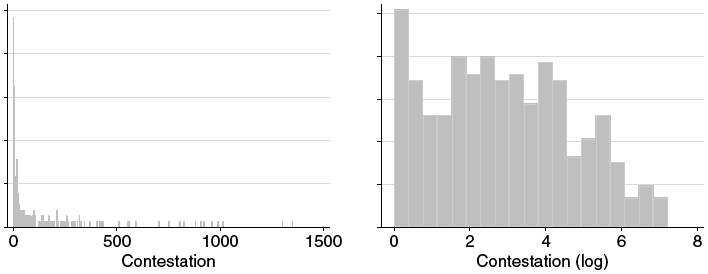

 Open access