To save content items to your account,
please confirm that you agree to abide by our usage policies.
If this is the first time you use this feature, you will be asked to authorise Cambridge Core to connect with your account.
Find out more about saving content to .
To save content items to your Kindle, first ensure no-reply@cambridge.org
is added to your Approved Personal Document E-mail List under your Personal Document Settings
on the Manage Your Content and Devices page of your Amazon account. Then enter the ‘name’ part
of your Kindle email address below.
Find out more about saving to your Kindle.
Note you can select to save to either the @free.kindle.com or @kindle.com variations.
‘@free.kindle.com’ emails are free but can only be saved to your device when it is connected to wi-fi.
‘@kindle.com’ emails can be delivered even when you are not connected to wi-fi, but note that service fees apply.
Indian corn, Zea mays, was an important crop in Mesoamerica and popular theories of its appearance in South America all rest on its having been brought there (by means unknown) at an extremely early date. Recent analyses, however, show fundamental differences in the two groups of maize, suggesting that maize spread south well before it had become domesticated in Mesoamerica.
Does the South American continent have a future? Between gross exploitation by European and Asian countries, corrupt and incompetent local governments, many in thrall to foreign interests, environmental degradation, overpopulation and weak economies plus widespread looting of archaeological sites to supply European and North American museums, the future does not seem very bright.
South America was cut off from Eurasia for some 15,000 years and is generally ignored by North Americans and Europeans in any manner but superficial tourism. Yet the separate development of such features of civilization as agriculture, monumental architecture, conquest states and elite art allow us to test our own, Eurasian centric views, of what is a civilization and how do they arise.
Metal working in South America has at least two independent foci: the Altiplano of Peru/Bolivia and the closely related coastal technologies, with an emphasis upon hammered and joined sheet metal ornaments and the very different, casting oriented, traditions of the northern Andes. These latter features gold and gold alloys whereas the Peruvian traditions also used different kinds of bronze.
Intercontinental contact in Pre-Columbian times consisted of movement up and down the Central America corridor—to some extent. In later prehistory canoe travel along the eastern coast of Central America was extremely important, whereas the hypothesis of Mexico-South American contact via rafts on the west is a sentimental fallacy.
Because no ancient South American society had writing, all histories must be dated by archaeological mean, including radiocarbon dating. Before this was available various schemes of relative dating were proposed, most concocted on a lack of data and ethnocentric principles.
The geography of South America is extremely varied with a long range of high mountains, the Andes, along the west coast and the eastern and northern parts of the continent in various tropical forests with enormous river systems, semi-arid deserts, and the cold plains of the Pampas and Patagonia. These fostered the development of a series of extremely distinctive societies, from giant multiethnic conquest states to simple hunters and gatherers.
The northern and eastern lowlands of the South America continent are marked by extreme regional diversity of landforms coupled with the ease of communication (by canoe) over immense distances. In the Amazon proper numbers of autochthonous kingdoms have been delineated where as in the Orinoco plains and those of the Llanos de Mojos in Bolivia cultures features built up residential (islands) connected by long causeways and drain field systems prevailed.
Ceramics manufacture and use followed a very different trajectory in South American than in the rest of the world. The first ceramics in Peru were late and the earliest complex societies were completely aceramic while in the northern Andes extremely early ceramic traditions flourished and multiplied.
Beginning ca. 3800BC large circular temples with associated platforms and structures began to appear along the Peru coast, especially in the Norte Chico. Hypotheses concerning this sudden and completely preceramic development include the intensification of irrigation agriculture, a dependance upon maritime resources, and possible climatic changes.
The last centuries before the European invasions were marked by the rise of an immense conquest state in the Andes, that of the Inca and a smaller series of warring kingdoms, the Muisca, on the Sabana de Bogotá and the large and equally warring kingdoms or chiefdoms of the Tupinamba in eastern Brazil. The range of difference between these kingdoms (and empire) is significant but all were marked by a bellicose orientation and, in the case of the Tupinamba, by ritual cannibalism.
Iconographic studies of pictorial art are important clues to belief systems in non-literate societies. In South America intensive study of the pictorial Moche style has led to a new understanding of its religious practices, while in the north studies of a number of metallurgical styles have shown belief systems concerning shamanism and the importance of carnivores in mythology.
Research on rock art around the world takes for granted the premise that rock art, as a product of the Upper Palaeolithic symbolic revolution, is a natural behavioral expression of Homo sapiens, essentially reflecting new cognitive abilities and intellectual capacity of modern humans. New discoveries of Late Pleistocene rock art in Southeast Asia as well as recent dates of Neandertal rock art are also framed in this light. We contend in this paper that, contrary to this essentialist non-interpretation, rock art is a historical product. Most human groups have not made rock art. Rock art's main characteristic is its inherent territorial/spatial dimension. Moreover, or probably because of it, rock art is fundamentally associated with food-producing economies. The debate between the cognitive versus social and historical character of rock art is rarely explicitly addressed. In this paper we explore this historical dimension through examples from rock-art corpora worldwide: they provide key case studies to highlight the relevance of addressing the different temporalities of rock-art traditions, their interruptions and, therefore, their historical qualities.
Studies of balances (scales) in Europe, Asia and northern Africa have found that their use is not exclusively tied to state control or market exchange, but rather grew and evolved through interactions among bureaucrats in centralized states, merchants, artisans and local leaders. Research on balances from Andean South America can contribute to an understanding of the diverse roles and functions of balances, as they developed independently in a region where there were both exchange-based and non-market economies. This article includes data on Andean balances that reveal that they were used as early as the Late Intermediate Period (ad 1100–1400), and that there is variation in the characteristics and dimensions of the balances. Similar to other regions, balances in the Andes were likely used by different groups of specialists including merchants, bureaucrats and artisans. To understand how balances were used, they need to be understood alongside long-distance exchange practices, socio-political strategies, the organization of craft production and the possible use of currency.
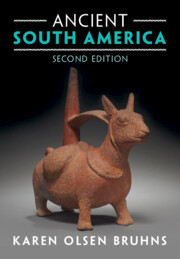
Ancient South America, 2nd edition features the full panorama of the South American past from the first inhabitants to the European invasions Isolated for all of prehistory and much of history, the continent witnessed the rise of cultures and advanced civilizations rivalling those of Europe, Asia, and Africa. Independently of developments elsewhere, South American peoples invented agriculture, domesticated animals, and created pottery, elaborate architecture, and the arts of working metals. Tribes, chiefdoms, and immense conquest states rose, flourished, and disappeared, leaving only their ruined monuments and broken artifacts as testimonials to past greatness. This new edition is completely revised and updated to reflect archaeological discoveries and insights made in the past three decades. Incorporating new findings on northern and eastern lowlands, and discussions of the first civilizations, it also examines the first inhabitants of Brazil and Patagonia as well as the Andes. Accessibly written and abundantly illustration, the volume also includes chronological charts and new examples.