To save content items to your account,
please confirm that you agree to abide by our usage policies.
If this is the first time you use this feature, you will be asked to authorise Cambridge Core to connect with your account.
Find out more about saving content to .
To save content items to your Kindle, first ensure no-reply@cambridge.org
is added to your Approved Personal Document E-mail List under your Personal Document Settings
on the Manage Your Content and Devices page of your Amazon account. Then enter the ‘name’ part
of your Kindle email address below.
Find out more about saving to your Kindle.
Note you can select to save to either the @free.kindle.com or @kindle.com variations.
‘@free.kindle.com’ emails are free but can only be saved to your device when it is connected to wi-fi.
‘@kindle.com’ emails can be delivered even when you are not connected to wi-fi, but note that service fees apply.
In September 1981, Jeanette and Marius Schoon were hired as co-directors of the Botswana branch of the (UK-based) International Voluntary Service. The IVS developed as a pacifist response to world war, enabling people from different nations and backgrounds to work together as an antidote to militarism and patriotism. For example, in the aftermath of World War 2, British volunteers went to Germany and worked alongside volunteers from all over the continent helping to rebuild war-torn cities. The organisation also responded to natural disasters and initiatives that would now fall under the broad umbrella of ‘development’ work. IVS in Britain had joined with other UK agencies as part of the British Volunteer Programme, funded mainly by the government, and it had ‘overseas programmes’ in several other, mainly African, countries. In fact, according to Nigel Watt, who was the general secretary of IVS at the time, ‘budget wise, the overseas programme was the biggest because we got 75 per cent, sometimes more, from the government for this programme. It was kind of like the British Peace Corps in a way.’ Much of the overseas work had a strong emphasis on development, such as digging wells, building schools, and teaching and working at orphanages. There was, since the organisation's founding, a strong focus on the value of hard work on improving society. However, IVS staff would have resented being lumped together with NGOs and charities that are paternalistic, who simply provide ‘service’ without a sense of mutual humanity:
We tried to make it one operation, so that in those days when we sent volunteers to Botswana, say, as part of their preparation we would ask them to attend an international work camp here [in the UK] before they went, so that they would understand the whole ethos of volunteering.
In fact, the situation in Botswana for IVS was substantially different from how one might imagine the Peace Corps operating in Africa. First, the organisation did not pretend to be politically neutral, but rather, ‘we thought we were supporting anti-apartheid in a way by demonstrating that racial harmony can exist in the neighbouring countries [to South Africa]. I suppose that was the kind of motivation, you could say, for IVS as an organisation to be there.
A bove and beyond the general difficulties and complications of doing underground work for the ANC, in the Schoons’ specific case, as Glenn Moss scathingly – and correctly – says,
The damn problem with their network was that it was heavily infiltrated. It was not just Williamson and Edwards; everybody who went to Botswana to meet with them [the Schoons], something happened to them afterwards. People went there just to visit them as friends and were asked to bring back a document or something like that and they always got stopped at the border and searched … people who touched that network would get into serious trouble.
Barbara Hogan echoes Moss's sentiments regarding the Schoons’ network, of which she herself was a member. Hogan's description of how she ended up working with the Schoons in this way is gripping, in that it reveals her deep misgivings and regrets:
Mac recommended that I be shifted to the Botswana operation because Jenny and Marius were there. It was understood that I would work with the white left on shifting them to a Congress position. The white left punched above its weight at that stage because of its privileged position … I was unhappy about going to Botswana, although I loved Jenny and Marius. I thought it was a very leaky operation. Jenny and Marius weren't very good at managing security. The people who were messengers for them were security police. In actual fact, the work I did with Jenny and Marius I regard as the least important. My main interest was to look at how you organise the unemployed, and I was working with the unions down in East London.
It is interesting that Hogan, a lifelong supporter of the ANC, describes her work with the Schoons as the ‘least important’ that she did during that period. If Hogan's priorities were to organise the unemployed and help build trade unions, was it worth the risk involved to send coded messages via dead letter boxes and couriers across the border, letting the Schoons (and the ANC, by extension) know about these activities?
While everyone needed a cover story, not all covers were as clean cut as being a teacher or an artist; in some cases, cover stories could have an undercover side to them as well. Heinz Klug and Patrick Fitzgerald's exile years in Botswana are perhaps the most complex – and also the most compelling – cases in point.
Klug had been a journalism student, and part of the radical leadership of Nusas, after the entire executive disbanded in 1976, and after Williamson's flight from the country. Klug had been living in Durban when Rick Turner was killed and had experienced a nasty increase in harassment from the police in the aftermath of the assassination. At the end of 1978, Klug moved down to Cape Town and began an MA in January of 1979. Meanwhile, Klug continued his radical organising, often focused on opposing the conscription of white men into the apartheid military. ‘The pressures were building, and all of a sudden I got a letter that said that they had cancelled my deferment.’ In response to being called up by the military, Klug attempted to organise a group of students to all refuse to serve, together. However, the state strategically offered deferments, to whittle down this group of conscientious objectors. Furthermore, Nusas had decided that they were unwilling to encourage young white men to resist conscription.
I told exactly two people, close friends, that I was planning to leave the country. One of these friends invited me to beer at the Pig and Whistle in Cape Town. My friend wasn't there when I arrived. Karl Edwards was sitting there, and he said, ‘I hear you're leaving the country.’ I said that I had no idea what he was talking about. He said, ‘Well, look, if you decide you’d like to leave, there's this project in Botswana called SANA [the South African News Agency]. They need somebody to take it over. So, it's a job …’ I asked what SANA was, and he said, ‘Oh, it's funded by the International University Exchange Fund.’ I had no idea what that was. Karl explained further, ‘It's Craig Williamson; he's in Geneva now.’
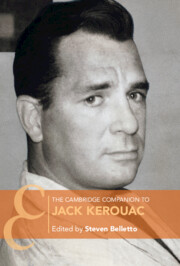
Jack Kerouac is among the most important and influential writers to emerge from mid-twentieth century America. Founder of the Beat Generation literary movement, Kerouac's most famous novel, On the Road, was known as the bible of this generation, and inspired untold people to question the rigid social and cultural expectations of 1950s America. And yet despite its undeniable influence, On the Road is only a small piece of Kerouac's literary achievement, and there are now well over forty Kerouac books published. The centerpiece to this work is Kerouac's multi-volume Duluoz Legend, named for his fictional alter-ego, Jack Duluoz, and comprising numerous books written over decades that together tell the story of Duluoz's life and times. This volume offers fresh perspectives on his multifaceted body of work, ranging from detailed analyses of his most significant books to wide-angle perspectives that place Kerouac in key literary, theoretical, and cultural contexts.
Good Governing: The Police Power in the American States is a deep historical and legal analysis of state police power, examining its origins in the founding period of the American public through the 20th century. The book reveals how American police power was intended to be a broad, but not unlimited, charter of regulatory governance, designed to implement key constitutional objectives and advance the general welfare. It explores police power's promise as a mechanism for implementing successful regulatory governance and tackling societal ills, while considering key structural issues like separation of powers and individual rights. This insightful book will shape understanding of the neglected state police power, a key part of constitutional governance in the U.S. This title is also available as Open Access on Cambridge Core.
This chapter describes the connection between state constitutions and the essential aims of regulatory governance in the American states, providing an overview of state constitutionalism and of the elements of state constitutional history as it relates to governmental structure and purpose. The basic theme of the chapter is that to understand the police power requires a fundamental understanding of the objectives of state constitutionalism. At a high level, state constitutions look to distribute effectively political power and balance democracy with the protection of individual rights. Even as fundamentally political documents, they are designed to succeed (although they occasionally fail). Likewise, the powers assigned to institutions of government are intended to facilitate constitutional success.
This chapter begins the last section, a section that explores how the police power can be used to address modern social problems. We look at a number of these wicked problems, including housing, transportation, environmental degradation, and other predicaments, and connect our conception of the police power as described earlier in this book to the use of this power proactively to confront these especially difficult problems.
This chapter looks at the ways in which the police is defined and confined by internal standards of constitutional acceptability. Before we get to the matter of individual rights, we must ask the question of whether and to what extent the police power is being used in ways that are reasonable, not arbitrary, and not the product of animus or unacceptable influence. These internal structural considerations have been used to limit the scope of the power and, more to the point of this chapter, they have the potential of being used in a way that reconciles broad governmental power with the protection of citizen interests and liberty.
In this final chapter, we explore different techniques of regulatory intervention, including regulatory alternatives, taxes, behavioral nudges and such, that can be profitably used to tackle the wicked problems described in the previous chapter, and other problems that may emerge and persist in the modern U.S.
This chapter begins a new part, this focusing on structural considerations in the scope and exercise of the police power. Some of the critical issues involving the power involve who gets to exercise it, and upon what conditions. The separation of powers among departments of government is relevant here, and there have been concerns in courts when the state legislatures delegate the exercise of this power to governors and administrators. We discuss some of these controversies in this chapter. Moreover, we discuss the ways in which the police power has long been used by local governments to implement health, safety, and welfare objectives in their community. The relationship between state and local governments, often labelled “localism,” in order to capture the constitutional dimensions of this dynamic relationship, is a focal point of this chapter.
Chapter Six begins by looking at how Americans of different racial and ethnic stripes think about politics and how these views have changed over time. This chapter looks not only at racial divisions in policy preferences but also at racial differences in public trust and confidence in institutions. Excerpts examine the echo chamber and skepticism over polling and the measurement of public opinion.
This chapter looks at how the police power has evolved in judicial interpretations and legislative enactments to the present day. It begins by exploring how the shifting approaches to regulatory governance more generally and also various state constitutional developments in the past two centuries affected thinking about the overall structure and purpose of state regulatory authority. It then turns to a number of critical areas in which the police power was used as a tool of protecting health, safety, welfare, and the common good. It begins with morals, a linchpin of traditional police power regulation, and then proceeds to discuss urban blight, occupational licensing, and public health emergencies