To save content items to your account,
please confirm that you agree to abide by our usage policies.
If this is the first time you use this feature, you will be asked to authorise Cambridge Core to connect with your account.
Find out more about saving content to .
To save content items to your Kindle, first ensure no-reply@cambridge.org
is added to your Approved Personal Document E-mail List under your Personal Document Settings
on the Manage Your Content and Devices page of your Amazon account. Then enter the ‘name’ part
of your Kindle email address below.
Find out more about saving to your Kindle.
Note you can select to save to either the @free.kindle.com or @kindle.com variations.
‘@free.kindle.com’ emails are free but can only be saved to your device when it is connected to wi-fi.
‘@kindle.com’ emails can be delivered even when you are not connected to wi-fi, but note that service fees apply.
As colonial resistance gave way to armed struggle, Native Americans, living along an extensive frontier stretching over 1,500 miles, were courted assiduously by the British and their American opponents. The chronology of the Indians' revolution only partially overlapped with that of European colonists. The adoption of the term 'borderland' to describe the region emerges relatively late in the book which, beginning with a description of the regional environment, traces the establishment of the Indian population, the development of intercultural trade between Indians and colonists, the emergence of the colonial economy, the destruction of existing valley communities during the revolutionary war and the creation of the post-war economy. The ability of Native Americans and colonists to live and deal with each other in pre-revolutionary America is one of the major themes of much of the new work.
At the time of the Revolution, African Americans, nearly all of them slaves, numbered approximately twenty per cent of the population, a larger proportion than at any time before or since. Insofar as African Americans were discussed at all by the revolutionary generation of historians, it was as a consequence of their status as enslaved workers on southern plantations where they constituted a potential danger to the rest of the population. Resistance was not random but calculated to exploit those times when whites were at a disadvantage such as during epidemics, war and natural disasters and the political conflict with Britain presented further opportunities. When the Revolution came, the existence of slavery among European Americans struggling for their own freedom was an embarrassment to some, an opportunity for others and inconsequential to most.
This is a book about the encounters that contemporary North American fiction stages with distinct strands of self-help. Its central argument is that the varied practices of ever-expanding and diversifying self-help cultures are generatively elastic sites of inspiration as well as antagonism for contemporary authors: spaces where they can explore what it means to be better on personal, ethical, and societal terms. It offers new perspectives on the work of nine very different writers by exploring how they play different forms of self-help off against one another. This book shows how in the clashes between practices ranging from commencement speeches and grassroots communitarian self-help to time-management productivity manuals, trauma recovery theories, pop-neuroscience, and makeover cultures, contemporary writers try to find ways of reimagining authority and agency beyond individualism, asking how - and if - it is possible to live and write 'better' in our compromised neoliberal world.
In Black Voices in the Halls of Power, authors Jennifer R. Garcia, Christopher T. Stout, and Katherine Tate explore how US lawmakers use racial rhetoric to elevate the voice of Black communities, influence policy, and shape voter trust. Through a combination of data-driven research and accessible storytelling, the book uncovers the strategic ways politicians speak about race, revealing how rhetoric impacts policymaking and representation and offering fresh insights into race and power in American politics. The book explores how politicians craft messages to appeal to diverse audiences and use political communication to advance legislative priorities. It also examines how legislators' engagement in racial outreach affects voter attitudes. Given the increasingly important role of race on the national political stage in the US, the book provides a critical yet engaging examination of race, rhetoric, and representation in Congress.
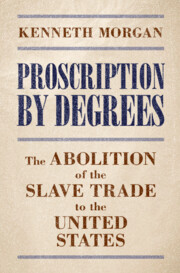
In this book, Kenneth Morgan provides the most comprehensive account of the abolition of the slave trade to the United States since W. E. B. Du Bois's 1896 The Suppression of the African Slave Trade to the United States of America, 1638–1870. Utilising a wider range of resources and exploring the economic, social, moral and political considerations, Morgan creates a multi-layered account that explains whyabolition was a protracted affair that proceeded by degrees over nearly half a century. He appraises the role of abolitionist individuals, groups and societies in bringing abolition to the forefront of public discussion across North America, and the decisive role of the US Constitution and the Constitutional Convention that eventually led to proscription in 1808, which made abolition constitutionally possible.
The Cambridge Companion to the Declaration of Independence offers a wide-ranging and accessible anthology of essays for understanding the Declaration's intellectual and social context, connection to the American Revolution, and influence in the United States and throughout the world. The volume places the document in the context of ideas during the Enlightenment and examines the language and structure to assess its effect and appeal throughout the centuries and across countries. Here are contributions from law, history, and political science, considering such matters as the philosophical foundations of the Declaration, the role of religion, critics of its role in American political development, and whether 'Jefferson's handiwork' is still relevant in the twenty-first century. Written by distinguished and emerging scholars, the Companion provides new and diverse perspectives on the most important statement of American political commitments.
Chapter 3 considers the self-help of time management, productivity, and creative timeflow in conversation with the work of Tao Lin and Myriam Gurba. First, I examine Lin’s autofictional novels, especially Taipei (2013), exploring how his relationship with time management evolves through ideas of micromanaged self-control, a self-tracking ‘virtual self’, and psychedelic, aleatory, and New Age temporalities. Then, by attending to Gurba’s memoir, Mean (2017), as well as the self-help advice podcast she co-hosted, I look at how her sense of therapeutic ‘trauma time’ and queer Chicanx asynchronic time combine to produce a form of ‘writer’s block’ that challenges the notion of literary production as a rational activity. The chapter argues that both authors play with diverse self-help discourses to explore agency and control in the processes of writing and life, illuminating broader tensions in contemporary culture between ideas of writers as disciplined, entrepreneurial craftspeople or as recalcitrant, romantic artists.
So far, this book has focused on the power of the President to act. However, the President and the Executive Branch make up just one of the three branches of the federal government, Congress and the federal courts composing the other two. In this chapter we will focus on the relationship between the power of Congress to make laws and the President’s power to sign into law a bill Congress has passed, the power to veto a law, and the power to issue statements of interpretation on a bill the President signs into law.
Transplant teams often reject organs offered to their patients for a variety of reasons, including the assessment that the qualities of the organs are too low. Rejections add to cold ischemic time, which makes low-quality organs even less desirable and thus increases the risk of nonuse. Recent changes by the Centers for Medicare & Medicaid Services (CMS) in the way it assesses organ procurement organizations (OPOs) and the more credible threat these changes pose to their local monopolies have incentivized the recovery of more low-quality organs. A change in the organizational report card for transplant centers has incentivized lower-volume transplant centers to reject more low-quality organs despite risk adjustment. The OPTN has developed several policies, such as offer filters, that attempt to reduce the number of organ offers transplant centers receive that they are unlikely to accept. The increasing rates of organ nonuse and the recognition that continuous distribution (CD) could help address it or make it worse led to the Expeditious Task Force and the postponement of the finalization of CD proposals for kidneys and pancreases.
Article II, Section 2 of the Constitution empowers the President to “grant Reprieves and Pardons for Offences against the United States, except in Cases of Impeachment.” The seemingly simple language of this clause in the Constitution obscures a number of complicated questions about the scope and nature of this presidential power. For example – may Congress play a role in a president’s decision on pardons? Can the President grant a pardon for both state and federal crimes? Is the President required to fully pardon someone, or may he place conditions on the pardon? And, can a president pardon himself?
It’s one thing to say a sitting president can be civilly sued for personal capacity conduct, as the Court held in Clinton v. Jones. It’s quite another to say that a sitting president can be indicted for a crime. Or are they so different? The courts have never addressed this question. The Department of Justice (DOJ) in three Office of Legal Counsel memos (1974, 2000, and 2019) answered in the negative. Other lawyers and legal scholars disagree.
In addition to the more debated presidential powers discussed in the previous chapters of this book, the President can also exercise several less controversial powers. Among these powers are the power to seek the opinions of executive officers, the power to appoint ambassadors, federal judges, and other officers of the United States, and the right to provide Congress information on the state of the union.
When considering presidential power, presidential “ethics” concerns also are relevant. Here we address two aspects of this problem – financial and political conflicts of interest of the President.